
Outdoor lighting can completely change the way a garden looks and feels after sunset. The right fixtures can make pathways easier to navigate, highlight beautiful plants, create a relaxing seating area, and add warmth to patios, lawns, and outdoor dining spaces. 11+ Garden ideas for outdoor lighting can help you create a garden that feels inviting without making it look excessively bright.
A garden that looks ordinary during the day can become surprisingly beautiful at night with just a few carefully positioned lights. Instead of covering every corner with bright fixtures, modern landscape lighting focuses on layers, shadows, focal points, and soft illumination. Recent outdoor lighting guides consistently recommend combining practical pathway lighting with accent and ambient lighting rather than depending on one powerful floodlight.
In this guide, you’ll discover practical 11+ Garden ideas for pathways, trees, patios, flower beds, fences, pergolas, steps, water features, and small gardens. You’ll also learn how to choose outdoor fixtures, use warm lighting, avoid glare, combine solar and wired options, and create a lighting plan that looks attractive while remaining functional.
1. Add Soft Pathway Lights
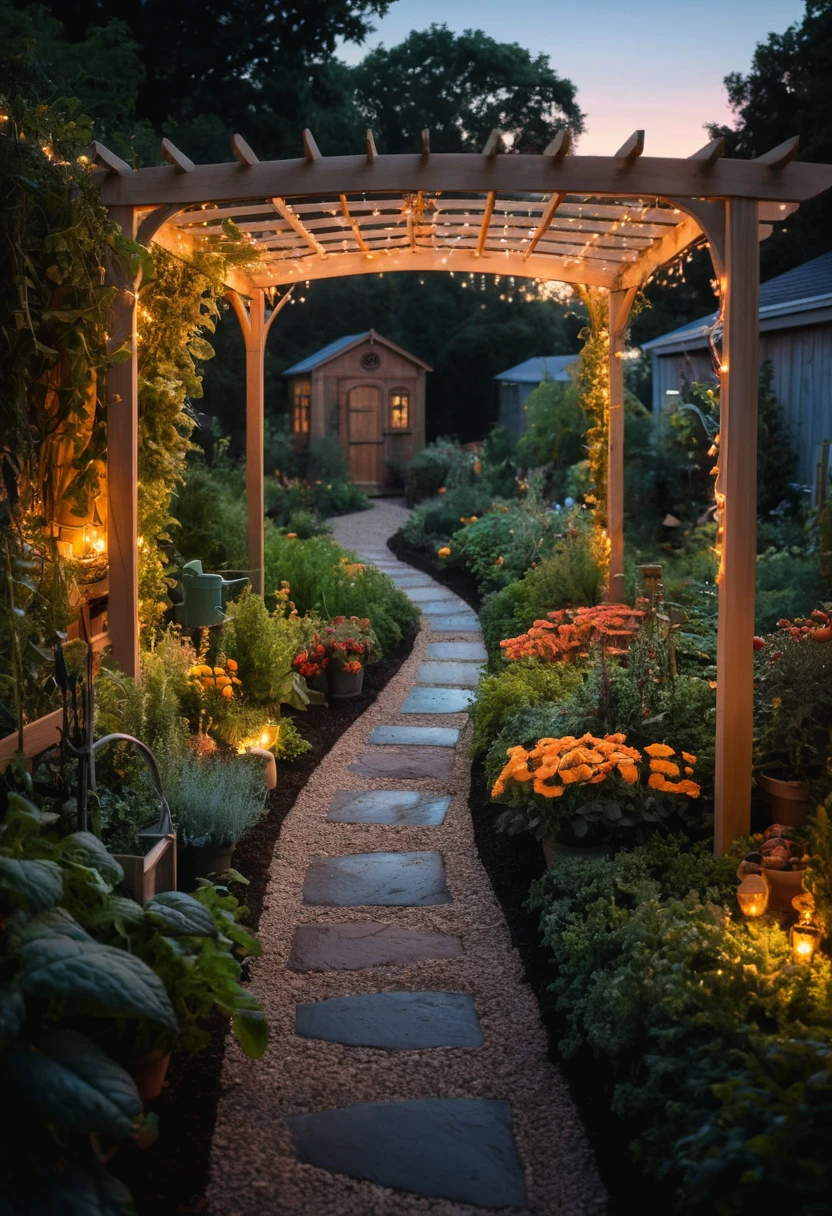
Pathway lighting is one of the easiest ways to make an outdoor space both attractive and practical. Small path lights can guide people along walkways without flooding the surrounding garden with unnecessary brightness.
Instead of placing identical fixtures in a perfectly straight line, consider staggering them slightly and positioning some near planting. Designers often recommend avoiding the “runway” appearance created by evenly spaced lights on both sides of a path.
Use Low-Glare Fixtures
Choose fixtures that direct light toward the ground instead of directly into people’s eyes. A shielded or hooded design can create a softer effect while still illuminating the walking surface.
The goal is to see the path rather than stare at the light source. This makes the garden more comfortable and helps preserve the relaxed nighttime atmosphere.
Try Recessed Path Lighting
For a modern garden, recessed lights installed into paving can create a clean, almost invisible appearance during the day. At night, they provide subtle guidance without adding tall fixtures along the walkway.
They work especially well around contemporary patios, steps, borders, and formal pathways where a minimal design is preferred.
2. Highlight Trees With Uplighting
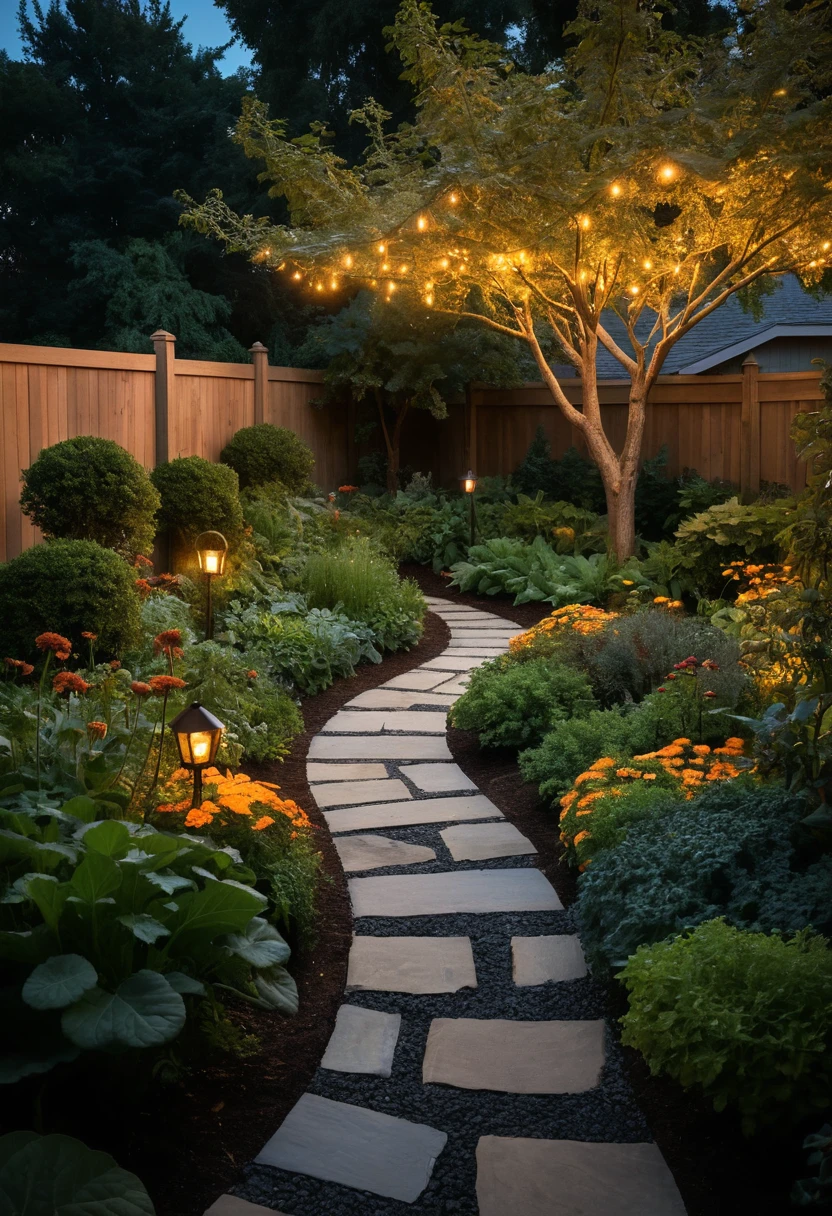
Trees are natural focal points, so they are excellent candidates for outdoor landscape lighting. Positioning a spotlight near the base of a tree and aiming it upward can reveal the trunk, branches, and foliage after dark.
This technique works with mature trees as well as smaller ornamental specimens. The result can range from dramatic and architectural to soft and romantic depending on the beam angle and brightness. Garden design sources commonly recommend tree uplighting as a way to add drama and depth.
Light the Trunk and Canopy
A narrow beam can emphasize the trunk and selected branches, while a wider beam can softly illuminate a larger canopy.
Avoid pointing a very strong light directly into nearby windows. Positioning and glare control are important because outdoor lighting is often visible from inside the home as well as from the garden.
Try Downlighting From Trees
Uplighting isn’t your only option. Fixtures positioned higher in a tree can cast light downward onto paths, planting beds, or seating areas.
This can create a natural moonlight effect and illuminate a larger area without filling the garden with visible fixtures.
3. Create a Cozy Patio With String Lights
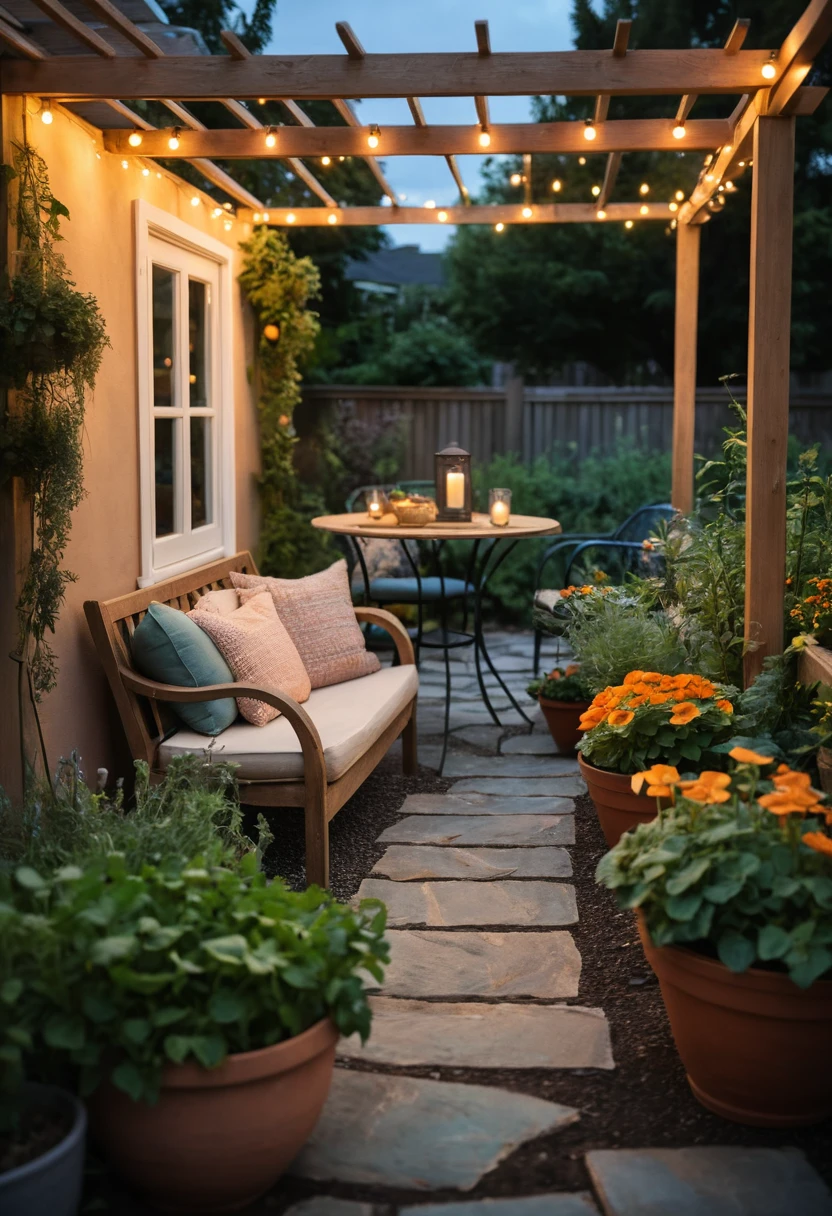
String lights are one of the most approachable 11+ Garden ideas because they can instantly make a patio, pergola, balcony, or seating area feel warmer.
They are particularly effective above dining tables or lounge areas. Current outdoor lighting guides continue to recommend globe, festoon, fairy, and other string-light styles for creating a comfortable entertaining space.
Hang Them Above a Seating Area
Run string lights between posts, walls, trees, or a pergola to create a soft canopy of light. Keep the arrangement neat enough to look intentional while allowing a little flexibility.
For a more elegant appearance, choose a simple warm-white design instead of mixing several different colors or bulb styles.
Use Them on a Pergola
A pergola provides a natural structure for outdoor lighting. You can run string lights along the beams or combine them with small hanging fixtures.
This creates an outdoor room without requiring major construction. It is particularly useful when the garden is used for evening meals or gatherings.
4. Illuminate Garden Steps
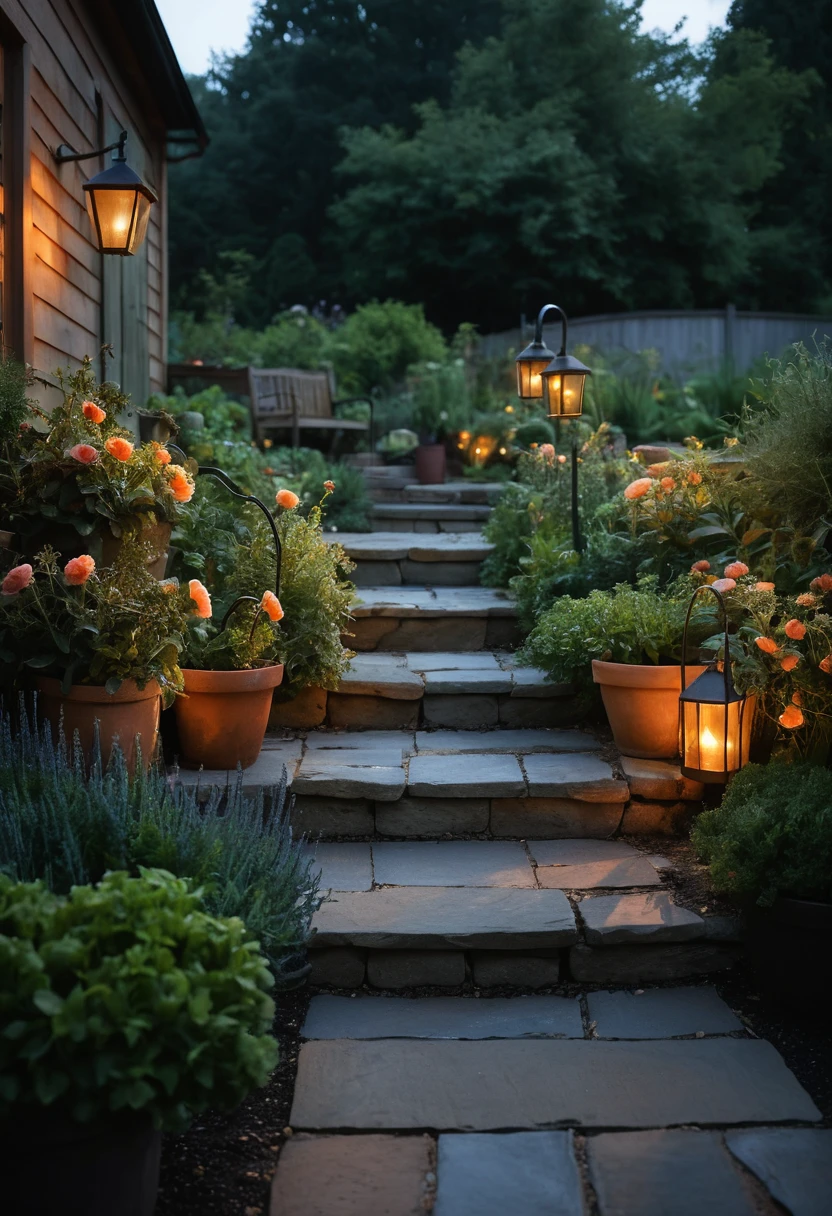
Steps need practical lighting because even a small change in level can become difficult to see after dark. Step lights can be integrated into risers, walls, posts, or nearby planting.
The best fixtures provide enough illumination to show the edge and surface of each step without creating harsh glare. Safety-focused outdoor lighting guidance specifically recommends practical, glare-controlled illumination for steps and pathways.
Light Each Level Carefully
Depending on the design, you may not need a fixture on every single step. A carefully positioned series of lights can reveal the changes in elevation while maintaining a natural appearance.
Avoid placing lights where their brightness makes the actual step edge harder to see.
Combine Steps With Nearby Planting
If your steps are bordered by shrubs or ornamental grasses, small landscape lights can illuminate the planting as well as the staircase.
This creates a more integrated appearance than treating the steps as a completely separate lighting zone.
5. Use Lanterns Around Outdoor Seating
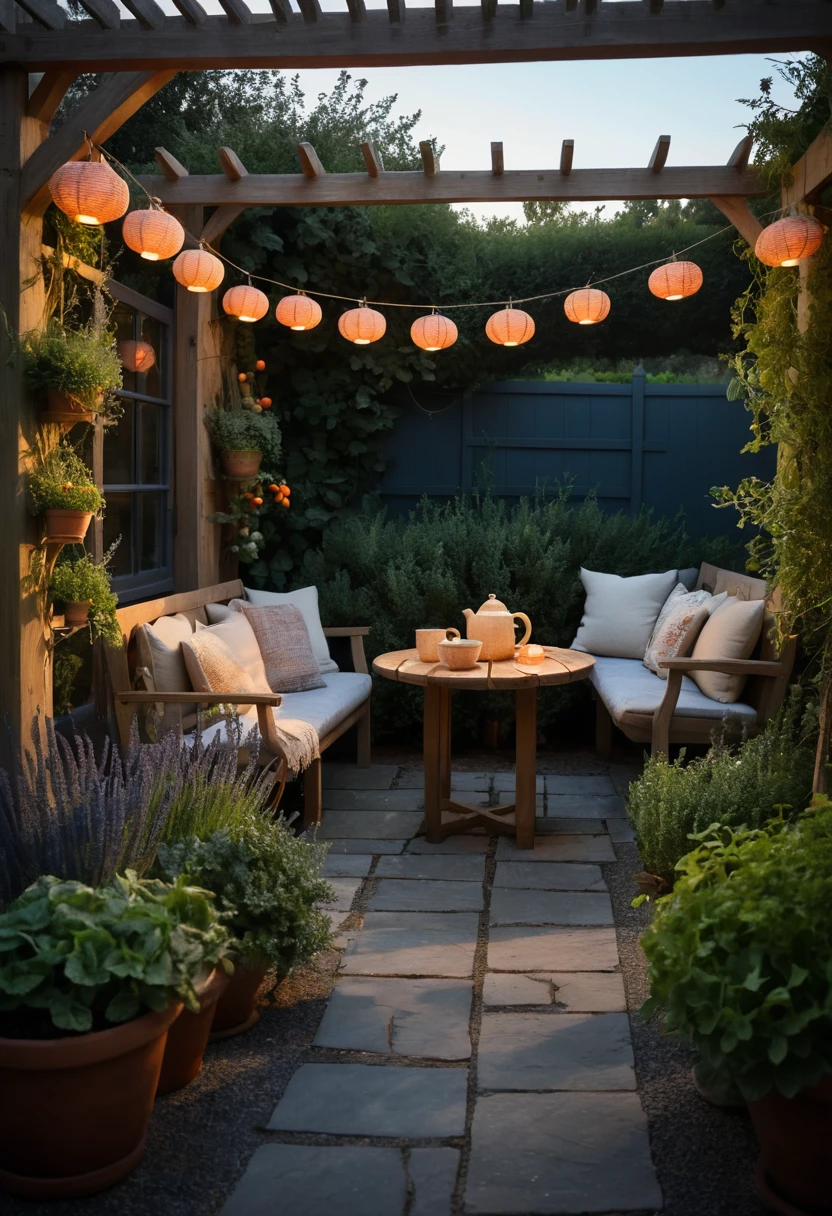
Lanterns can add a decorative layer to a garden without requiring permanent electrical installation. Place them around a seating area, beside a bench, along a patio edge, or near an outdoor dining table.
Floor lanterns are also useful for softening large areas of paving. Livingetc’s recent garden lighting guide highlights low-level lanterns as a way to define terraces and paths while adding warmth.
Choose Weather-Appropriate Designs
Outdoor lanterns should be designed for exterior use and protected from rain and moisture according to their specifications.
Battery-powered or rechargeable options are convenient for occasional entertaining because they can be moved around as needed.
Mix Heights
Instead of placing all lanterns at the same height, use a combination of floor-level and table-level lighting.
Different heights create a more natural visual rhythm and prevent the space from looking too uniform.
Read also: 12+ Garden Ideas for a Productive Raised Bed Vegetable Garden Layout
6. Highlight Flower Beds and Planting Borders
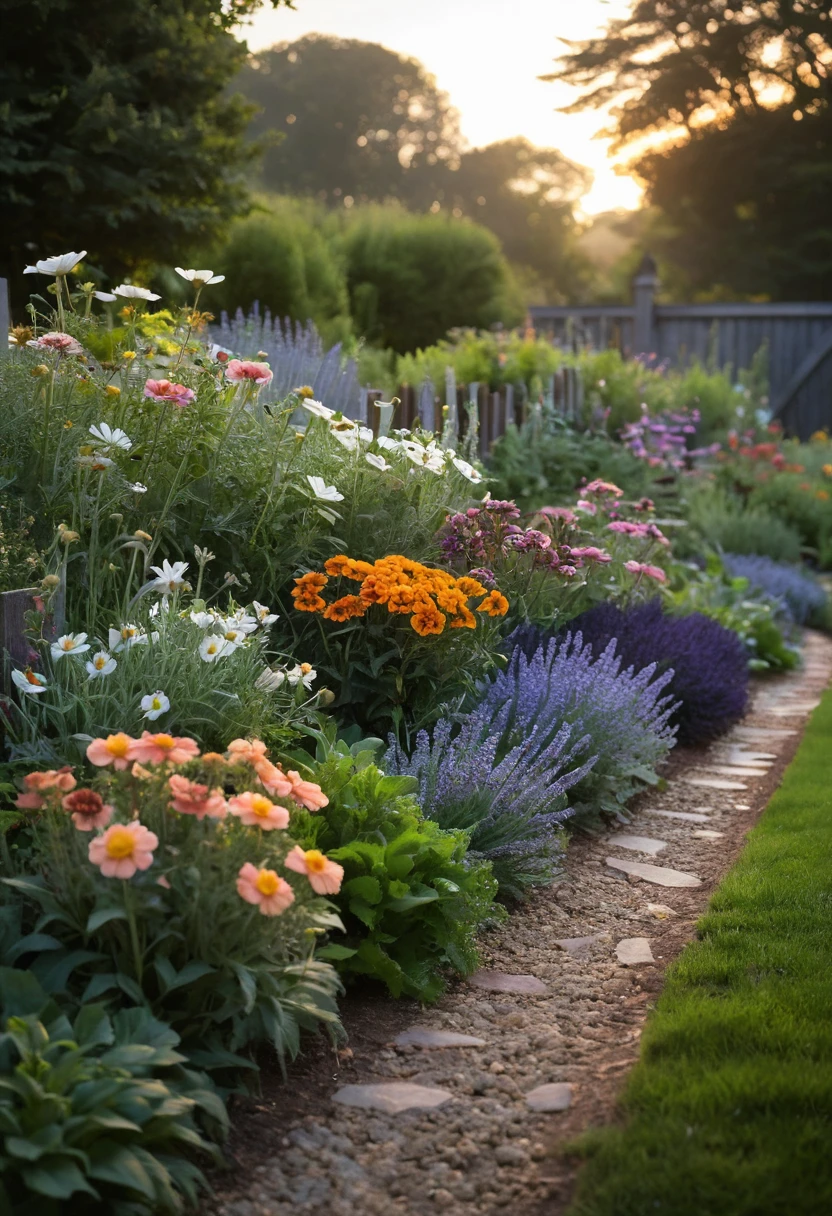
Flower beds can look completely different at night when selected plants are softly illuminated. Rather than lighting every flower individually, focus on interesting shapes, foliage, ornamental grasses, shrubs, or plants with distinctive textures.
This is one of the most effective 11+ Garden ideas for adding depth because the contrast between illuminated planting and darker areas makes the garden appear larger and more layered.
Use Small Spotlights
Small adjustable spotlights can be placed discreetly among plants. Aim them toward a selected feature rather than directly toward the seating area.
A wide, soft beam can work well for larger planting beds, while a narrow beam can highlight a particular specimen plant or architectural shrub.
Backlight Ornamental Grasses
Backlighting can make fine foliage appear almost glowing. Place a light behind grasses or delicate plants so that the light catches their edges.
This technique is especially attractive when there is a darker wall, hedge, or fence behind the plants.
7. Add Lighting to Fences and Garden Walls
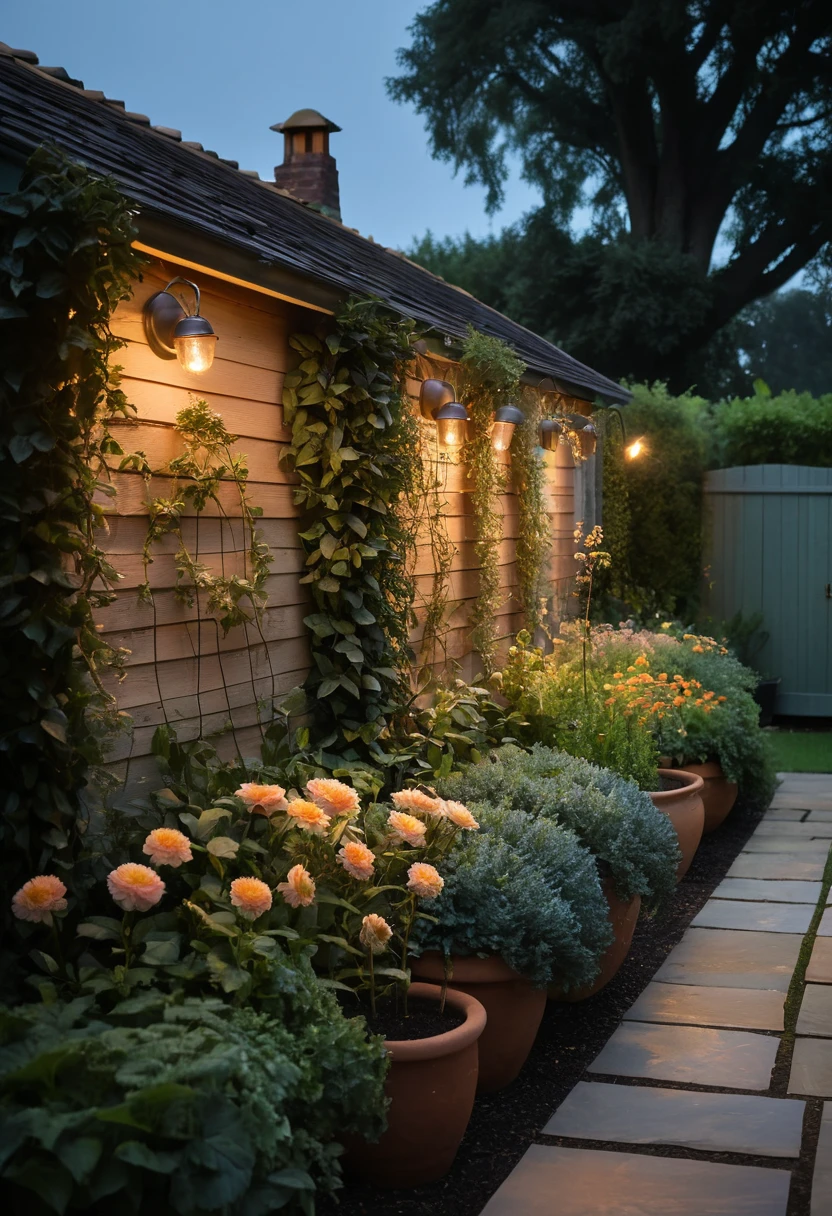
Fences and walls are often overlooked when planning outdoor lighting. Yet they can provide a useful vertical surface for creating depth.
A wall-wash fixture can spread light across textured stone, brick, timber, or another interesting surface. Designers frequently recommend illuminating architecture rather than focusing exclusively on the ground.
Wash a Textured Wall
If your garden has a stone or brick wall, position a suitable light so that the beam grazes across the surface.
The shadows created by the texture can become part of the design, making an ordinary wall more visually interesting at night.
Light a Fence From Below
Small uplights can be positioned near a fence to create a gentle vertical glow. This can make a narrow garden feel taller while providing a soft background for plants.
Keep the light controlled so it doesn’t shine directly into neighboring properties.
8. Create a Magical Garden With Fairy Lights
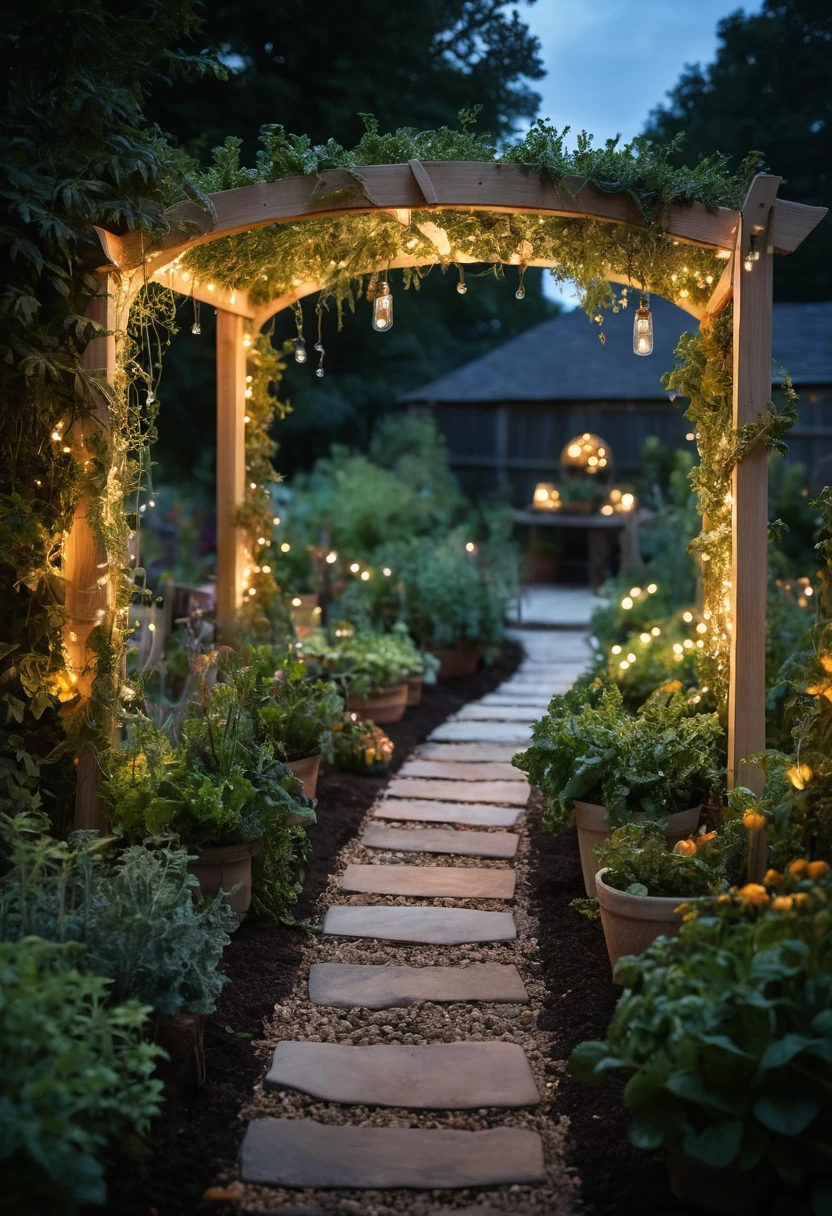
Fairy lights are a simple option for small trees, shrubs, pergolas, arches, and fences. Their many small points of light create a delicate effect that works particularly well in informal or romantic gardens.
Unlike a powerful spotlight, fairy lights can become part of the garden’s visual character without dominating the surrounding plants.
Wrap Small Trees
Carefully wrap outdoor-rated fairy lights around the trunk and selected branches of a small tree.
Keep the arrangement neat and avoid damaging the plant. The goal is to accent the tree rather than cover it so heavily that the natural structure disappears.
Decorate a Garden Arch
A garden arch can become a beautiful evening focal point when lined with small lights. This works particularly well around climbing plants and entrances between different garden zones.
Choose weather-suitable lighting and make sure cables and connections are installed safely for outdoor conditions.
9. Light a Water Feature
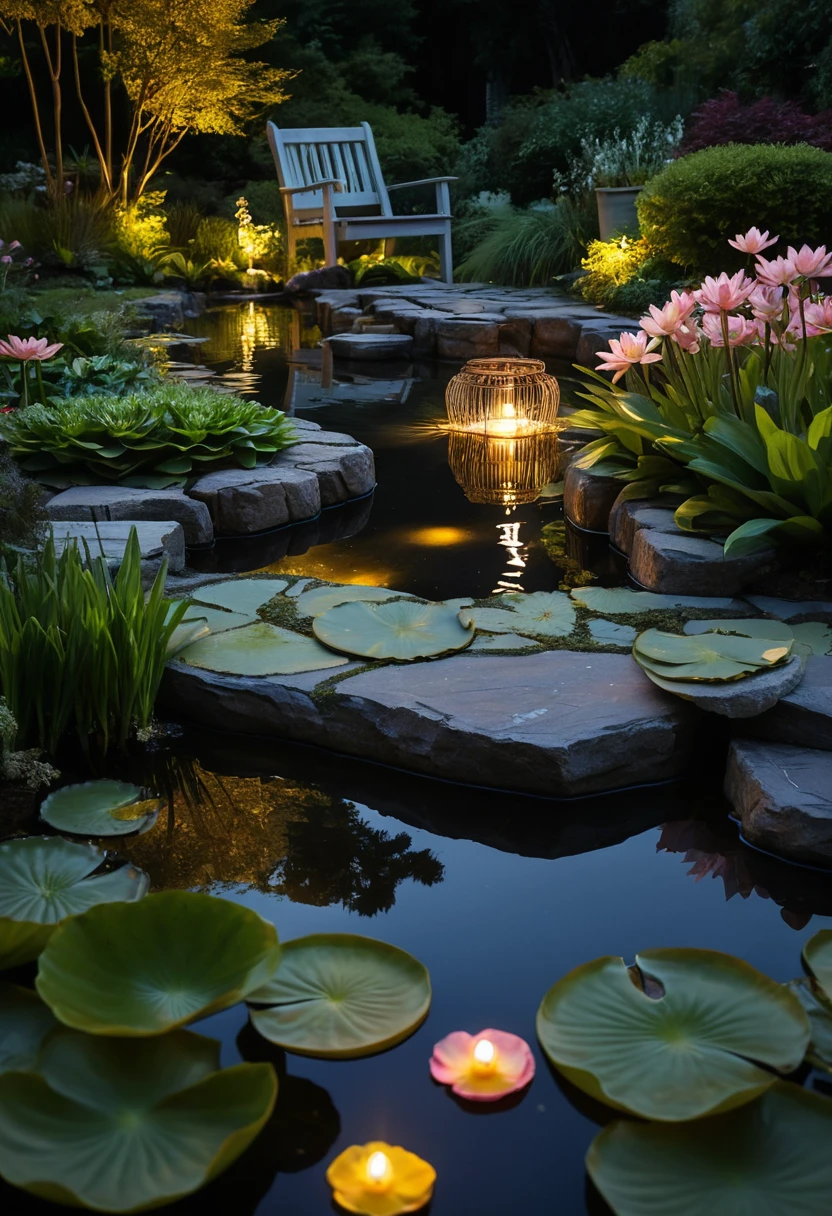
Water naturally reflects light, making ponds, fountains, pools, and small water features excellent candidates for carefully planned illumination.
A small amount of light can create shimmering reflections across the surface. Reflective water and other surfaces can also help distribute light visually through a compact garden.
Use Underwater Lighting Carefully
If you are using underwater fixtures, choose products specifically designed and rated for that application.
Electrical work around water requires particular care. Follow manufacturer requirements and use a qualified professional where installation involves mains electricity or complicated wiring.
Try Edge Lighting
You don’t always need to illuminate the water itself. A light positioned near the edge can highlight reeds, rocks, surrounding plants, or the surface of the water.
This often produces a softer result than making the entire feature brightly visible.
10. Create a Moonlight Effect
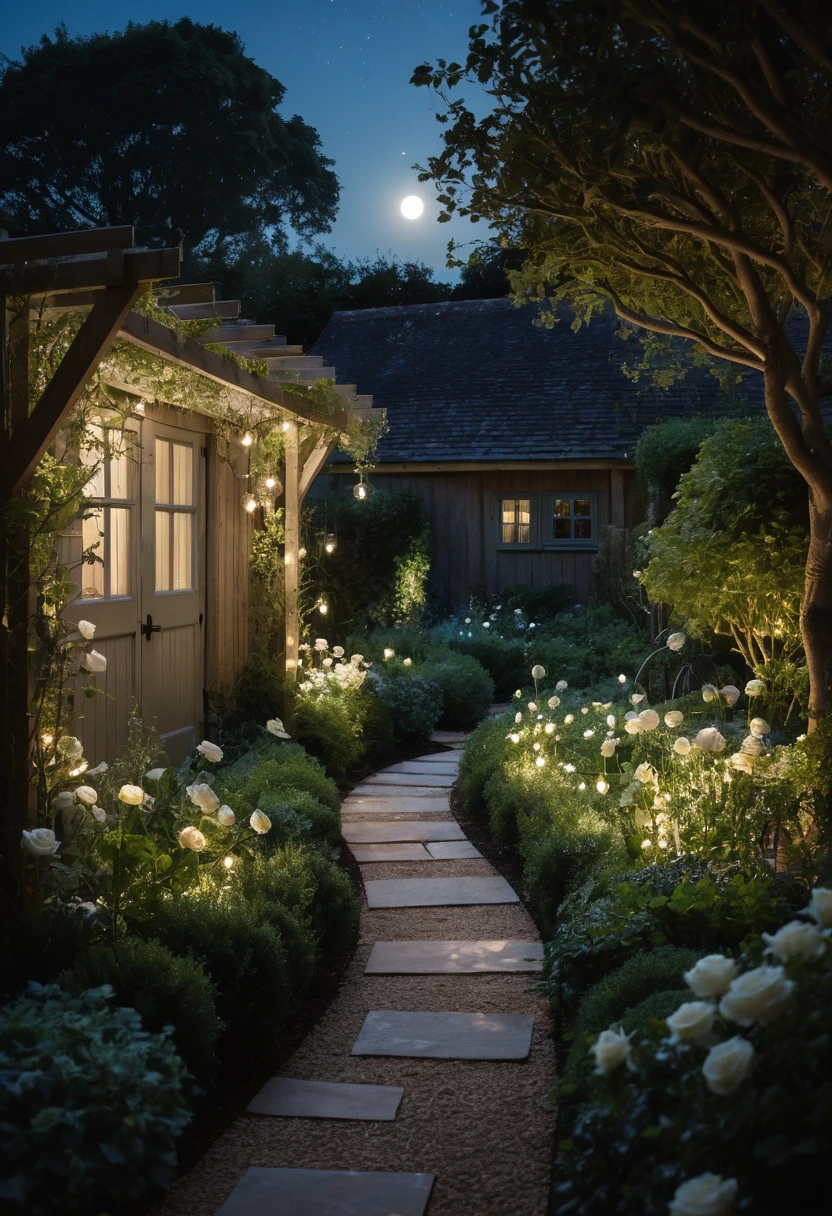
Moonlighting involves placing lights at a higher point, often in or around trees, so that illumination falls downward across the garden.
This technique can create a soft, natural-looking pattern across paths, lawns, and planting. Recent designer guidance notes that cooler light can sometimes be used higher in mature trees to suggest the appearance of moonlight, while warmer tones are more commonly used elsewhere in gardens.
Keep the Source Hidden
The effect works best when people see the illuminated garden rather than the fixture itself.
Hide or carefully position the fitting so the light source doesn’t become a distracting bright point.
Use This Technique Sparingly
Moonlighting can be beautiful, but too many fixtures can make the effect feel artificial.
One carefully positioned source may be enough to transform a small area.
11. Combine Warm Lighting With Darker Areas
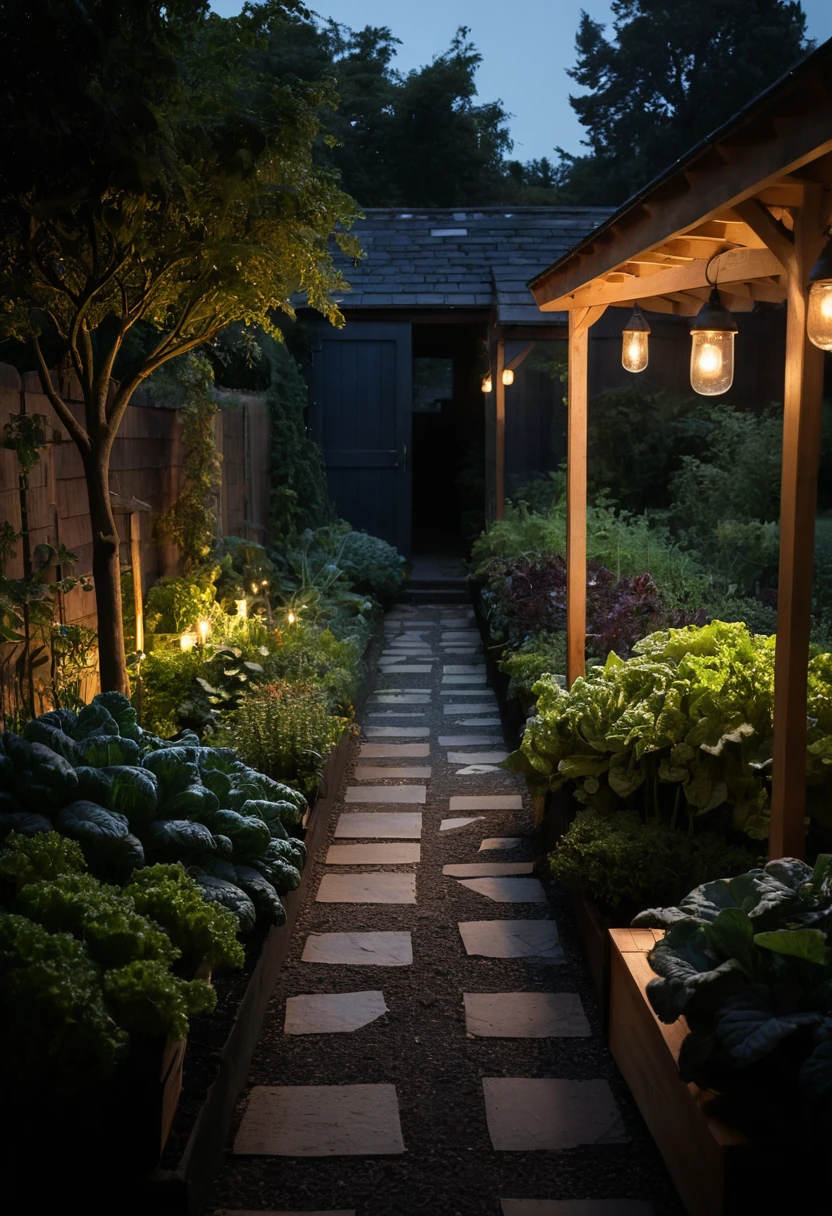
One of the most important 11+ Garden ideas is understanding that a beautiful nighttime garden doesn’t need to be completely illuminated.
Leaving selected areas darker creates contrast. When every surface is equally bright, the eye has nowhere specific to focus.
Recent expert guidance strongly emphasizes restraint and recommends choosing a handful of attractive features rather than lighting the entire garden.
Choose a Few Focal Points
Start with one tree, one seating area, one pathway, and perhaps one architectural feature.
Stand back at night and see how the space feels before adding more fixtures.
Let Shadows Work for You
Shadows aren’t automatically a problem. They can give plants, walls, stones, and garden structures depth.
A mixture of light and darkness often looks more natural than a uniformly bright garden.
Outdoor Garden Lighting Comparison
| Lighting Type | Best Use | Main Benefit | Ideal Style |
|---|---|---|---|
| Path lights | Walkways | Safer navigation | Traditional or modern |
| Spotlights | Trees and features | Strong focal effect | Contemporary |
| Uplights | Trees and walls | Adds drama | Modern or natural |
| String lights | Patios and pergolas | Warm atmosphere | Casual |
| Fairy lights | Trees and arches | Decorative sparkle | Romantic |
| Step lights | Stairs | Improved visibility | Minimal |
| Lanterns | Seating areas | Soft decorative glow | Traditional |
| Wall washers | Walls and architecture | Adds depth | Contemporary |
| Solar stakes | Borders and paths | Easy installation | Casual |
| Recessed lights | Paving and steps | Clean appearance | Modern |
| Pendant lights | Dining zones | Focused ambient light | Contemporary |
| Motion lights | Entrances and gates | Convenient visibility | Functional |
Make Your Garden Lighting Feel Natural
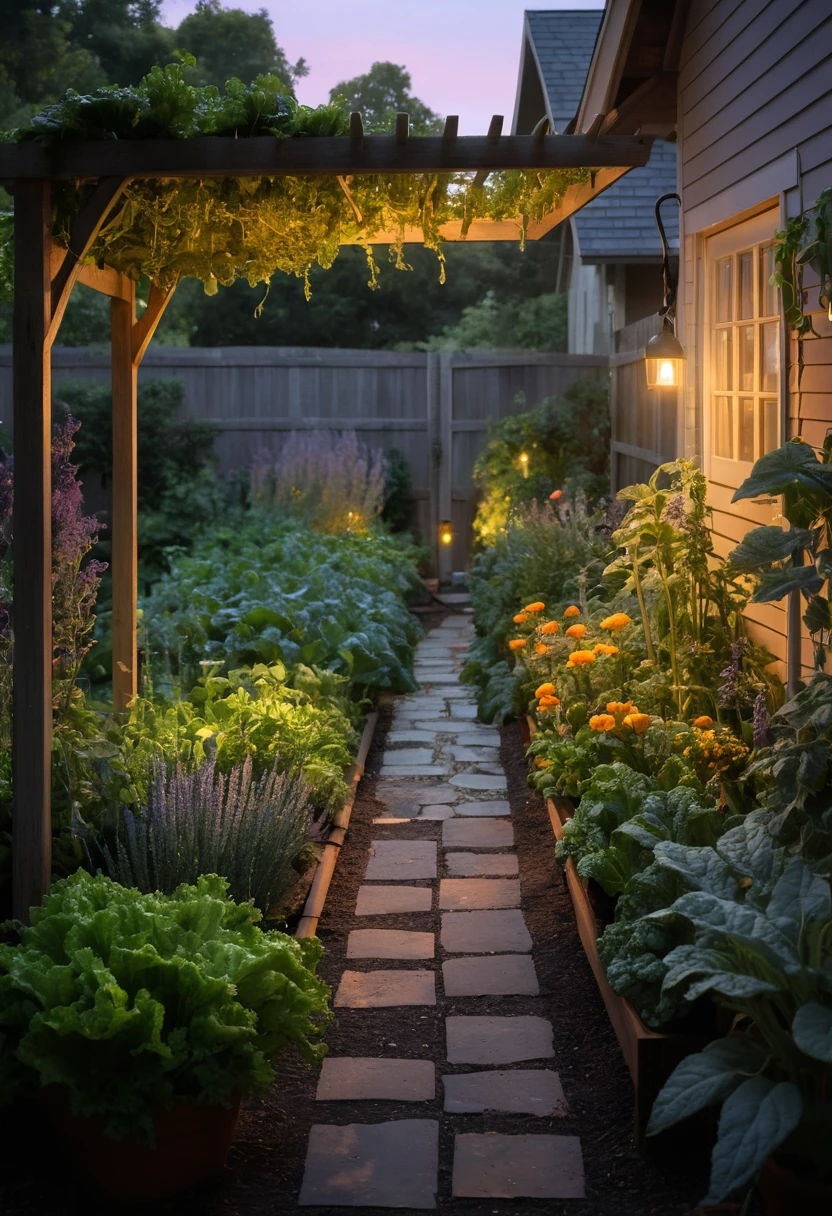
The most attractive 11+ Garden ideas don’t necessarily involve expensive equipment. They rely on thoughtful placement and restraint.
Look at the garden as a collection of shapes, textures, levels, and focal points. A tree can become a silhouette, a stone wall can become a textured backdrop, and a path can become a gentle visual line through the planting.
Hide the Fixtures Where Possible
When practical, place fixtures behind planting, beneath foliage, or within borders so the garden itself becomes the focus.
This creates a more sophisticated appearance because visitors notice the illuminated tree or flowers rather than a row of visible equipment.
Test Before Final Installation
If you’re installing adjustable fixtures, test their position at night before permanently securing them.
Move a spotlight a few inches and the entire effect can change. Testing first helps you avoid unnecessary glare and makes it easier to find the most flattering angle.
FAQs
1. What is the best type of lighting for a garden?
A combination of pathway, ambient, and accent lighting is usually more effective than one bright fixture because it provides safety, atmosphere, and visual depth.
2. What color light is best for outdoor garden lighting?
Warm white around 2700K–3000K is commonly suitable for patios, paths, and planting areas, while cooler light can be used selectively for effects such as moonlighting.
3. Are solar lights good for gardens?
Solar lights can be useful for decorative areas and simple installations, especially where wiring is difficult, but their performance depends on sunlight, battery capacity, and placement.
4. How do I light a garden path without making it look like a runway?
Use low-glare fixtures, vary their placement, and avoid perfectly symmetrical rows on both sides of the path. Lighting nearby planting can create a more natural appearance.
5. Should garden lights be left on all night?
Not necessarily. Timers, dimming, and motion sensors can reduce unnecessary nighttime lighting while keeping important areas functional when needed.
Conclusion
The best 11+ Garden ideas for outdoor lighting combine beauty with purpose. Path lights can guide visitors, tree uplights can create dramatic focal points, string lights can make patios feel welcoming, and carefully placed accent fixtures can reveal details that disappear after sunset. The key is not to illuminate everything but to decide which areas deserve attention.
Start small, use warm and comfortable illumination, control glare, and allow darker areas to remain part of the design. Think about how your garden looks from inside the house as well as from the patio, and adjust your lighting as plants and outdoor spaces change. With a thoughtful combination of safety, ambient, and accent lighting, even a simple garden can become a beautiful evening retreat.

