
Garden Study is a way to learn about plants, garden design, and the natural world through observation and practical experience. It can include growing flowers, planning a backyard, exploring native plants, or creating a space for learning.
Whether you are a beginner gardener, a nature lover, or a homeowner, studying how plants grow can help you make better gardening choices.
What Is Garden Study?
Garden Study means learning about gardens, plants, soil, landscape design, and the environment. It combines knowledge with practical activities, such as observing plant growth and understanding how sunlight, water, and soil affect plants.
A study garden can be a backyard, community garden, balcony, school garden, or indoor plant collection. It provides a place to learn about plant care, biodiversity, and sustainable gardening.
Gardeners can also keep a garden journal to record planting dates, watering routines, flowering times, and plant growth. These observations help them understand what works best in their gardens.
Garden Study Resources, Apps, Products, and Study Rooms
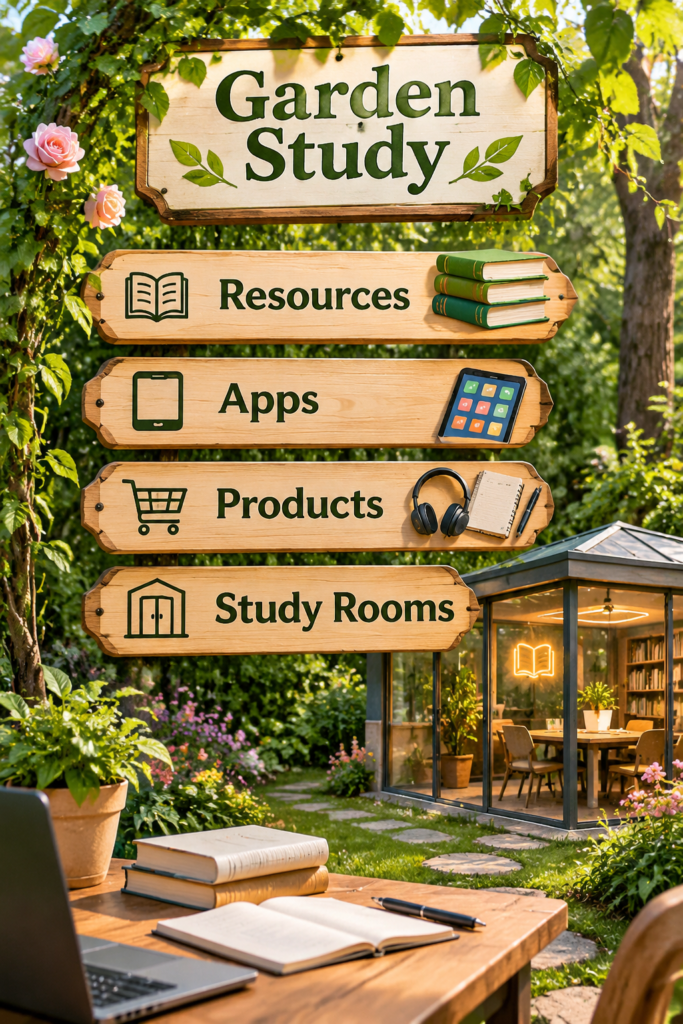
Garden learning can take place outdoors, online, or in an indoor study space. The right resources depend on your interests and gardening goals.
- Study garden game: Gardening games can teach basic concepts about plant care, garden planning, and growing flowers or vegetables.
- Study garden app: Gardening apps can help identify plants, organize watering schedules, and track plant growth. Always verify important plant identification results with reliable sources.
- Study garden products: Useful products include gardening gloves, seed trays, hand tools, plant labels, soil-testing kits, grow lights, and gardening journals.
- Garden Study room: A garden study room can provide a comfortable space for reading gardening books, planning landscapes, caring for houseplants, and organizing gardening supplies.
You do not need expensive equipment to start. A few suitable plants, basic tools, and a notebook can provide everything you need for a simple garden study project.
Read Also: Garden Flags: A Complete Guide to Styles, Seasons, and Outdoor Decorations
Native Gardens and Garden Design for USA Homeowners
Native gardens feature plants that naturally occur in a particular region. These gardens can provide food and shelter for local wildlife while supporting biodiversity and responsible water use.
Because the United States has many different climates, choosing plants suited to your local environment is important.
Why Choose Native Plants?
Native plants can support local insects, birds, and other wildlife. When planted in suitable conditions, some native species also need less supplemental watering after they become established.
The U.S. Environmental Protection Agency explains how green infrastructure, including planted areas, can help manage stormwater and provide environmental benefits.
How to Plan a Native Garden
Before choosing plants, consider your USDA Plant Hardiness Zone, sunlight, soil type, drainage, rainfall, and available space.
For regional planting advice, consult university extension services, botanical gardens, or the Lady Bird Johnson Wildflower Center.
Native Plant Associations and Australian Native Plants
A native plant association helps people learn about native flora, plant conservation, and responsible gardening. In the United States, state and regional native plant societies can provide local plant guides and educational resources.
Australian native plants include kangaroo paw, bottlebrush, and many eucalyptus species. However, their growing requirements vary, and not every Australian species will thrive in an American garden.
Before planting Australian natives, check climate suitability, local growing restrictions, and invasive-species guidance.
How to Start Your Own Garden Study
You can begin garden study without a large backyard or previous gardening experience. A few containers on a balcony or plants near a sunny window can provide a useful starting point.
- Choose your space: Select a backyard, patio, balcony, windowsill, or indoor growing area.
- Study the conditions: Observe sunlight, temperature, drainage, and available space.
- Select suitable plants: Consider local native plants, seasonal flowers, herbs, or beginner-friendly houseplants.
- Keep a garden journal: Record watering, growth, flowering, pests, and weather changes.
- Use reliable resources: Learn from botanical gardens, university extension services, and native plant organizations.
- Review your progress: Observe which plants thrive and adjust your care routine when needed.
Garden study is an ongoing learning process. Each season offers new opportunities to understand plant growth, soil conditions, and the effects of weather.
Frequently Asked Questions About Garden Study
What Is the Study Garden Game?
A study garden game is generally an interactive activity that introduces gardening concepts, plant care, or garden design. Features vary by game, so check its official listing before downloading or purchasing it.
Is There a Study Garden App?
Gardening apps can help with plant identification, watering reminders, garden planning, and plant-care tracking. The phrase Study Garden app does not identify one specific verified application, so check the developer and app features before installing it.
What Are Study Garden Products?
Study garden products are tools and materials used for gardening and learning about plants. Examples include seed trays, plant labels, gardening gloves, hand tools, grow lights, and soil-testing kits.
How Can I Create a Garden Study Room?
Choose a comfortable space with good lighting, a desk, storage, and access to gardening books or digital resources. Add houseplants, botanical drawings, and a garden journal to make the space useful for learning.
What Are Native Gardens?
Native gardens use plants that naturally occur in a particular region. They can provide wildlife habitat and help gardeners create landscapes suited to local environmental conditions.
What Is a Native Plant Association?
A native plant association is an organization or community that promotes knowledge, appreciation, and conservation of native plants. It may offer educational resources, planting guides, events, and information about regional species.
What Are Australian Native Plants?
Australian native plants are species that naturally occur in Australia. Examples include kangaroo paw and bottlebrush. Their suitability outside Australia depends on climate, soil, water needs, and local growing restrictions.
Conclusion
Garden Study offers a practical way to learn about gardening, plant care, garden design, and native ecosystems. Start with a small space, use reliable resources, and observe how plants respond to their environment. With time and careful planning, you can develop gardening skills and create a garden suited to your home and local wildlife.