
A patio doesn’t need a full landscaping crew to look designed. It needs the right containers, in the right places, planted with a little intention.
All you really need is a container, potting soil, and some plants and anyone can feel like a professional gardener with the right container garden ideas. The trick isn’t more pots. It’s knowing where a few well-placed ones make the biggest difference.
Save this guide now, because idea #3 is exactly what interior and landscape designers use to make a modest patio feel noticeably more expensive.
Here’s the thing: container gardening is a fun, flexible way to bring vibrant color, texture, and greenery to any space, from patios and porches to balconies and backyards. Let’s get into the specific ideas that make it work.
Get the Container Basics Right First
Before the design ideas, a few fundamentals matter more than style. Make sure your container is large enough to hold everything you want to plant 18 to 24 inches in diameter is a good size range to start with and confirm it has drainage holes in the bottom, drilling your own if needed.
You can plant directly into almost any container as long as it has drainage — drilling through wood, plastic, or fiberglass is relatively easy, while clay pots need an electric drill with a masonry bit, worked carefully to avoid cracking.
So what does this mean for you? Get the container right, and almost any plant combination on this list will thrive. Skip it, and even the prettiest arrangement will struggle.
[Image placement: A collection of empty terracotta and ceramic containers of varying sizes lined up before planting. Alt text: “Choosing the right container sizes for a patio garden.”]
1. Group Your Existing Pots Together
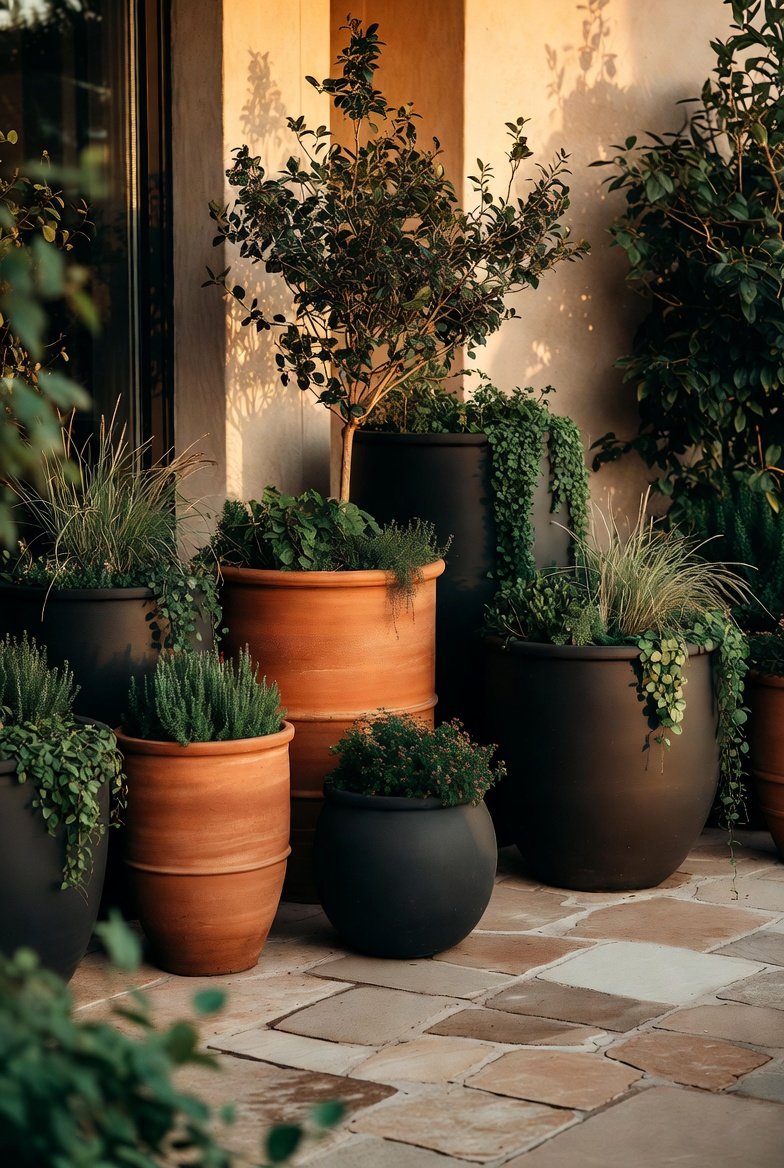
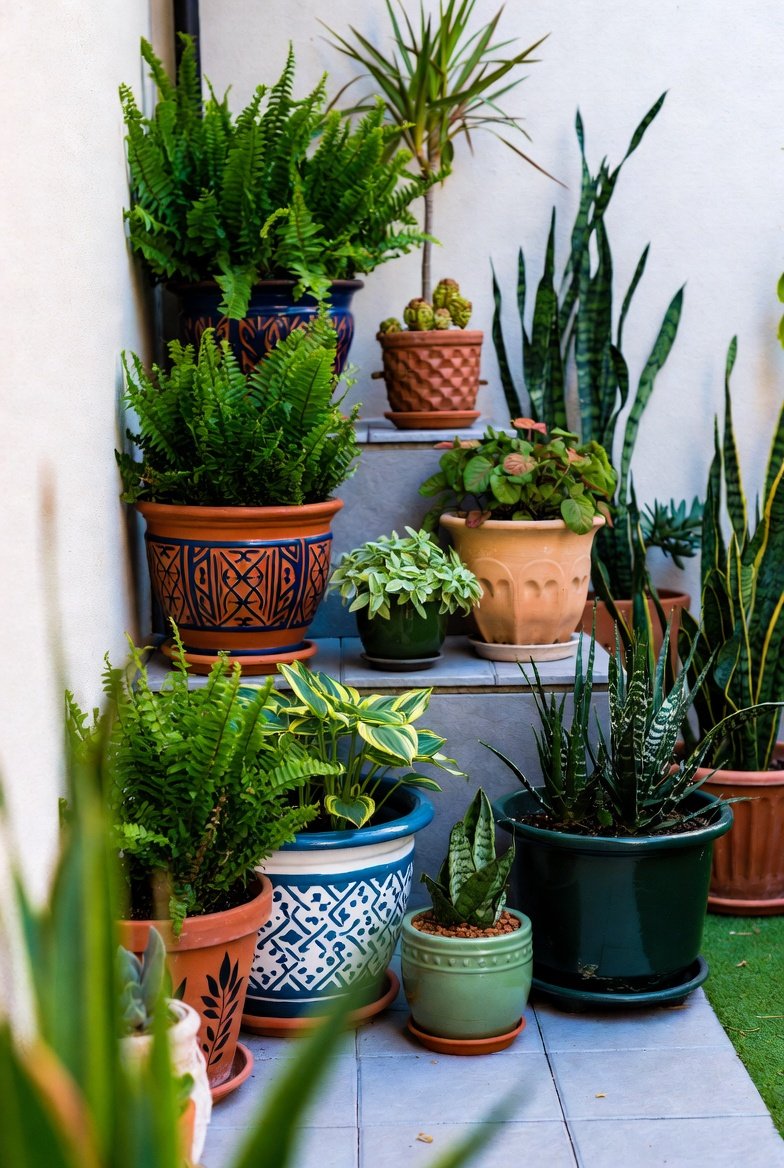
One of the easiest patio planter ideas is simply gathering up all the pots and containers you already have and arranging them together the combined greenery pulls everything into a cohesive look, giving even a small patio or courtyard a rich, collected feeling with plenty to look at.
Quick tip: You don’t need matching pots for this to work varied heights and materials often look more curated than a matching set.
2. Layer at Different Heights
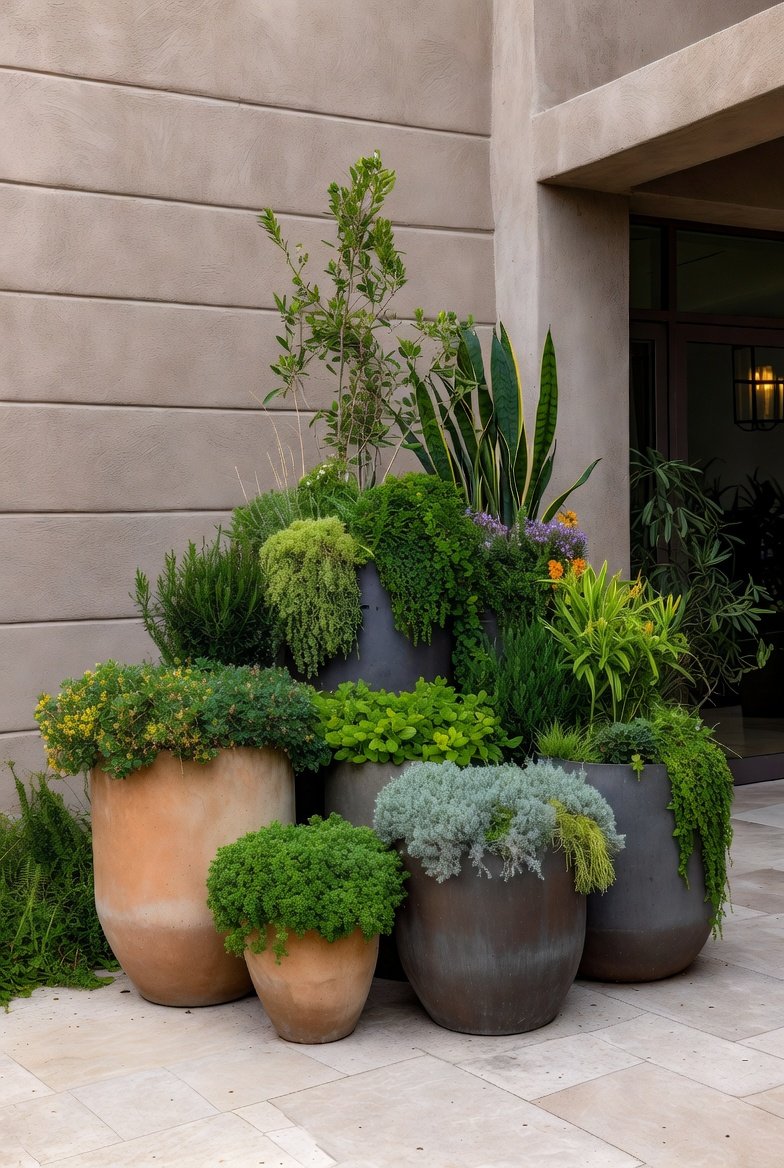
Creating a layered design at different heights is one of the key tricks designers use to give a patio a high-end feeling, alongside using textural planting to introduce contrast and thinking carefully about container placement within the overall scheme.
Combining tall, medium, and trailing plants even in a single grouping creates the same layered depth a professionally designed garden bed has, just scaled down to container size.
3. Add a Small Tree in a Statement Planter
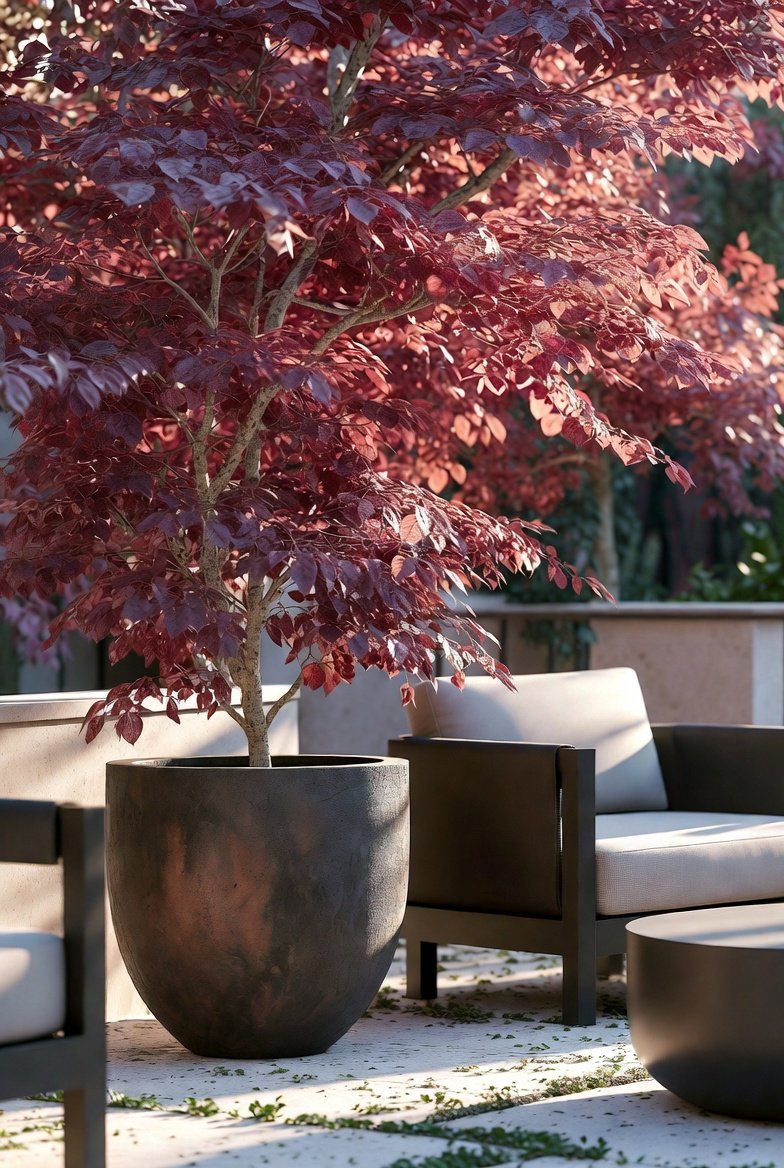
Handsome evergreen shrubs or small ornamental trees in large planters add real impact and are a smart way to make a small patio feel more expensive, instantly adding polish and finishing the space in a way that feels considered rather than accidental.
If you’re going for a Mediterranean look, a delicate olive tree in a large pot works beautifully contrary to what many people assume, small trees can genuinely thrive in patio containers as long as you choose the right species.
[Image placement: A large terracotta planter with a small olive tree on a sunny patio corner. Alt text: “Statement tree container idea for a patio garden.”]
4. Use the “Thrill, Fill, Spill” Formula
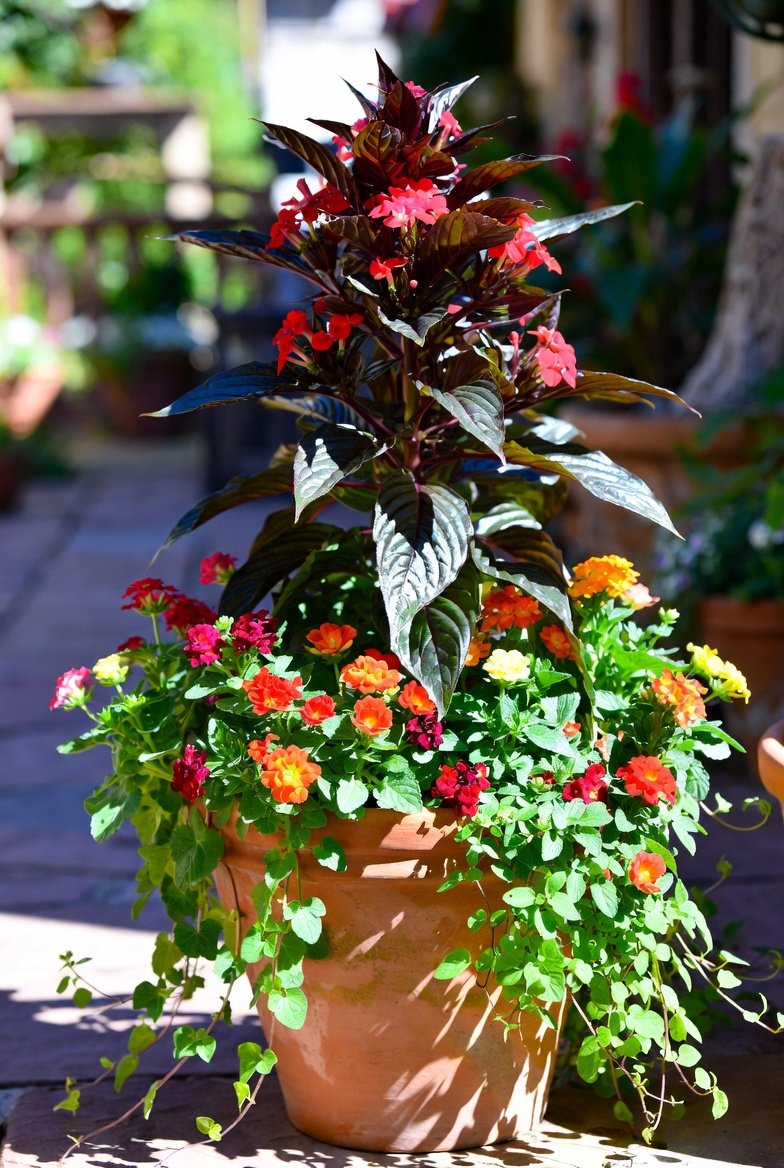
The classic container design approach thrill, fill, and spill pairs a tall, eye-catching “thrill” plant with mid-height “filler” plants and a trailing “spiller” plant cascading over the container’s edge. This single formula is behind most of the most photogenic single-pot arrangements you’ll see, and it works in almost any container size.
Read Also: 14+ DIY Garden Path Ideas Cheap Enough for Any Budget
5. Build a Living Privacy Screen
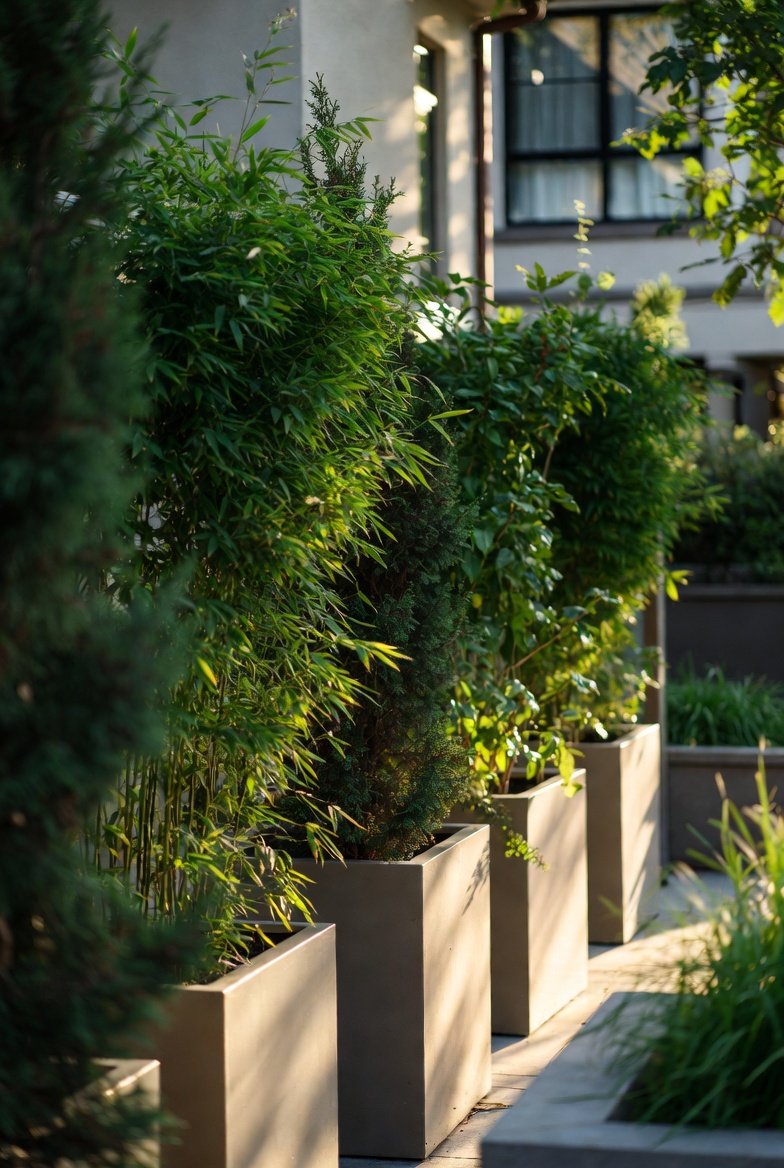
If you have a bare wall or a fence backing directly onto a neighbor’s yard, a wall of potted bamboo can add both privacy and shade without the permanence (or cost) of a built structure.
Save-worthy tip: Potted screening plants are also fully repositionable if your privacy needs change, the “wall” can move with you.
6. Add a Trellis to a Planter for Vertical Interest
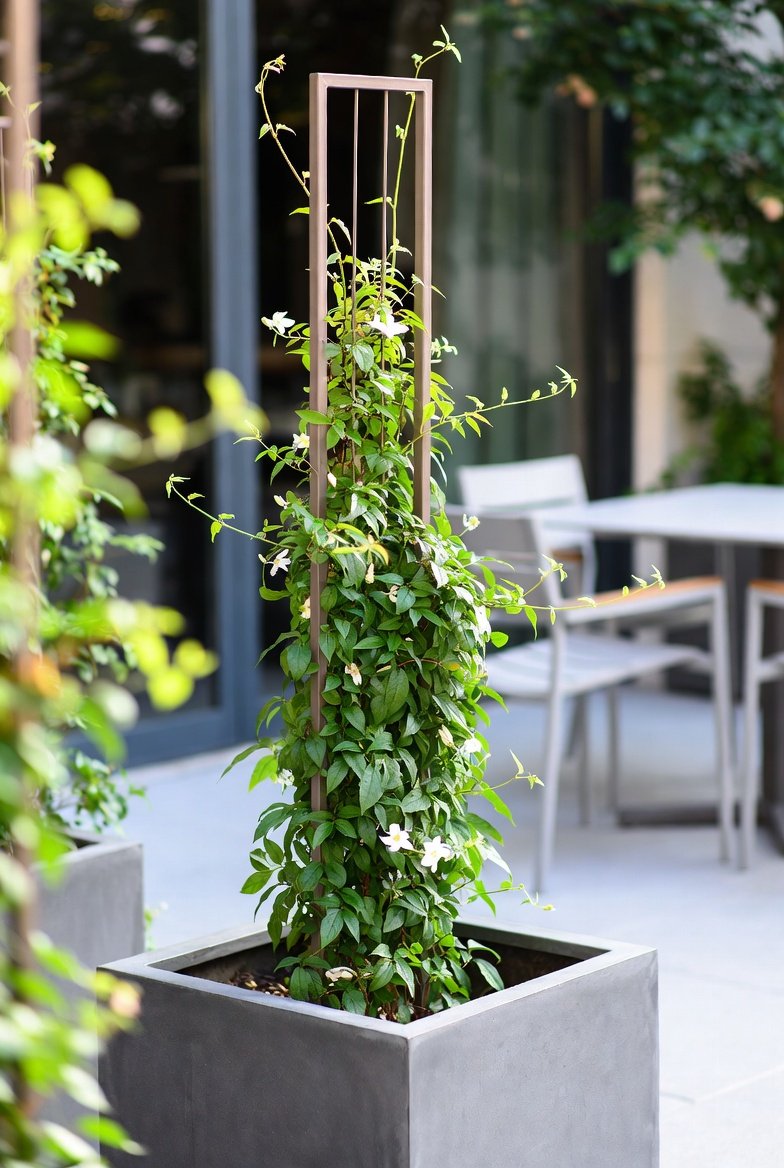
Attaching a wooden trellis to a planter and covering it with flowering vines adds both shade and beauty to a patio, effectively turning a single container into a vertical design feature rather than just a ground-level accent.
[Image placement: A large planter with a trellis attached, covered in climbing flowering vines on a patio corner. Alt text: “Trellis planter idea for vertical patio garden interest.”]
7. Solve Ugly Utility Spots With Container Groupings
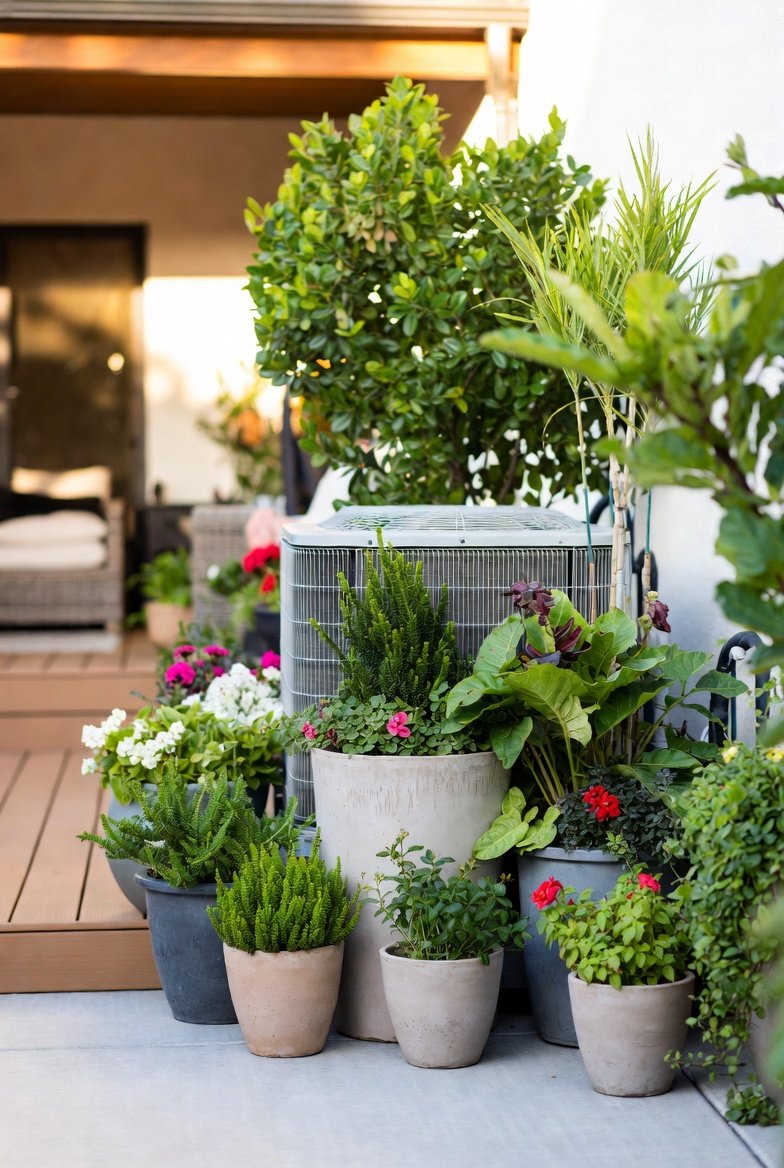
Containers can help cover up unsightly areas and solve real gardening challenges think an electric meter, utility panel, or awkward carport corner. Grouping a few well-chosen containers in front of the eyesore both hides it and adds a genuine design feature in its place.
8. Anchor a Gate or Entry With Matched Specimens
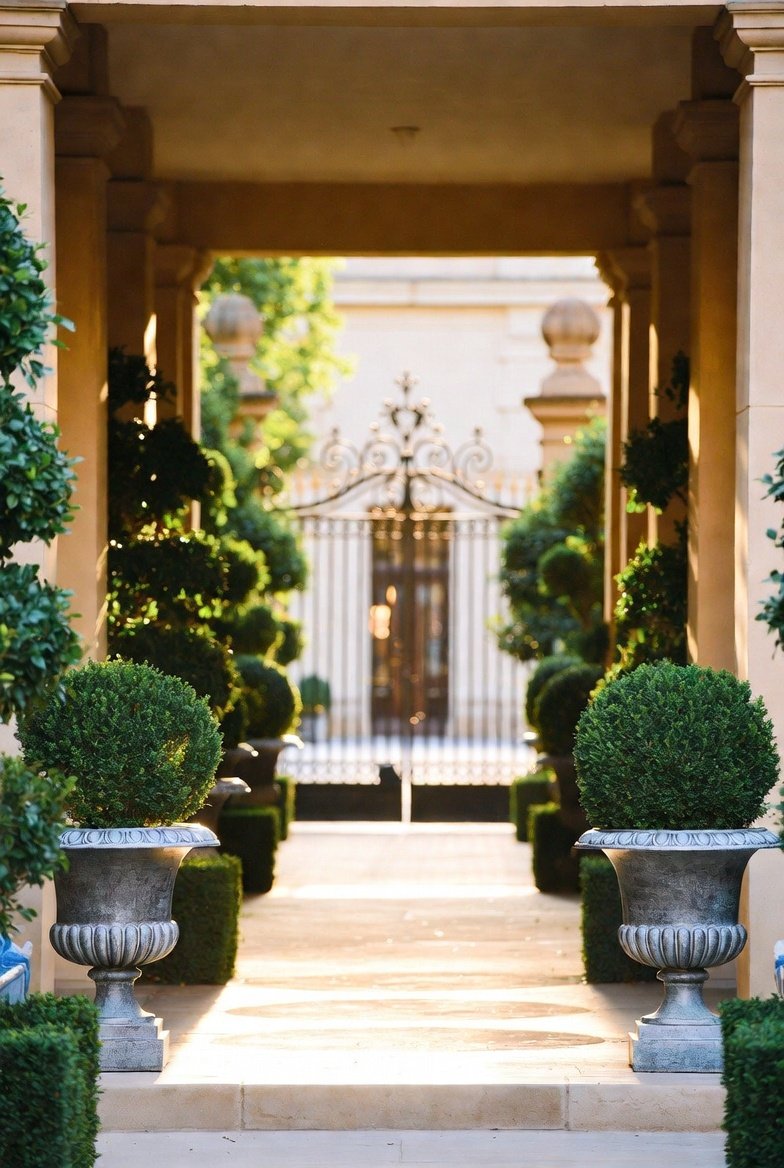
Placing containers with single specimen plants on either side of a narrow gate or entry point say, a tall variegated shrub on one side and a lower, rounded boxwood on the other creates variety in color and size that visually invites guests to continue exploring beyond the entrance.
9. Create a Simple Visual Divider
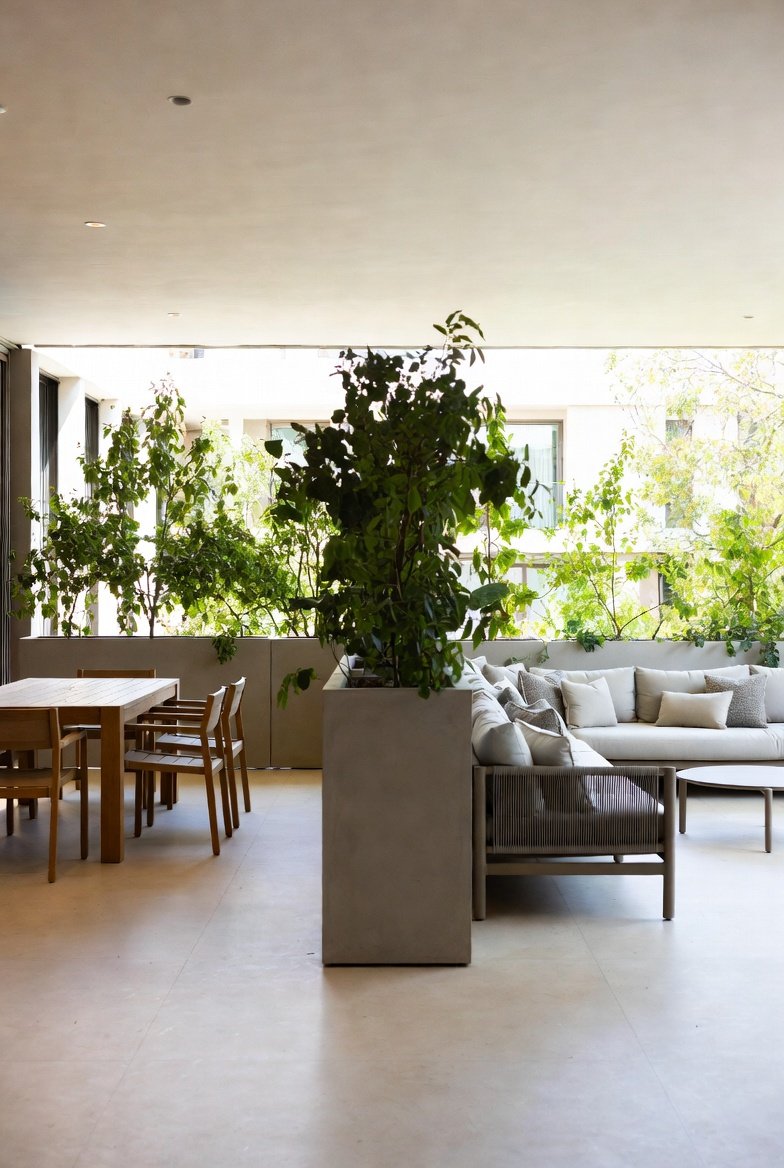
Oversized containers, like terracotta pots planted with small citrus or lemon trees, can create an effective visual barrier between a patio and an adjoining lawn or neighboring space, without the cost or permanence of a fence.
[Image placement: Large terracotta containers with citrus trees forming a soft divider along a patio edge. Alt text: “Citrus tree container divider idea for a patio garden.”]
10. Use a Repurposed Vessel as a Planter
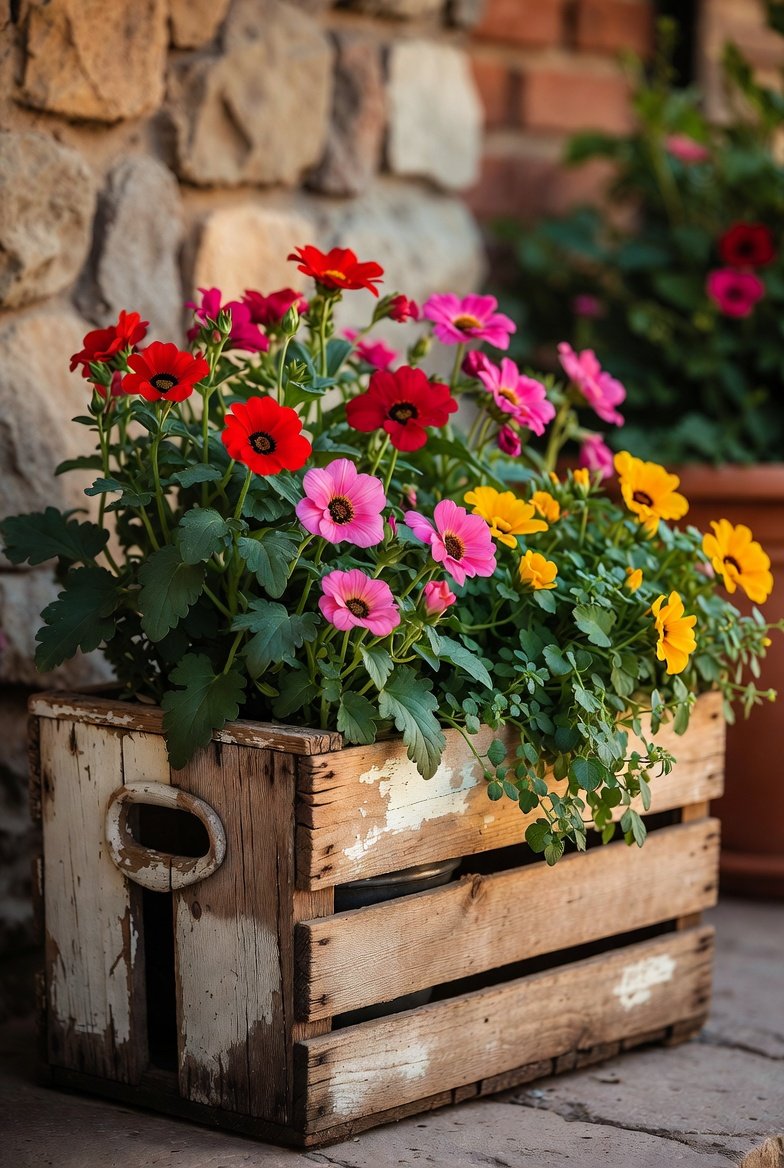
Found objects, like an old ceramic bathtub, can make genuinely interesting planters with minimal construction simply fill it with soil and plants, and the existing drain removes excess water. Alternatively, fill it with river rock or gravel and group smaller potted plants inside for an arrangement that’s easy to rotate seasonally.
11. Turn a Large Planter Into Outdoor Furniture
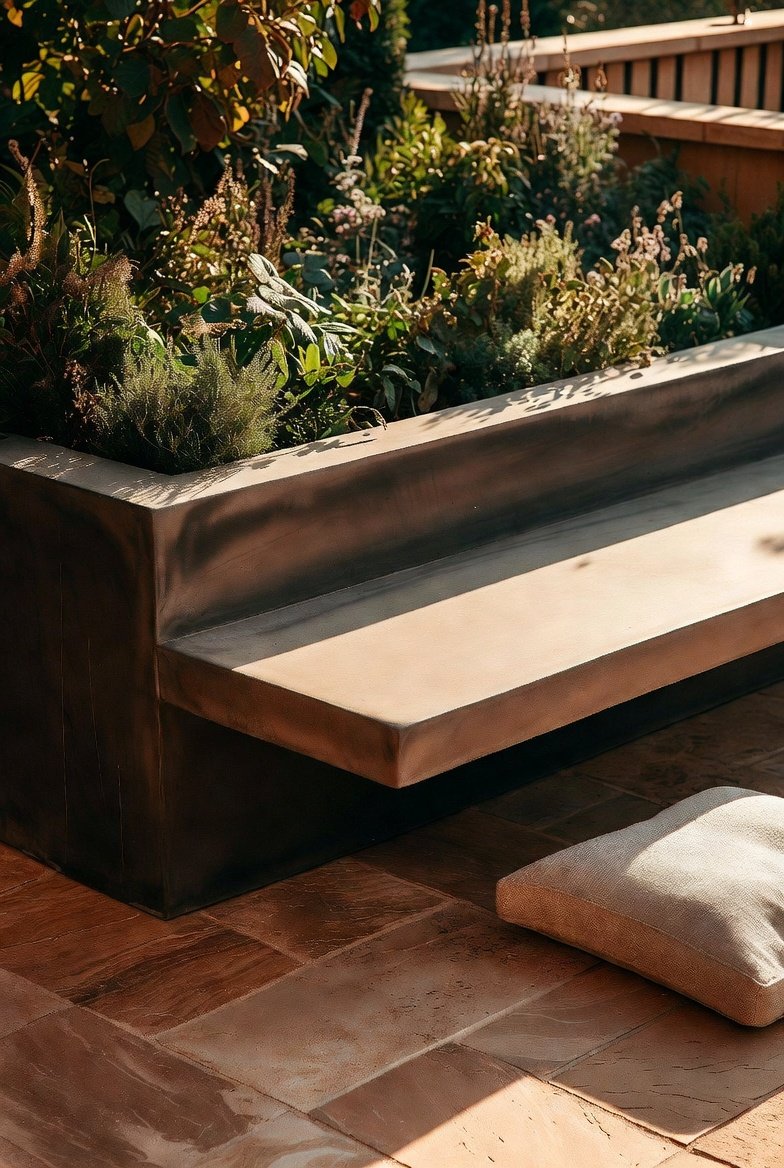
A large, sturdy planter positioned near your patio furniture can double as temporary living garden furniture plant it with hardy, drought-tolerant succulents, leaving 4-6 inches of space between the tallest plant and the container’s rim, then top it with a tempered glass tabletop for a genuinely clever dual-purpose piece.
12. Add Flowers Directly to Your Outdoor Dining Table
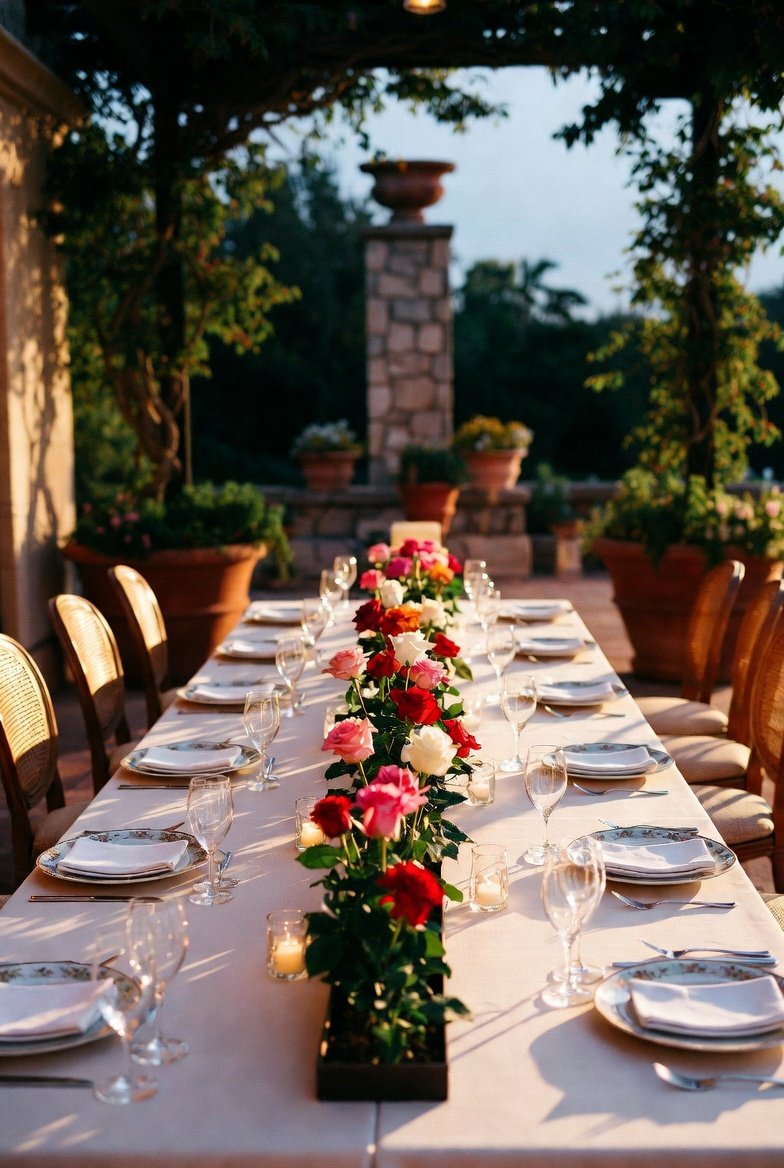
Just as a vase of flowers can transform a dining table indoors, elegant tin boxes or low, wide-mouthed pots do the same for an outdoor table a small, easy detail that makes an outdoor meal feel considerably more special.
[Image placement: A low, wide flower arrangement in a shallow tin planter centered on an outdoor dining table. Alt text: “Outdoor dining table container garden idea.”]
13. Solve Tricky Growing Spots With Container Placement
Containers placed beneath large trees, hooked up to simple irrigation, can be a genuinely effective solution for growing plants like Japanese maples in spots where in-ground planting around established roots isn’t practical. This idea is especially useful for patios shaded by mature trees, where ground-level planting options are otherwise limited.
14. Rotate Plantings With the Seasons
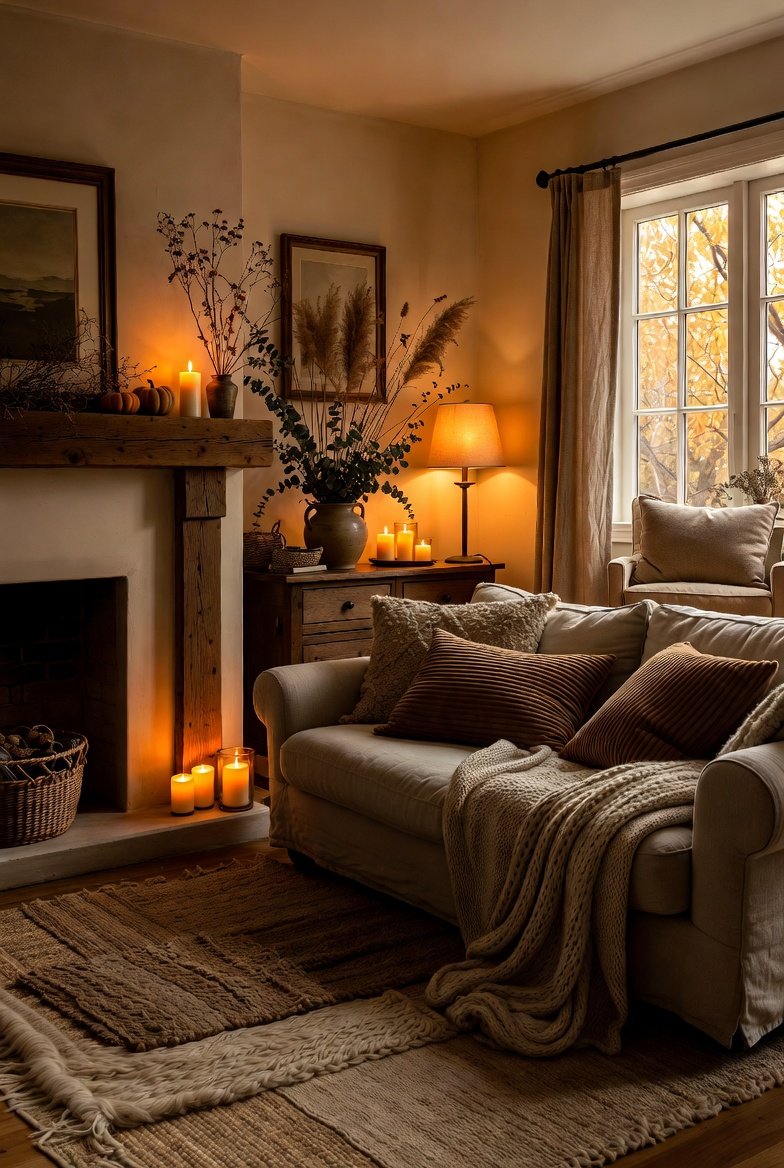
Changing your container plantings with the seasons keeps a patio garden feeling fresh year-round rather than static. A simple container can transition from a cheerful summer display to a festive fall or holiday look with just a swap of plants, without needing to replace the container itself.
Quick recap of the fastest wins if you only try three: group your existing pots together, apply the thrill-fill-spill formula to one statement container, and add a single small tree in a large planter. Those three alone will noticeably elevate a plain patio.
Frequently Asked Questions
What size container is best for patio gardening?
An 18 to 24 inch diameter is a good general starting size, though the ideal size depends on how many plants you want to combine and how large they’ll grow.
What plants work best in patio containers?
Annuals, herbs, dwarf shrubs, succulents, and ornamental grasses all perform well in containers, as long as they suit your patio’s specific light conditions and won’t quickly outgrow their pot.
How do I make a small patio look more expensive with containers?
Layering plants at different heights, using textural contrast, and thoughtful container placement are the key techniques designers rely on to give a small patio a high-end, intentional feel.
Do all patio containers need drainage holes?
Yes containers should have drainage holes in the bottom, which can be drilled if a container doesn’t already have them.
Final Thoughts
A patio container garden doesn’t need dozens of pots to feel complete it needs a handful of well-chosen ones, sized correctly, layered thoughtfully, and placed with purpose. Start with one statement container or a simple grouping of pots you already own, and build outward from there as your patio (and your plant collection) grows.

