
Autumn gives an outdoor space a completely different personality. Summer’s bright flowers begin to fade, leaves change color, evenings become cooler, and the garden naturally shifts toward warmer, richer tones. 13+Seasonal Garden Guides can help gardeners make that transition attractive by combining seasonal plants, pumpkins, natural textures, outdoor lighting, comfortable furniture, and practical decorative details.
Have you ever looked at your garden after summer and thought it suddenly felt empty? You may still have beautiful trees, shrubs, paths, and furniture, but the colorful summer display is disappearing. The good news is that you do not need a complete landscape makeover. A few well-placed autumn accents can turn a tired-looking yard, patio, porch, or garden corner into a welcoming seasonal retreat.
The best 13+Seasonal Garden Guides approach is to work with what your garden already offers. This article covers practical fall garden decorate ideas outdoor spaces can use, including pumpkins and gourds, autumn containers, natural materials, warm lighting, cozy seating, pathways, small gardens, wildlife-friendly details, and budget-conscious decorating. The aim is to create a beautiful space that remains functional and easy to maintain.
Start With a Thoughtful Autumn Color Scheme
Current fall garden inspiration commonly combines seasonal plants, pumpkins, planters, natural textures, and warm colors instead of treating decorations as isolated objects. Garden Design recommends rich fall-colored containers and seasonal plants such as asters, mums, grasses, ornamental kale, and peppers for outdoor displays. The principle behind 13+Seasonal Garden Guides is simple: choose a few colors and repeat them throughout the space rather than using every autumn shade at once.
Before purchasing anything, walk around your garden and identify the colors already present. The leaves of trees, existing shrubs, fences, brickwork, stone paths, and outdoor furniture can all become part of the palette. If the landscape already has plenty of red and orange, cream pumpkins and dark containers may provide better contrast than adding more bright colors.
A limited palette also makes seasonal decorating easier to manage. Choose two or three main colors and one neutral or natural material, then repeat those elements around the property. For example, rust-colored flowers, cream pumpkins, and wooden accents can appear at the entrance, patio, and garden path without making each area look identical.
Create a Layered Pumpkin and Gourd Display
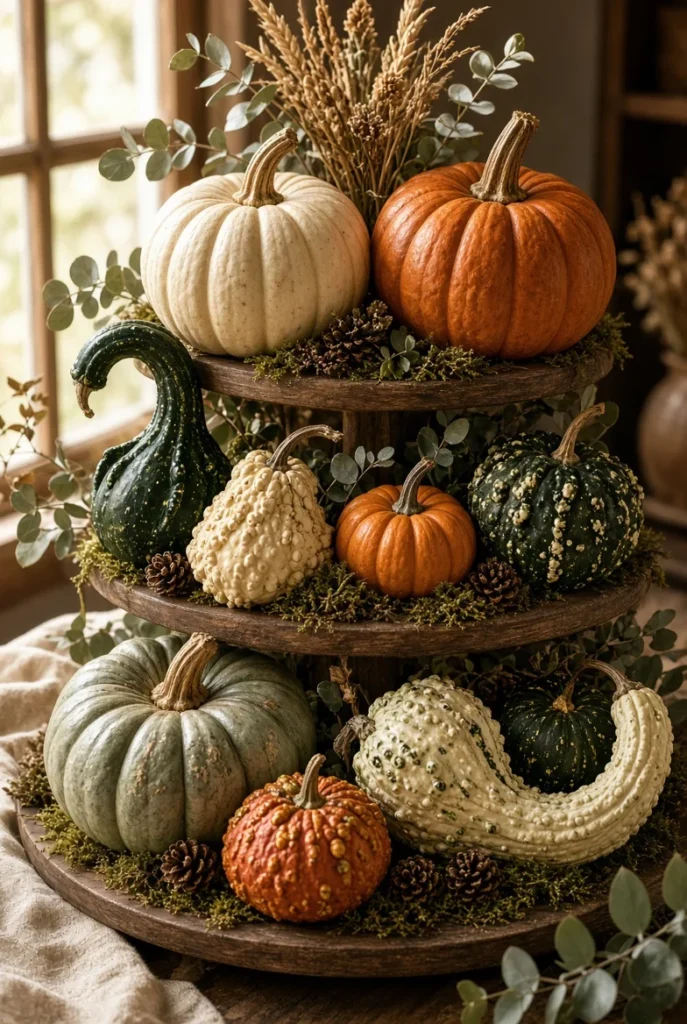
Pumpkins and gourds are among the easiest ways to introduce an immediate autumn feeling outdoors. Instead of placing one pumpkin by itself, create a small composition with different shapes and sizes. A few large pumpkins can provide a foundation while smaller gourds fill spaces between containers, benches, steps, or garden features.
Recent outdoor decorating ideas emphasize grouping pumpkins and gourds in varied sizes and using different heights to make displays feel natural rather than overly arranged. This is one of the most accessible 13+Seasonal Garden Guides ideas because the display can be changed or removed without altering the garden itself.
Use odd-numbered groupings when possible, such as three, five, or seven pieces. Mix smooth pumpkins with unusual gourds to add texture, and place larger items toward the back of the arrangement. If pumpkins are sitting directly on damp ground, placing them on a paver, wooden surface, or other suitable base can help reduce contact with wet soil.
You can also use pumpkins as accents rather than making them the main attraction. Tuck a few beneath shrubs, beside large planters, near a garden bench, or at the corner of a patio. This allows the landscape to remain the star while the seasonal decorations quietly reinforce the autumn theme.
Refresh Outdoor Containers With Fall Plants
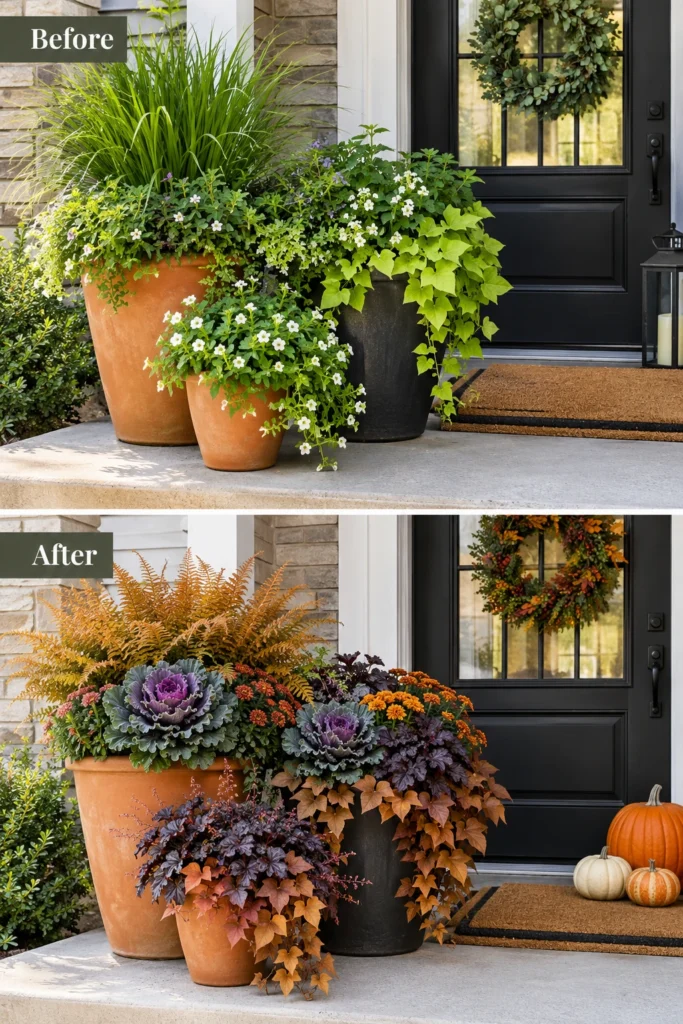
Container gardening is one of the fastest ways to update an outdoor area for autumn. Summer containers can often be refreshed by replacing tired plants and adding cool-season varieties that provide new color and texture. Mums, pansies, ornamental kale, asters, grasses, and other climate-appropriate plants can work beautifully in seasonal combinations.
A useful 13+Seasonal Garden Guides strategy is to think about the structure of a container before filling it. Combine a taller plant or grass with a rounded flowering plant and a trailing or spreading element when appropriate. Then add a small pumpkin, branch, or natural accent to connect the container with the rest of the autumn decoration.
Do not feel that every pot needs to be replanted. A healthy evergreen, ornamental grass, or perennial can remain in place while you add seasonal accents around it. This approach saves money and helps maintain structure after temporary flowers finish blooming.
Group containers rather than scattering individual pots randomly. Three containers with different heights can create more visual impact than several small pots spread across a large patio. Repeat the same plant, pot color, or decorative accent to make the arrangement look cohesive.
Turn the Front Entrance Into a Seasonal Focal Point
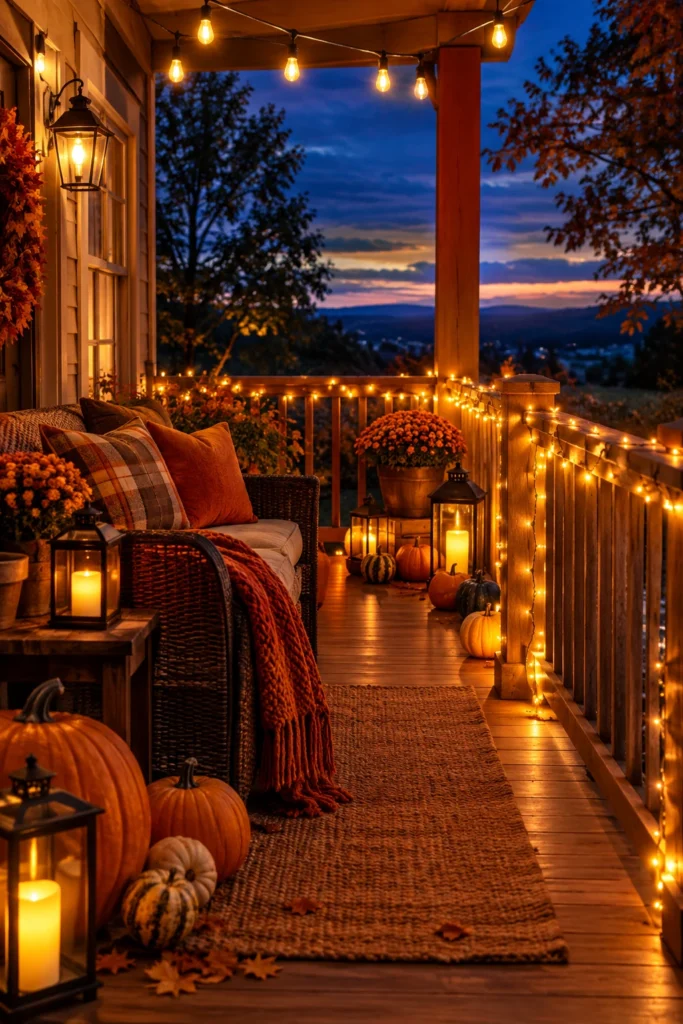
Your front entrance is an ideal place for autumn decoration because it creates an immediate visual connection between the home and garden. You can use planters, pumpkins, a wreath, lanterns, seasonal foliage, or a simple arrangement of natural branches without making the entrance feel crowded.
Many current fall decorating guides recommend combining planters, pumpkins, mums, wreaths, and lighting around entrances to create layered curb appeal. With 13+Seasonal Garden Guides, the key is to build upward and outward rather than placing everything on the same level.
Try using two substantial containers on either side of the door. Add seasonal flowers or foliage for height, then place several smaller pumpkins around the bases. A wreath or simple autumn arrangement can provide a central decorative element without requiring many additional accessories.
Keep steps and walkways clear. Decorations should never make it difficult for visitors to enter the home, carry groceries, push a stroller, or move garden equipment. Stability also matters, so choose containers and decorations that can tolerate normal wind and changing weather.
Add Warm Lighting for Autumn Evenings
As daylight becomes shorter, outdoor lighting becomes an important part of an autumn garden. A few warm lights can make a patio, garden path, porch, or seating area feel inviting after sunset. String lights, lanterns, suitable solar fixtures, and outdoor-rated LED lighting can all contribute to a comfortable atmosphere.
Current autumn garden design guidance frequently recommends warm lighting around seating, pathways, pergolas, patios, and dining areas because it combines atmosphere with practical visibility. This makes lighting a particularly useful part of 13+Seasonal Garden Guides planning.
Avoid lighting every corner equally. Instead, concentrate illumination where people sit, walk, gather, or need additional visibility. A few carefully positioned fixtures can create depth while allowing darker areas of the garden to remain visually interesting.
For safety, use products designed for outdoor conditions and follow their installation instructions. Keep cables organized and away from walking routes, and make sure decorative lighting does not interfere with irrigation, mowing, or other routine garden work.
Build a Comfortable Autumn Seating Area
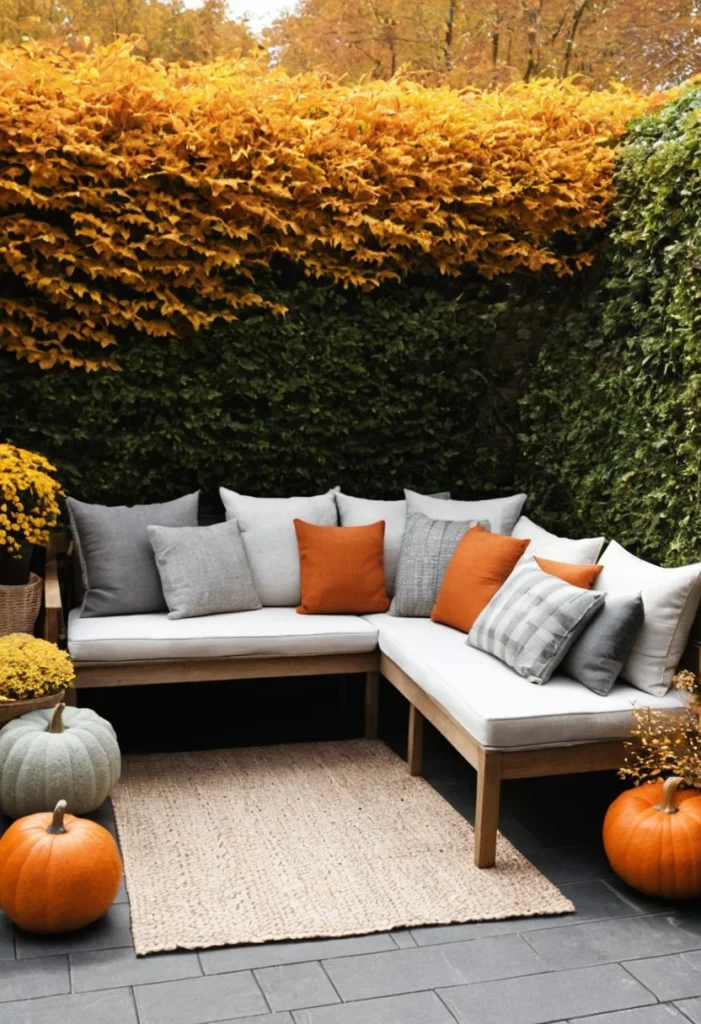
Cooler temperatures do not mean the garden has to become unused. Autumn can be an excellent season for morning coffee, outdoor conversations, reading, or evening gatherings. A comfortable seating area gives your seasonal decorations a practical purpose.
The strongest 13+Seasonal Garden Guides ideas connect decoration with everyday use. Instead of decorating an empty corner simply because there is space available, create a place where people actually want to sit. Outdoor cushions, weather-appropriate throws, a small table, and soft lighting can transform an ordinary patio into a cozy retreat.
Choose a location with some protection from wind if possible. A wall, pergola, hedge, or covered patio can make an outdoor seating area more comfortable as temperatures fall. Consider the direction of afternoon sunlight as well, especially if you plan to spend time outside during cooler parts of the day.
Use texture to create warmth without overloading the space. Woven baskets, wooden furniture, outdoor fabrics, natural planters, and autumn-colored cushions can provide visual interest. Store delicate textiles when bad weather is expected so they remain in good condition.
Decorate Garden Paths Without Creating Hazards
Garden paths can become attractive seasonal features when decorations are placed carefully. Pumpkins, lanterns, small planters, and natural accents can guide the eye toward a gate, seating area, patio, or focal plant.
For 13+Seasonal Garden Guides, the most important rule is to decorate around the path rather than inside the walking area. Current fall yard decorating advice similarly recommends keeping pumpkins and lanterns outside the main footpath so the route remains practical.
Place larger decorations at turns or wider sections of the path. Smaller accents can be repeated along the edges if sufficient space remains for comfortable movement. Uneven ground, wet leaves, and poor visibility already make autumn paths more challenging, so decoration should never add another obstacle.
Low lighting can help define the route after dark. Choose stable fixtures that will not easily tip over, and inspect the pathway regularly as leaves accumulate. A beautiful path is only successful when people can use it safely.
Bring Natural Materials Into the Garden
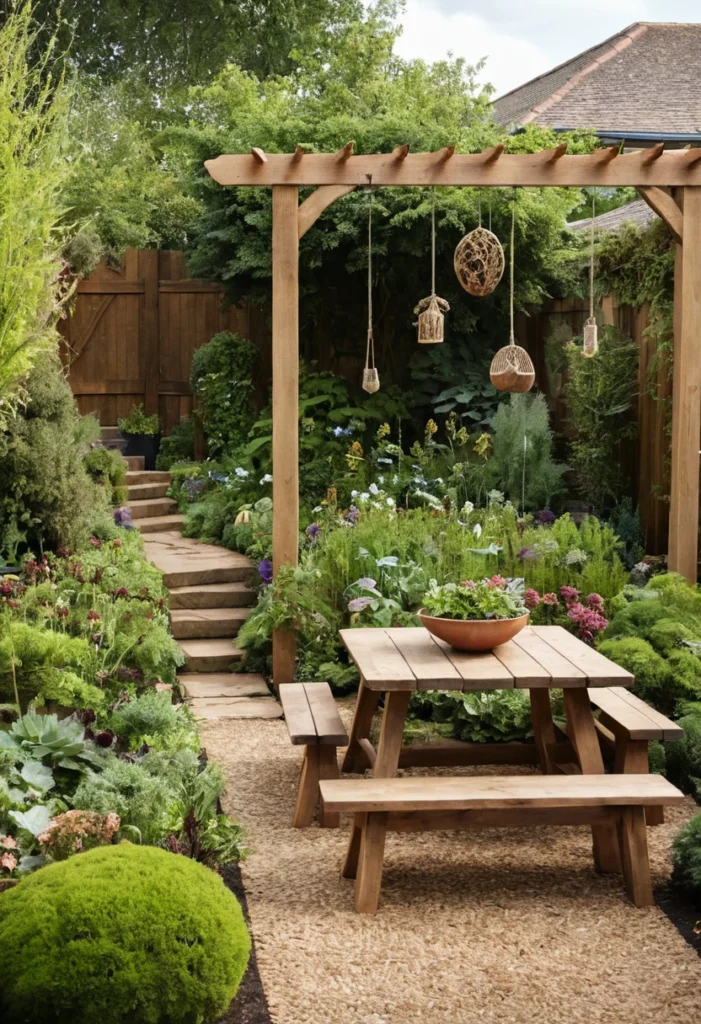
Autumn naturally supplies some of the most attractive decorating materials. Fallen leaves, branches, seed heads, grasses, pinecones, and other appropriate natural elements can introduce texture without making the garden look artificial.
Natural materials are central to many 13+Seasonal Garden Guides approaches because they connect decoration with the landscape itself. Recent garden inspiration highlights branches, seed pods, pinecones, foliage, and ornamental grasses as inexpensive ways to add seasonal character.
Try placing sturdy branches in a large outdoor container or combining dried grasses with seasonal foliage. Pinecones can be arranged around planters or incorporated into a natural centerpiece. If you collect materials from outdoors, use only suitable fallen material and avoid unknown berries or plants where children and pets may have access.
Do not remove every fallen leaf simply because it looks untidy. Some leaf material can contribute to the natural character of an autumn garden, although diseased foliage and areas that need to remain clear should still be managed appropriately.
Create a Rustic Harvest Corner
A rustic harvest display works particularly well in larger gardens, country-style yards, patios, and porches. Wooden crates, baskets, pumpkins, gourds, dried plants, and seasonal flowers can be combined into a relaxed arrangement.
This style fits naturally with 13+Seasonal Garden Guides because it uses simple materials and emphasizes texture rather than expensive decorative objects. Current fall decorating inspiration also frequently combines harvest materials, pumpkins, flowers, lanterns, and rustic containers.
Choose one location as your harvest corner rather than spreading rustic elements throughout the entire property. A garden entrance, unused patio corner, or area beside a large planter can work well.
Create several levels using sturdy crates or containers, but make sure everything is stable. Keep heavier items low and avoid stacking decorations where they could fall. The goal is a relaxed harvest appearance, not a cluttered display.
Use Vertical Space in a Small Garden
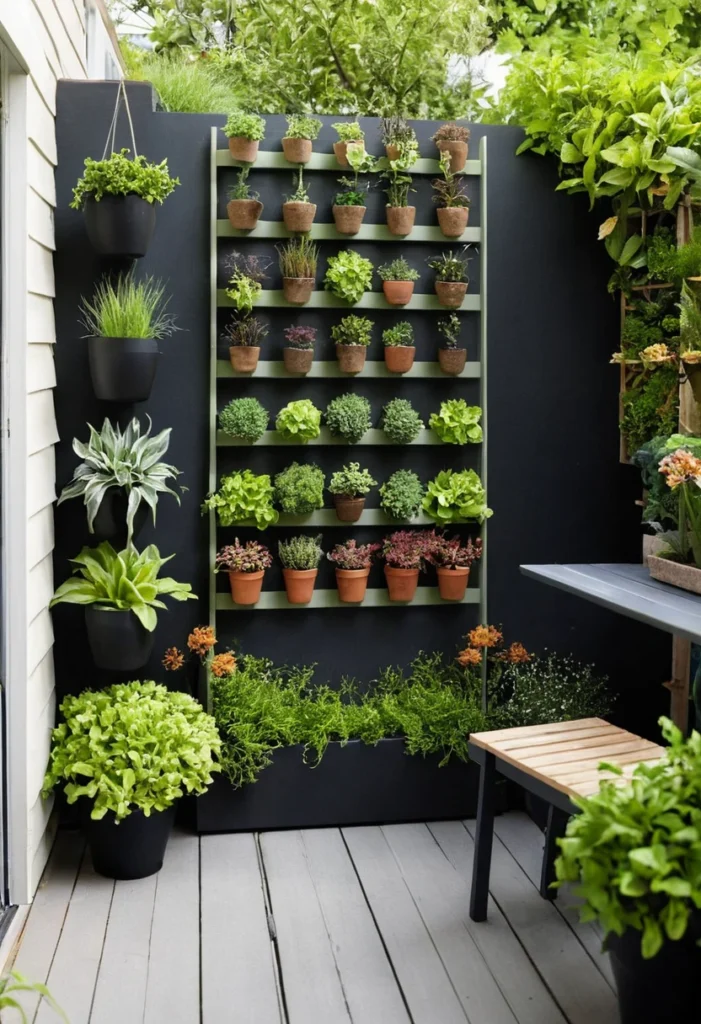
Small gardens, balconies, narrow patios, and compact yards can still look impressive in autumn. The secret is to decorate upward instead of using valuable floor space. Walls, fences, gates, railings, trellises, and doors can all provide opportunities for seasonal styling.
A vertical approach is one of the most practical 13+Seasonal Garden Guides techniques for small spaces. A wreath, hanging basket, wall-mounted planter, or carefully secured seasonal arrangement can provide strong visual impact without reducing usable floor area.
Use one or two larger vertical features instead of filling every wall. A simple wreath on a garden gate can create a seasonal focal point, while hanging containers can provide living color at eye level.
Remember that hanging objects must be securely attached and suitable for outdoor conditions. Avoid placing heavy decorations where they could fall onto people or damage plants below.
Read Also:12+ Seasonal Garden Guides: Summer Garden Shade Tips for Heat Protection
Add a Modern Minimalist Autumn Look
Not everyone enjoys rustic pumpkins, hay bales, and heavily decorated porches. A minimalist autumn garden can be just as seasonal while using fewer elements. Choose neutral pumpkins, dark planters, warm lighting, simple furniture, and a small amount of autumn-colored foliage.
Minimal styling is particularly effective when following 13+Seasonal Garden Guides principles because repetition and restraint allow each item to have more visual impact. Recent fall decor inspiration also recommends limited palettes such as cream, tan, black, olive, and rust for a cleaner outdoor appearance.
Start with a neutral base and introduce one autumn color as an accent. For example, cream pumpkins can be combined with black planters and olive foliage, with a small amount of rust-colored flowers providing contrast.
Keep surfaces relatively clear. One well-designed planter and two carefully positioned pumpkins can look more sophisticated than a large collection of unrelated decorations.
Make Your Garden Wildlife-Friendly
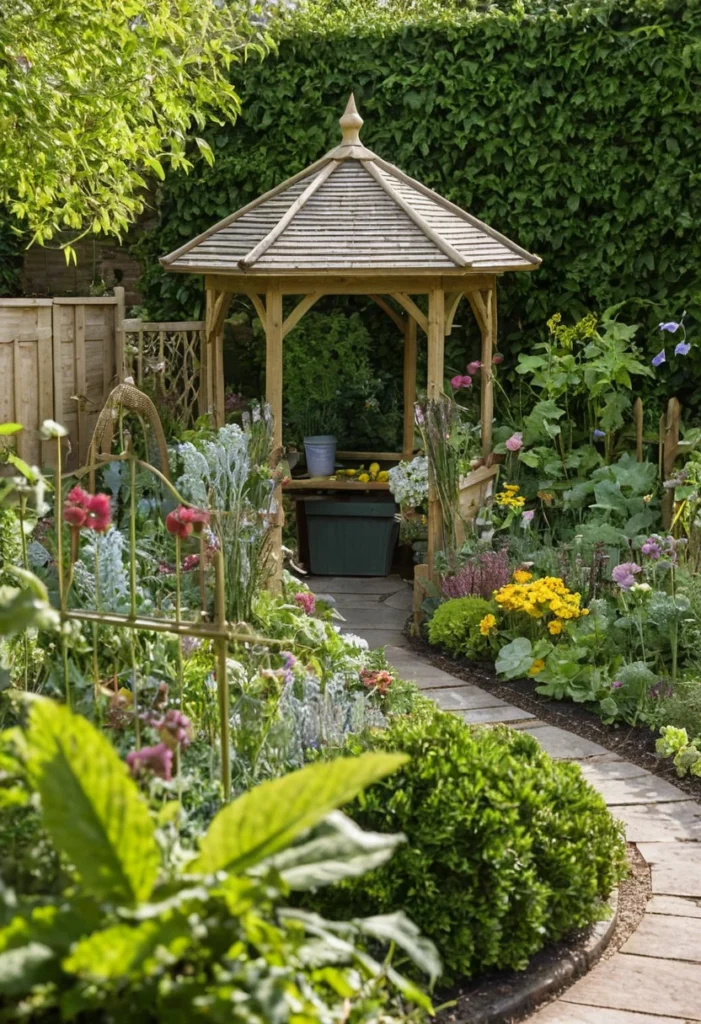
Autumn decoration does not have to be purely visual. You can design your garden in a way that remains useful to birds, insects, and other wildlife. Certain seed heads, shrubs, berries, and natural plant structures can provide seasonal habitat and food.
Wildlife-friendly autumn gardening is a valuable addition to 13+Seasonal Garden Guides because it combines beauty with ecological function. Autumn garden inspiration often recommends maintaining bird-friendly features and leaving suitable plant material rather than removing everything immediately.
Consider leaving selected seed heads standing through autumn and winter when they are healthy and appropriate for your garden. They can provide texture while potentially offering food or shelter.
If you use bird feeders or birdbaths, maintain them responsibly. Keep water clean, remove spoiled food, and position wildlife features where they can be monitored easily.
Choose Decorations That Can Handle Outdoor Weather
Autumn weather can change quickly. Rain, wind, moisture, falling leaves, and temperature changes can damage decorations that were designed primarily for indoor use. Choosing durable materials helps your seasonal display remain attractive for longer.
A practical 13+Seasonal Garden Guides approach is to consider weather resistance before buying anything. Outdoor-rated lighting, stable containers, weather-resistant fabrics, treated wood, stone, metal, and durable decorative materials are generally better suited to exterior conditions.
Lightweight objects should be secured, especially in exposed gardens. Pumpkins and planters may need repositioning after strong wind, while fabric decorations can become heavy when wet.
Inspect decorations regularly. Replace cracked containers, repair loose fixtures, and remove anything that has become unstable. Seasonal beauty should never compromise safety.
Use Furniture as Part of the Decoration
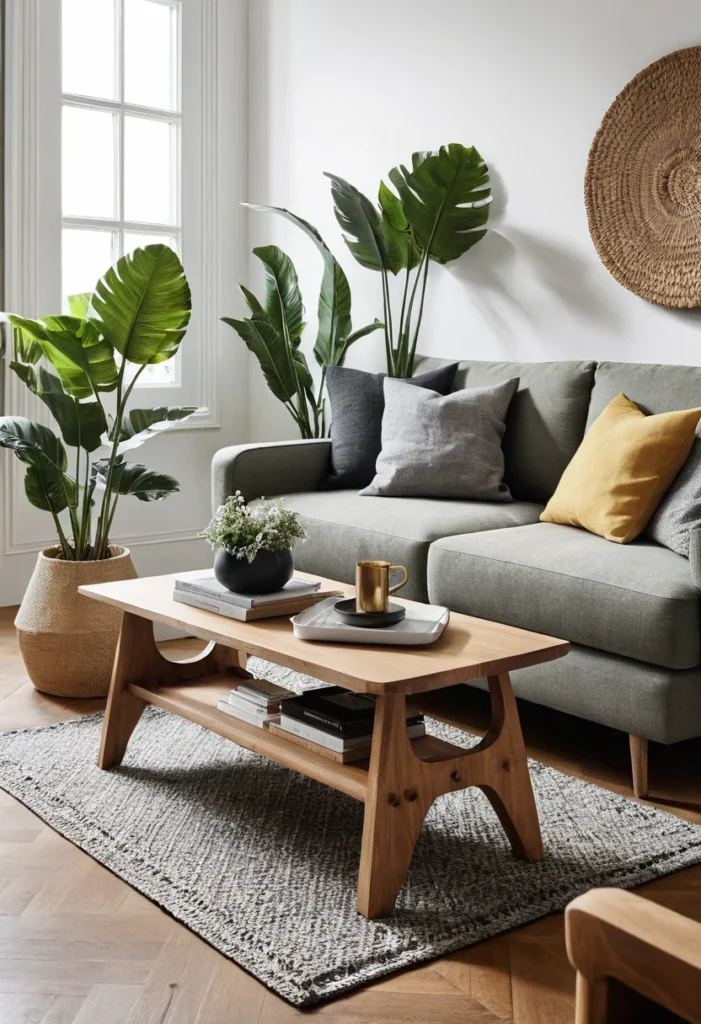
Outdoor furniture can become a major part of your autumn design instead of simply serving as seating. A wooden bench, dining table, lounge chair, or small bistro set can provide structure around which seasonal decorations are arranged.
This is another useful 13+Seasonal Garden Guides idea because it allows decoration to remain functional. Rather than filling a garden with decorative objects, combine existing furniture with a few seasonal elements.
Place a small planter beside a bench, add an outdoor cushion in a warm autumn shade, and use a lantern nearby. A simple arrangement can create a clear focal point without overwhelming the space.
If your furniture is lightweight, check that it remains stable during windy conditions. Store cushions and delicate accessories when severe weather is expected.
Decorate Around a Garden Gate or Fence
Gates and fences are often overlooked when decorating outdoor spaces. They provide natural boundaries that can frame seasonal arrangements and help connect different parts of the garden.
A gate can be decorated with a wreath, small hanging arrangement, or weather-resistant sign. Fence sections can support planters, lights, or carefully secured foliage.
For 13+Seasonal Garden Guides, repetition is especially useful here. If you use cream pumpkins near the entrance, repeat the color near the gate. If lanterns appear on the patio, use a smaller version near the fence. This creates visual continuity without making every area identical.
Avoid hanging heavy objects on weak fence sections. Keep gates easy to open and make sure decorations do not interfere with hinges, locks, or pathways.
Create Affordable Fall Garden Decor
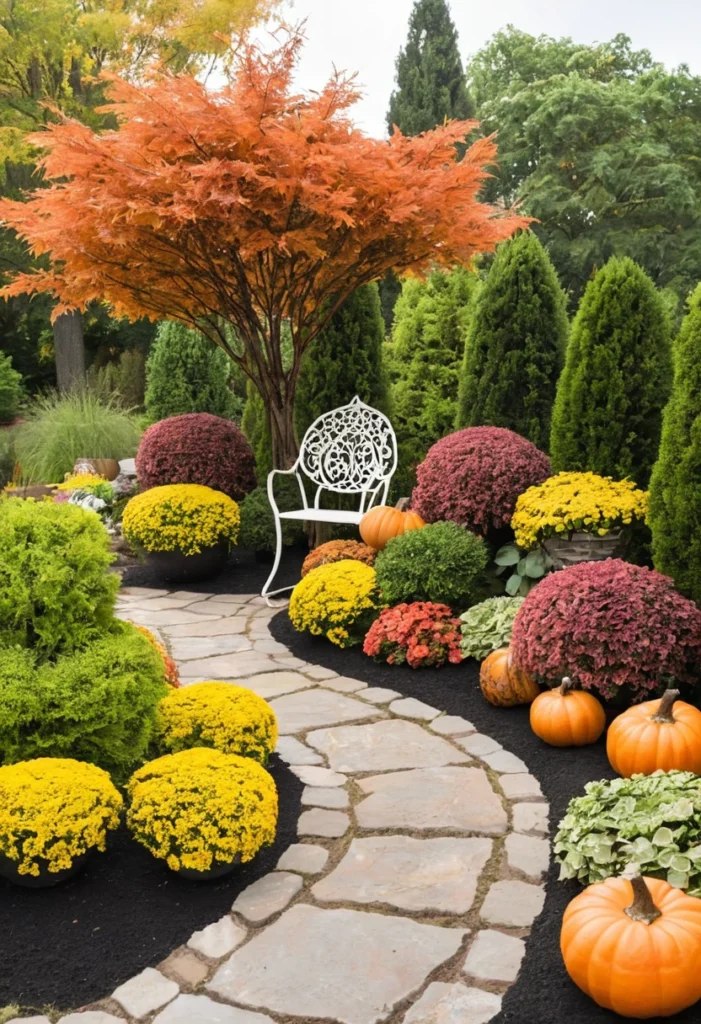
You do not need a large budget to create an attractive autumn garden. In many cases, the most effective displays use items that are already available at home or in the garden.
Budget-friendly 13+Seasonal Garden Guides ideas include:
- Reusing existing outdoor containers
- Grouping pumpkins instead of buying large amounts of decor
- Collecting suitable fallen branches
- Using natural pinecones and seed heads
- Rearranging existing garden furniture
- Adding a small number of seasonal plants
- Making a simple autumn wreath
- Reusing baskets and wooden crates
- Adding a few outdoor-rated solar lights
- Decorating one focal point instead of the whole yard
Spend money where it has the greatest visual effect. A beautiful planter at the entrance may contribute more to the overall appearance than ten small decorations scattered throughout the garden.
Connect the Porch, Patio, and Garden
A seasonal outdoor space looks more polished when its different areas feel connected. The porch should not look like one style, the patio another, and the garden a third unrelated design.
Use 13+Seasonal Garden Guides principles to repeat a few visual elements across the property. You might use the same pumpkin color near the door and patio, repeat a particular plant in containers, or carry warm lighting from the entrance toward the seating area.
Repetition does not mean copying the same arrangement everywhere. Instead, repeat colors, textures, materials, or shapes in different ways. This creates a subtle visual thread.
For example, rust-colored flowers could appear in a front-door planter, while rust cushions appear on the patio and a small rust-colored accent appears beside the garden bench. The spaces feel connected without becoming repetitive.
Design for Easy Seasonal Maintenance
A beautiful garden display should not become a burden. Before decorating, consider how you will water plants, sweep leaves, mow nearby areas, clean pathways, and move furniture during bad weather.
Good 13+Seasonal Garden Guides planning means leaving enough access around garden beds and structures. Decorations should fit naturally into your maintenance routine rather than forcing you to move everything every time you work outside.
Group accessories in areas that do not interfere with daily tasks. Keep hoses, tools, gates, drains, and access points clear. Use stable containers that do not need constant repositioning.
Choose seasonal plants according to your local climate and their growing requirements. A plant that looks beautiful in a garden center may struggle if it receives the wrong amount of light or water at home.
13 Easy Fall Garden Decorate Ideas Outdoor
If you want a quick starting point, these 13+Seasonal Garden Guides ideas can be adapted to almost any outdoor space:
- Create a layered pumpkin and gourd arrangement.
- Refresh summer planters with autumn flowers and foliage.
- Add a seasonal wreath to the front door or garden gate.
- Use warm outdoor lighting around patios and seating areas.
- Place lanterns beside wider garden paths.
- Add ornamental grasses for texture and movement.
- Create a rustic harvest display using baskets and wooden crates.
- Add autumn-colored cushions to outdoor furniture.
- Use natural branches, pinecones, and seed heads as accents.
- Decorate a small garden vertically with hanging containers.
- Try neutral pumpkins for a modern minimalist display.
- Leave selected seed heads to provide winter structure and wildlife value.
- Repeat two or three colors throughout the porch, patio, and garden.
The most important point is not to use all 13 ideas at once. Select the ones that fit your garden, budget, climate, and personal style.
Frequently Asked Questions
How can I decorate my garden for fall?
Use seasonal plants, pumpkins, gourds, natural foliage, outdoor lighting, containers, and comfortable seating to create a layered autumn display.
What colors work best for fall outdoor decor?
Burnt orange, rust, deep red, bronze, mustard, cream, brown, olive, and neutral shades all work well with autumn foliage and existing greenery.
How do I make a small garden look good in autumn?
Use vertical space, compact planters, hanging baskets, a few seasonal accents, and warm lighting so the garden feels decorated without becoming crowded.
What plants are good for fall garden containers?
Mums, pansies, asters, ornamental kale, ornamental grasses, and other plants suited to your local climate can provide seasonal color and texture.
How can I decorate my garden cheaply for fall?
Reuse existing pots and furniture, collect suitable natural materials, group a few pumpkins, make simple seasonal arrangements, and concentrate decorations around one or two focal areas.
Conclusion
A successful autumn garden does not depend on having dozens of decorations or completely redesigning the landscape. The strongest 13+Seasonal Garden Guides approach combines what is already present with a few well-chosen seasonal elements. Pumpkins, autumn plants, natural textures, warm lighting, comfortable furniture, and thoughtful color repetition can transform an ordinary outdoor area into a welcoming seasonal space.
Start small and build your display gradually. Choose one focal point, establish a simple color palette, add seasonal plants or natural materials, and then introduce lighting or cozy accessories where they serve a purpose. With these 13+Seasonal Garden Guides ideas, your garden can remain beautiful, practical, and inviting throughout the fall season.

