
An olive garden brings a relaxed Mediterranean feeling to an outdoor space through graceful trees, silvery-green leaves, natural stone, warm terracotta, and simple planting. You do not need a large estate or a professionally designed courtyard to enjoy this look. A small patio, front yard, balcony, or backyard corner can become a welcoming retreat with a few thoughtful choices.
The best olive garden ideas balance beauty with the growing needs of the plants. Olive trees generally prefer plenty of direct sunlight and soil that drains freely. Their sculptural trunks and soft foliage work especially well with gravel, lavender, rosemary, thyme, clay pots, and understated outdoor furniture.
Before choosing a design, consider your local climate. Olive trees are best suited to sunny conditions and may need winter protection in colder or very wet areas. In hot, humid, or monsoon-prone regions, drainage and airflow become especially important. Use the ideas below as inspiration, then adapt the plants and materials to your own garden.
Table of Contents
- 1. Make an Olive Tree the Focal Point
- 2. Add a Natural Gravel Path
- 3. Decorate with Terracotta Planters
- 4. Pair Olive Trees with Lavender and Herbs
- 5. Create a Mediterranean Courtyard
- 6. Design a Comfortable Seating Corner
- 7. Grow an Olive Tree in a Large Container
- 8. Use Natural Stone and Pebbles
- 9. Add a Pergola for Shade and Structure
- 10. Use Warm Outdoor Lighting
- 11. Try an Olive Garden in a Small Space
- 12. Build a Water-Wise Mediterranean Garden
- Care Tips and Common Design Mistakes
- Frequently Asked Questions
1. Make an Olive Tree the Focal Point
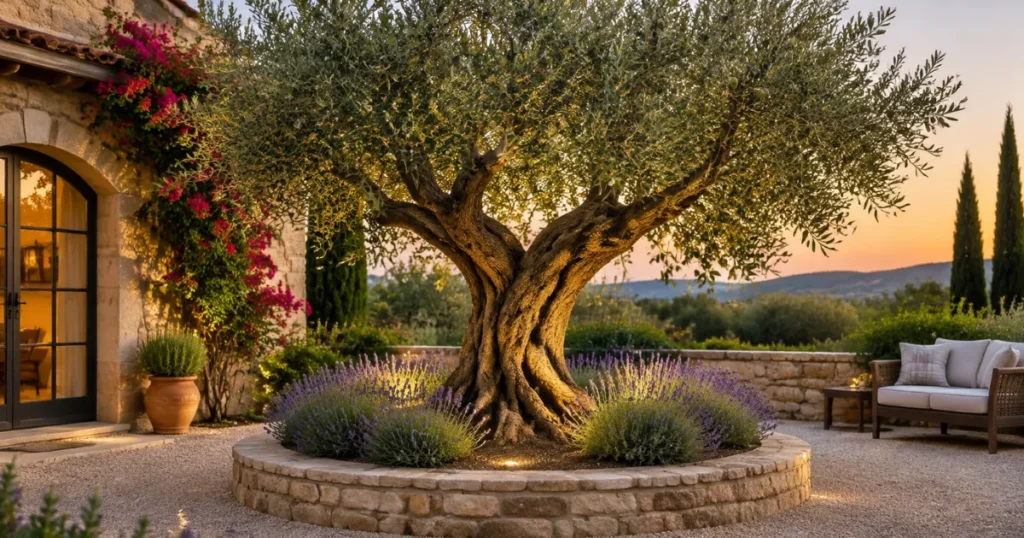
A mature olive tree can become the natural centre of your garden. Its twisting trunk adds character, while the narrow leaves create a soft silver-green canopy. Instead of surrounding it with many competing decorations, give the tree enough open space to stand out.
Place it where it can be seen from a patio, garden entrance, or main window. A simple ring of gravel, low groundcover, or a few carefully spaced stones can frame the base. Keep the root area clear enough for watering and maintenance, and avoid piling soil or mulch against the trunk.
2. Add a Natural Gravel Path
A gravel path gives an olive garden a relaxed, Mediterranean appearance. Pale gravel contrasts beautifully with olive foliage and makes the space feel bright. It can also help create a clear route between a seating area, planting beds, and the garden entrance.
Mark the route before spreading gravel and prepare a stable, well-draining base. Use edging to keep stones from moving into lawns or planting beds. In areas with heavy rain, plan the slope and runoff carefully so water does not collect around tree roots or wash the path away.
Read Also: 15 Urban Garden Ideas for Small Spaces
3. Decorate with Terracotta Planters
Terracotta pots bring warmth and an earthy colour to an olive garden. Their natural orange and brown shades complement the muted green leaves and weathered tree trunks. Use a few large pots as statement pieces rather than filling every available space with small containers.
Choose containers with drainage holes and a size that suits the plant. You can group a tall pot with two smaller ones near steps, a doorway, or a bench. Plant them with rosemary, thyme, seasonal flowers, or compact shrubs that suit your climate. Raise pots slightly if water tends to sit beneath them.
4. Pair Olive Trees with Lavender and Herbs
Lavender, rosemary, sage, and thyme are popular companions for Mediterranean-style planting. Their foliage and flowers create layers of texture without taking attention away from the olive tree. Aromatic herbs also make paths and seating areas more enjoyable.
Choose companion plants according to sunlight, soil, and rainfall in your location. Many Mediterranean herbs prefer sunny positions and well-drained soil, but varieties differ in their tolerance of humidity and heat. Do not assume every herb needs exactly the same amount of water as an olive tree; group plants with similar requirements and water each area appropriately.
5. Create a Mediterranean Courtyard
A courtyard can feel like a peaceful outdoor room when you combine an olive tree, a light-coloured wall, textured paving, and a small seating area. The tree may sit in a central bed or in a large container near one corner. Keep the layout simple so the natural shape of the tree remains the main feature.
Use warm neutral colours such as cream, sand, soft grey, and terracotta. A low stone border or a plain rendered wall can provide a calm background for foliage. If the courtyard receives limited sun, an olive tree may not thrive there; check the light first and consider a shade-tolerant alternative if direct sunlight is insufficient.
6. Design a Comfortable Seating Corner
A garden should be enjoyable as well as attractive. Place a wooden bench, simple metal chairs, or a compact outdoor sofa where you can relax and enjoy the planting. Position the seating so it looks toward the olive tree or a particularly attractive part of the garden.
Choose outdoor cushions in beige, olive, cream, or muted brown to keep the palette coordinated. Make sure the furniture can handle your local weather, and leave enough space to walk around it comfortably. If the area gets very hot, add shade with an umbrella, pergola, or nearby tree rather than relying on delicate fabrics alone.
7. Grow an Olive Tree in a Large Container
Container growing is useful when you have a balcony, paved patio, rental home, or heavy soil that drains poorly. A large, sturdy pot gives an olive tree room for its roots while allowing you to move it when conditions change. Dwarf or compact varieties can be easier to manage in restricted spaces.
Select a pot with several drainage holes and use a free-draining potting mix. Avoid leaving the container standing in a saucer full of water. Place it in the sunniest suitable spot and remember that container plants dry out faster than trees growing in the ground. Check moisture regularly, especially during hot weather, but do not keep the compost constantly soggy.
8. Use Natural Stone and Pebbles
Stone adds texture and a sense of permanence to an olive garden. Flat stepping stones can guide visitors through a planting bed, while larger rocks can create a natural border around a tree. Small pebbles also work well in pots and decorative areas where they do not interfere with drainage.
Mix only a few stone colours to avoid a busy appearance. Cream limestone, warm sandstone, and muted river pebbles can all complement olive foliage. In very hot climates, remember that dark stone can absorb heat. Keep the root zone suitable for the tree and avoid covering the soil with a thick layer of material that prevents water from reaching it.
9. Add a Pergola for Shade and Structure
A pergola creates a strong vertical feature and helps define an outdoor dining or sitting space. A simple timber structure looks natural beside olive trees, clay pots, and stone paving. You can leave it open for a clean architectural look or train a suitable climbing plant over part of it.
Plan the pergola so it does not block the sunlight your olive tree needs. Check local building requirements and make sure the posts are securely installed for wind and weather. In a small garden, a narrow pergola over a bench can provide the same sense of structure without taking over the entire space.
10. Use Warm Outdoor Lighting
Outdoor lighting makes an olive garden welcoming after sunset. Low path lights can guide people safely, while a soft spotlight can highlight the texture of a tree trunk. String lights above a seating area add a relaxed atmosphere without requiring complicated decoration.
Choose outdoor-rated fixtures and install them according to the manufacturer’s safety instructions. Use warm-toned light and avoid placing bright fixtures where they shine directly into neighbouring homes. Solar lights can be convenient, but they need enough daytime sun to charge reliably.
11. Try an Olive Garden in a Small Space
You can create an olive-inspired garden even without a large backyard. One compact olive tree in a generous pot, a narrow bench, and a few herb containers may be all you need. On a balcony, use lightweight accessories and check the balcony’s safe load capacity before adding large planters filled with wet soil.
Keep the floor area open and use vertical space for a wall planter or a small trellis. Repeating the same pot material or colour helps the arrangement look intentional. If the balcony is shaded for most of the day, choose plants that suit those conditions rather than forcing an olive tree to grow without enough light.
12. Build a Water-Wise Mediterranean Garden
An olive garden can be designed with sensible water use in mind. Group plants with similar watering needs, improve drainage where necessary, and apply an appropriate organic mulch to help reduce moisture loss. Drip irrigation can deliver water near plant roots and reduce waste from overspray.
Water requirements still depend on the tree’s age, soil, container size, and weather. Newly planted trees need more consistent attention while they establish, whereas established olives are more tolerant of dry periods. Do not confuse drought tolerance with a need to keep a young tree completely dry. Check the soil before watering and adjust the schedule during rainy or unusually hot periods.
Olive Garden Care Tips and Common Design Mistakes
Good design starts with the right growing conditions. Olive trees generally perform best in full sun and well-drained soil. Before planting, check whether your local climate is suitable for the variety you are considering. In regions with cold winters, young trees may need protection; in humid or rainy climates, excellent drainage and airflow are especially important.
Avoid overcrowding the tree with thirsty plants, placing it in deep shade, or allowing water to collect around its roots. Do not choose a container without drainage holes. Prune carefully to remove damaged or crossing branches and maintain the shape, but avoid removing too much growth at once. For variety-specific care, consult a reliable local nursery or horticultural service.
A Simple Checklist Before You Start
- Choose a sunny location with suitable growing conditions.
- Check that the soil or potting mix drains freely.
- Select a tree variety that suits your local climate and available space.
- Plan paths and seating before buying decorative items.
- Use a restrained palette of stone, wood, terracotta, and muted greenery.
- Group companion plants according to their light and water needs.
- Leave enough access for pruning, watering, and general maintenance.
Frequently Asked Questions
1. What makes a beautiful olive garden?
A beautiful olive garden combines a well-placed olive tree with natural materials, open space, and suitable companion plants. Gravel, stone, terracotta, lavender, and simple seating can create a calm Mediterranean-inspired look.
2. What plants grow well with olive trees?
Lavender, rosemary, thyme, and sage are common Mediterranean-style companions. Choose varieties that suit your local climate and group plants with similar sunlight, soil, and watering requirements.
3. Can I grow an olive tree in a pot?
Yes. Use a large, stable container with drainage holes and a free-draining potting mix. Give the tree a sunny position and monitor moisture because container soil can dry out faster than garden soil.
4. How much sunlight does an olive tree need?
Olive trees generally need a sunny position with several hours of direct sunlight each day. A location receiving around six or more hours is a useful starting point, although local conditions and variety can affect performance.
5. Is gravel a good choice around olive trees?
Gravel can create an attractive, free-draining surface and suit Mediterranean garden styling. Prepare the area properly, keep the tree’s root zone healthy, and make sure rainwater can drain away rather than pooling near the trunk.
6. Can an olive garden work in a small backyard?
Yes. A single compact tree in a container, a few herb pots, and a small seating area can create the look in a limited space. Make sure the tree still receives enough sun and has room for healthy growth.
7. Are olive trees low maintenance?
Established olive trees can be relatively low maintenance in suitable sunny, well-drained conditions. They still need occasional watering, pruning, inspection, and protection from weather that is unsuitable for the selected variety.
Final Thoughts
A successful olive garden is more than a collection of Mediterranean-style decorations. It gives an olive tree the sunlight, drainage, and room it needs while making the space comfortable to use. Start by choosing the right spot, then add a gravel path, terracotta pots, or a small herb border only where each feature serves a purpose. The result will feel natural, look inviting, and remain easier to care for through the seasons.