
A garden wall can solve a practical problem and give an outdoor space a stronger sense of design. It can hold back a slope, frame a flower bed, create a quiet seating corner, or provide a sturdy structure for climbing plants. The right wall also helps connect paths, patios, and planting areas so the yard feels planned rather than pieced together.
The most useful garden wall ideas begin with the job the wall needs to do. A retaining wall that supports soil needs a different design from a low decorative wall or a planted screen. Materials, drainage, plant choices, and the wall’s position all affect how well the finished feature works.
This guide focuses on permanent garden walls and landscape design, rather than only hanging pots or pocket planters. If you want small-space container systems, see our vertical garden ideas for small spaces. For simple boundary decorations, our garden fence decor ideas cover a different approach.
Table of Contents
What Makes a Garden Wall Different?
A garden wall is a built landscape feature made from materials such as natural stone, brick, concrete block, timber, or metal. Some walls are freestanding and define an area. Others are retaining walls, which hold soil in place where the ground changes level. A seat wall, planter wall, or courtyard wall may combine more than one purpose.
A planted wall can mean two different things. A green facade uses climbing plants rooted in the ground or in containers at the base, then trains them up a support. A living wall holds plants in growing pockets or modules across the vertical surface. These systems have different water, weight, and maintenance needs, so decide which one you want before buying materials.
Why Add a Wall to Your Landscape?
Walls create visual structure. A low wall can separate a patio from a lawn without closing off the view, while a taller courtyard wall can make an exposed seating area feel more sheltered. A retaining wall can turn a difficult slope into usable planting terraces, provided it is designed to manage the soil and water behind it.
A wall also gives plants a clear backdrop. Flowers, ornamental grasses, shrubs, and climbing vines stand out against stone, brick, or timber. Think of a wall as a vertical plane that can shape an outdoor room: it can define the edge of a patio, screen a service area, or guide the eye toward a focal point without adding another row of shrubs.
15 Garden Wall Ideas
Curved Natural-Stone Retaining Wall
A gently curved stone wall softens a straight property line and can make a sloping yard feel more natural. Use the curve to follow an existing bed, frame a lawn, or guide the eye toward a patio. A broad cap gives the wall a finished edge and can provide a place to set a small pot or lantern.
Plant the upper edge with compact perennials and ornamental grasses, then soften the base with low groundcovers. Keep drainage outlets and the wall face visible. A retaining wall must be designed for the soil pressure and water it will hold back, so use a qualified professional for structural work.
Terraced Walls for a Sloping Yard
Instead of one tall retaining wall, a series of shorter terraces can create several planting levels. Each level can have its own character: herbs near the kitchen, flowering perennials beside a path, and a small shrub border at the top. The repeated horizontal lines make a steep yard easier to read and can create useful pockets of level ground.
Terracing is not a shortcut around proper engineering. The height, soil type, slope, drainage, and distance between walls all matter. Ask a local landscape professional or engineer to assess the site before changing a hillside, especially where water could move toward a home or neighboring property.
Low Seat Wall Around a Patio
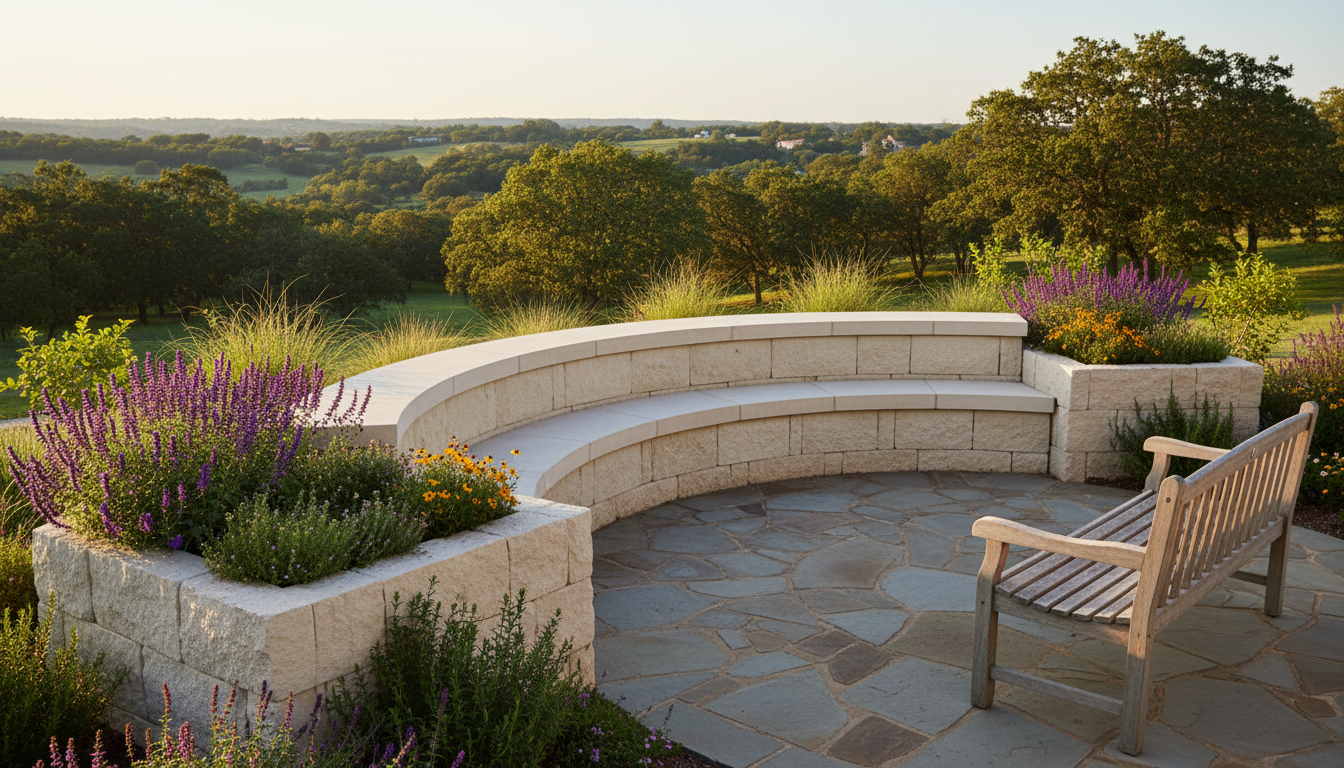
A low masonry seat wall can define the edge of a patio and provide extra seating when guests visit. Choose a smooth, comfortable cap and keep the wall height and depth suitable for sitting. A short return at one end can make the patio feel like an outdoor room while leaving the garden open on the other sides.
Add a planter at each end rather than filling the entire wall with pots. Compact herbs, seasonal flowers, or a small evergreen can soften the hard edge. Leave enough space for people to move around the seating area and keep the walking route clear.
Dry-Stacked Stone Wall
A dry-stacked wall uses carefully fitted stones without visible mortar joints. Its informal texture suits cottage gardens, woodland edges, and naturalistic planting schemes. Small gaps can provide sheltered crevices for suitable alpine plants or compact groundcovers, but do not assume every gap is a safe planting pocket.
Use stone sizes and construction methods that match the wall’s purpose. A small decorative edging wall is not the same as a retaining wall holding back a bank. If the wall supports soil or sits beside a path, steps, or driveway, have its stability and drainage assessed before building.
Brick Wall with a Separate Trellis
A brick wall gives a garden a classic, structured backdrop. To add flowers, install a freestanding trellis or a properly designed support in front of the masonry, rather than allowing every vine to cling directly to the bricks. Clematis and other suitable twining or tendril-climbing plants can use a trellis when the variety matches the local climate.

Mississippi State University Extension notes that some self-clinging vines can penetrate small gaps in mortar or wood and make removal difficult. Its green-wall guidance recommends keeping a freestanding trellis several inches away from a building wall to allow air circulation.
Gabion Wall Filled with Natural Stone
A gabion wall uses strong wire cages filled with stone. The open texture creates a contemporary look and can work as a low garden divider, a raised-bed edge, or part of a larger landscape design. Choose stone colors that relate to the home, patio, or existing paths so the feature looks intentional.
Gabions are heavy and their stability depends on the cage, base, height, and site conditions. Use a purpose-made system and follow its installation guidance. Do not improvise a tall retaining structure from loose wire baskets, especially on a slope or near a building.
Concrete Block Wall with Planting Cells
Hollow landscape blocks can create a wall with built-in planting spaces. The openings are useful for compact, shallow-rooted plants that tolerate the exposure and limited soil volume. Repeating the same plant in each cell gives a tidy pattern, while a restrained mix of foliage colors creates a softer, more relaxed look.
Check that the block system is intended for this use and that the wall is stable. Planting cells dry faster than a normal garden bed, so use a suitable growing mix and plan how water will reach every pocket. Avoid filling cells with large shrubs whose roots or mature size exceed the space.
Wall-Top Planter Trough
A long planter built along the top of a low wall creates a continuous band of greenery. It works well beside a patio, along an entry path, or around an outdoor dining area. Use a mix of upright plants in the middle and a few trailing plants at the front edge to soften the hard line.
The trough needs a liner or waterproofing system suited to its construction, plus drainage that carries water to an appropriate location. Do not let irrigation water run behind the wall or toward a foundation. For complex runoff or near-building installations, use a landscape professional familiar with local drainage requirements.
Freestanding Modular Living Wall
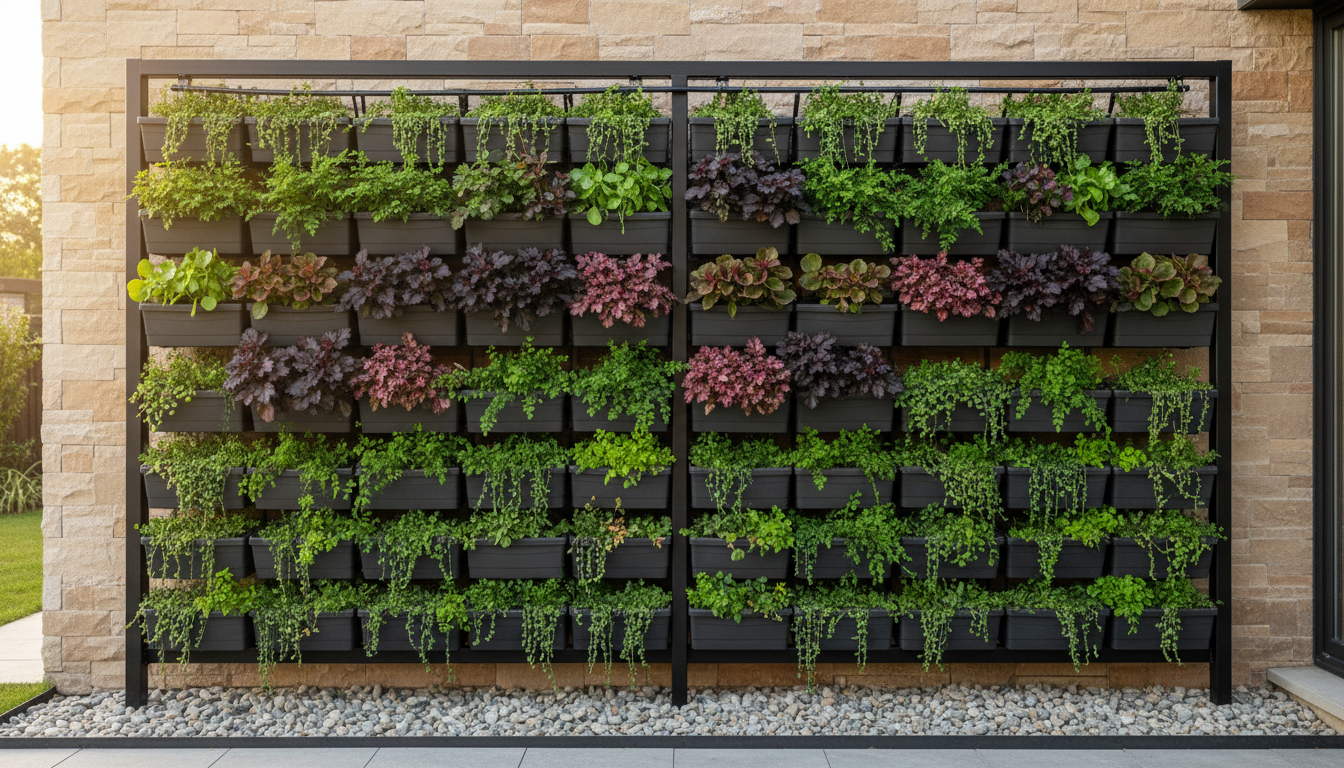
A modular living wall uses a separate frame with planting panels or pockets. It can turn a blank courtyard wall into a strong focal point, especially where there is no room for a deep border. Choose compact plants that suit the amount of sunlight and the small root area available in the modules.
Living walls need regular attention. Mississippi State University Extension explains that many systems require supplemental drip irrigation, and that attached systems need protection between the growing medium and the building surface. A freestanding frame can make inspection and maintenance easier.
Cable Trellis for Ground-Rooted Climbers
A simple system of horizontal wires or cables can support a green facade without filling the wall with individual pots. Plant suitable climbers in the ground or in a large container at the base, then train the new growth along the support. This approach can be less complicated to water than dozens of small wall pockets because the roots have a larger soil area.
The anchors and support must suit the wall material and the mature weight of the plant. A freestanding support is often a better choice where drilling into the building is not appropriate. Leave room to prune and inspect the wall as the vine grows.
Espalier Fruit Tree Along a Wall
An espalier is a fruit tree trained into a flat, planned shape along wires or another support. It can make productive use of a narrow strip beside a sunny wall and create an elegant, orderly feature. Apples and pears are commonly trained this way, but the right cultivar, rootstock, and pruning method depend on climate and available space.
The tree still needs adequate root room, light, and regular pruning. Install the support before branches become heavy, and do not attach wires to weak masonry or siding. Ask a local nursery or Cooperative Extension office which fruit varieties perform well in your region.
Garden-Room Partition Wall
A waist-high wall can divide a yard into useful zones without making the whole space feel closed. Use one side to define a dining patio and the other to frame a flower bed or lawn. A short wall can also screen a compost area, utility corner, or storage spot while leaving the rest of the garden open.
Repeat a material already used in the home or patio to make the partition feel connected to the property. Keep the top line simple and avoid unnecessary height if the goal is only to guide movement or create a visual boundary.
Small Water-Feature Wall
A low wall with a compact fountain or water outlet can add movement and a gentle sound to a quiet seating area. Stone or masonry provides a natural setting for the feature, while a nearby planting bed can soften the edges. Keep electrical components, pumps, and water lines accessible for servicing.
Plan the water path before construction. Splashing and overflow should not soak the wall, paving, or house foundation. Choose a recirculating system with a suitable reservoir and follow the manufacturer’s safety and maintenance instructions.
Timber Sleeper Wall for a Rustic Border
Landscape timbers or sleepers can create a simple, warm-looking border around a raised bed or a small change in level. Their straight lines work well in modern, rustic, and informal gardens. Pair them with grasses, herbs, or low perennials to soften the edges without hiding the structure.
Timber that touches soil and stays damp can decay over time. Select products rated for the intended outdoor use, protect cut ends as directed, and inspect the wall regularly. For a substantial retaining wall, use a design that accounts for soil pressure and drainage rather than relying on a few stacked boards.
Mixed-Material Wall with a Planted Base
Combine a simple masonry wall with a narrow planting bed at its base for a balanced, layered effect. Stone can provide the main structure, while a timber screen or metal trellis adds a lighter vertical accent. Repeating two or three materials is usually more cohesive than mixing every finish available.
Use plants to connect the wall to the wider landscape. A repeated group of grasses, compact shrubs, or flowering perennials can make a long wall feel less imposing. Keep plants far enough from access panels, drains, and inspection points that those features remain easy to reach.
Choose the Right Wall Material
Natural stone has varied color and texture, so it suits informal and traditional landscapes. Brick gives a regular pattern that often works with older homes and formal gardens. Concrete blocks offer consistent shapes and can be used in many retaining-wall systems. Timber creates a softer, warmer appearance, while gabion cages provide a more industrial look.
Compare materials by more than appearance. Consider local freeze-thaw conditions, moisture, sun exposure, maintenance, availability, and how the material will meet existing paving or siding. A material that looks attractive in a photograph may not be the best choice for a wet slope or a wall that receives strong afternoon sun.
Plants That Work Well Near Garden Walls
Choose plants for the actual growing space, not just the picture you have in mind. Wall-top beds and narrow pockets usually need compact plants with modest root systems. Depending on local conditions, options may include sedums, small ornamental grasses, low-growing perennials, ferns for shade, and herbs that tolerate the available sun and drainage.
For a trellis, choose climbers that use the support in a suitable way and are not likely to damage the wall. Mississippi State Extension lists examples such as clematis and coral honeysuckle for trellis systems in its region. These are not universal recommendations for every state, so check plant hardiness, invasiveness, and local native-plant guidance before buying.
If the wall is sunny and exposed, select plants that can cope with heat and faster drying. Shadier walls may suit ferns or other shade-tolerant plants, but a north-facing wall can also remain damp longer. Local Extension offices and native plant societies can help narrow the choices for your USDA hardiness zone and microclimate.
Plan for Sun, Wind, and Watering
A wall changes the conditions around it. South- and west-facing surfaces can reflect or hold heat, while shaded walls may receive fewer hours of direct light. Upper planters can dry faster than beds at ground level, and exposed walls may funnel wind through a courtyard. Watch the site at different times of day before choosing plants or mounting a growing system.
Watering should be simple enough to maintain. A few larger planters may be easy to water by hand, while a modular living wall often benefits from drip irrigation. Kansas State University Extension notes that crops such as pole beans, peas, cucumbers, and tomatoes can be grown vertically, but heavier fruit may need extra support. Use sturdy trellises and train plants as they grow rather than waiting until stems become heavy.
Protect the Wall and Nearby Structures
Do not assume a fence, house wall, or retaining wall can carry the weight of saturated containers. Wet growing media, mature plants, irrigation lines, and wind all add load. Before attaching a planter or frame, confirm the structure and fasteners are suitable. If the wall is old, cracked, leaning, or already showing moisture damage, have it checked before adding weight or irrigation.
Keep an air gap where a trellis or planted frame sits near a building. Mississippi State Extension recommends a gap of about 6 to 8 inches for a freestanding trellis beside a wall, helping air circulate and reducing moisture buildup. For an attached living-wall system, use a properly designed waterproofing layer and follow the system manufacturer’s installation details.
Drainage and Installation Basics
Water is one of the most important parts of wall design. A planter that holds water against a building or allows runoff to collect behind a retaining wall can create problems that plants cannot fix. Oregon State University Extension explains that poorly designed infiltration planters can destabilize slopes or undermine foundations in certain site conditions. Its guidance is about stormwater planters, but the broader lesson is important: water must have a safe, planned route.
Do not block drainage outlets or cover weep holes with mulch and foliage. Avoid directing irrigation toward the foundation, and make sure planter overflow can escape without washing soil onto paths. If your project changes a slope, supports a driveway, sits near a building, or includes a tall retaining wall, get site-specific advice from a qualified contractor or engineer.
In the United States, contact 811 before digging for posts, footings, drainage lines, or new planting beds. The Pipeline and Hazardous Materials Safety Administration reminds homeowners and contractors to contact their state 811 center before excavation so underground utilities can be located. Check the timing rules for your state before work begins.
Budget and Project Planning
A simple trellis with ground-rooted climbers is usually a smaller project than a masonry retaining wall or a modular living wall with irrigation. The final cost depends on access, excavation, material, wall height, footing, drainage, labor, and whether the site needs engineering or permits. Get itemized estimates that separate the wall, drainage, planting, lighting, and irrigation work.
For a phased project, build the essential structure first and add planting once the wall is stable and drainage works. Start with a short section rather than covering an entire boundary at once. This makes it easier to learn how the wall handles rain, sun, and maintenance before extending the design.
Garden Wall Design Mistakes to Avoid
The most common mistake is choosing the appearance before deciding what the wall must do. A decorative block wall cannot automatically act as a retaining wall, and a light fence panel should not carry heavy wet planters. Match the construction to the job, then choose finishes and plants that suit the site.
Other problems include planting aggressive self-clinging vines directly on fragile masonry, ignoring drainage, crowding plants into tiny pockets, and hiding inspection points. Avoid placing a new wall or infiltration planter close to a foundation without checking local conditions. A good design should still be easy to inspect, prune, water, and repair several seasons after installation.
Frequently Asked Questions
What is the easiest garden wall idea for a beginner?
A low, freestanding trellis with a few suitable climbing plants is a manageable starting point. It adds height without requiring a large masonry project. Choose a stable support, match the plant to your climate, and leave enough room to prune and water it.
Can I grow plants directly on a brick garden wall?
It is usually safer to use a separate trellis or cable support rather than allowing self-clinging vines to attach directly to brick. Some climbing plants can enter mortar gaps and become difficult to remove. Keep the support ventilated and make sure its anchors are appropriate for the wall.
What plants are best for a living wall?
The best plants depend on sun, climate, wind, irrigation, and pocket depth. Compact ferns, sedums, small perennials, groundcovers, and some herbs are used in living-wall systems. Choose varieties recommended for your region and check that their mature size suits the modules.
Do garden retaining walls need drainage?
Retaining-wall drainage must be considered as part of the design because water can build pressure behind the wall. The correct solution depends on wall height, soil, slope, and local conditions. Follow the wall-system specifications and use a qualified professional for structural retaining work.
How can I make a garden wall look more natural?
Use a material that fits the home and repeat a small group of plants along the wall. Combine upright forms with lower groundcovers, and allow some open space so the structure remains visible. A few well-chosen textures usually look more natural than a crowded mix of unrelated plants and decorations.
Final Thoughts
The strongest garden wall design starts with one clear purpose: hold a slope, frame a patio, create a seat, or support a planting display. Once that job is settled, choose a material that suits the site, plan where water will go, and select plants for the real light and root space available. A wall that works well behind the scenes will remain a useful part of the garden long after the first season of flowers has passed.