
DIY raised garden bed ideas can help you grow fresh vegetables, herbs, and flowers in a backyard, patio, or small garden. With the right materials and layout, you can build a practical garden that fits your space and budget.
From simple wooden boxes to galvanized metal planters and vertical gardens, these raised garden bed ideas offer options for beginners and experienced gardeners. The key is choosing safe materials, healthy soil, proper drainage, and a layout that makes planting and harvesting easier.
Benefits of Building Your Own Raised Garden Bed
A raised garden bed holds soil above ground level in a framed or mounded planting area. It gives you more control over soil quality, drainage, and planting space. It can also make gardening easier when the ground is rocky, compacted, or difficult to dig.
Raised beds work well for backyard vegetable gardens, herb gardens, flower beds, and small-space gardening. For easier access, keep most beds no wider than 4 feet so you can reach the center without stepping on the soil. Learn more from Utah State University Extension.
Our Favorite DIY Raised Garden Bed Ideas for Every Budget and Space

Classic Wooden DIY Raised Garden Bed
A classic wooden raised garden bed is a simple choice for beginners. Build a rectangular frame using cedar, redwood, or suitable untreated lumber. This design works well for lettuce, carrots, tomatoes, and herbs.
Budget-Friendly Raised Garden Bed Made From Reclaimed Wood
Reclaimed wood can reduce construction costs and give your garden a rustic look. Only use wood with a known, suitable treatment history. Avoid railroad ties, chemically treated salvaged lumber, and wood with signs of spills or contamination, especially when growing edible crops.
Galvanized Metal Raised Garden Bed
Galvanized metal beds offer a clean, modern appearance and do not rot like wood. Choose a product intended for garden use and make sure it has proper drainage. In hot weather, exposed metal beds may heat up and dry out quickly, so check soil moisture regularly.
DIY Raised Garden Bed With Legs
An elevated raised garden bed is useful for patios, decks, and gardeners who prefer less bending. Add drainage holes and choose a container suitable for growing edible plants. Remember that elevated planters hold less soil than ground-level beds, which limits the crops they can support.
Read Also: Roger’s Gardens: History, Things to Do, Shopping, and Visitor Guide
Small Raised Garden Bed for Patios and Balconies
A compact raised bed can turn a small outdoor area into a productive garden. Grow basil, parsley, lettuce, radishes, and other compact crops. Place the bed where plants receive enough sunlight, and make sure excess water can drain safely.
L-Shaped or Corner Raised Garden Bed
An L-shaped raised garden bed makes good use of an unused yard corner. It creates separate planting areas without taking up as much open space as multiple rectangular beds. Leave enough room to reach every section and avoid locations where walls or fences block essential sunlight.
U-Shaped Raised Garden Bed
A U-shaped garden bed creates a central working area surrounded by planting space. It works well in larger yards because you can reach plants from several sides. Keep the arms narrow enough to reach comfortably, and leave enough space for walking and carrying tools.
Tiered Raised Garden Bed
A tiered raised garden bed has multiple planting levels that create visual interest and help organize crops with different root depths. Use deeper sections for larger vegetables and shallower sections for herbs and leafy greens. Make sure every level receives enough sunlight and has good drainage.
DIY Raised Garden Bed With a Trellis
A trellis allows peas, pole beans, and climbing cucumbers to grow vertically instead of spreading across the soil. This saves ground space and can improve airflow around the plants. Secure the trellis firmly so it can support mature plants and withstand wind.
Raised Garden Bed With a Protective Cover
A removable cover can help protect vegetables from insects, birds, and certain weather conditions. Use insect netting for pest protection or suitable garden fabric when seasonal protection is needed. Allow ventilation when temperatures rise, and avoid covers that prevent pollinators from reaching crops that need them.
Stone or Brick Raised Garden Bed
Stone and brick raised beds create a durable, permanent garden feature. They suit both vegetable gardens and ornamental planting areas. Build on a stable base and provide proper drainage to prevent water from collecting around plant roots.
Concrete Block Raised Garden Bed
Concrete blocks can create an affordable, sturdy frame without complicated carpentry. Arrange them into a rectangle and fill the bed with a suitable growing mix. Check that the blocks are appropriate for garden use, especially when growing food, and avoid materials with unknown chemical contamination.
DIY Raised Garden Bed With Built-In Seating
A raised bed with a wide, reinforced ledge can provide a convenient place to sit while planting or harvesting. Use strong supports and weather-resistant materials. Keep the seating structure sturdy enough to bear weight without putting too much pressure on the garden bed walls.
Recycled Pallet Raised Garden Bed
Wooden pallets can be repurposed into inexpensive planters, but not every pallet is suitable for gardening. Choose pallets with a known history and appropriate treatment. Avoid wood with chemical spills, stains, or unclear markings, and never assume reclaimed wood is safe for edible crops.
How to Build, Fill, and Plant a DIY Raised Garden Bed
Choose the Best Location, Size, and Layout
Most fruiting vegetables need around 6–8 hours of direct sunlight each day. Choose a level location with good drainage and easy access to water. Before digging in the United States, call 811 to have underground utility lines marked.
A bed about 4 feet wide is practical for many home gardens because you can reach the center from either side. The length depends on your available space. A soil depth of 10–12 inches suits many common vegetables, while deeper-rooted crops may need additional depth.
Select Affordable, Durable, and Garden-Safe Materials
Cedar and redwood naturally resist decay, making them popular choices for wooden beds. Untreated pine usually costs less but may need replacing sooner. Galvanized metal, stone, and suitable concrete blocks are other options.
Choose materials based on their expected lifespan, price, appearance, and safety. Avoid railroad ties and wood treated with creosote. For edible gardens, do not use salvaged materials when their chemical history is unknown.
For more guidance, see University of Minnesota Extension’s raised-bed gardening advice.
Tools and Supplies You Need
A basic wooden raised garden bed usually requires suitable lumber, exterior-rated screws, a drill, a tape measure, a saw, and protective equipment. You will also need a suitable growing mix, finished compost, and mulch.
Optional supplies include hardware cloth for burrowing pests, a trellis for climbing crops, and a removable cover for pest protection.
Step-by-Step Instructions for Building a Raised Garden Bed
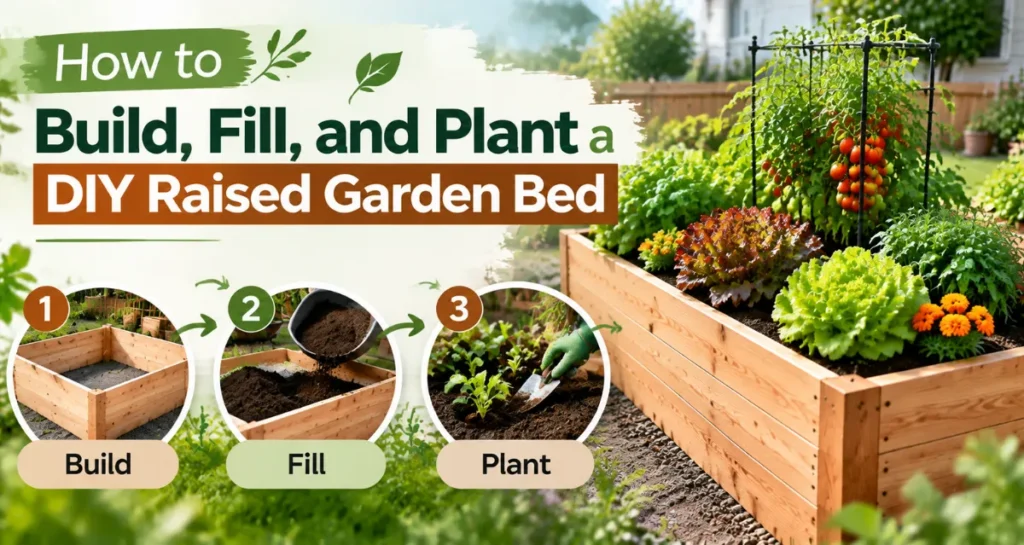
First, measure your space and mark the bed’s dimensions. Cut the lumber to size and assemble the frame on level ground using suitable screws.
Next, place the frame in its final location and check that it is stable. Prepare the base, add suitable soil and compost, and water the bed to help the mix settle. Finish by planting crops according to their sunlight, spacing, and watering needs.
What to Put in the Bottom of a Raised Garden Bed
For a raised bed built directly on soil, an open bottom usually provides the best drainage and allows roots to reach the ground below. Hardware cloth can help discourage burrowing animals, while plain cardboard may suppress existing grass and weeds as it breaks down.
Avoid placing plastic sheeting across the base because it can prevent water from draining. For a planter on a patio or deck, use a suitable base with drainage holes and protect the surface from excess water.
How to Layer Soil, Compost, and Organic Matter
Use a quality raised-bed growing mix or a suitable blend of topsoil and finished compost. The mix should retain enough moisture for plant roots while allowing excess water to drain.
Large amounts of rocks or gravel are not a substitute for good soil and can reduce the space available for roots. For deeper beds, use an appropriate growing medium throughout the root zone rather than filling most of the bed with unsuitable waste materials.
Best Vegetables, Herbs, and Flowers for Raised Beds
Lettuce, spinach, radishes, carrots, bush beans, and many herbs are suitable for raised beds. Tomatoes, peppers, and cucumbers can also grow well when the bed has enough depth, sunlight, and space.
Choose compact varieties for small beds and use trellises for climbing plants. Flowers such as marigolds and nasturtiums can add color, although their benefits for pest control depend on the specific pest and growing conditions.
Companion Planting and Space-Saving Garden Layouts
Group plants according to their sunlight, water, and spacing needs. Grow tall crops where they will not shade shorter plants, and place spreading crops near the edges when possible.
Vertical growing works especially well for pole beans, peas, and climbing cucumbers. Rotating plant families between seasons can also help reduce the buildup of certain pests and diseases in the soil.
Common DIY Raised Garden Bed Mistakes to Avoid
Avoid building beds too wide to reach the center comfortably. Do not block drainage, compact the growing soil by walking on it, or plant large crops too close together.
Another common mistake is choosing unsafe reclaimed materials. Use suitable wood and soil, check the location for sunlight, and plan for watering before filling the bed.
DIY Raised Garden Bed Costs, Materials, and Maintenance
Cheapest Materials for Building Raised Garden Beds
A basic rectangular frame made from affordable untreated lumber or suitable reclaimed wood is often one of the least expensive choices. Keeping the design simple reduces the number of cuts, fasteners, and construction steps.
Compare the cost of the frame, soil, compost, and hardware before choosing a size. A cheap frame may not be the best value if it needs frequent repairs or replacement.
Wood vs. Metal vs. Stone: Which Material Is Best?
Wood is easy to cut and assemble, while galvanized metal provides a modern look and does not rot. Stone and brick offer a more permanent structure but usually require more labor and a stable base.
The best material depends on your budget, climate, garden design, and expected maintenance. Choose a product suitable for growing edible plants when you plan to harvest vegetables or herbs.
How to Make Raised Garden Beds Last Longer
Keep wooden beds well-drained and check them for rot or loose fasteners. Secure metal frames properly and inspect masonry beds for movement or damage.
Add compost as needed, use mulch to reduce moisture loss, and avoid leaving the soil bare for long periods. These steps can support healthy soil and help your garden remain productive.
Seasonal Maintenance Tips for American Gardens
In spring, refresh the growing mix as needed and check the frame before planting. During summer, monitor moisture closely because raised beds can dry out faster than ground-level gardens.
In fall, remove diseased plants and add suitable organic matter. In winter, follow local climate guidance for protecting perennial herbs, soil, and bed structures from freezing conditions.
FAQ’s
What should you put in the bottom of a raised garden bed?
For a bed on the ground, leave the bottom open so water can drain and roots can reach the native soil. Add hardware cloth if burrowing pests are a problem, or plain cardboard to help suppress existing grass and weeds. For a patio planter, use a designed base with drainage holes.
What’s the cheapest way to build raised garden beds?
A simple rectangular bed made from suitable reclaimed lumber or affordable untreated boards is often one of the least expensive options. Reuse safe materials, keep the design basic, and compare the cost of the frame, soil, and compost before choosing the final size.
What vegetables should not be grown in a raised bed?
No vegetable is automatically unsuitable for every raised bed, but large spreading crops such as pumpkins and some winter squash can overwhelm small beds. Tall corn may shade nearby plants, while deep-rooted crops need enough soil depth. Choose varieties that match the bed’s size and growing conditions.
What is the best layout for a raised bed garden?
For most home gardens, a rectangular bed no wider than 4 feet is a practical choice. It allows access from both sides without walking on the growing soil. Leave clear paths between beds, place tall crops where they will not block sunlight, and use trellises to save space.
Final Thoughts
The best DIY raised garden bed ideas balance cost, durability, available space, and the needs of your plants. A simple wooden bed is a practical starting point, while elevated planters, trellises, and tiered designs can help you make the most of smaller spaces.
Start with a safe frame, healthy soil, good drainage, and a workable layout. With regular care, your raised bed can become a productive place to grow fresh food and flowers season after season.