
Standing in the doorway of your living room, mentally rearranging furniture for the tenth time this month? You’re not alone, and the good news is you don’t need more square footage to fix it. You need smarter decisions.
A small living room isn’t a design limitation. It’s a constraint, and constraints are what force the best design decisions. The rooms that feel the most cramped usually aren’t small because of their dimensions they’re small because of clutter, bulky furniture, and layout choices that fight the space instead of working with it. Stick around for idea #6, because it’s the one trick most people skip that instantly makes a small room read as intentional instead of squeezed.
By the end of this guide, you’ll have 13 practical, budget-friendly ways to make your small living room feel open, calm, and genuinely bigger using smart layout tricks and natural, sustainable materials that hold up long after the trend cycle moves on.
Save this guide for later so it’s ready the next time you’re standing in that doorway again.
Why Small Living Rooms Decor Feel Smaller Than They Are
Here’s the thing: most small living rooms aren’t actually failing because of square footage. They’re failing because of visual weight the sense that every surface, wall, and corner is doing something, all at once, with nothing left to breathe.
Layout comes first, style comes second. Before you touch a paint swatch or throw pillow, get clear on how the room actually needs to function day to day, and limit yourself to two or three core purposes (lounging, entertaining, working) rather than trying to cram in everything at once. Once the layout supports how you live, the styling choices below will do the rest of the work.
1. Start With Layout, Not Furniture Shopping
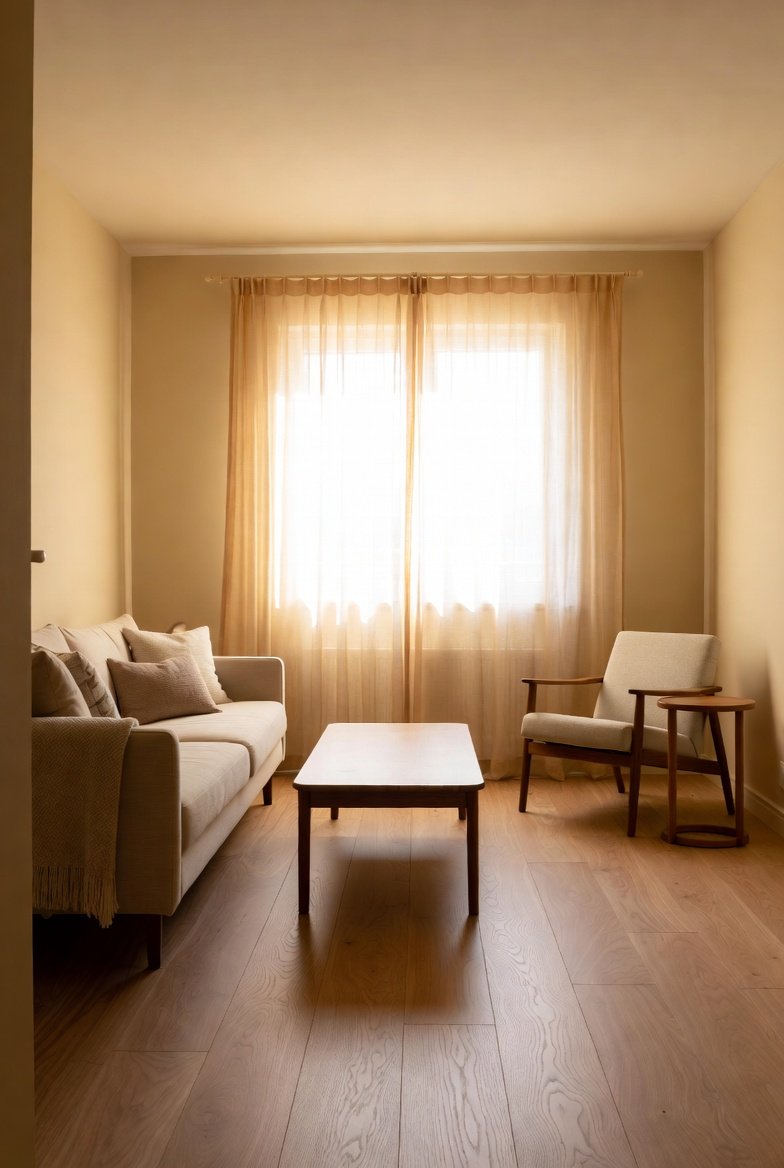
The single biggest mistake in small living rooms is buying furniture before mapping the layout. Instead, choose a focal point first a fireplace, TV wall, or a favorite piece of art and arrange your seating around it to create a natural flow.
Once your focal point is set:
- Leave at least 30 inches of walking space between major pieces
- Float furniture slightly away from walls rather than pushing everything flush against them
- Keep a clear sightline from the entryway through to the far side of the room
A room with a clear purpose and flow will always feel bigger than a room with more furniture crammed into a smaller footprint.
2. Scale Down Your Furniture on Purpose
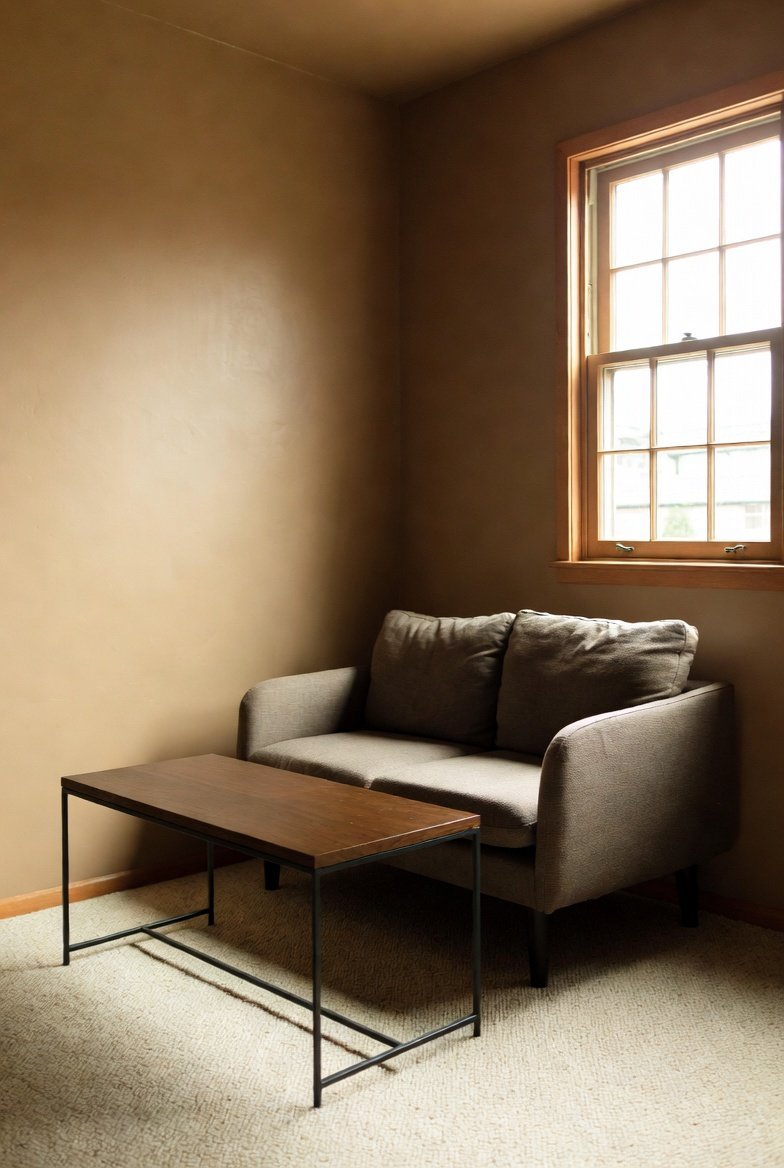
Oversized furniture is the fastest way to shrink a small room. A deep sectional built for a great room will swallow a compact living space whole.
Instead:
- Choose a loveseat or a smaller two-cushion sofa instead of a full sectional
- Look for pieces with visible, tapered legs rather than furniture that sits flush on the floor
- Swap one bulky armchair for two slim accent chairs that can be pulled apart or pushed together as needed
Quick tip: furniture with legs lets light pass underneath it, which visually “lifts” the piece and makes the whole room feel less grounded and heavy.
3. Choose Multifunctional, Sustainable Furniture
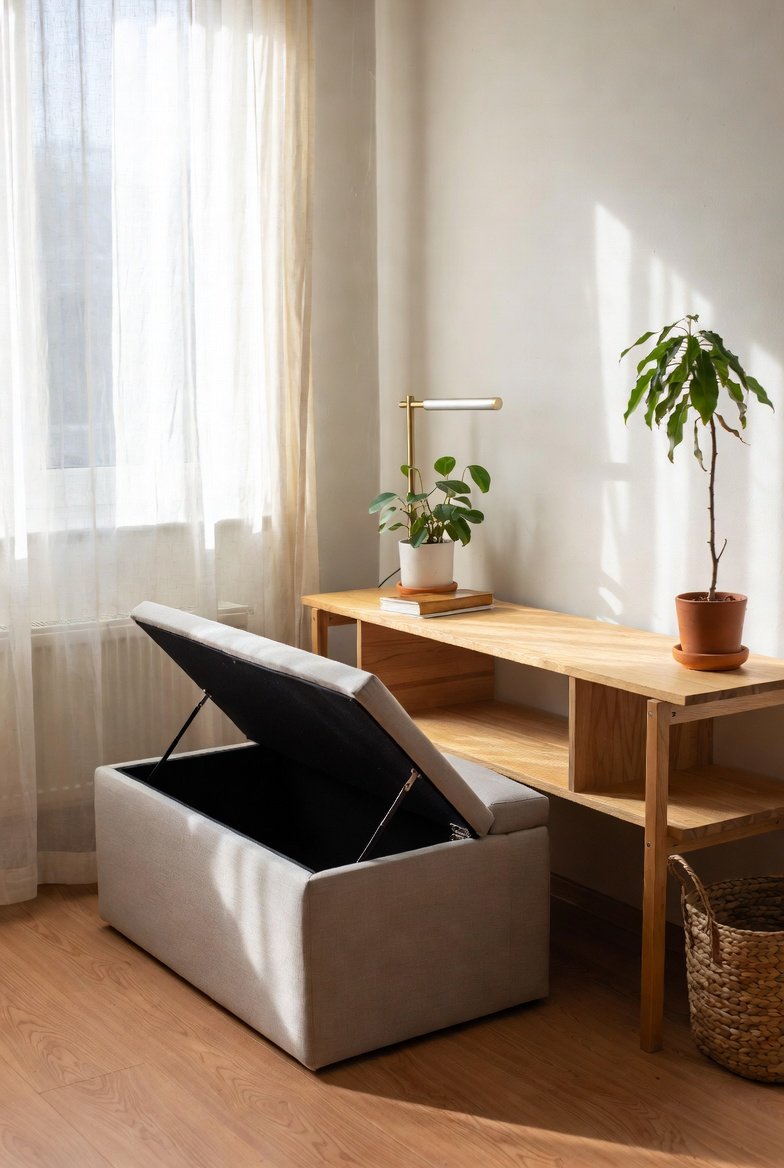
This is where a small living room and an eco-conscious home naturally overlap and it’s the single highest-impact swap on this list.
Instead of buying separate pieces for every function, invest in furniture that does double duty:
- A storage ottoman that works as a coffee table, extra seating, and hidden storage
- A sofa bed or daybed for a living room that occasionally hosts overnight guests
- Nesting tables that expand for entertaining and tuck away the rest of the time
- Wall-mounted, foldaway desks for a living room that also functions as a workspace
Prioritize solid wood, FSC-certified materials, and natural upholstery fabrics like linen or cotton over particleboard and synthetic blends. Multifunctional, well-made pieces mean you buy less overall which is better for your space and better for the planet.
4. Let Light Do the Heavy Lifting
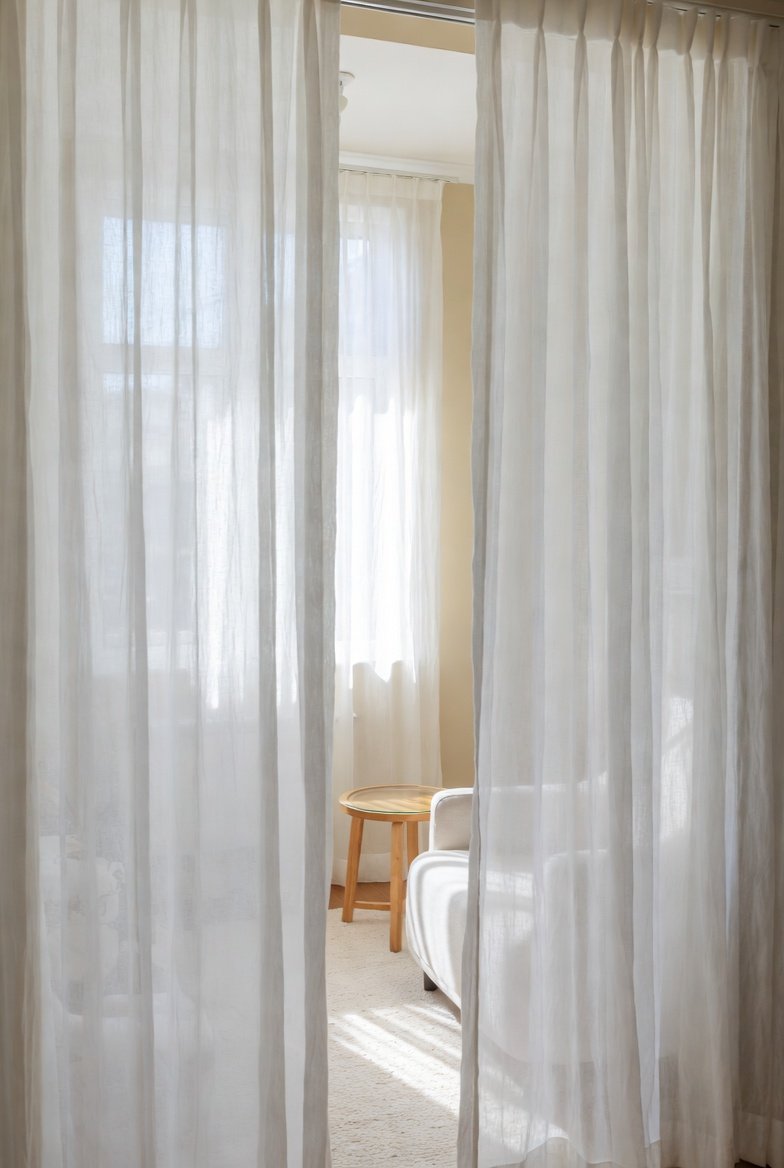
Maximizing natural light is one of the fastest, cheapest ways to make a small living room feel bigger. Skip heavy, dark curtains that block window space, and let as much daylight in as possible.
- Use sheer or lightweight linen curtains instead of blackout drapes
- Hang curtain rods a few inches above the window frame and slightly wider than the window itself, so curtains don’t cover any glass when open
- Keep window sills clear of clutter so light isn’t blocked at the source
If your living room doesn’t get much natural light, layer in warm-toned lamps at different heights instead of relying on a single harsh overhead fixture.
5. Use Mirrors to Visually Double the Space
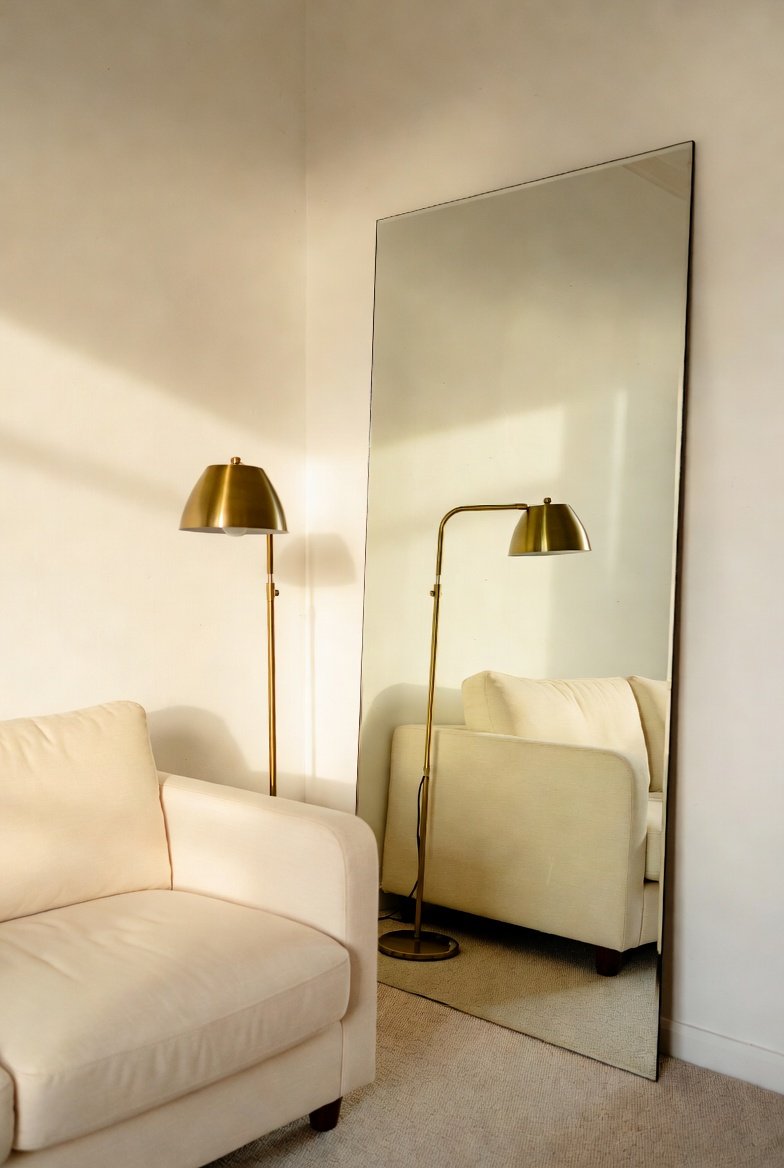
An oversized mirror positioned to reflect a window or your main light source can make a small living room feel dramatically larger, since it bounces both light and the sense of depth back into the room.
- Lean a large floor mirror against the wall opposite your main window
- Choose a mirror with a wood, rattan, or brushed-metal frame to keep it feeling warm rather than cold or clinical
- Avoid clustering several small mirrors one well-placed statement mirror does more work than several scattered ones
Read Also: Green Nest Hubs
6. Elevate the Eye-Line to Fake Taller Ceilings
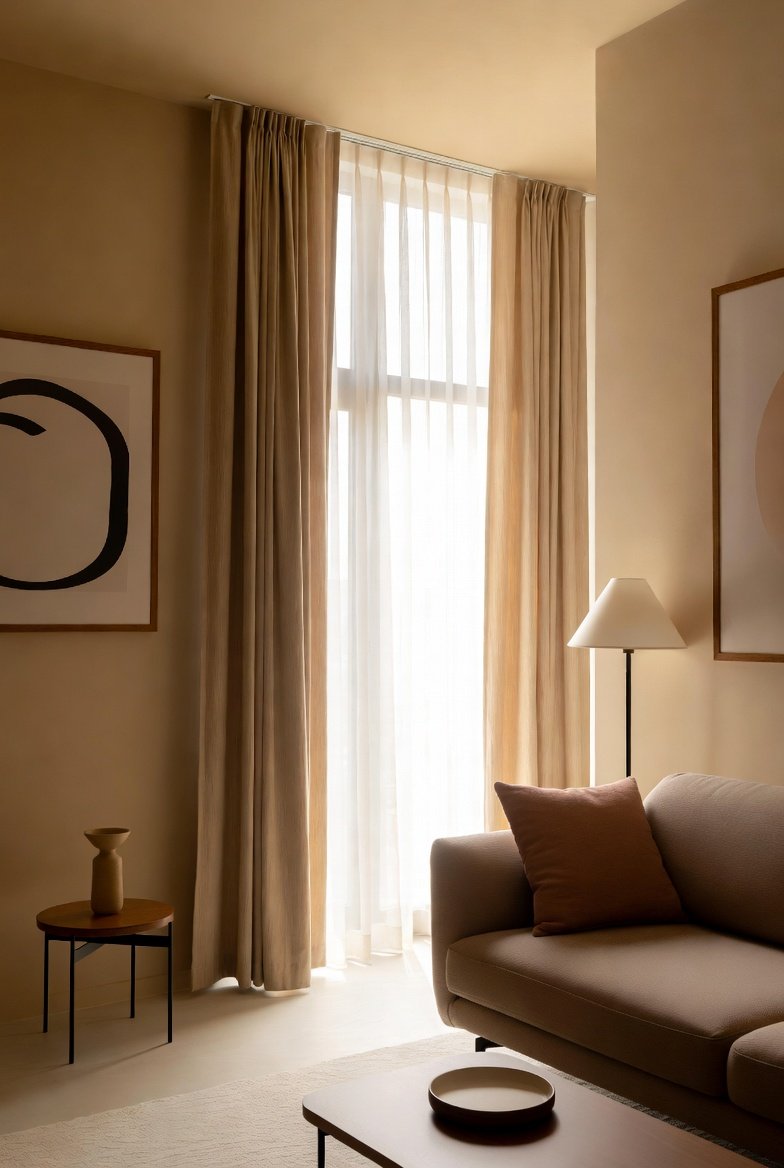
This is the trick most small-living-room guides skip entirely, and it’s genuinely one of the most effective: draw the eye upward, not just outward.
- Hang curtains close to the ceiling line, well above the window frame
- Add a slim shelf or a cluster of framed art up near the ceiling molding
- Choose tall, narrow furniture (a slim bookcase, a vertical floor lamp) over short, wide pieces
When your eye travels upward instead of stopping at furniture height, the entire room reads as taller and more open, even though the actual ceiling height hasn’t changed.
7. Bring Down the Furniture Height
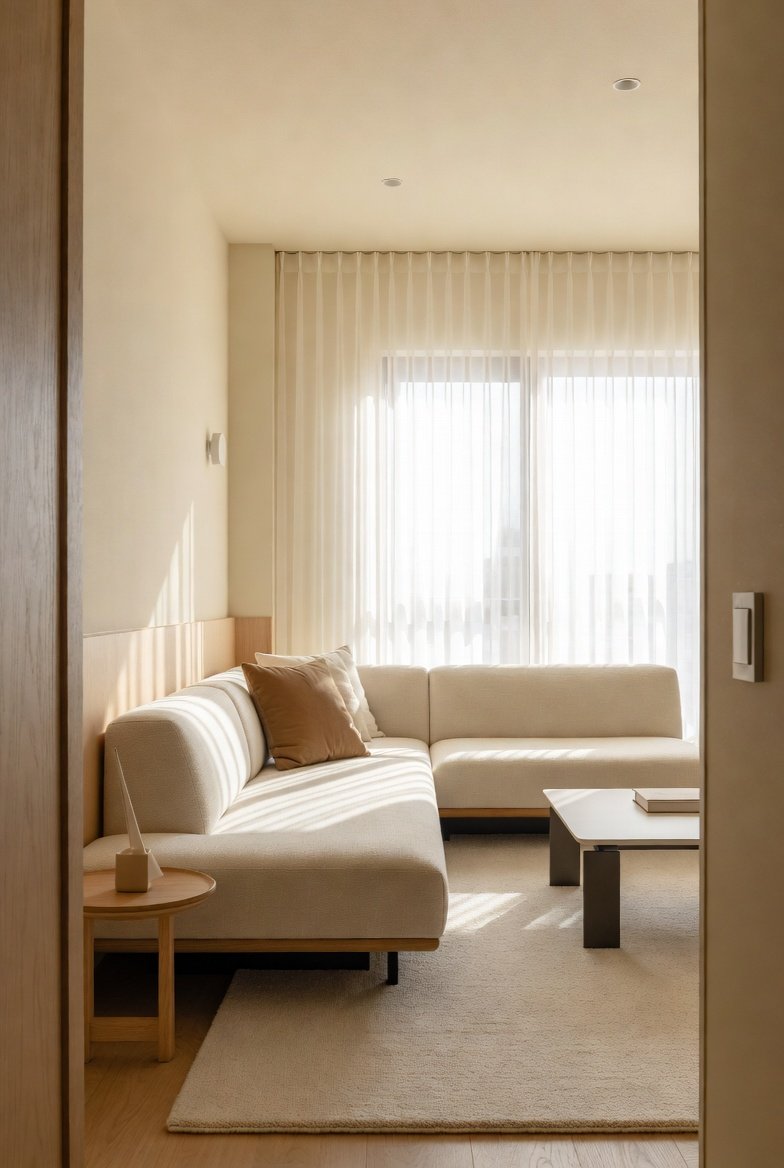
Alongside elevating your eye-line, low-profile furniture creates the same tall-ceiling illusion from a different angle. Sofas, coffee tables, and chairs that sit lower to the ground leave more visible wall and air space above them, which reads as more room.
Just make sure comfort still comes first sit in any low-profile piece before buying it, since some low seating can be harder to get in and out of comfortably.
8. Use a Rug That’s Actually Big Enough
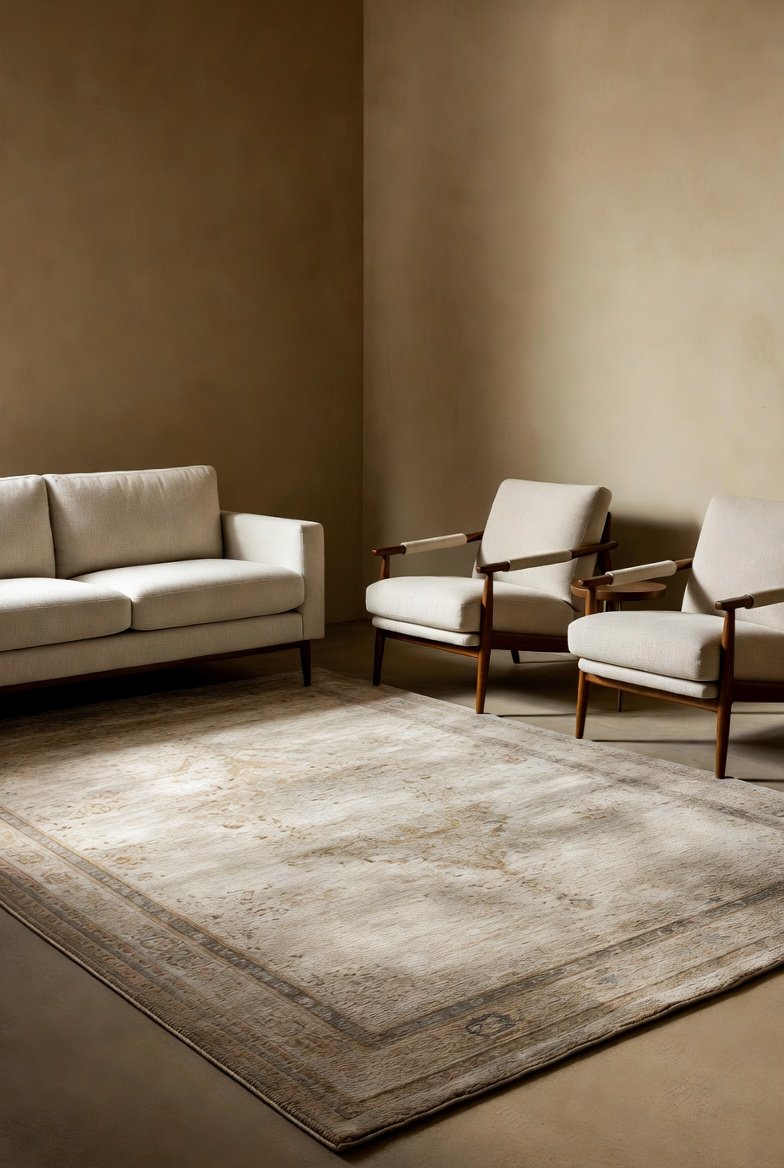
A rug that’s too small is one of the most common (and most fixable) small living room mistakes. A too-small rug floats in the middle of the room like an island, which visually chops the space into smaller sections instead of unifying it.
- Choose a rug large enough that at least the front legs of all major furniture pieces rest on it
- In open-plan spaces, let the rug’s edges define where the living room “ends” and the next zone begins
- Stick to a natural fiber rug jute, sisal, or wool for durability and a grounded, sustainable material choice
9. Create Zones With Large-Format Flooring or Rugs
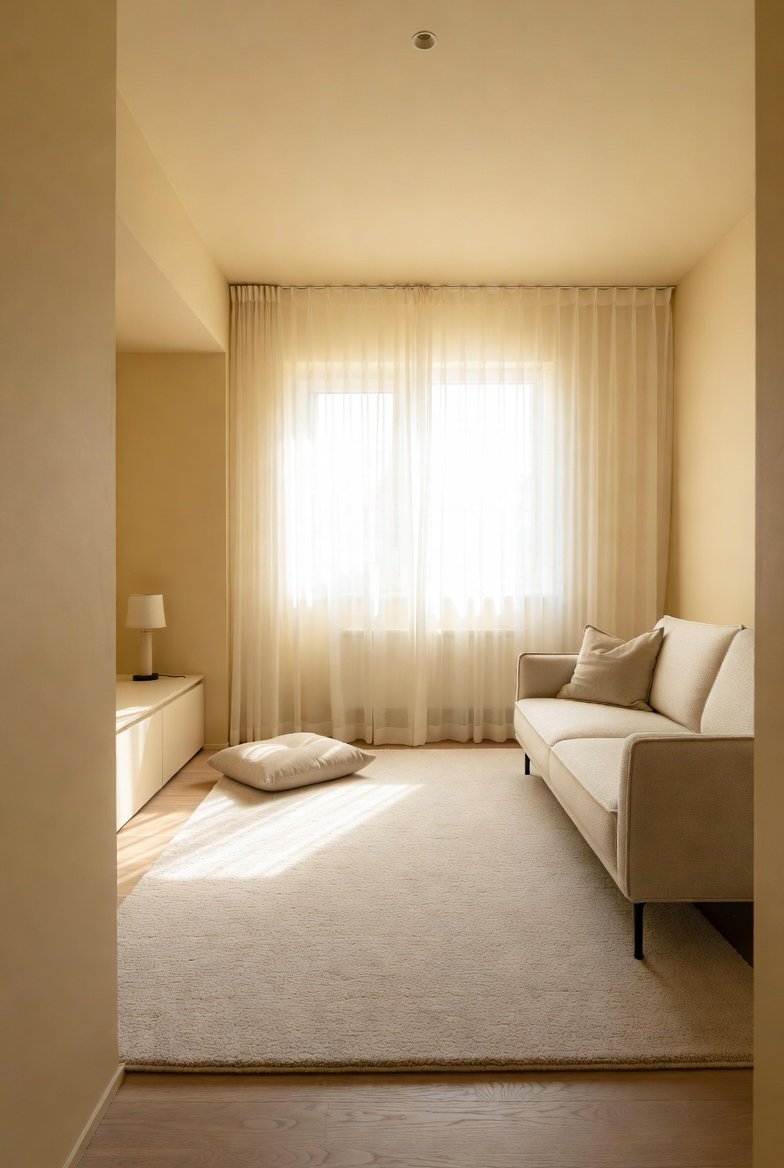
If your small living room is part of an open-concept space, define it clearly rather than letting it blur into the kitchen or dining area. Large-format flooring, tile, or a well-placed rug can visually “wall off” a zone without adding a single physical wall.
This trick gives each part of an open floor plan a sense of place a defined living room, a defined dining nook without making either section feel boxed in or cramped.
10. Add Vertical Storage Instead of Floor Storage
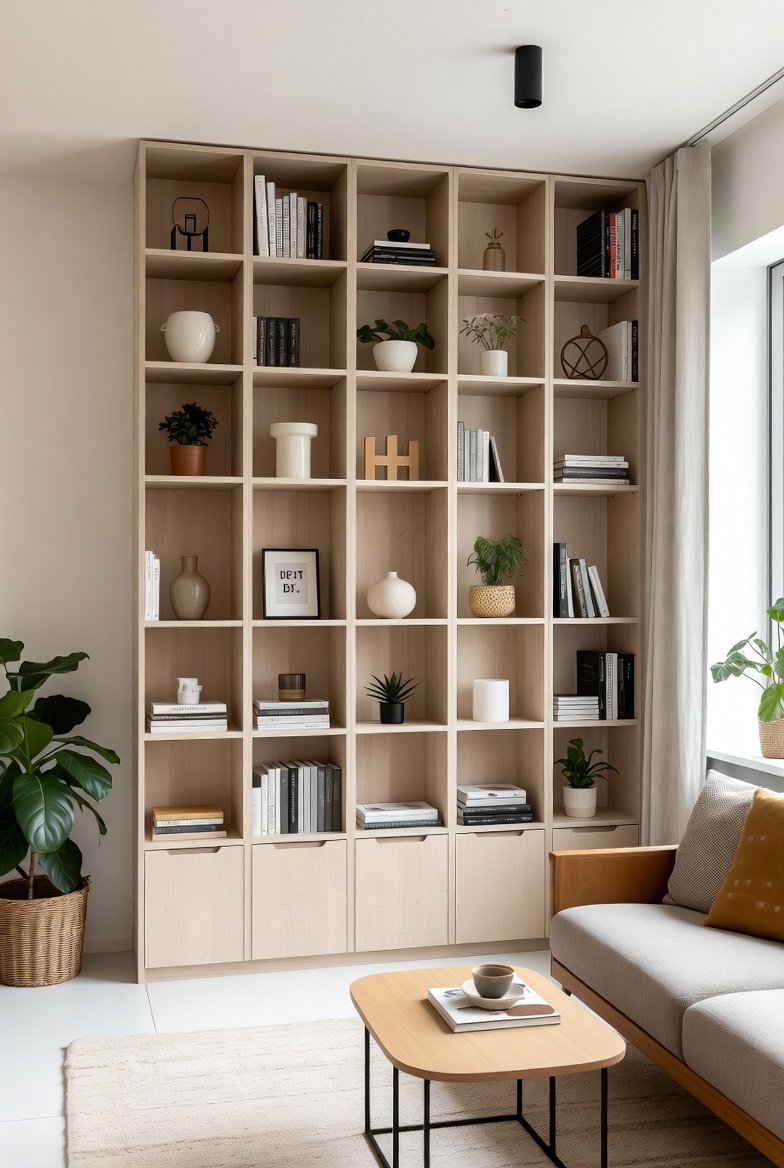
Every square foot of floor space matters in a small living room, so push storage upward instead of outward.
- Wall-mounted shelves free up floor space while still displaying books and decor
- A tall, narrow bookcase uses vertical square footage that would otherwise sit empty
- Floating media consoles (mounted slightly off the floor) keep sightlines open underneath
Baskets and decorative boxes on those shelves keep smaller items corralled without looking like storage at all.
11. Keep the Palette Light, Warm, and Cohesive
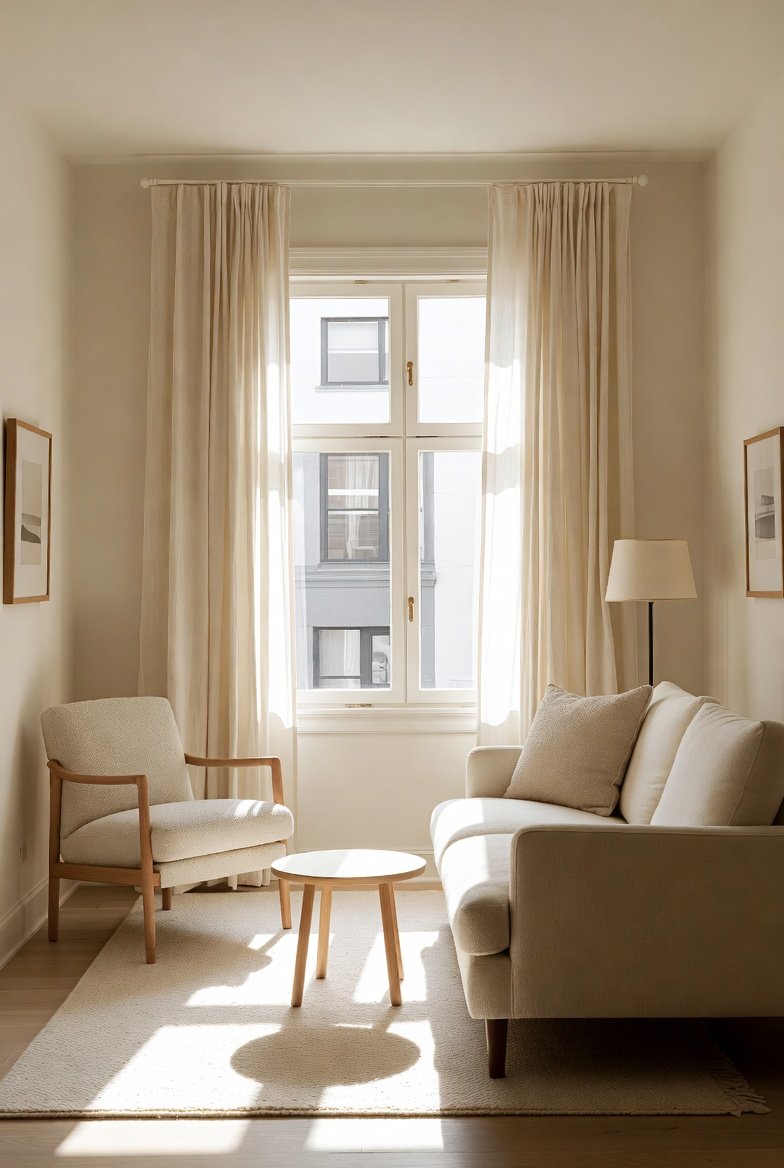
Light, warm neutrals soft white, warm beige, sand, and light oak reflect more light than dark tones and make walls feel like they’re receding rather than closing in.
So what does this mean for you? Match your wall color, flooring, and larger textiles within the same light, warm family, then use texture (not dark contrast) to keep the room from feeling flat. Save your darkest tones for small accents only — a few pillows, a piece of art, a picture frame rather than large surfaces.
12. Add Greenery for Color Without Clutter
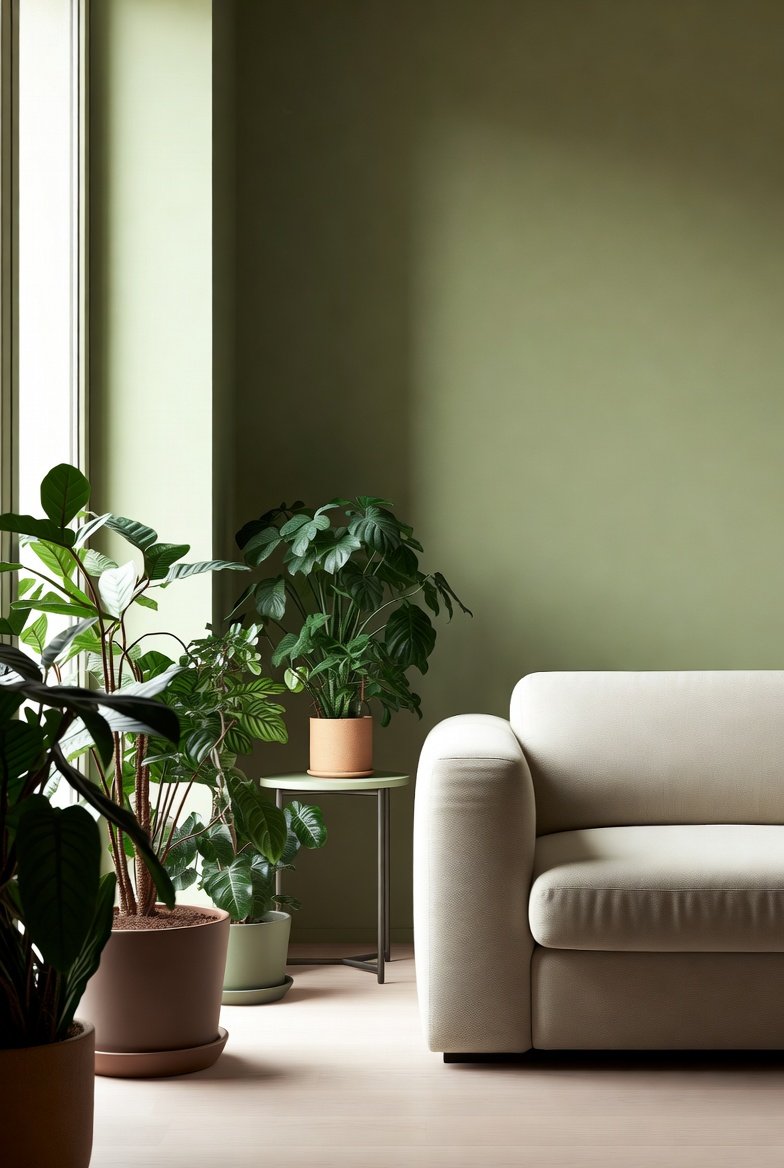
Plants bring in color, texture, and life without adding visual weight the way furniture or decor objects do. In a small living room, greenery is one of the only additions that makes a space feel more alive without making it feel more crowded.
- A tall, narrow plant (like a snake plant or fiddle leaf fig) fills a vertical corner without eating floor space
- Trailing plants on a high shelf add softness up near the ceiling line, reinforcing the “eye-line” trick from earlier
- A single large plant almost always reads better in a small room than several smaller scattered ones
13. Edit Ruthlessly and Style With Purpose
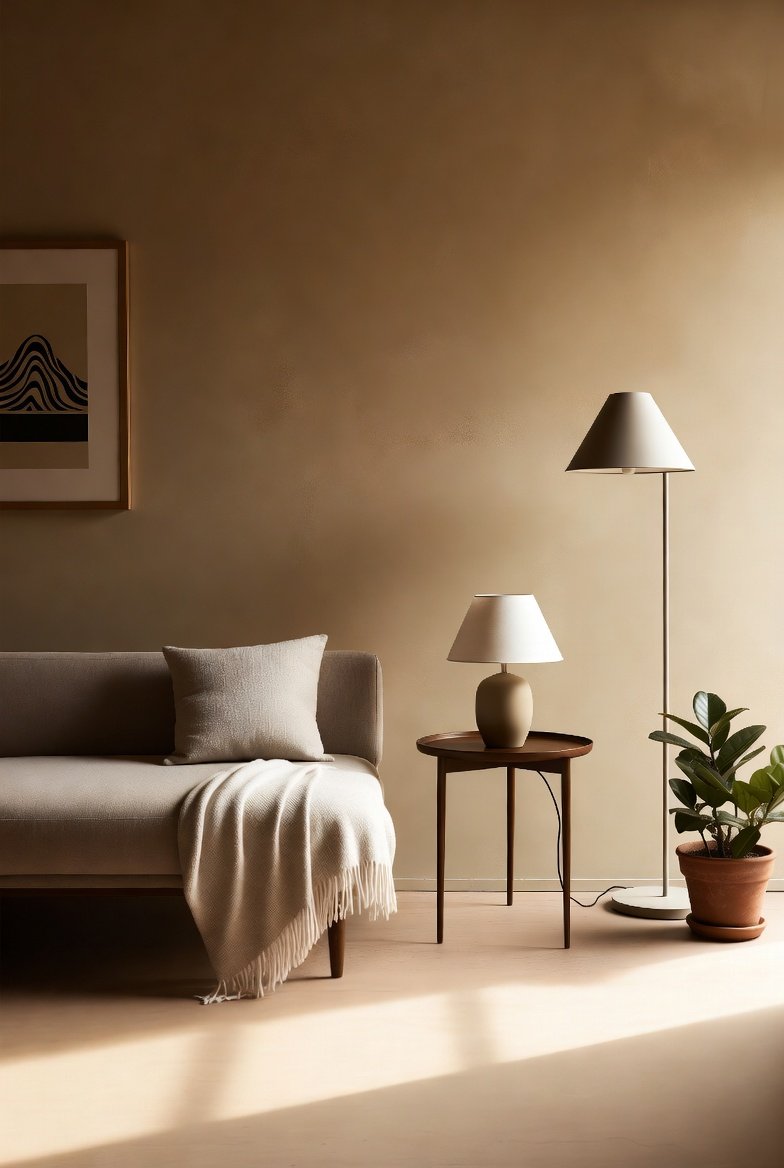
The final, and arguably most important, small living room trick isn’t a product it’s a mindset. Every item in a small space needs to earn its place, because in a compact room, clutter reads twice as loud as it would in a larger one.
Before adding anything to your small living room, ask:
- Does this item serve a real function, or is it just filling space?
- Could two smaller decor pieces be replaced with one intentional statement piece?
- Is there a home for this item, or will it just create visual noise on a surface?
A well-edited small living room with a handful of intentional pieces will always feel calmer and larger than one that’s fuller but unplanned.
Common Small Living Room Mistakes to Avoid
Mistake #1: Pushing every piece against the wall. It feels like it should maximize space, but floating furniture slightly away from the walls often creates a more natural, open flow.
Mistake #2: Matching furniture sets. A matched sofa, loveseat, and armchair set can feel flat and showroom-like. Mixing in one or two different pieces adds personality and depth.
Mistake #3: Overcrowding with “nice to have” furniture. An extra accent chair nobody sits in, or a side table with no real purpose, quietly eats up walking space. Stick to pieces that serve your top two or three real functions.
Mistake #4: Choosing a rug that’s too small. As covered above, an undersized rug chops the room into visual pieces instead of unifying it.
Mistake #5: Ignoring vertical space. Floor space is limited in a small living room, but wall space rarely is. Failing to use shelves, tall furniture, or high art wastes free square footage that’s sitting right there.
A Simple Checklist Before You Start Shopping
- Have you mapped your layout and focal point before buying any furniture?
- Is your rug large enough for at least the front legs of major furniture to sit on?
- Are your curtains hung high and wide enough to maximize the window and light?
- Have you chosen at least one multifunctional, natural-material piece over a single-purpose one?
- Is your color palette light and cohesive, with darker tones reserved for small accents only?
- Have you used vertical space (shelves, tall plants, art) instead of relying only on the floor?
Why Sustainable Choices Matter Even More in a Small Space
In a small living room, every piece of furniture works harder and gets used more often which makes durability and material quality more important, not less. A well-made, solid-wood coffee table or a genuinely multifunctional storage ottoman will outlast several rounds of cheaper, trend-driven replacements, saving both money and landfill space over time.
Choosing FSC-certified wood, natural fiber textiles, and low-VOC paints and finishes also means better indoor air quality in a room where furniture, people, and airflow are all in closer proximity than they’d be in a larger space. In a small living room, sustainable design isn’t just a nice-to-have it’s a genuinely practical choice.
Frequently Asked Questions
What’s the biggest mistake people make in small living rooms?
Buying furniture before planning the layout. Start with a focal point and your room’s real functions, then choose furniture that fits both.
Should I use a small rug in a small living room to avoid overwhelming the space?
No the opposite is usually true. A rug that’s too small makes a room feel more chopped-up and cramped. Size up so at least the front legs of your main furniture rest on it.
What colors make a small living room look bigger?
Light, warm neutrals — soft white, sand, warm beige, and light wood tones reflect more light and make walls feel like they recede rather than close in.
Is a sectional sofa ever a good idea in a small living room?
It can work in an open-plan layout where it also helps define the space, but in a fully enclosed small room, a loveseat or two slim chairs usually leave more usable floor space.
How can I add storage to a small living room without adding clutter?
Prioritize vertical storage — wall-mounted shelves, tall bookcases, and floating consoles over floor-based storage pieces, and choose furniture that hides storage inside it, like a storage ottoman.
Do plants actually help a small living room feel bigger?
Yes. A single well-placed, tall plant adds color and life without the visual weight of furniture or decor objects, especially when placed to draw the eye upward toward the ceiling.
Final Thoughts
A small living room doesn’t need more square footage it needs a clearer plan. Start with your layout and focal point, scale your furniture down, let in as much light as possible, and choose fewer, better, more sustainable pieces over more, cheaper ones. The room will feel bigger before you’ve moved a single wall.