
Here’s something most plant parents don’t realize until their favorite fiddle leaf fig starts dropping leaves in January: houseplants don’t actually experience winter the way outdoor plants do but they absolutely feel its effects. Less daylight, drier air from your heating system, and cooler temperatures near windows all add up to real stress, even for plants that never leave your living room.
The good news is that winter houseplant care isn’t complicated once you understand what’s actually changing indoors. The fifteen tips below cover everything from watering adjustments to the pest problem almost nobody checks for until it’s already spread. Stick around for tip #8 it solves the single most common cause of crispy, browning leaf edges every winter.
1. Water Less Frequently Than You Do in Summer
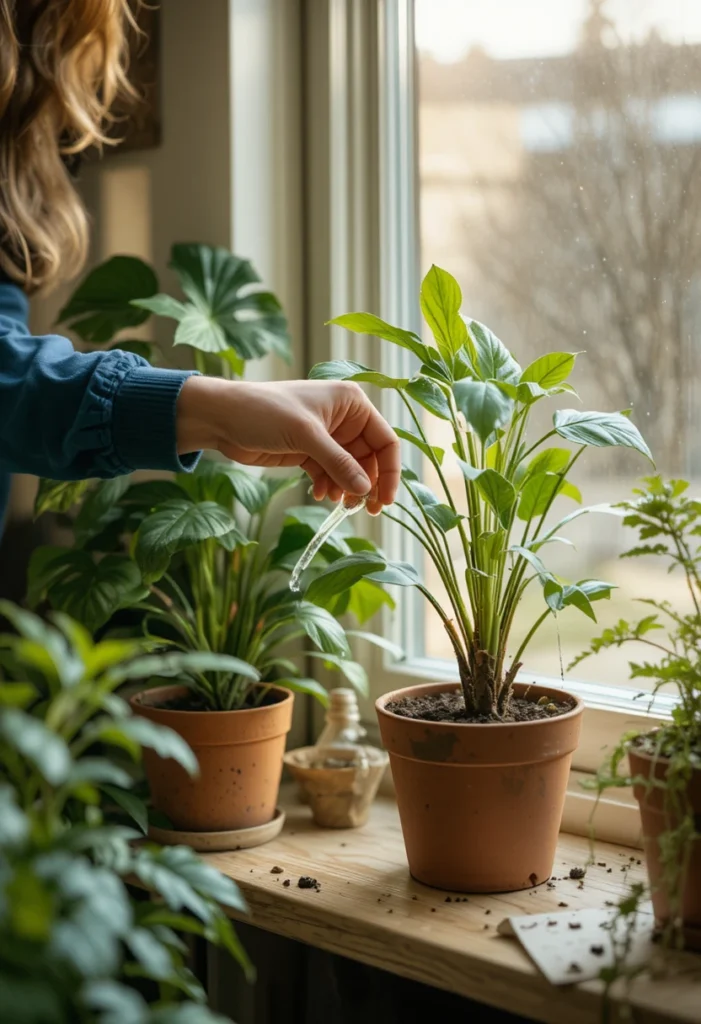
This is the adjustment that trips up more houseplant owners than any other. With lower light and cooler temperatures, most houseplants slow their growth dramatically in winter which means they’re using far less water than they were just a few months earlier.
Here’s the thing: watering on the same summer schedule during winter is one of the most common causes of root rot this time of year, since the soil simply isn’t drying out as fast as it did before.
2. Always Check the Soil Before Watering
Rather than watering on a fixed schedule, check the actual moisture level first. Stick a finger about an inch into the soil if it still feels damp, hold off for a few more days.
Quick tip to save: this single habit prevents the overwatering mistake in tip #1 almost automatically, since you’re responding to what the plant actually needs instead of guessing based on the calendar.
3. Water in the Morning When You Do Water
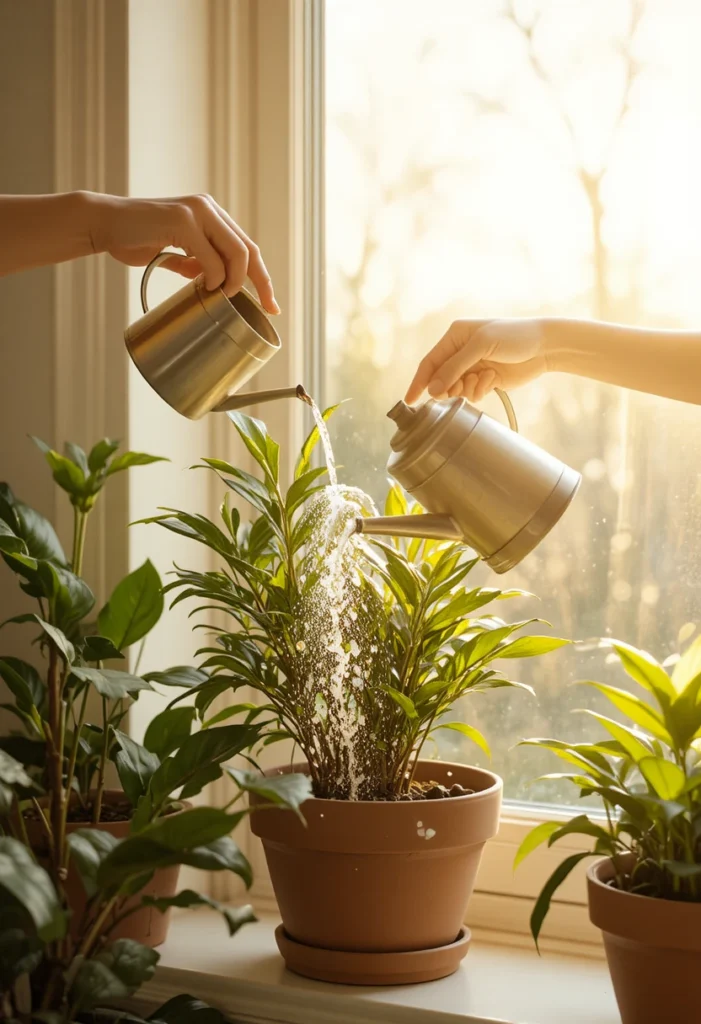
When it is time to water, morning is the better choice over evening. It gives excess moisture on the soil surface and around the plant more time to evaporate during the day, reducing the risk of fungal issues that thrive in cool, damp conditions overnight.
4. Move Plants to the Brightest Available Spot
Winter light is weaker and the days are shorter, so plants benefit from being moved closer to your brightest window — typically a south-facing one, which offers the most consistent light throughout the day.
So what does this mean for you? A plant that did perfectly well several feet from a window in summer may genuinely need to move right up against the glass in winter to get the same amount of usable light.
5. Clean Your Windows Before Winter Sets In
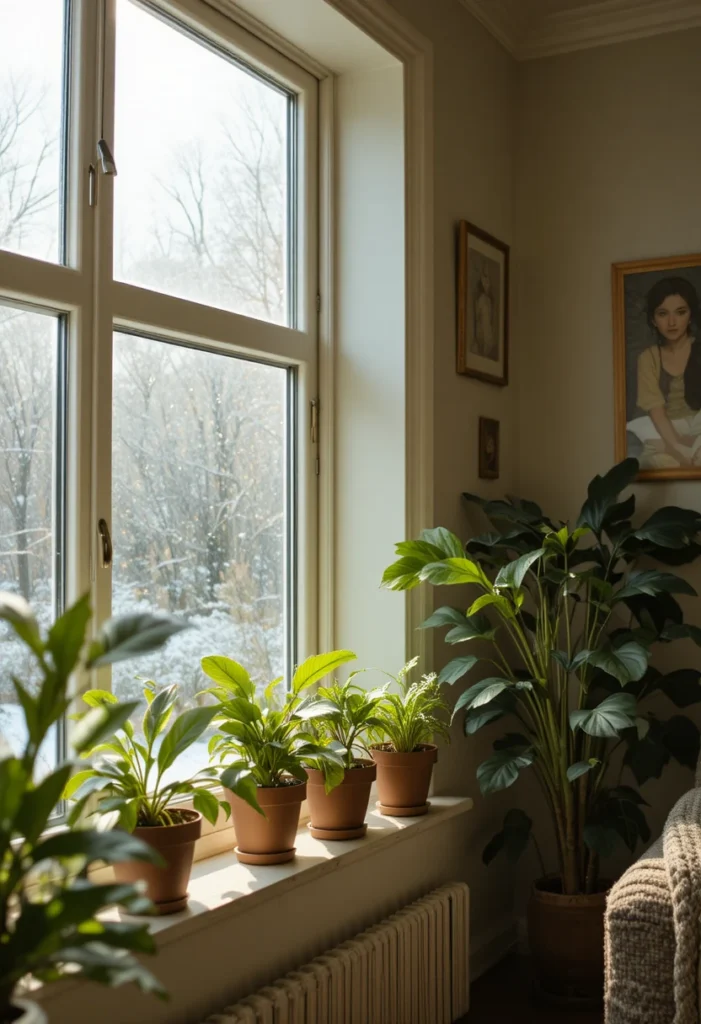
Here’s a step almost nobody thinks about: if a window is your plant’s primary light source, a layer of grime or dust on the glass is quietly cutting down how much light actually reaches your plant. Give windows a proper clean before the darkest months arrive.
Quick tip to save: this takes fifteen minutes and costs nothing, making it one of the highest-value, lowest-effort tips on this entire list.
6. Rotate Plants Regularly for Even Growth
With light coming predominantly from one direction near a window, plants tend to lean and grow lopsided if left in the same position for months. Give pots a quarter turn every week or two so all sides get equal exposure.
Here’s the payoff: a plant that grows evenly in all directions rather than stretching awkwardly toward the glass on one side.
7. Consider a Grow Light for Low-Light Rooms
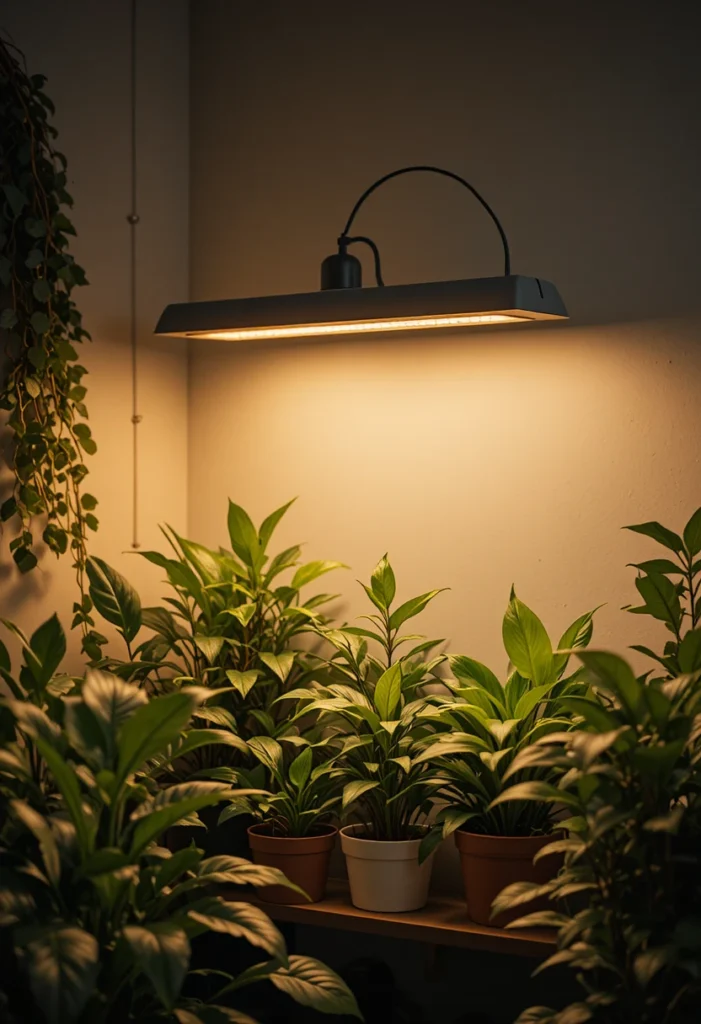
If your space simply doesn’t have a bright enough window for certain plants, a grow light closes that gap. Aim for roughly 12-16 hours of light per day when relying on artificial lighting to replace what natural winter sun can’t provide.
Quick recap you can save:
- South-facing windows are best if relying on natural light alone
- Grow lights are worth the investment for rooms with limited or no direct sun
- 12-16 hours daily is a reasonable target when using artificial light as the primary source
8. Boost Humidity This Is the Fix Most People Skip
This is the tip that solves the majority of winter houseplant complaints. Indoor humidity can drop to as low as 10-20% in winter, while most houseplants prefer somewhere in the 40-50% range. That gap is exactly why so many tropical plants develop crispy, browning leaf edges once the heat comes on.
A few ways to close that gap:
- Light misting a few times a week for humidity-loving plants
- A humidifier placed near plants that crave it most, like calatheas or orchids
- Grouping plants together, which naturally creates a slightly more humid microenvironment
- Pebble trays with water beneath pots (without letting roots sit directly in standing water)
But there’s a catch: don’t overdo misting excess moisture sitting on leaves can invite mold or fungal issues, so light and occasional beats frequent and heavy.
9. Keep Plants Away From Cold Drafts and Heat Vents
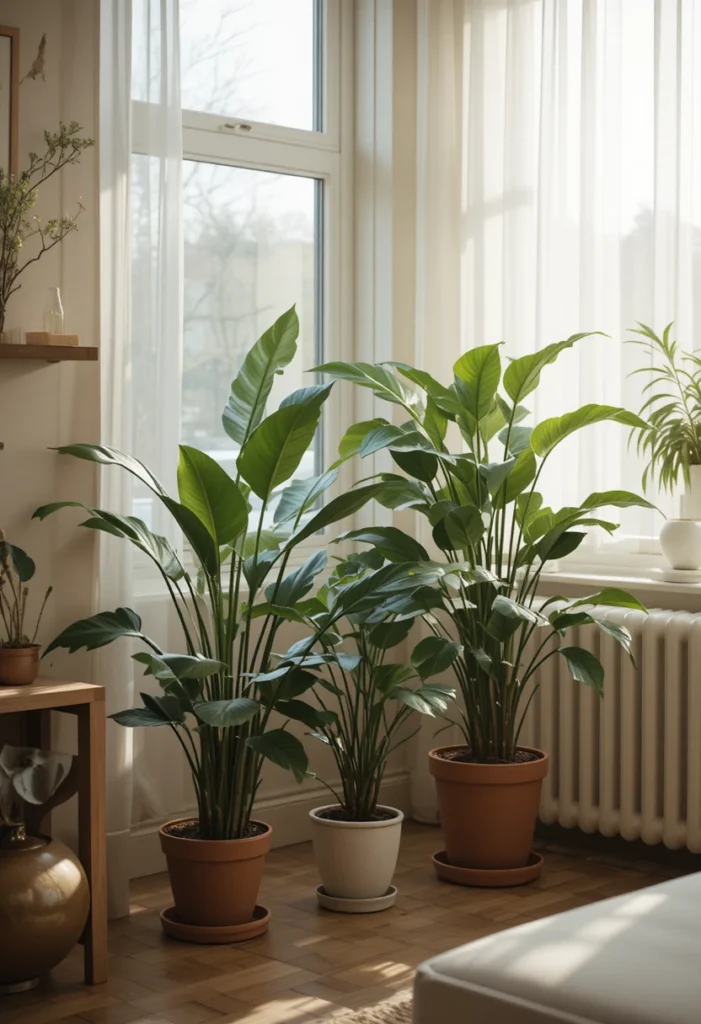
Winter creates two opposite temperature hazards in most homes at once: cold drafts from older windows or doors, and blasting dry heat from vents and radiators. Both stress plants in different ways, and both are easy to accidentally place a plant right next to without noticing.
Quick tip to save: walk your home and specifically check for drafty windows and nearby heating vents before deciding on final plant placement for the season.
10. Ease Off Fertilizing During the Slow Season
Most houseplants aren’t actively growing much in winter, which means they’re not using nutrients at the same rate they do in spring and summer. Fertilizing on a normal-season schedule can actually build up excess salts in the soil that a slow-growing plant isn’t able to use.
So what does this mean for you? Reduce fertilizing frequency significantly, or pause it entirely, until you see new growth signaling the plant is actively growing again.
11. Hold Off on Repotting Until Spring
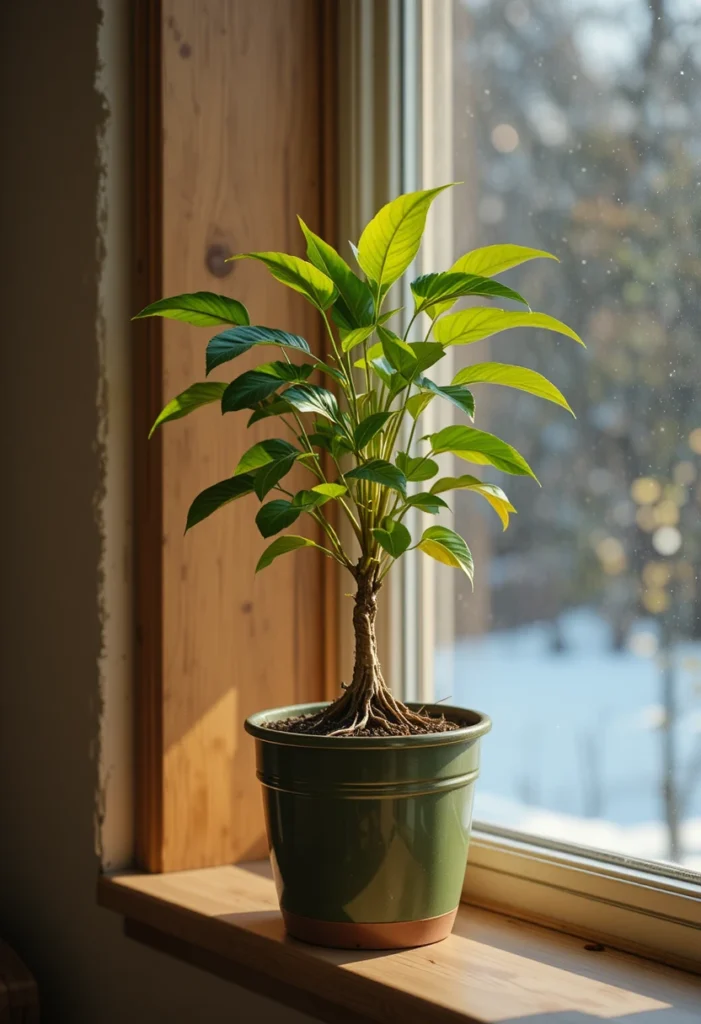
It’s tempting to repot a plant the moment it looks like it’s outgrown its container, but winter is the wrong season for it. Plants that aren’t actively growing are more vulnerable to the stress and shock that repotting causes.
Quick tip to save: make a mental (or written) note of which plants need repotting, and revisit the task once you see fresh growth appear in early spring.
12. Wipe Down Leaves to Remove Dust
Dust settles on broad leaves faster than most people expect, and a dusty leaf surface reduces how efficiently a plant can photosynthesize which matters even more in winter, when light is already limited.
Here’s the payoff: a simple wipe-down with a damp cloth every few weeks keeps leaves able to make full use of whatever light they’re getting, at a time of year when every bit of light counts.
13. Inspect Regularly for Winter Pests
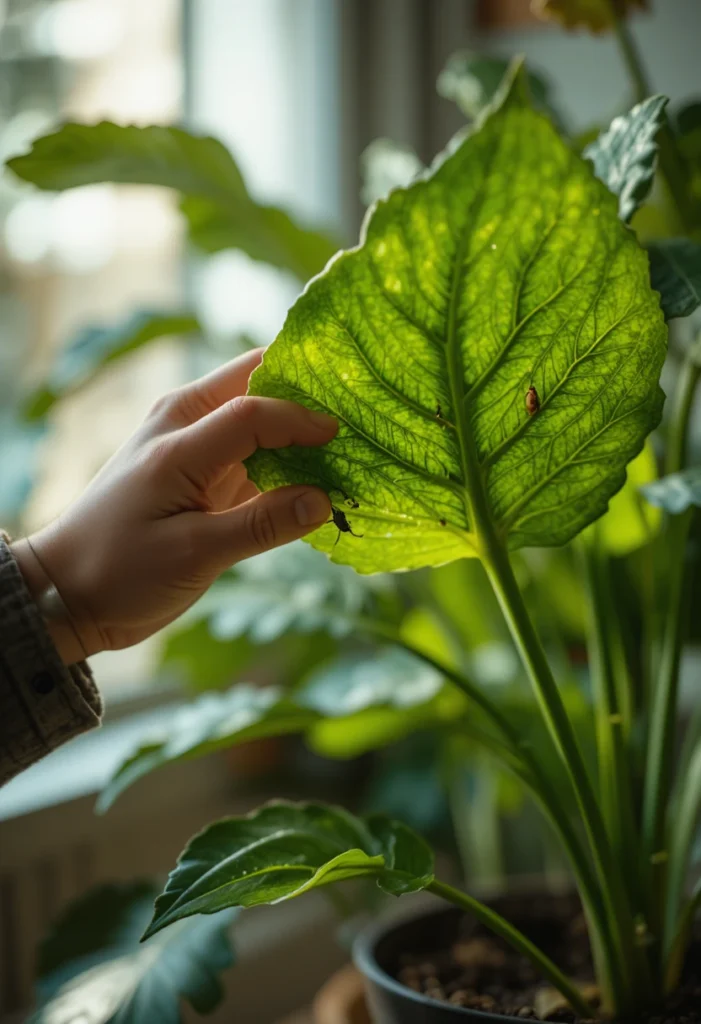
Indoor heating and less airflow can create ideal conditions for certain pests to move in unnoticed. Cottony white masses point to mealybugs; sticky residue on leaves signals insects at work nearby; clusters on new growth are often aphids.
Quick recap you can save:
- Mealybugs: dab individually with a cotton swab dipped in rubbing alcohol
- Sticky or affected leaves: rinse thoroughly with water and keep watching for their return
- Aphids: wash off with a strong, direct spray of water
14. Protect New Plants During Winter Purchases
If you’re buying houseplants during the colder months, the trip from store to home matters more than people realize. Protect plants from cold exposure during transport, and never leave a newly purchased plant sitting in a cold car, even briefly.
Here’s the thing: once home, give a new plant time to acclimate to a warm, bright spot rather than immediately placing it in its permanent, possibly less ideal location.
15. Quarantine New Plants Before Introducing Them to Others
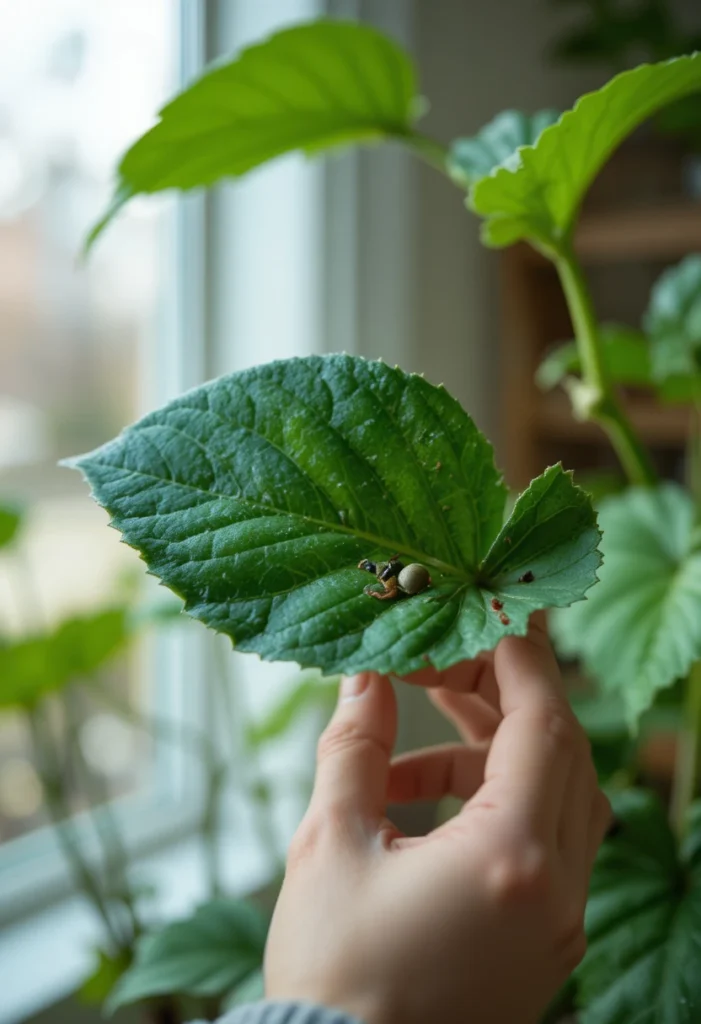
This is the step almost everyone skips in their excitement over a new plant. Isolating a newly purchased or gifted plant from your existing collection for a few weeks lets you confirm it’s pest-free before it has a chance to spread anything to plants that were already perfectly healthy.
So what does this mean for you? A few weeks of minor inconvenience now prevents an infestation that could otherwise spread through your entire indoor collection by the time you notice something’s wrong.
Frequently Asked Questions
How often should I water houseplants in winter?
Less often than in summer most houseplants grow slower in winter due to reduced light and cooler temperatures, so check the soil moisture before watering rather than sticking to a fixed schedule.
Why are my houseplant’s leaves turning brown and crispy in winter?
This is usually caused by low humidity from indoor heating, which can drop well below what most houseplants prefer. Misting, a humidifier, or grouping plants together can all help close that humidity gap.
Should I fertilize houseplants during the winter months?
Generally no, or only lightly most houseplants aren’t actively growing much in winter, so regular fertilizing can build up excess salts the plant isn’t using. Resume a normal schedule once new growth appears in spring.
Is it safe to repot houseplants in winter?
It’s best to wait until early spring when plants are actively growing again. Repotting a dormant or slow-growing plant in winter adds unnecessary stress and shock at the worst possible time.
Bringing It All Together
Winter houseplant care isn’t about doing more it’s about doing the right things differently than you would the rest of the year. Water less, but check more carefully. Boost humidity instead of fighting dry indoor air. Hold off on fertilizing and repotting until active growth resumes.
Work through these fifteen tips over the next few weeks rather than trying to change everything about your routine overnight, and your indoor collection should sail through to spring looking just as good as it did in fall.