
A garden arch is one of the simplest ways to add height, structure, and personality to a backyard. Unlike a flat garden border, an arch draws the eye upward and can create a natural transition between two parts of the outdoor space. It can frame a pathway, mark an entrance, support climbing plants, create a private garden corner, or simply become a beautiful focal point. BBC Gardeners’ World notes that garden arches can be both decorative and functional, helping define paths, create privacy, support climbers, and introduce extra flowers and greenery.
The beauty of 15+Garden ideas is that you do not need a huge backyard or an expensive landscaping project to create an impressive arch. Wooden frames, metal arches, lattice structures, recycled materials, and even simple DIY trellises can be adapted to different garden styles. Current garden-design inspiration includes everything from classic rose-covered arches and rustic timber structures to modern steel frames and edible garden tunnels.
Whether you want a romantic cottage garden, a practical vegetable garden, a modern backyard, or a cozy outdoor retreat, the right arch can transform the space. Below, you will find creative 15+Garden ideas along with practical advice about placement, materials, climbing plants, privacy, maintenance, and designing an arch that looks beautiful throughout the seasons.
1. Classic Wooden Garden Arch
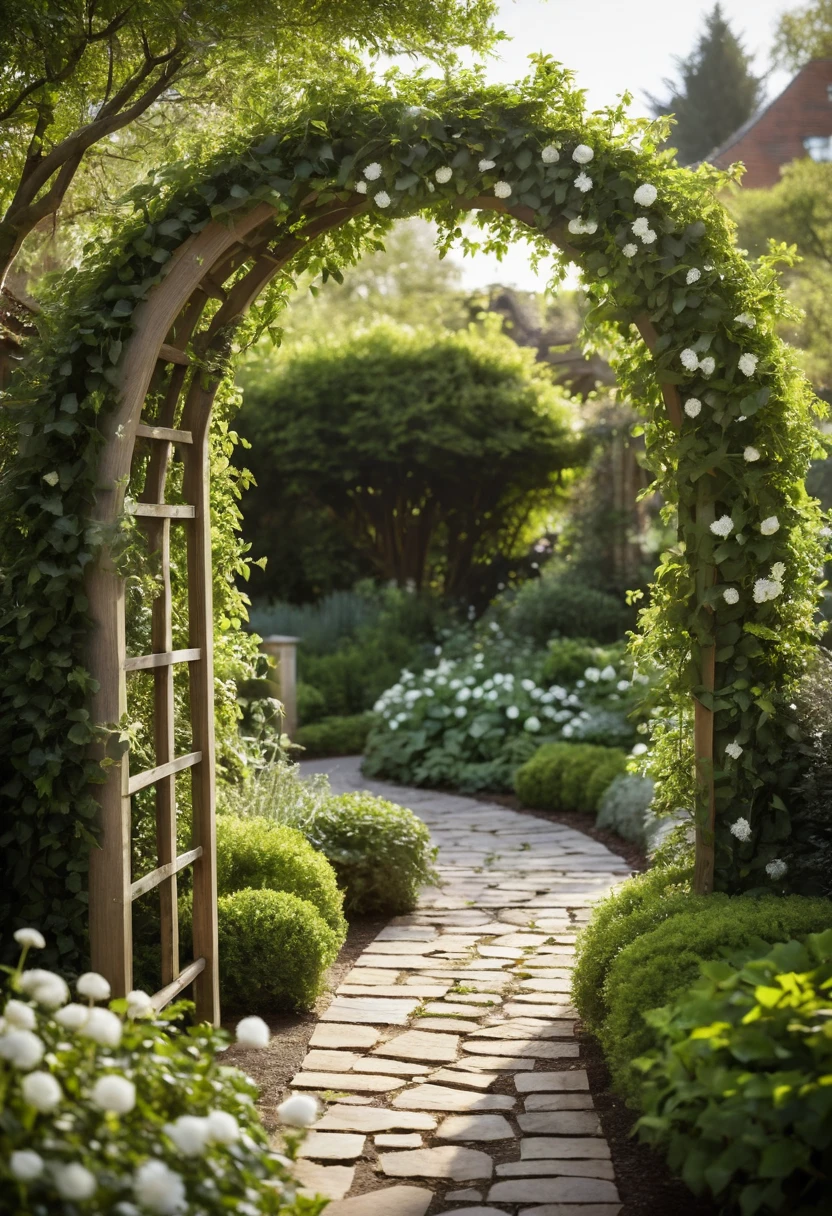
One of the most timeless 15+Garden ideas is a traditional wooden arch. A wooden structure works particularly well in cottage, farmhouse, country, and natural-style gardens because its warm texture blends easily with flowers and greenery.
You can choose a simple curved top or a more architectural design with straight sides and a slatted roof. A rustic timber arch can be left in its natural finish, while a painted version can coordinate with fences, doors, planters, or outdoor furniture.
Add Climbing Roses
Climbing roses can turn a simple wooden structure into a dramatic garden feature. Train the flexible stems around the sides and across the top rather than allowing them to grow randomly.
Martha Stewart highlights rose-covered archways as a classic garden look and recommends guiding climbing rose canes through the structure with ties.
2. Rose-Covered Romantic Arch
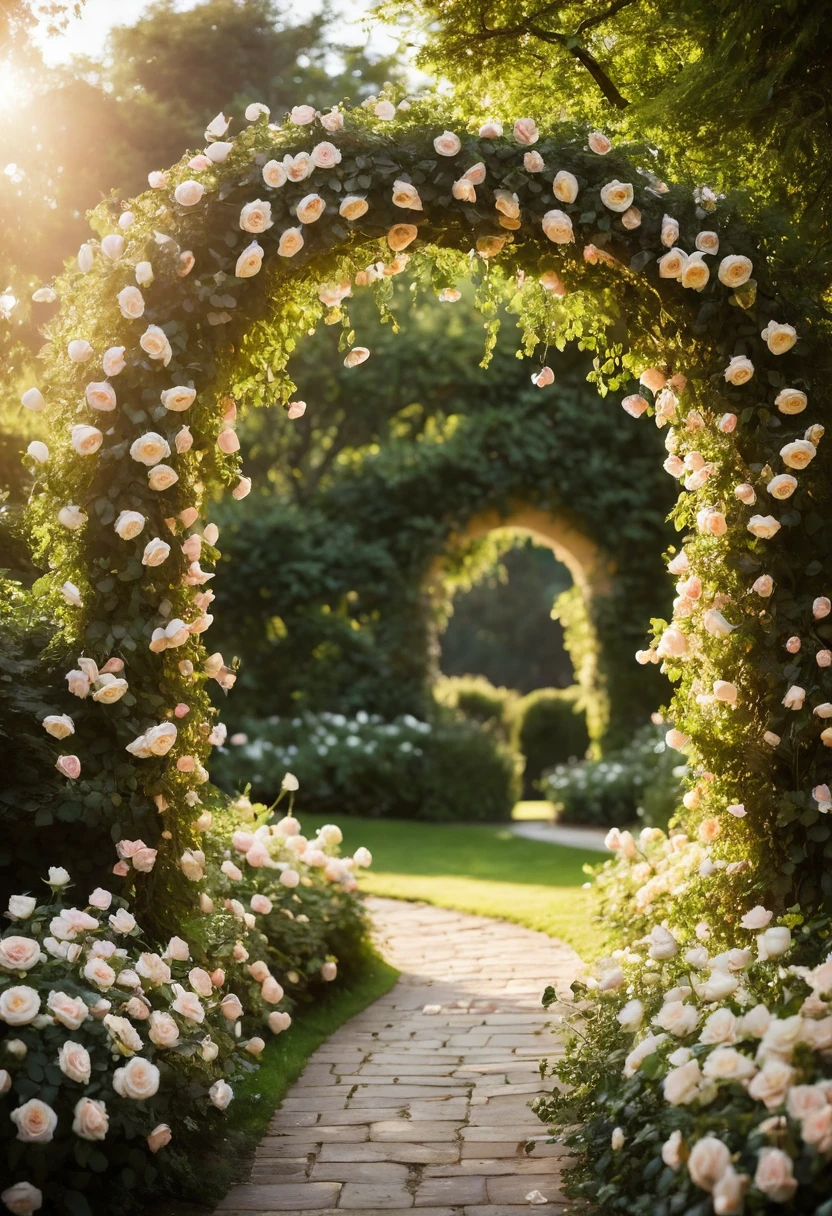
If you want your backyard to have a romantic appearance, create an arch covered with flowering roses. The combination of an elegant structure and abundant blooms can make even a simple pathway feel special.
Choose rose varieties according to your climate, available sunlight, mature size, and maintenance preferences. A rose arch looks particularly attractive when the planting around its base is slightly informal rather than perfectly symmetrical.
Create a Soft Cottage Border
Surround the arch with low-growing flowers, herbs, or ornamental foliage. This helps the structure appear naturally connected to the rest of the garden.
Keep enough space around the plants for air circulation and maintenance. The goal is a lush appearance without allowing the base of the arch to become overcrowded.
3. Rustic Branch and Willow Arch
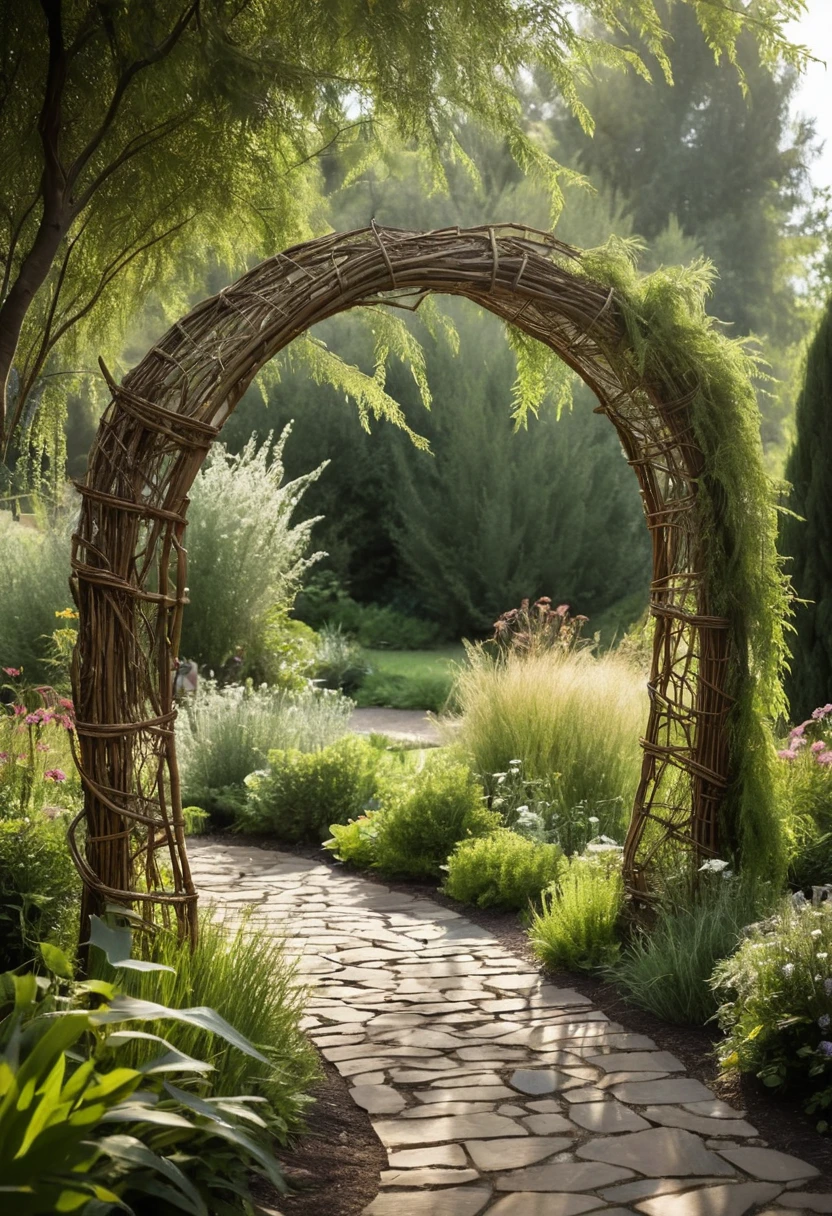
For a natural backyard, consider creating an arch from flexible branches or willow. The irregular texture gives the structure a handmade appearance and works beautifully with informal planting.
This style is particularly suitable for woodland gardens, cottage gardens, and spaces where you want the arch to look as though it has always belonged there.
Use Natural Textures
Pair a branch arch with ferns, grasses, climbing vines, and small flowering plants. Avoid making everything perfectly symmetrical because the charm of this design comes from its organic character.
Make sure the structure is securely anchored and use suitable materials that can withstand your local weather conditions.
4. Modern Black Metal Arch
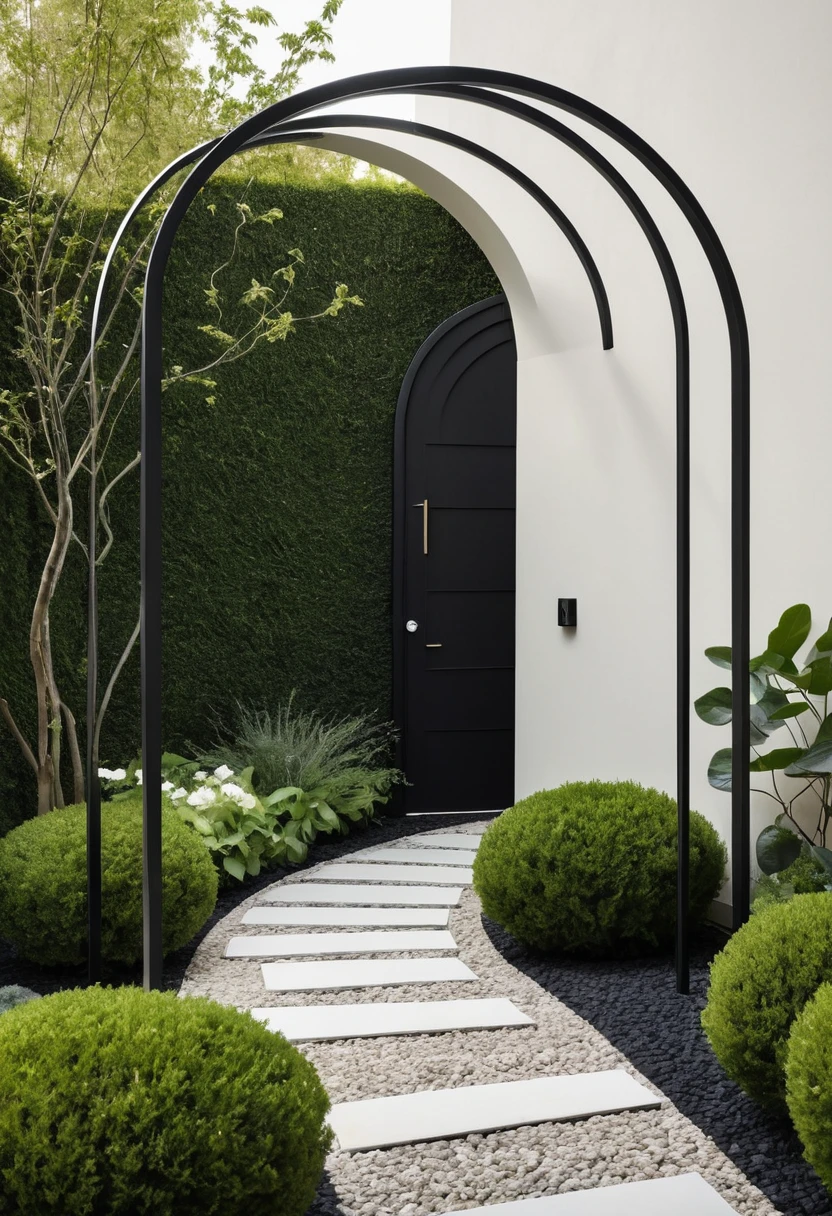
A black metal arch can create a completely different effect. Instead of blending into the garden, the dark frame provides a strong architectural outline against green foliage and colorful flowers.
Modern arches work especially well in contemporary gardens with geometric planting beds, gravel paths, concrete paving, or minimalist furniture.
Keep the Planting Controlled
Choose one or two climbing plants instead of covering the entire structure with many different vines. A restrained planting scheme helps maintain the modern appearance.
Climbers such as clematis, jasmine, or suitable roses can soften the metal without hiding its shape completely. BBC Gardeners’ World also recommends climbing plants such as honeysuckle, passion flower, and clematis for arch structures.
5. Garden Arch Over a Pathway
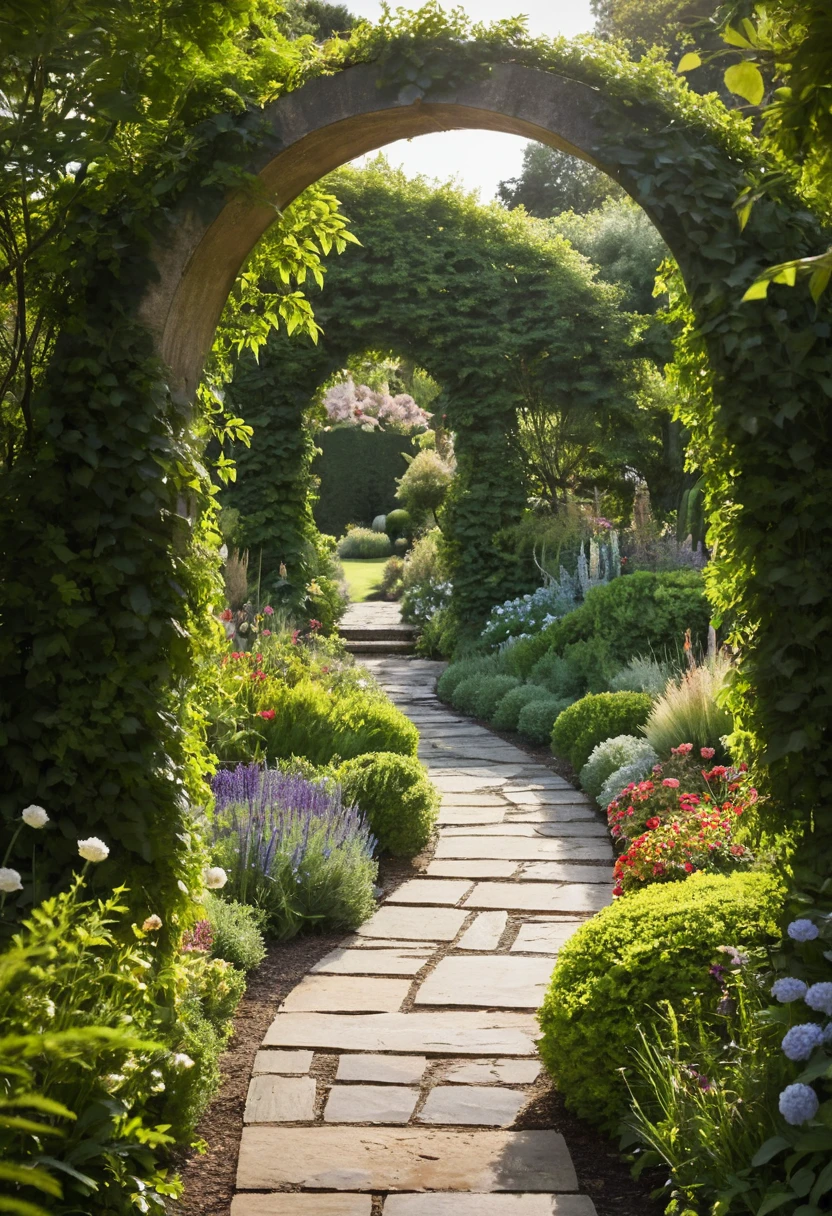
A pathway arch can make an ordinary walkway feel like a destination. Position the arch across the beginning, middle, or end of a garden path to create a sense of movement.
This is one of the most useful 15+Garden ideas because the structure serves both a decorative and organizational purpose. Garden arches are commonly used to define paths and create transitions between different garden zones.
Frame the View Beyond
Think about what visitors will see when they walk through the arch. If possible, position it so the opening frames an attractive feature such as a tree, fountain, flower bed, bench, or seating area.
This simple design trick can make a relatively small garden feel deeper and more carefully planned.
Read also:11+ Flower Garden & Planting Ideas With Roses for a Beautiful Backyard
6. Archway at the Garden Entrance
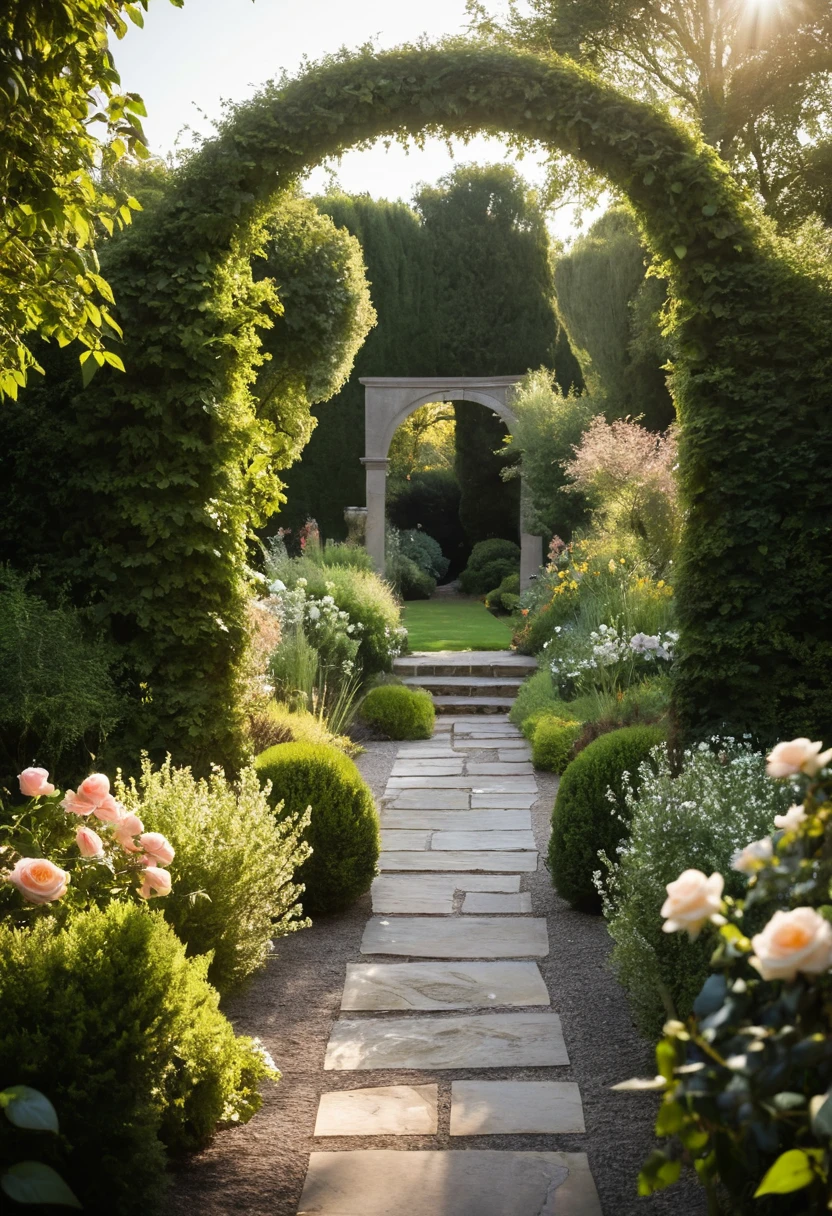
A garden entrance arch can create a welcoming first impression. If your backyard has a gate or defined entrance, an arch can frame it and give the area more architectural presence.
HGTV describes garden arbors as structures that can mark entrances or act as focal points, with both open and gated versions offering different visual effects.
Add a Simple Gate
A wooden or metal gate underneath the arch can create a traditional garden-entry appearance. Choose a gate style that matches the material of the arch.
For a softer look, leave the entrance open and allow vines to form a natural frame around the walkway.
7. Vegetable Garden Arch
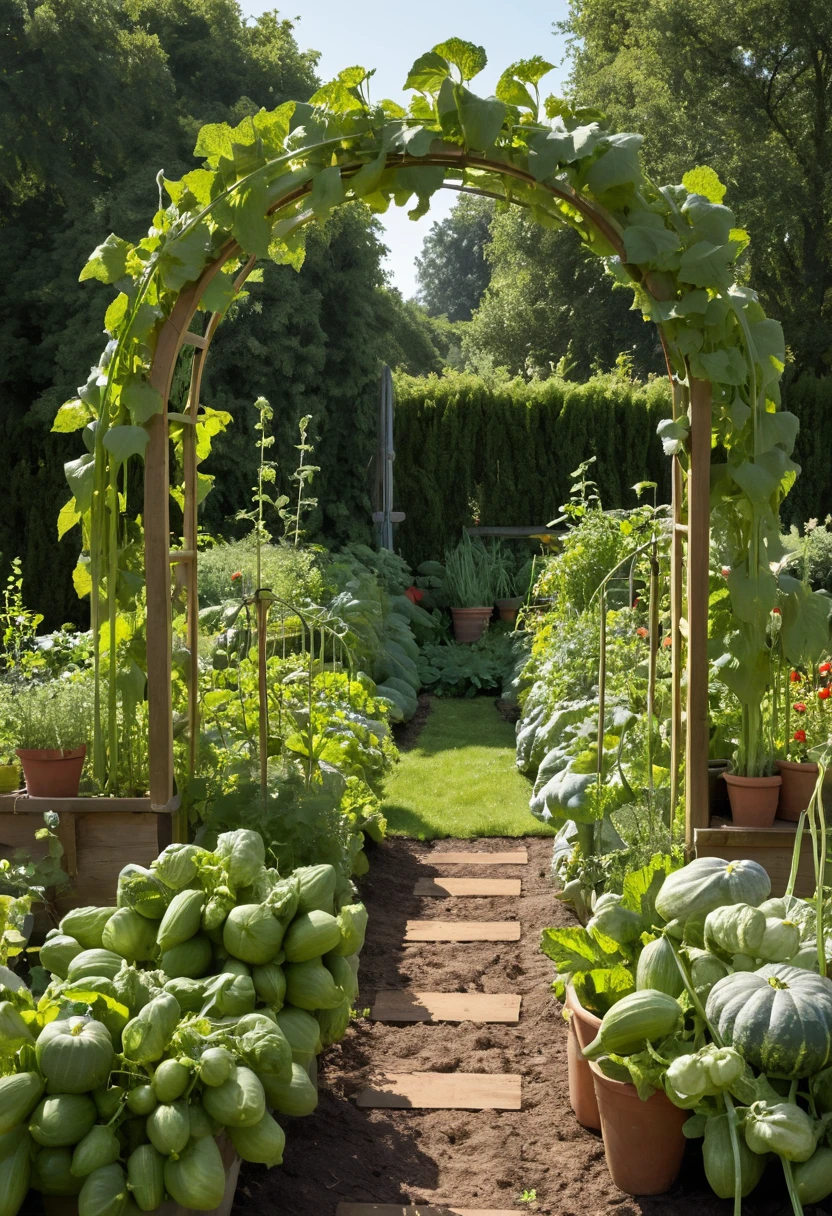
A garden arch does not have to be purely ornamental. You can use one to support climbing vegetables such as beans, cucumbers, peas, and other suitable vines.
This is particularly useful in small backyards because the plants grow upward rather than spreading across valuable ground space. DIY garden arch designs commonly use sturdy arched panels to support climbing vegetables and create productive tunnels.
Create an Edible Tunnel
Place two planting areas on opposite sides of the arch and train climbing vegetables toward the overhead structure. As the plants mature, they can create a green tunnel.
Make sure the arch is strong enough for the mature weight of the plants, especially after rainfall. Secure the structure properly rather than relying on lightweight supports.
8. Clematis-Covered Garden Arch
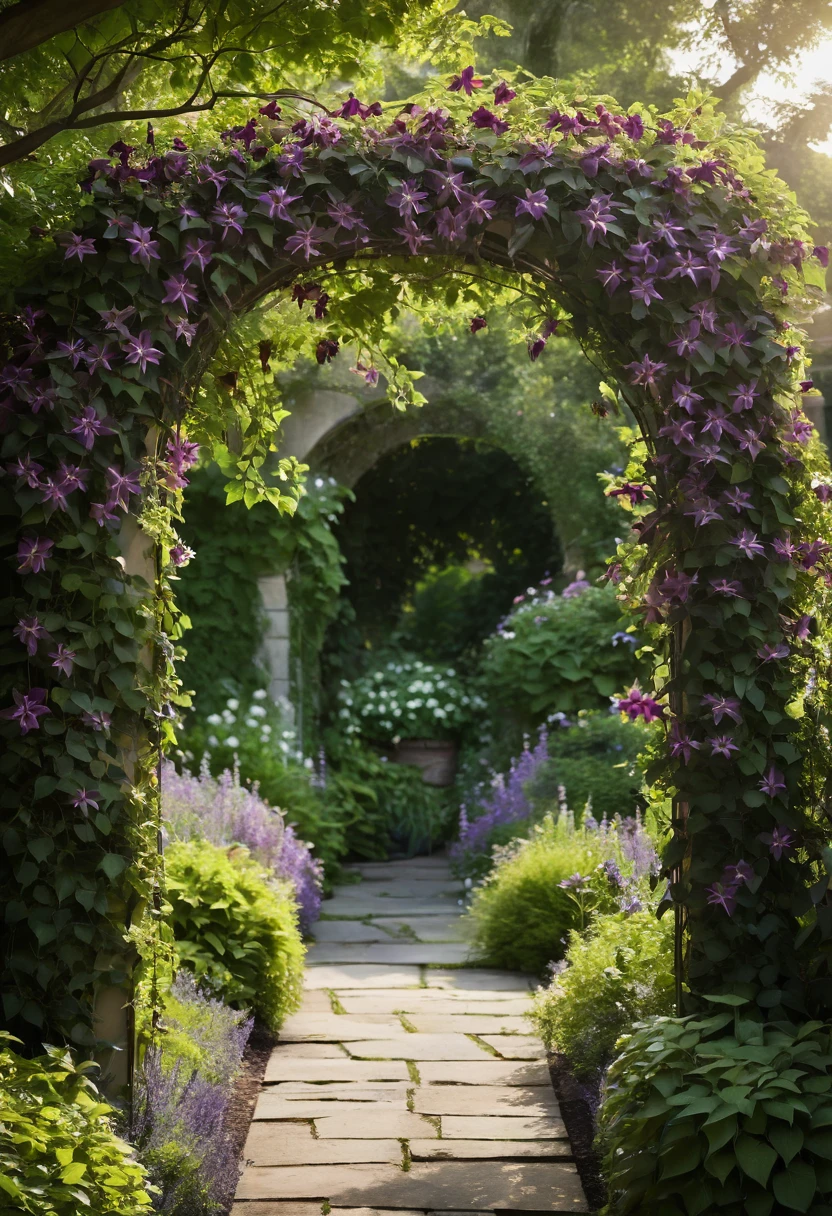
Clematis can be an attractive choice when you want flowers climbing over an arch. Different varieties provide different flower shapes, colors, and flowering periods, allowing you to select something that suits your garden.
An arch covered with clematis can provide seasonal color while still allowing some of the underlying structure to remain visible.
Combine With Another Climber
If you want a longer display period, consider combining climbers carefully according to their growth habits and conditions. Avoid planting too many vigorous plants together because they can compete for space and become difficult to maintain.
BBC Gardeners’ World recommends clematis among climbing plants suitable for arch structures.
9. Arch With Built-In Planters
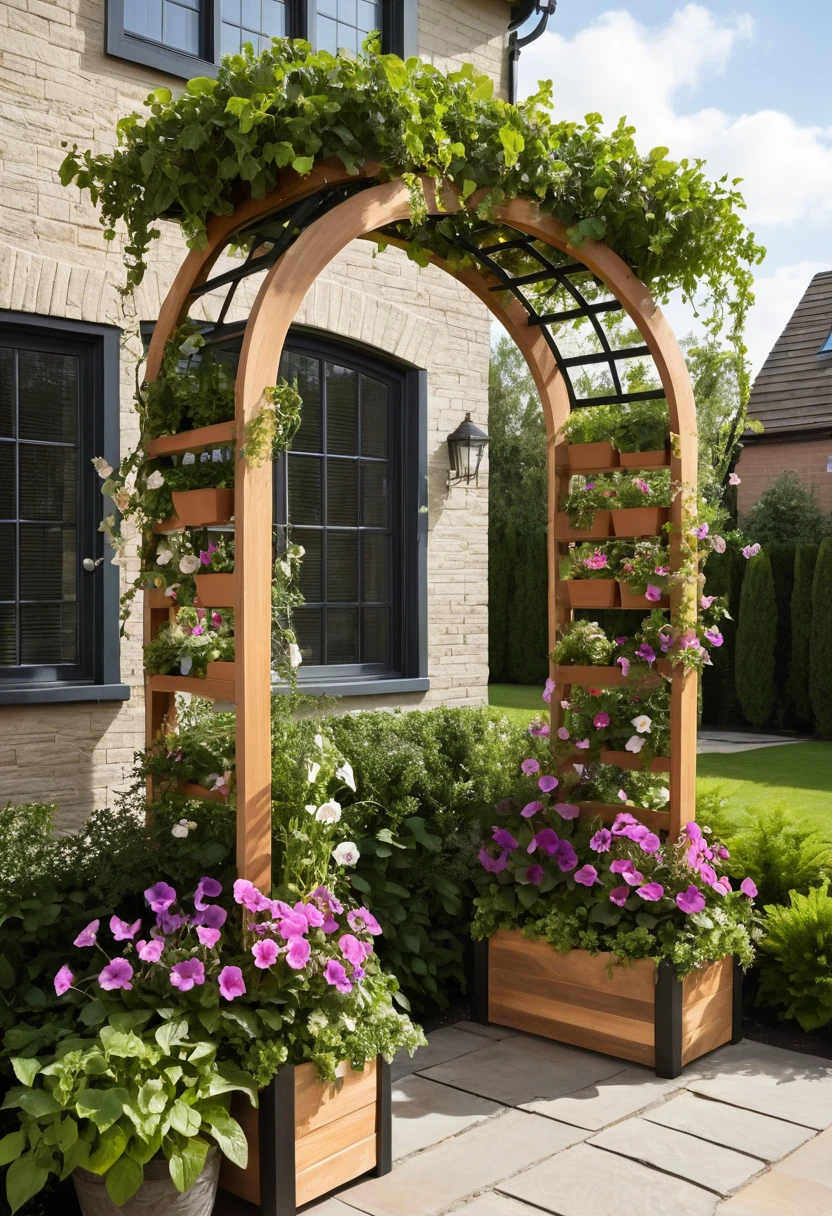
If your backyard has limited planting space, choose or build an arch with planters at its base. This allows climbing plants to grow upward even where there is little open soil.
BBC Gardeners’ World notes that arches with built-in planters can be useful where there is little or no soil available for climbers.
Use Containers for Flexibility
Large containers can also make your arch easier to adapt. You can change seasonal flowers or move the containers if you want to redesign the garden.
Make sure the containers are heavy and stable enough to support the arch or climbing plants. Drainage is also essential for healthy roots.
10. Secret Garden Arch
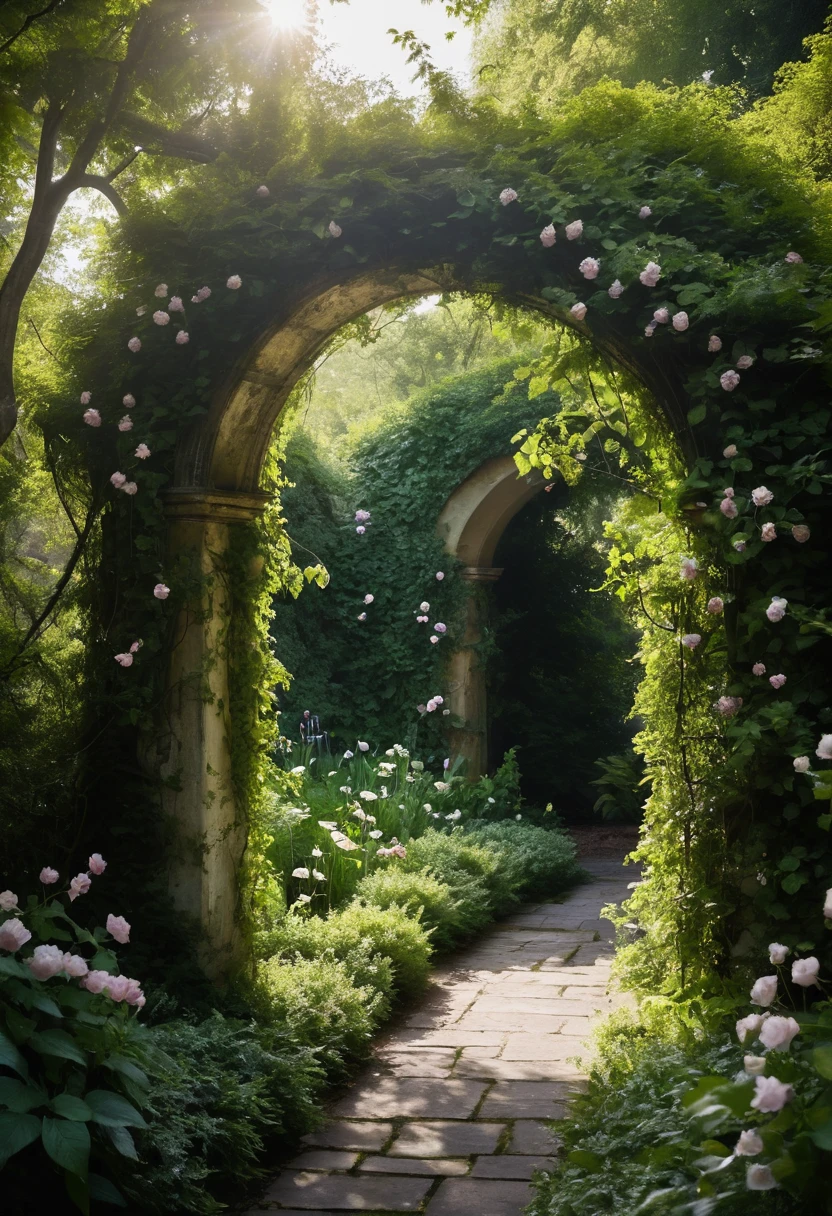
Create a sense of mystery by placing an arch at the entrance to a hidden garden corner. Instead of making the entire backyard visible, use the structure to suggest that something interesting lies beyond it.
This approach works particularly well when the arch opens toward a small bench, reading area, flower garden, or secluded patio.
Add Layers of Greenery
Plant shrubs, grasses, and climbers around the sides so that the entrance feels slightly enclosed. The goal is not necessarily complete privacy; even partial screening can make the space feel more intimate.
A garden arch can become especially effective when it is combined with planting that gradually reveals what lies beyond. Current garden-design guidance emphasizes arches as tools for framing spaces and creating thresholds between areas.
11. White Garden Arch for a Cottage Look
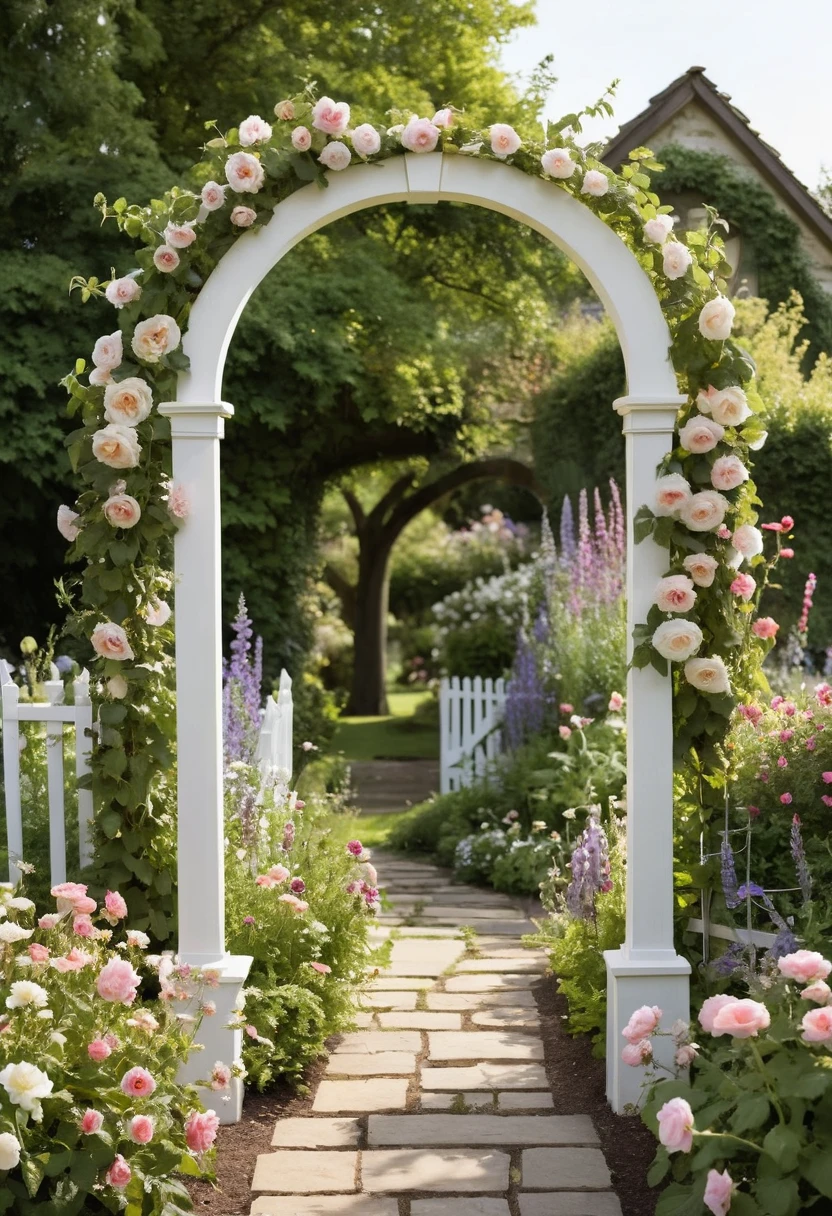
A white-painted arch can instantly create a classic cottage-garden atmosphere. It provides a bright contrast against green leaves and colorful flowers.
Pair the structure with roses, clematis, sweet peas, or other suitable flowering climbers. Add informal flowers around the base to complete the relaxed look.
Repeat White Accents
For a coordinated backyard, repeat white in other details such as pots, benches, edging, or garden furniture. You do not need many white elements; two or three repeated accents can be enough.
Use an exterior-grade finish suitable for the arch material and local weather conditions so the paint remains attractive for longer.
12. Arch With a Built-In Bench
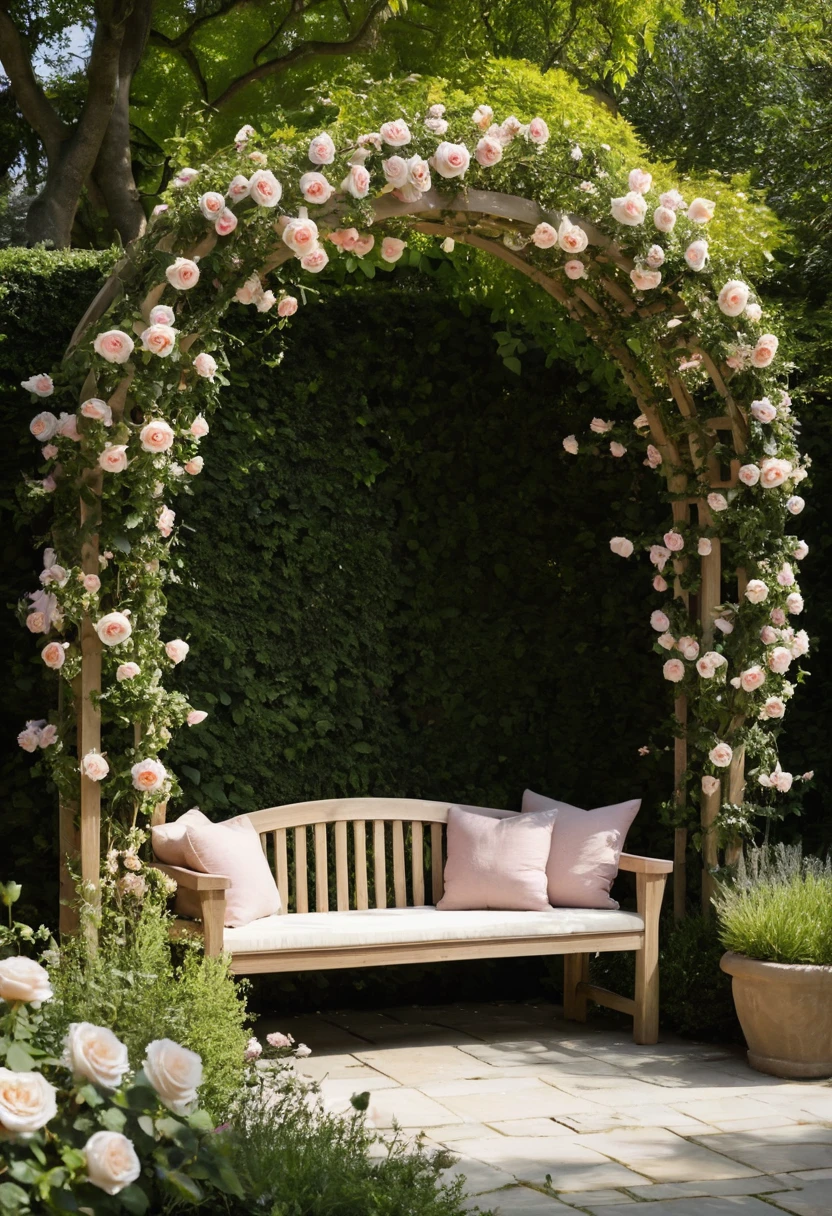
Turn your garden arch into a destination by adding a bench beneath or beside it. The structure then becomes more than a passageway it becomes a place to sit, relax, read, or enjoy the garden.
A timber arch with lattice sides can work particularly well because vines can gradually create a natural enclosure around the bench.
Make It a Relaxation Nook
Place the bench where you can see an attractive garden feature. Add outdoor cushions, a small side table, or subtle lighting if appropriate.
FAQs
What is the best plant for a garden arch?
There is no single best plant for every garden. Climbing roses, clematis, honeysuckle, jasmine, and suitable vegetable vines can all work depending on climate, sunlight, structure strength, and maintenance preferences.
Where should a garden arch be placed?
A garden arch works well at an entrance, across a pathway, between two garden zones, beside a seating area, or as a focal point. Choose a location that supports the purpose of the structure and provides suitable conditions for its plants.
Can I build a garden arch myself?
Yes. Simple arches can be made from suitable timber, metal panels, branches, or other strong materials. DIY examples include wooden frames, cattle-panel arches, and trellis structures.
How do I make a garden arch look natural?
Use materials and plants that complement the surrounding garden. Natural wood, climbing roses, clematis, foliage plants, and informal borders can help an arch blend into the landscape rather than appearing disconnected.
Can a garden arch be used for vegetables?
Absolutely. Strong arches can support climbing vegetables such as beans, cucumbers, and peas. This makes vertical use of the garden and can be especially helpful in smaller spaces.
Conclusion
A garden arch can completely change the character of a backyard without requiring a major landscaping project. From classic wooden arches and romantic rose tunnels to modern metal frames, vegetable trellises, secret garden entrances, and illuminated pathways, the possibilities are remarkably flexible. The best 15+Garden ideas combine the structure with the needs of the space, creating something that is both beautiful and useful.

