
Picture this: you walk past your dining room on a random Tuesday and it stops you in your tracks not because you’re hosting anyone, but because the room itself feels like an invitation. That’s not luck. That’s design. And in 2026, the dining room isn’t the forgotten space between the kitchen and the living room anymore homeowners are asking for real dining rooms again, trading afterthought spaces for fully realized rooms that can host a dinner party on Saturday and still feel cozy on a Tuesday night. aol
If your dining room currently doubles as a mail-sorting station or a place where boxes go to be “dealt with later,” you’re not alone and you’re also just a few intentional choices away from a room you actually want to sit in. Below are 11 dining room decorating ideas, pulled from what’s actually working in homes right now, that you can mix, match, and layer to build a space with real personality.
Pin this now so you can come back to it while you shop you’ll want the full list handy.
1. Commit to a Statement Lighting Fixture
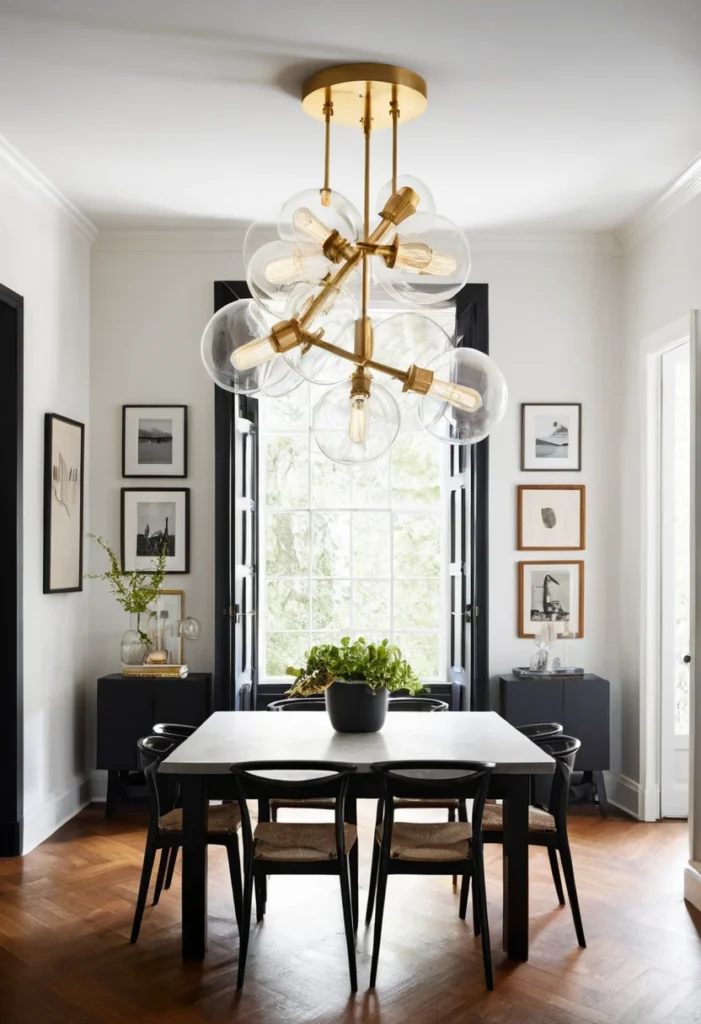
Nothing changes the mood of a dining room faster than what’s hanging above the table. For 2026, the trend has moved firmly away from small, matchy fixtures and toward sculptural pieces that double as art. Oversized, sculptural fixtures slim black rings, branching brass forms, or delicate glass globes double as art and a focal point, especially above a simple table. POVISON
You don’t need a chandelier the size of a chandelier in a hotel lobby. What you need is scale: a fixture that feels proportionate to your table, hung low enough to create intimacy but high enough that no one’s ducking to pass the potatoes. A good rule of thumb is 30–34 inches above the tabletop for standard 8-foot ceilings, adjusting up about 3 inches for every additional foot of ceiling height.
Try this: If a full chandelier swap feels like too much commitment, start with a single oversized pendant. It’s a lower-cost, lower-effort way to test drama before you go all in.
2. Layer In Warm, Storied Wood Tones
The all-white, all-gray dining room had its moment and 2026 is quietly retiring it. Designers describe 2026 dining rooms leaning toward richer, more architectural environments, with paneled walls, plaster finishes, walnut tones, statement millwork, and warm, layered lighting. The overarching idea is a room that feels less like a showroom and more like it has a history. Homes and Gardens
Walnut, teak, and richly grained oak are having a real moment right now. Creative touches include woods in walnut and teak, satin finishes that soften light, and prominent visible grain, paired with textured upholstery in earthy or citrus tones against clean-lined taper-leg chairs or pedestal tables. Decorilla
If you’re not ready to replace your table, you can borrow this trend through a wood-toned sideboard, a set of new chair legs, or even wooden charger plates layered under your usual place settings.
Save-worthy tip: Mix wood tones on purpose. A walnut table with an oak sideboard reads intentional; matching everything exactly can flatten the room’s personality.
3. Bring the Walls to Life With Texture
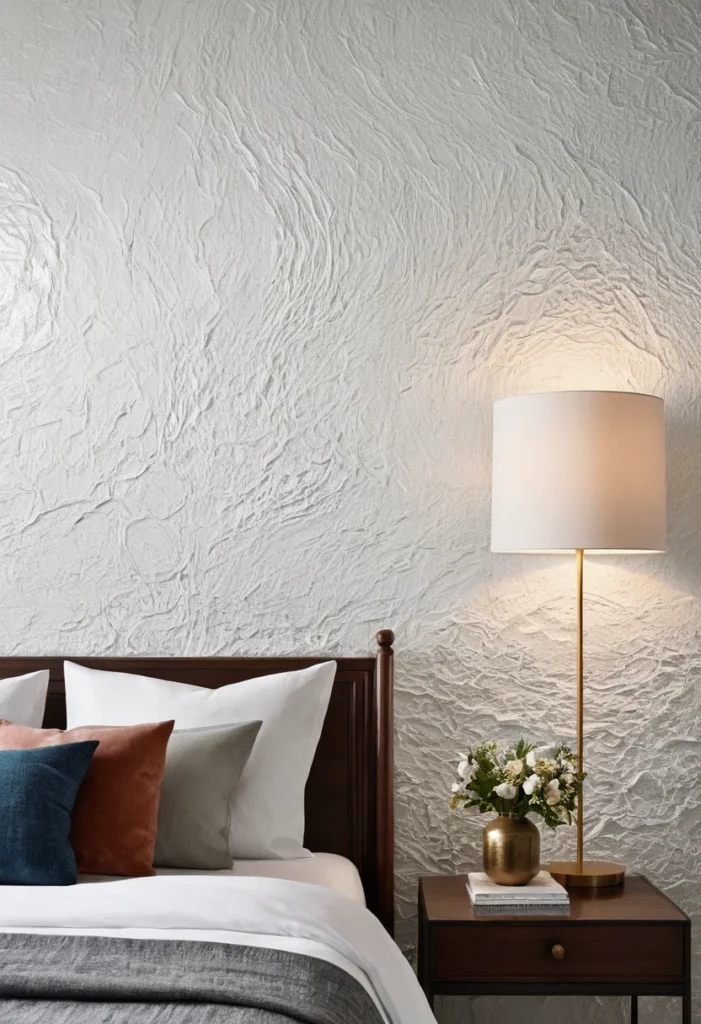
Flat, painted drywall is no longer doing the heavy lifting in 2026’s most talked-about dining rooms. For dining room wallpaper ideas, designers suggest tonal palettes that mix wood and stone patterns, handmade tile, grasscloth, and soulful textiles and if wallpaper feels too bold for the walls, consider putting it on the ceiling instead. Livingetc
Even without wallpaper, texture is the throughline of the year. Wall panelling, fluted finishes, and even fabric-clad walls are becoming popular ways to create depth and sophistication without requiring a major renovation. Wallsauce
If a full wall treatment isn’t in the budget right now, try:
- Peel-and-stick grasscloth on a single accent wall
- Board-and-batten panelling painted the same color as your walls for subtle depth
- A textured jute or wool table runner as a smaller-scale entry point into the trend
4. Go Bold (or Moody) With Color
If your dining room has been “safe” for years, 2026 is giving you permission to change that. “The mood is alluring but never loud,” says one interior designer of the shift toward deeper, more atmospheric color choices “it’s about subtle drama and quiet confidence.” Moody greens, ink blues, and deep terracottas are showing up in dining rooms specifically because this is a room used mostly in the evening, when a saturated wall color actually gets to shine under candlelight and pendant lighting.
One especially popular technique right now is monochromatic saturation. Many designers are embracing “color drenching” painting the walls, trim, ceiling, and even panelling in a single rich hue to create an immersive, enveloping feel that makes the dining room feel like a true retreat. Modern Luxury
Not ready to commit to full color drenching? Paint just the ceiling. It’s one of the lowest-risk ways to test a moody palette, and it instantly makes a room feel finished.
Read Also: 15 Herb Garden Ideas for Beginners That Actually Work
5. Choose Curved, Softer Furniture Silhouettes
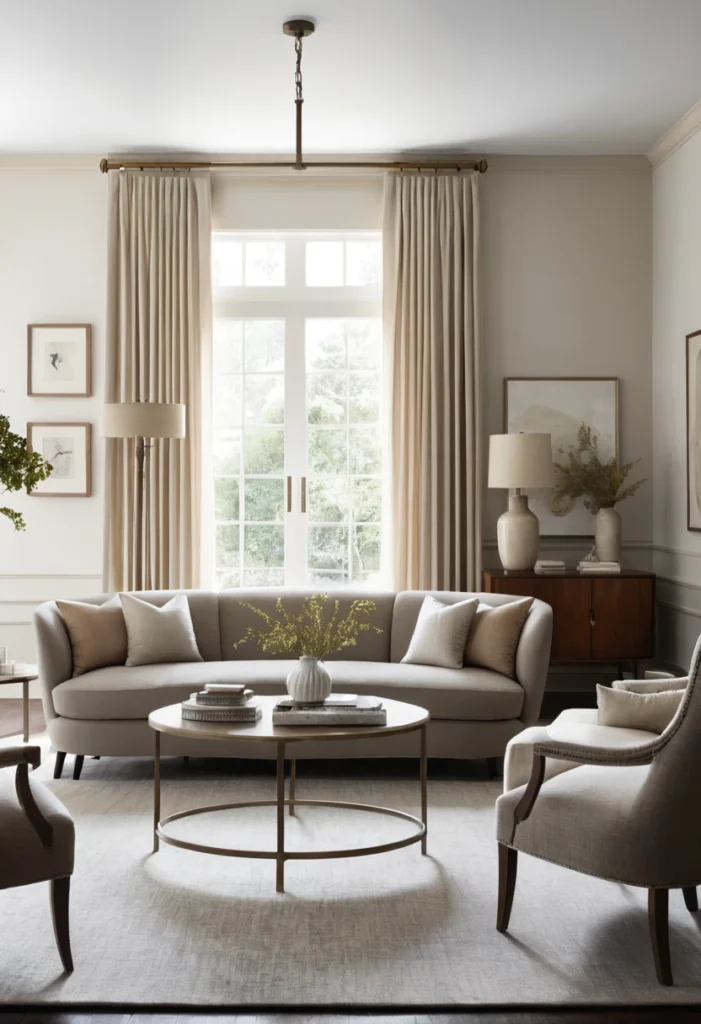
Sharp-edged furniture is giving way to something gentler this year. Sharp corners and rigid lines are giving way to rounded edges, oval tables, and chairs with gently curved backs shapes that feel softer and more inviting, and that work beautifully across styles from Scandinavian to midcentury modern.
This shift isn’t purely aesthetic it’s practical too. Round and oval tables are ideal for small dining rooms, since they improve traffic flow and often feel less bulky, and extendable options provide flexibility for hosting. Diningfurnitureshowcase
If you love your current rectangular table, you don’t have to start over. Swap in a few curved-back chairs at the ends, or add a rounded pedestal side table nearby to soften all those straight lines.
6. Let the Centerpiece Do the Talking
An empty table reads unfinished but an over-decorated one reads cluttered. The sweet spot is a single, confident centerpiece that anchors the whole table without competing with your dinnerware. A simple styling formula that keeps recurring in 2026 dining rooms: clay vases overflowing with olive branches, arched mirrors to visually enlarge the space, neutral woven rugs to anchor the furniture, and warm, muted wall tones underneath it all. The Crafty Hacks
A few centerpiece formulas that photograph beautifully and hold up in real life:
- A low, wide bowl of seasonal fruit changes with the months, costs almost nothing
- A single sculptural vase with dried branches or pampas grass zero maintenance
- A cluster of varying-height candlesticks instant ambiance for evening meals
Pinterest-worthy detail: Keep centerpieces under 14 inches tall if your table seats people across from each other anything taller blocks sightlines and conversation.
7. Add “Invisible” Storage That Doesn’t Look Like Storage
If your dining table has become the family’s landing pad for mail, backpacks, and half-finished homework, you’re far from alone and the fix isn’t willpower, it’s storage that’s actually easy to use. The trend is moving toward “invisible” storage solutions that look like high-end decor, including floor-to-ceiling cabinetry units that blend into the wall and hide everything from serving platters to printers. Decorator’s Voice
For most homes, a full built-in isn’t realistic but the same principle scales down beautifully. Closed storage like low sideboards, wall-mounted cabinets, or a built-in banquette with drawers lets you stash placemats, candles, kids’ art supplies, and laptop chargers out of sight, so the table can reset to a calm, clutter-free state in minutes.
Real-life tip: If your dining table doubles as a home office some days, dedicate one drawer specifically to work supplies that way everything disappears the moment dinner starts.
8. Style a Sideboard or Hutch Like It’s Part of the Décor
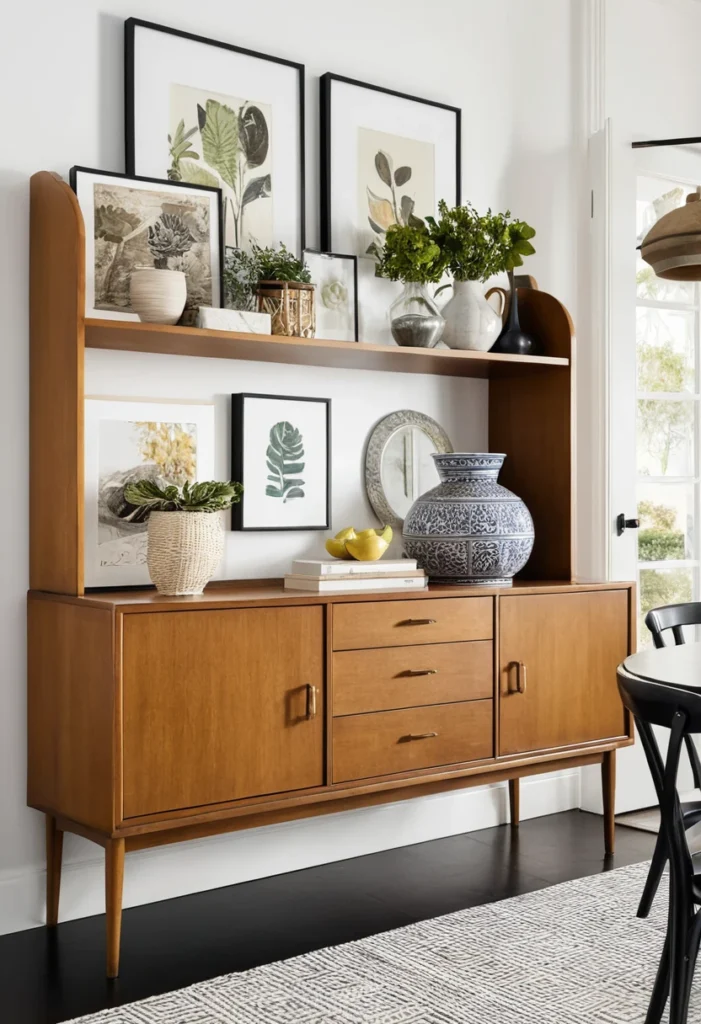
A sideboard shouldn’t just store your good dishes it should be doing visual work too. A china cabinet or hutch is a great way to store and display dishes or art pieces, while a sideboard a long, low storage piece with short legs, also called a “buffet” is your best bet if you need both storage and a place to lay out food when hosting. Houzz
Style your sideboard the way you’d style a bookshelf: with intention, not just placement. Layer in a stack of coffee-table books, a low vase, and one or two decorative objects with varied heights. Decorative books stacked upon sideboards introduce subtle personality, while keeping the surrounding artwork minimal prevents visual clutter.
9. Ground the Room With a Rug
A dining room without a rug can feel oddly unfinished, even when every other element is right. The easiest, lowest-commitment update on this whole list is adding one. Adding a rug a natural fiber or patterned rug placed under the table grounds the space and adds texture without requiring you to touch your furniture, walls, or lighting at all.
For sizing, a good rule is to choose a rug large enough that all four chair legs stay on it even when pulled out as a starting point, add at least 24–30 inches of rug beyond each edge of the table.
Material matters as much as pattern here. Jute and wool rugs are trending for a reason: natural materials like solid wood, stone, linen, wool, and jute bring warmth and a sense of sustainability that’s increasingly important to homeowners, and industry reports expect these materials to keep rising in popularity for home decor.
10. Mix Your Seating Instead of Matching It
One of the most freeing shifts happening in dining rooms right now: you no longer need every chair to match. 2026 encourages mixing rustic and modern dining furniture picture a sleek, contemporary table paired with vintage wooden chairs, or a farmhouse table surrounded by acrylic ghost chairs a mix-and-match approach that works especially well for busy families because it feels lived-in and forgiving.
There’s also a practical upside beyond aesthetics: mix-and-match dining chairs are a genuine interior design trend for the year, and the way to keep the look cohesive is to use a consistent color palette, similar seat heights, or shared materials across the different chairs.
How to start small: Keep your existing dining chairs on the long sides of the table, and swap in two different captain’s chairs at each end. It’s a low-cost way to test the mixed-seating look before committing further.
11. Finish With a Mirror and Real Artwork
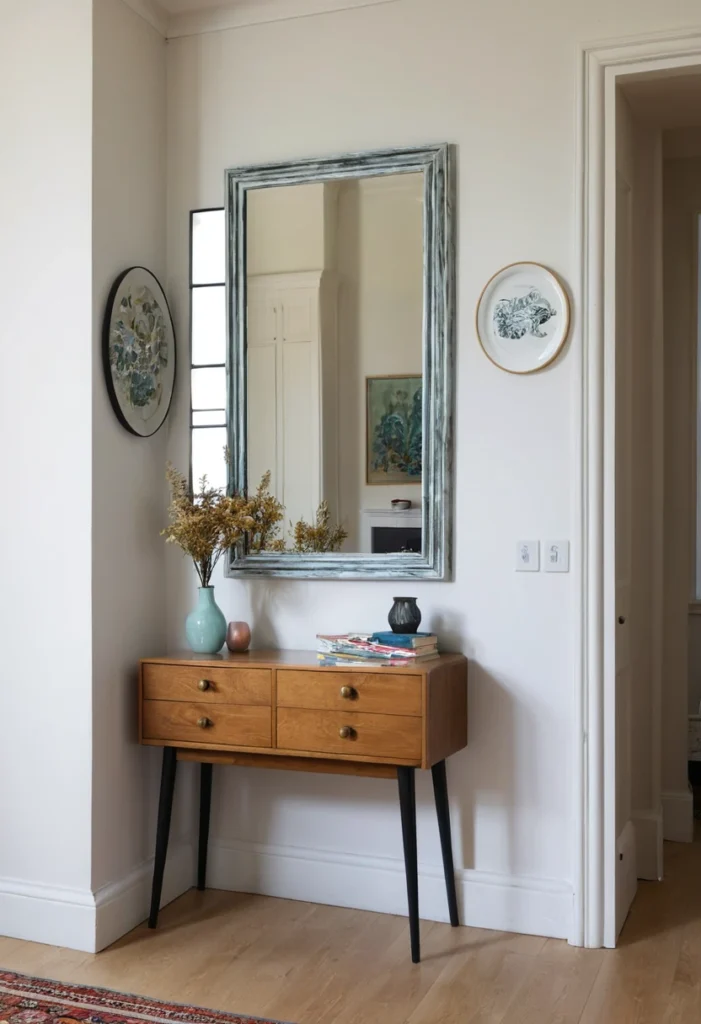
The easiest way to make a dining room feel finished and larger than it actually is is also one of the most overlooked. Topping off a dining room with a statement light fixture, some inspirational artwork, and a large mirror helps reflect more light throughout the space.
Hang artwork at eye level for a seated person, not a standing one dining room art is viewed from the chair far more often than from the doorway. A mirror placed opposite a window does double duty, bouncing natural light back into the room during the day and candlelight around the table at night.
Bonus styling move: Arched mirrors in particular visually enlarge compact rooms beautifully, making this a smart pick if your dining space is on the smaller side.
Quick-Reference: Dining Room Decorating Ideas at a Glance
| Idea | Best For | Effort Level |
| Statement lighting | Instant visual impact | Medium |
| Warm wood tones | Cozy, layered rooms | Low–Medium |
| Textured walls | Depth without renovation | Medium |
| Bold/moody color | Evening-use dining rooms | Low–Medium |
| Curved furniture | Small or narrow rooms | Medium–High |
| Confident centerpiece | Everyday styling | Low |
| Invisible storage | Multi-use dining rooms | Medium |
| Styled sideboard | Adding personality | Low |
| Grounding rug | Finishing the room | Low |
| Mixed seating | Family, lived-in homes | Low–Medium |
| Mirror + artwork | Small rooms, more light | Low |
Frequently Asked Questions About Dining Room Decorating
What is the biggest dining room trend for 2026?
The clearest shift is the return of the dedicated, design-forward dining room itself. Interior designers report that at-home entertaining is back, with homeowners embracing layouts that foster conversation and put guests at ease even in casual, everyday settings, not just for formal occasions. aol
How do I decorate a small dining room without it feeling cramped?
Lean on light-reflecting elements an arched mirror, a lighter wood tone, and a round or oval table all help a compact room feel more open, since curved furniture improves traffic flow in tight spaces.
Do dining room chairs have to match?
Not anymore. Mixed seating is one of the defining trends of the year, as long as you tie the look together with a shared color palette or consistent seat height.
What’s a low-budget way to update a dining room?
Start with the rug and the centerpiece both are inexpensive, non-committal changes that instantly shift the room’s mood without touching furniture or walls.
How high should a dining room light fixture hang?
Aim for 30–34 inches above the tabletop for a standard 8-foot ceiling, adding roughly 3 inches for every extra foot of ceiling height.
Bringing It All Together
You don’t need to renovate to make your dining room feel intentional you need a handful of choices that work together: light that sets a mood, texture that adds depth, and a few personal touches that keep the room from feeling like a showroom. Start with just one idea from this list the rug, the centerpiece, or the lighting and let the room grow from there.

