
Picture two versions of the exact same flower garden. In the first, the blooms are beautiful, but the whole space feels flat like something you’d only ever look at from the porch. In the second, a simple pathway winds through it, and suddenly the entire garden feels like somewhere you actually want to walk.Here’s the thing most people miss: a pathway doesn’t just get you from point A to point B. It’s what turns a flower bed into an experience.
A well-placed path invites you to slow down, brush past lavender, catch the scent of climbing roses, and notice blooms you’d otherwise only glimpse from a distance. It adds structure to even the most relaxed cottage garden, and it makes maintenance dramatically easier since you’re never trampling through the beds to deadhead or weed.
Why a Pathway Instantly Upgrades a Flower Garden
A path does more design work than almost any other single feature you can add to a garden.But there’s a catch: it only works if it’s planned intentionally, not just plopped down as an afterthought. A well-designed path connects different areas of the yard, gives structure and rhythm to an otherwise loose planting scheme, and creates the sense that there’s more garden to discover just around the bend.
Curved paths, in particular, make even a small or narrow garden feel bigger, since you can’t see the whole thing at once there’s always a reason to keep walking. Straight paths do the opposite, drawing the eye (and your feet) directly toward a focal point, like a bench, an arbor, or a striking specimen plant.So what does this mean for you? The shape and material you choose isn’t just decorative it actually changes how your garden feels to walk through.
How to Plan a Flower Garden Pathway (Before You Pick a Style)
Before falling in love with a particular look, a few practical decisions will save you from a pathway that looks great in photos but is frustrating to actually use.Match the material to the garden’s personality. A formal brick or paver path suits a symmetrical, structured garden, while gravel, flagstone, or mulch feels more at home in a relaxed, cottage-style bed.
Plan for maintenance. Mulch and bark paths are inexpensive and easy to install but will need topping up every couple of years. Stone, brick, and pavers cost more upfront but need very little upkeep after that.
Quick summary to save: Width for function, edging to contain materials, and a style that matches your garden’s personality get those three right and the design part becomes easy.
11+ Flower Garden Ideas With a Pathway
Here are 11+ tested, real-world approaches to combining a flower garden with a pathway pick the one (or two) that fits your space and style.
1. Gravel Path Through a Cottage-Style Flower Border
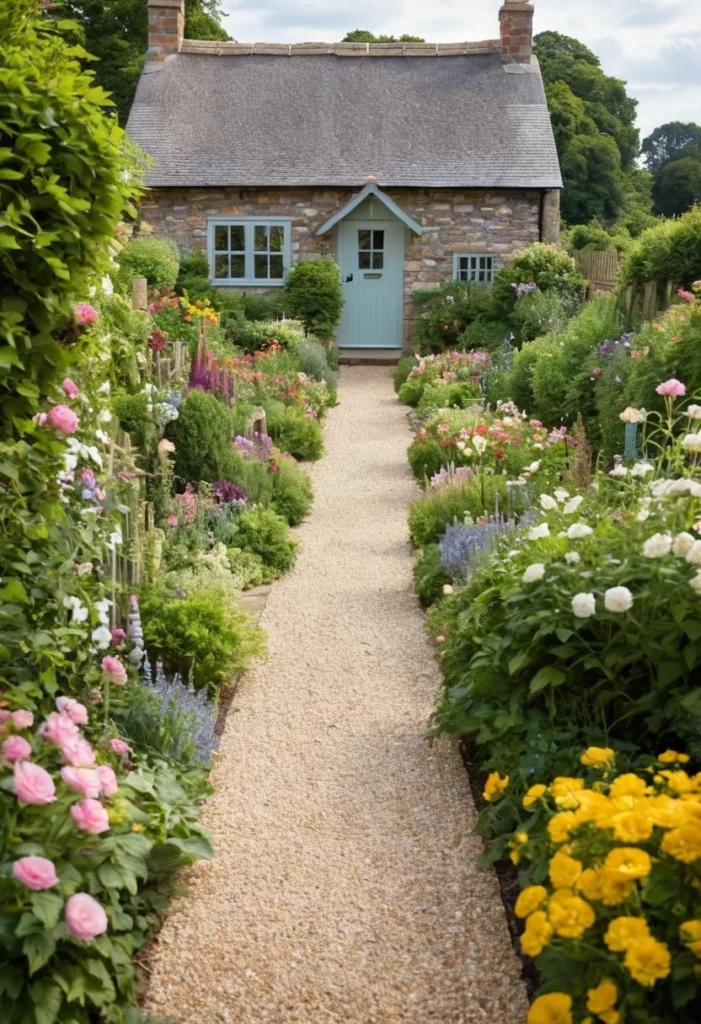
A gravel path is one of the most relaxed, budget-friendly ways to move through a flower garden, and it pairs beautifully with informal, overflowing plantings like foxglove, cosmos, and salvia spilling over the edges. Edge it with brick or metal to keep the gravel neatly contained and off the lawn.
Best for: Cottage gardens, casual layouts, budget-conscious projects
Design tip: Let flowers spill slightly over the path edges rather than keeping a hard line it softens the whole look.
2. Stepping Stone Path With Creeping Thyme
Stepping stones interplanted with a low, foot-traffic-tolerant groundcover like creeping thyme create a path that’s almost as much a garden feature as the flower beds themselves. As the thyme fills in between the stones, it softens hard edges, suppresses weeds, and even releases a light scent as you walk.
Best for: Cottage or naturalistic gardens, narrow paths, sensory gardens
Design tip: Space stones so a natural stride lands center to center usually 18–24 inches apart.
3. Flagstone Path Set in Mulch
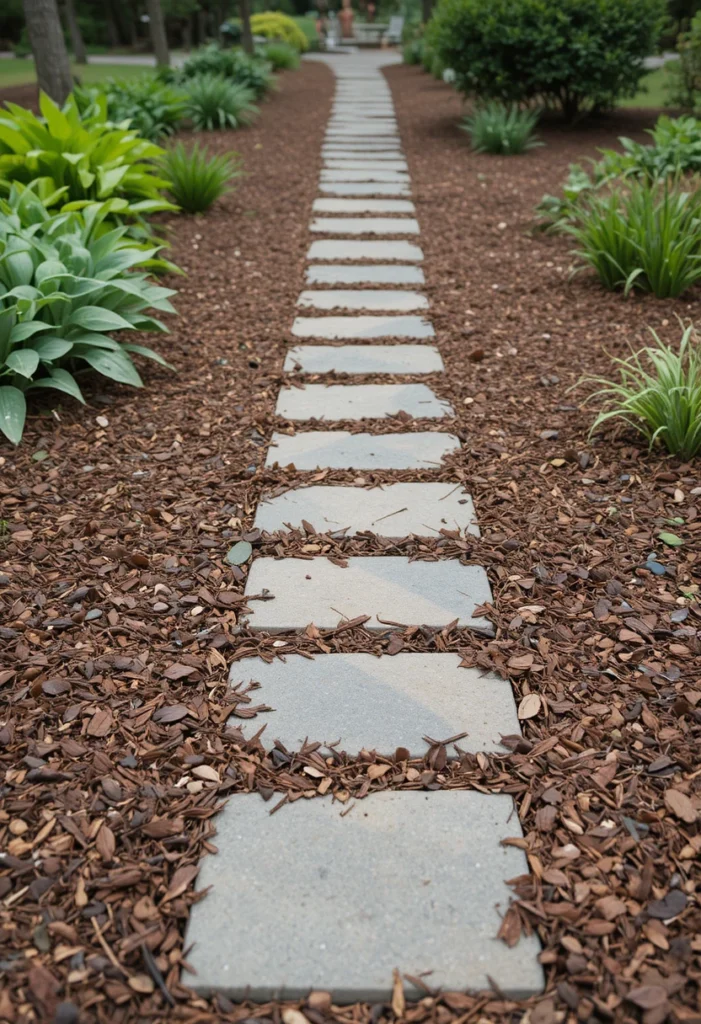
Flagstone set into a bed of soft mulch, weaving between flower borders, creates a relaxed, old-world feel that works beautifully in a cottage or English-garden-style planting. It’s less formal than mortared flagstone but still far more stable underfoot than loose gravel alone.
Best for: Cottage gardens, English-style borders, transitional spaces
Design tip: Choose irregularly shaped flagstone rather than uniform pieces for a more natural, meandering feel.
4. Curved Brick Path Around Flower Beds
A curved brick path adds structure without feeling stiff, and it’s a particularly good choice for looping around or between flower beds rather than cutting straight through them. Herringbone or basket-weave laying patterns add extra visual texture even before a single flower blooms.
Best for: Traditional gardens, front-yard entrances, defined borders
Design tip: Let the curve follow the natural shape of your flower beds rather than forcing a geometric arc.
Read Also: 11 Dining Room Decorating Ideas That Turn Every Meal Into an Occasion (2026 Edition)
5. Winding Meadow-Style Gravel Path
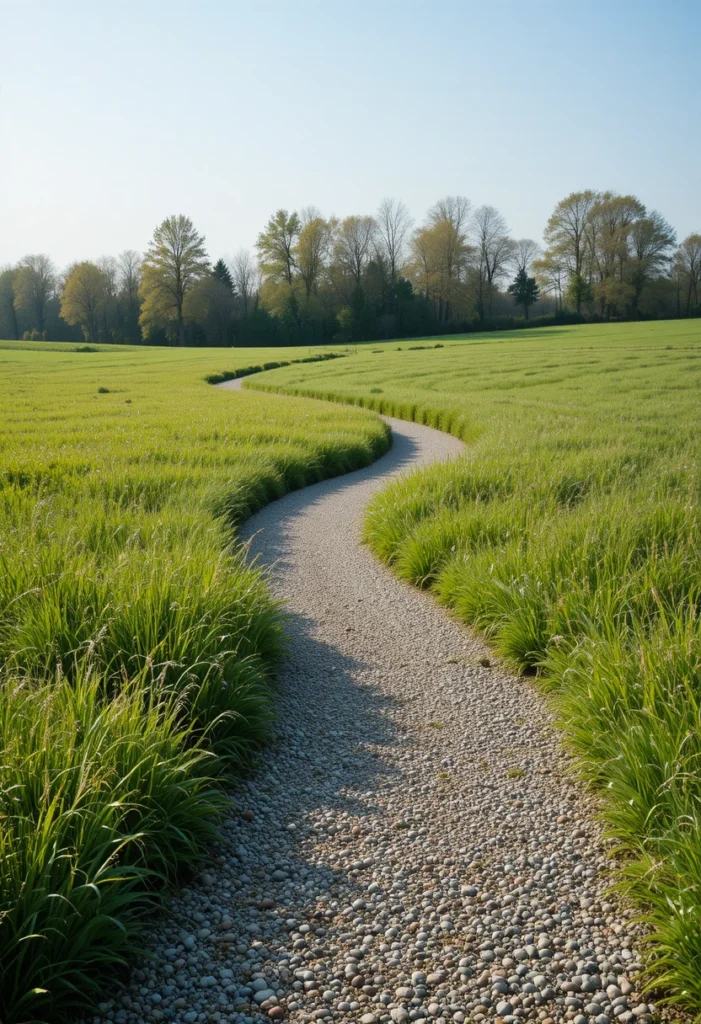
For a larger space, a gravel path that winds loosely through a wildflower or meadow-style planting creates the feeling of discovery you genuinely can’t see what’s around the next bend. This style works especially well with drifts of native perennials and ornamental grasses planted informally on either side.
Best for: Large gardens, native plant meadows, naturalistic landscapes
Design tip: Avoid straight sightlines entirely every curve should hide at least part of what’s ahead.
6. Paver Path Flanked by Lavender
A clean paver path bordered on both sides by lavender is a classic combination for a reason the structured hardscape balances the soft, silvery, slightly wild texture of the lavender, and brushing past the plants releases fragrance with every step.
Best for: Mediterranean-style gardens, sunny entrances, fragrant gardens
Design tip: Plant lavender close enough to the path edge that it just grazes your ankles as you walk.
7. Arbor-Framed Pathway With Climbing Roses
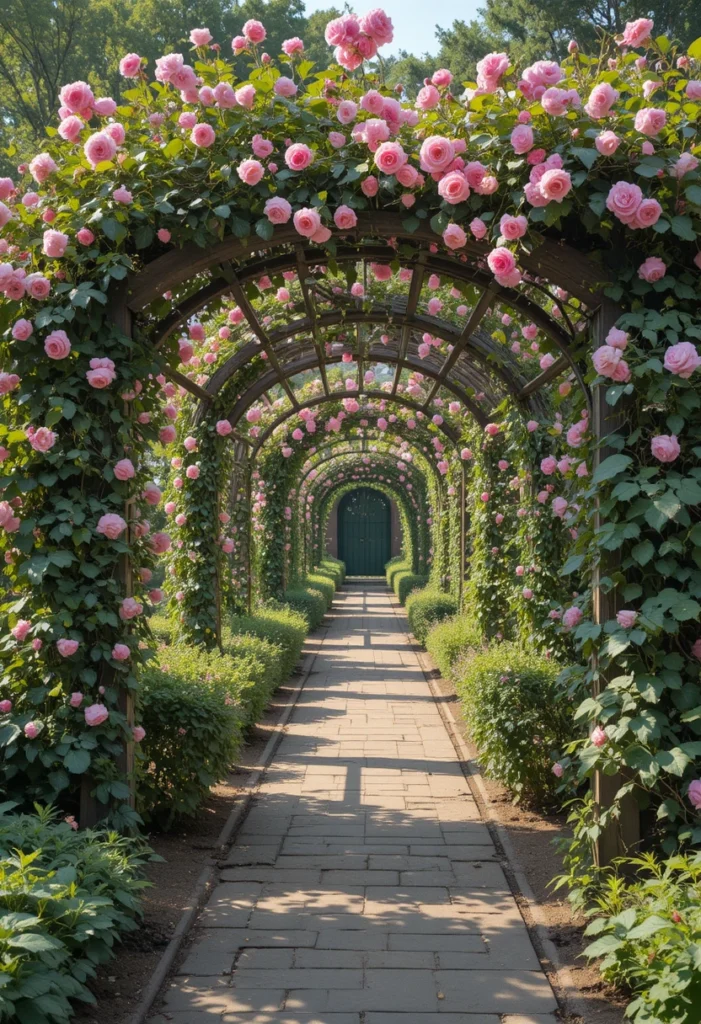
A gate, arbor, or simple trellis positioned over the entrance to a pathway instantly adds drama and a sense of arrival. Adorned with climbing roses, clematis, or another flowering vine, it becomes a living, blooming doorway into the rest of the garden.
Best for: Garden entrances, romantic or cottage-style gardens, focal points
Design tip: Repeat the same structure (or the same climbing plant) at a second point along the path to create visual rhythm and unity.
8. Stone Path Bordered by Low-Growing Flowering Groundcover
Tightly spaced flagstones or pavers, interplanted in the cracks with a low, spreading flowering groundcover, create a path that looks like it’s been there for decades. Options that tolerate light foot traffic include creeping phlox, Irish moss, and low sedum varieties.
Best for: Established-looking gardens, small spaces, low-maintenance borders
Design tip: Choose groundcover varieties rated for foot traffic specifically not every flowering groundcover can handle being stepped on.
9. Herringbone Brick Path Leading to a Focal Point
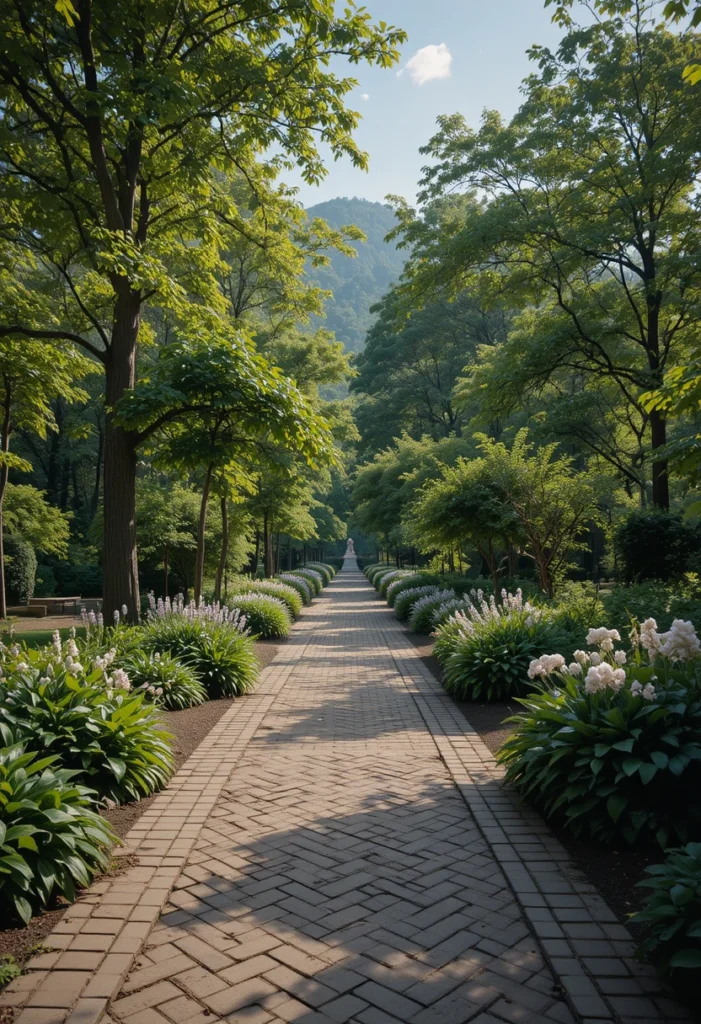
A herringbone-pattern brick path feels instantly formal and grand, especially when it leads directly to a clear focal point a front door, a statue, or a specimen tree flanked by structured plantings like boxwood balls or white flowering borders.
Best for: Formal gardens, front entrances, symmetrical layouts
Design tip: Keep the flower palette limited to two or three colors along a formal path too much variety competes with the structured pattern underfoot.
10. Mulch Path Through a Wildflower Garden
A simple bark mulch path is one of the most affordable ways to create a walkable route through a naturalistic wildflower or pollinator garden. It blends into the landscape rather than competing with it, letting the surrounding blooms take full visual priority.
Best for: Pollinator gardens, budget projects, informal or native plantings
Design tip: Plan to top up the mulch every year or two as it breaks down and settles.
11. Symmetrical Formal Path With Boxwood and Blooms
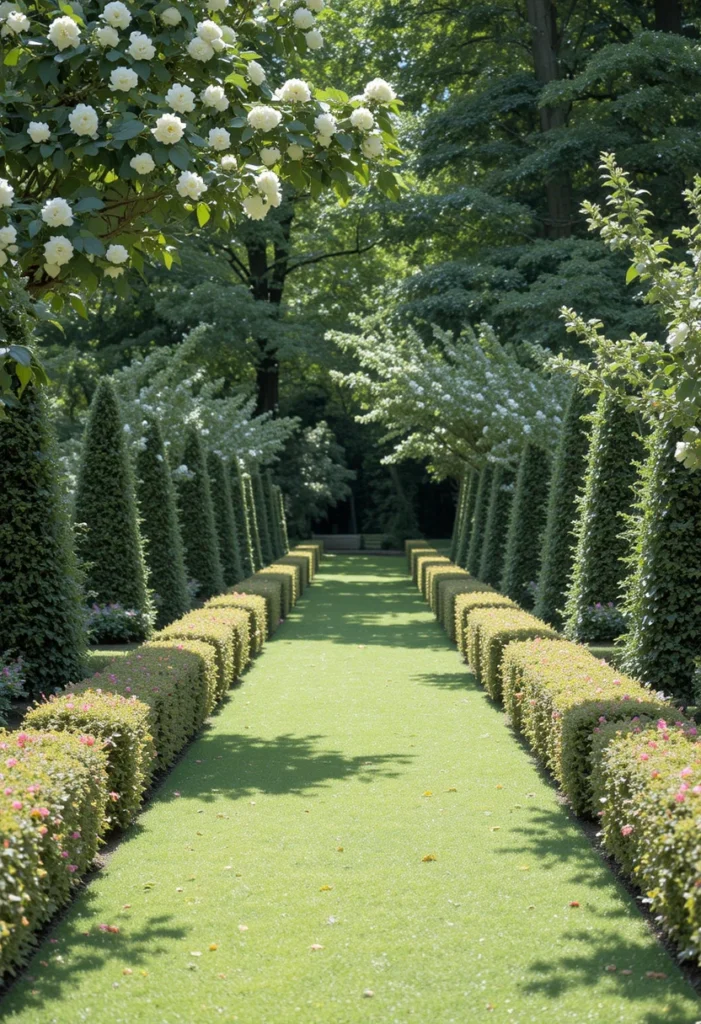
A straight, centered path flanked by matching boxwood hedges and repeating flower beds on either side creates a classic, formal garden feel. This style works especially well leading up to a home’s entrance, where symmetry reads as intentional and polished.
Best for: Formal entrances, traditional home styles, structured gardens
Design tip: Repeat the exact same plant combination on both sides of the path symmetry is what makes this style work.
12. Sloped Terrace Path With Flower-Filled Steps
On a sloped garden, terraced steps positioned at alternating ends of each level create a defined, safe pathway while flower beds soften each terrace edge. This turns an otherwise tricky slope into one of the most visually interesting parts of the garden.
Best for: Sloped yards, tiered gardens, dramatic landscapes
Design tip: Keep steps a uniform height (4–8 inches) and at least 12 inches deep for comfortable, safe footing.
13. Narrow Side-Yard Path Softened With Overflowing Blooms
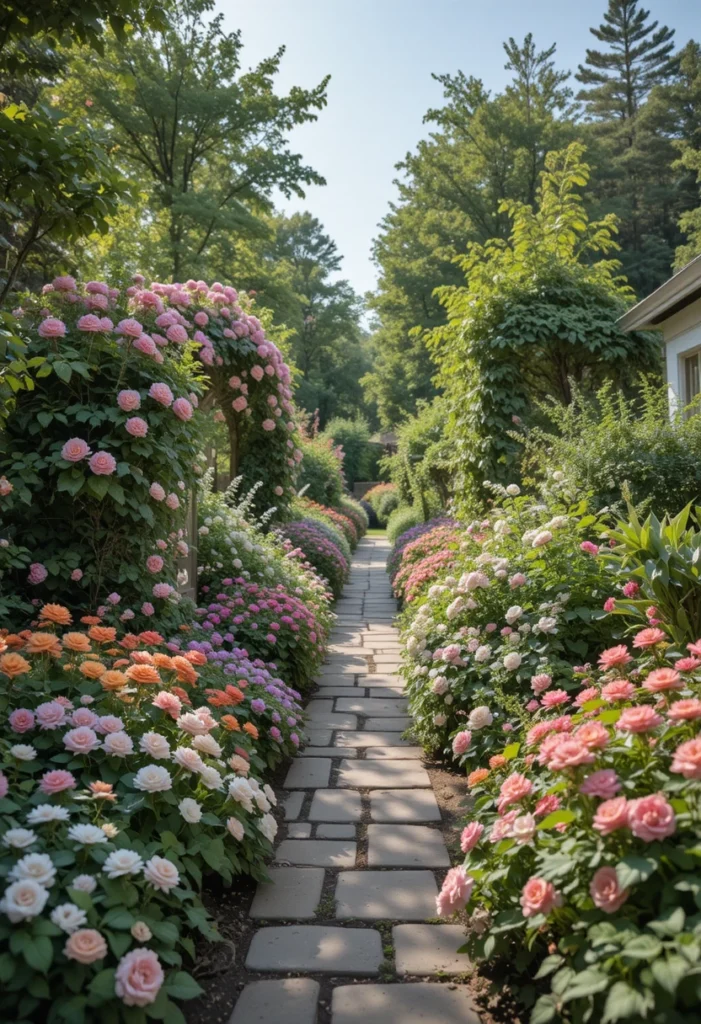
Even a purely functional narrow side-yard path can become a garden feature by planting low, spilling flowers along both edges think creeping phlox, alyssum, or dianthus tumbling gently over the path’s border.
Best for: Side yards, narrow passageways, small-space gardens
Design tip: Choose plants that stay low and spreading rather than upright, so they soften the path without blocking it.
Best Flowers to Plant Along a Garden Pathway
Once your path style is chosen, the plants along the edges do most of the remaining design work. A few reliable options:
For fragrance underfoot: creeping thyme, chamomile, or Irish moss between stepping stones
For soft, spilling edges: lavender, catmint, dianthus, and alyssum
For vertical drama: climbing roses, clematis, or sweet peas trained over an arbor or trellis
For structure and repetition: boxwood, dwarf hydrangea, or ornamental grasses spaced evenly along a formal path
For pollinator-friendly informal paths: coneflower, black-eyed Susan, and salvia planted in loose drifts
Quick tip: Whatever you choose, repeat at least one plant or color at intervals along the entire path length that repetition is what makes a long path feel unified rather than like a random collection of plants.
Frequently Asked Questions
What’s the cheapest material for a flower garden pathway?
Mulch and bark chips are typically the most budget-friendly option, though they’ll need topping up every year or two as they break down. Gravel is a close second and lasts considerably longer.
How wide should a garden pathway be?
A single-person path is generally comfortable at around 2–3 feet wide, while a path meant for two people walking side by side, or one used as a main garden route, should be closer to 4–5 feet.
Should a garden path be curved or straight?
Curved paths make a space feel larger and more exploratory, especially in narrow or small gardens, since you can’t see the whole path at once. Straight paths work well when you want to draw attention directly toward a specific focal point.
Can I plant flowers directly in the cracks of a stone path?
Yes, as long as you choose varieties rated for foot traffic, such as creeping thyme, Irish moss, or low sedum. Not every flowering groundcover can tolerate being stepped on regularly.
Do I need edging for a gravel or mulch pathway?
It’s highly recommended. Edging made from metal, plastic, brick, or stone keeps loose materials contained within the path and prevents them from spilling into the surrounding flower beds or lawn.
The Bottom Line
A pathway is one of the simplest additions that can completely transform how a flower garden feels turning it from something you admire at a distance into a space you actually walk through, linger in, and experience up close. Whether it’s a casual gravel trail through a cottage border or a formal brick path leading to a rose-covered arbor, the right pathway gives your garden structure, rhythm, and a reason to explore every corner of it.