
12+Garden ideas for xeriscaping can help homeowners create attractive outdoor spaces while using water more responsibly. Xeriscaping is a landscape approach built around water conservation, climate-appropriate plants, efficient irrigation, soil management, mulch, and thoughtful garden design. It does not mean covering a yard with rocks or growing only cactus. A well-planned xeriscape can include colorful flowers, ornamental grasses, shrubs, trees, pathways, seating areas, gravel, and native plants.
Have you ever looked at your garden during a hot, dry spell and wondered how it could stay attractive without constant watering? A thirsty lawn and water-hungry plants can demand considerable time and attention, while the wrong plants may struggle as soon as conditions become dry. The good news is that a water-wise garden can still feel lush, colorful, and welcoming when plants are selected for the site and arranged according to their needs.
In this guide, you’ll discover practical 12+Garden ideas for creating a drought-tolerant landscape, from gravel and rock gardens to flowering borders, native plants, dry riverbeds, containers, mulch, and efficient irrigation. You’ll also learn how to plan the space, choose suitable plants, avoid common mistakes, and make a low-water landscape look intentionally designed rather than sparse.
What Is a Xeriscape Garden?
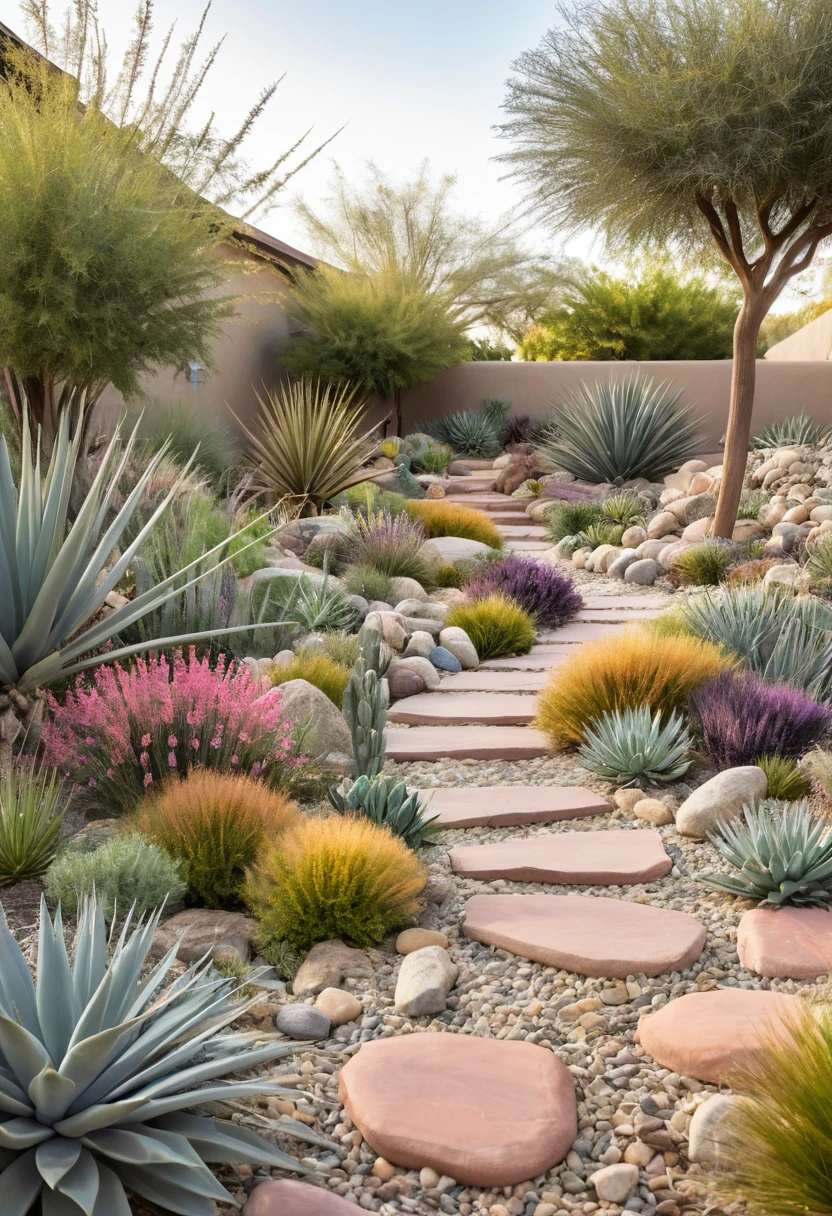
The foundation of 12+Garden ideas is understanding what xeriscaping actually means. The term describes a water-wise approach to landscape design in which plants and garden features are selected and organized to reduce unnecessary supplemental irrigation. Grouping plants with similar water requirements, choosing native or well-adapted species, improving the growing environment, and using efficient irrigation can all contribute to a successful xeriscape.
A drought-tolerant landscape is not necessarily a completely dry landscape. Newly planted vegetation often needs regular water while its roots become established, and even mature drought-adapted plants may require supplemental water during unusually hot or prolonged dry periods. The goal is to work with the local climate rather than forcing plants with high water requirements into unsuitable conditions.
Xeriscaping Is More Than Gravel
One common misconception about 12+Garden ideas is that xeriscaping means replacing every plant with gravel. Gravel can certainly be useful, but a successful design combines hardscape and vegetation. Flowers, grasses, shrubs, groundcovers, trees, and stone can be arranged in layers to create a landscape with depth and seasonal interest.
A thoughtfully designed garden can therefore look very different from the stereotypical desert yard. Recent gardening guidance highlights rockscaping, dry riverbeds, drought-resistant accent plants, gravel gardens, groundcovers, and drought-tolerant trees as ways to combine water conservation with attractive design.
1. Replace Unused Lawn With a Drought-Tolerant Garden
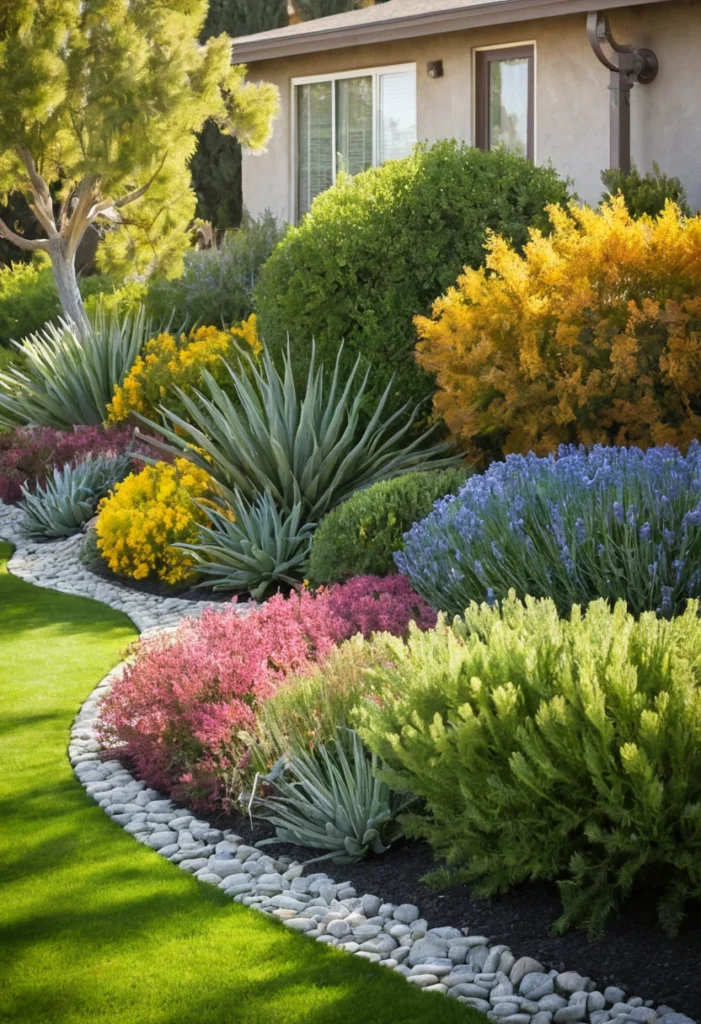
One of the most practical 12+Garden ideas is reducing lawn in places where it provides little value. If part of your lawn is rarely used for walking, playing, entertaining, or relaxing, it can become a planting area filled with climate-appropriate shrubs, flowers, grasses, and groundcovers. You don’t have to remove every section of grass to make a meaningful change.
Keep lawn where it serves a genuine purpose and redesign the remaining areas around how you use the property. Curved planting beds, stepping stones, gravel borders, and groups of drought-tolerant plants can make the transition look deliberate. Reducing lawn is also a common xeriscaping strategy because traditional turf can require regular irrigation and maintenance.
Create Defined Garden Zones
Instead of removing lawn randomly, divide the property into useful zones. A small lawn can remain near a patio, while low-water plants occupy unused side yards or large perimeter areas.
This approach creates a practical balance between aesthetics, recreation, and water conservation without forcing the entire landscape into one style.
2. Build a Colorful Rock Garden
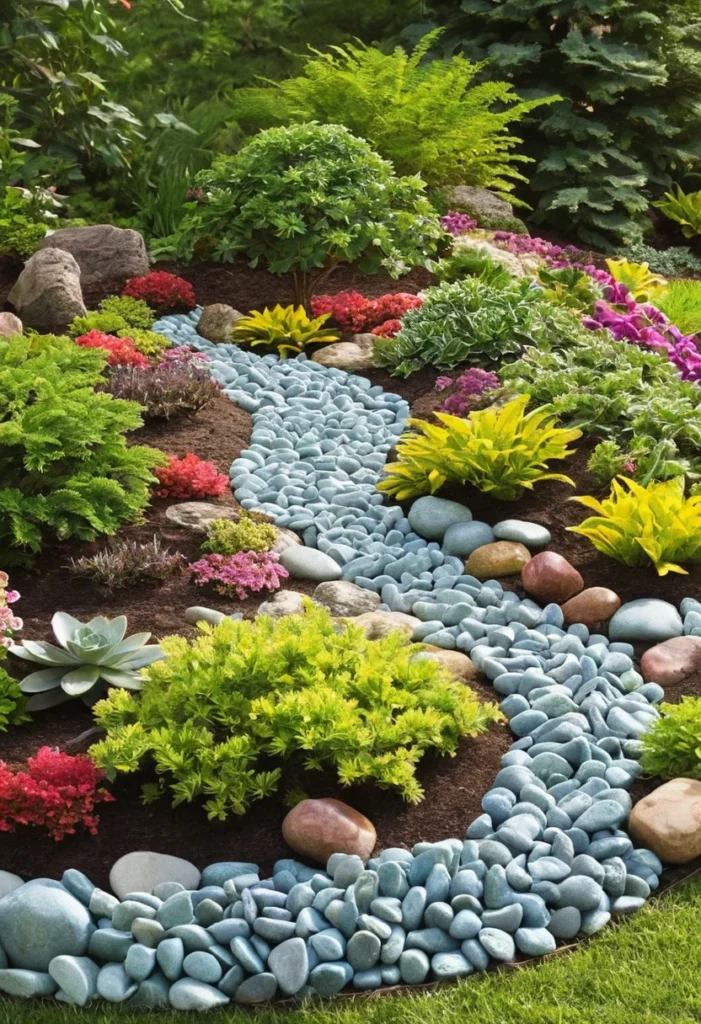
Rock gardens are among the most versatile 12+Garden ideas for sunny locations. Large boulders can provide structure, while smaller stones and gravel create a natural background for drought-adapted plants. Succulents, sedums, flowering perennials, and compact shrubs can add color and texture between the stones.
Avoid placing every rock at the same height or distance. A mixture of sizes generally looks more natural and gives the garden greater visual depth. Plants should also be selected according to local climate, soil, sunlight, and drainage rather than simply because they look good in photographs.
Combine Hard and Soft Textures
A rock garden becomes more inviting when plants soften the hard edges of stone. Use rounded succulents beside upright grasses or flowering plants next to larger boulders.
The contrast between foliage, flowers, gravel, and stone creates visual interest even when individual plants are not blooming.
3. Design a Gravel Garden
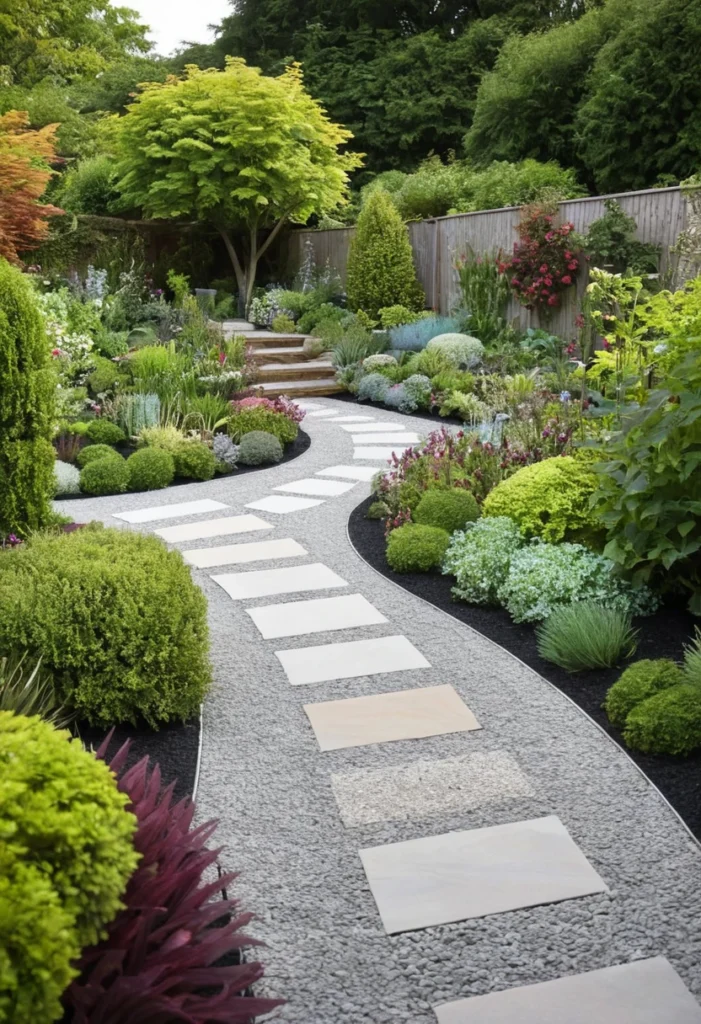
A gravel garden can give 12+Garden ideas a clean, contemporary appearance while creating a suitable surface for many drought-adapted plants. Gravel is particularly useful around plants that prefer excellent drainage, although the exact material and depth should be chosen according to the site and plant requirements.
Use gravel as a design element rather than filling every available space. Planting groups of different heights can prevent the garden from looking flat. Repeating a few plant varieties throughout the bed can also create rhythm and make the landscape feel professionally planned.
Choose Gravel Carefully
Consider the stone’s color, size, and texture before purchasing large quantities. The wrong gravel can dominate a small garden or create excessive visual heat.
Sample the material in the actual garden before committing to the full installation.
4. Add a Dry Riverbed
A dry riverbed is a creative option among 12+Garden ideas because it can become a strong visual feature without requiring a permanent water source. A winding channel made from rocks, gravel, and larger stones can guide the eye through the landscape and connect separate planting areas.
Dry riverbeds can also visually reflect natural drainage patterns, but they should not be installed casually where they could redirect water toward buildings or neighboring properties. If you’re using one to manage runoff, study the site’s slope and drainage first and make sure the design is appropriate for local conditions.
Use Curved Lines
A gently curving riverbed generally looks more natural than a perfectly straight channel. Vary the width as it moves through the garden.
Place larger stones along selected sections and use smaller gravel toward the center to create depth and variation.
5. Choose Native and Climate-Adapted Plants
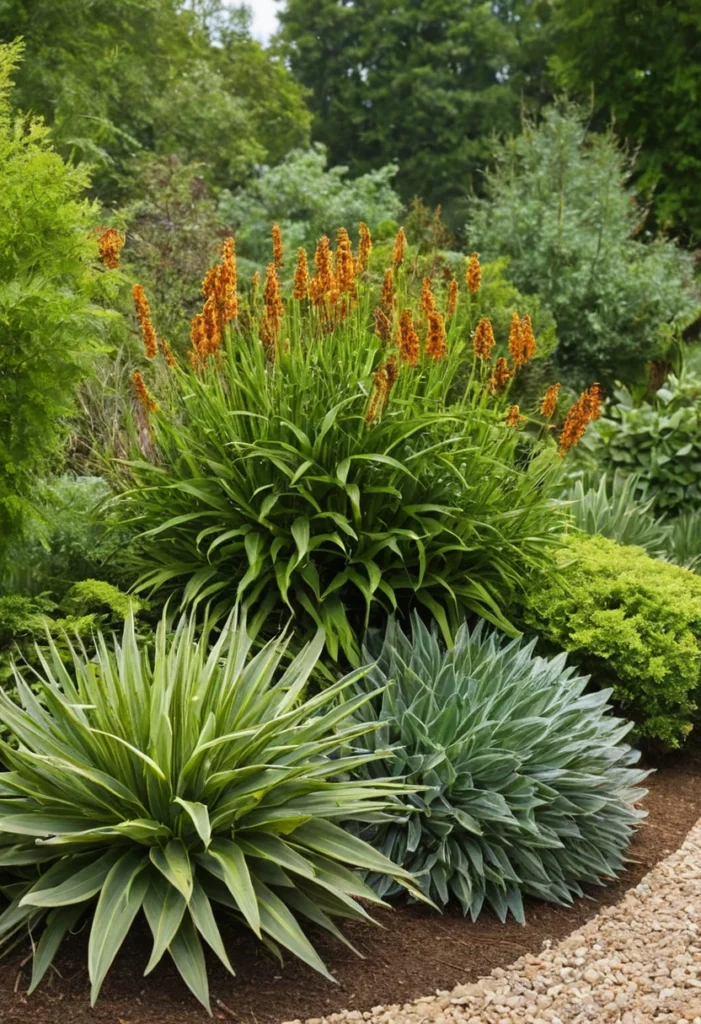
Plant selection is at the heart of 12+Garden ideas for drought-tolerant landscaping. Native and well-adapted plants can be particularly useful because they are suited to the environmental conditions of their region. Native plants can also provide habitat and food resources for local wildlife and pollinators.
However, “native” and “drought tolerant” should not be treated as automatic guarantees of success. Consider the specific conditions of your property, including sunlight, soil, drainage, temperature, wind, and mature plant size. A plant that thrives in one location may perform poorly only a short distance away if the soil or exposure is different.
Check the Plant’s Mature Size
A small nursery plant can become surprisingly large. Always check mature height and width before planting shrubs and trees.
This simple step helps prevent overcrowding and reduces the need for aggressive pruning later.
Read Also : 11+ Plant Care Tips for Cleaning Plant Leaves and Making Them Shine Naturally
6. Create a Flowering Drought-Tolerant Border
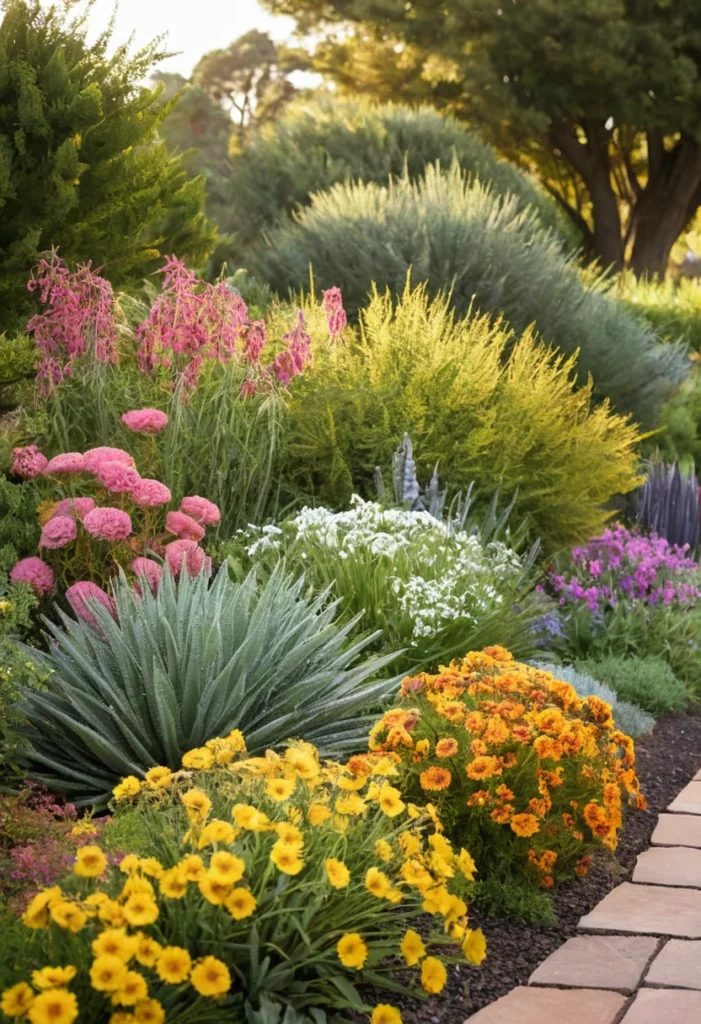
A low-water garden does not have to be short on flowers. One of the most colorful 12+Garden ideas is to create a flowering border with plants that are adapted to your local conditions.
Choose several species that bloom at different times rather than selecting everything for one season. This can provide a succession of color and keep the landscape interesting throughout the growing year. Drought-tolerant garden examples commonly include flowering plants alongside succulents, grasses, and shrubs, proving that water-wise landscaping can be highly decorative.
Plan for Seasonal Interest
Consider foliage, seed heads, bark, and plant structure as well as flowers.
A garden that depends entirely on blooms can look empty after flowering ends, while plants with attractive foliage and form provide longer-lasting interest.
7. Use Ornamental Grasses for Movement
Ornamental grasses can add movement and softness to 12+Garden ideas that contain gravel, stone, or other hardscape features. Their narrow leaves and upright or arching forms contrast beautifully with rounded shrubs and architectural succulents.
Select species based on your local growing conditions because not every ornamental grass is equally drought tolerant. Once established, appropriately chosen grasses can provide texture, seasonal structure, and movement when wind passes through the garden.
Create Height With Grasses
Place taller grasses toward the back of a planting bed and shorter varieties near paths or seating areas.
This creates layers and helps the landscape feel fuller without requiring a large number of different plants.
8. Design a Mediterranean-Inspired Landscape
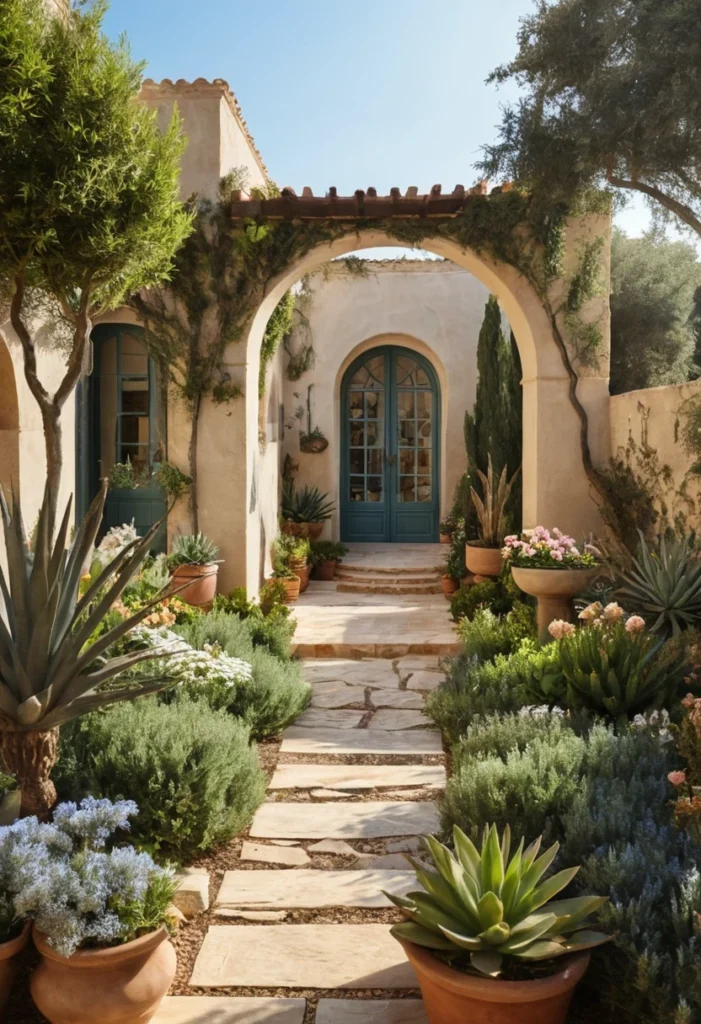
Mediterranean-inspired planting can give 12+Garden ideas a warm and relaxed appearance. Gravel, terracotta containers, stone, aromatic herbs, flowering plants, and drought-adapted shrubs can work together to create an inviting outdoor space.
Lavender, rosemary, sage, and similar plants can be useful where local conditions suit them. Good drainage and adequate sunlight are particularly important for many Mediterranean-style plants, so avoid copying a plant palette from another region without checking whether it fits your own climate.
Repeat a Small Plant Palette
Choose a few reliable plants and repeat them throughout the garden.
Repetition creates unity and often makes a landscape look more sophisticated than using a different plant in every available space.
9. Turn the Front Yard Into a Water-Wise Landscape
The front yard is an excellent place to apply 12+Garden ideas because it can combine curb appeal with practical water conservation. A layered front garden might contain low-growing groundcovers near the walkway, flowering perennials in the middle, and shrubs or small trees farther back.
A pathway can also become part of the design. Gravel, stepping stones, or suitable paving materials can guide visitors while breaking up large planting areas. Botanical Interests similarly recommends incorporating pathways, rocks, stones, sculptures, and structures alongside drought-tolerant planting in xeriscaped yards.
Frame the Entrance
Use repeated plants or matching containers around the front entrance to create a welcoming focal point.
The rest of the planting can remain more informal while the entrance provides a clear visual anchor.
10. Create a Container Xeriscape
Containers make 12+Garden ideas possible even when you don’t have a large yard. A patio, balcony, courtyard, or small entrance can be transformed with drought-adapted plants in containers of different sizes.
Remember that containers can dry out faster than plants growing in the ground. Choose pots with drainage holes, use a suitable growing medium, and monitor moisture during hot weather. A plant that is drought tolerant in a landscape bed may still need more attention when grown in a small container.
Group Containers Together
Rather than scattering individual pots around the patio, arrange several containers in a group.
Use different heights and sizes to create a miniature landscape with a stronger visual presence.
11. Use Mulch to Conserve Moisture
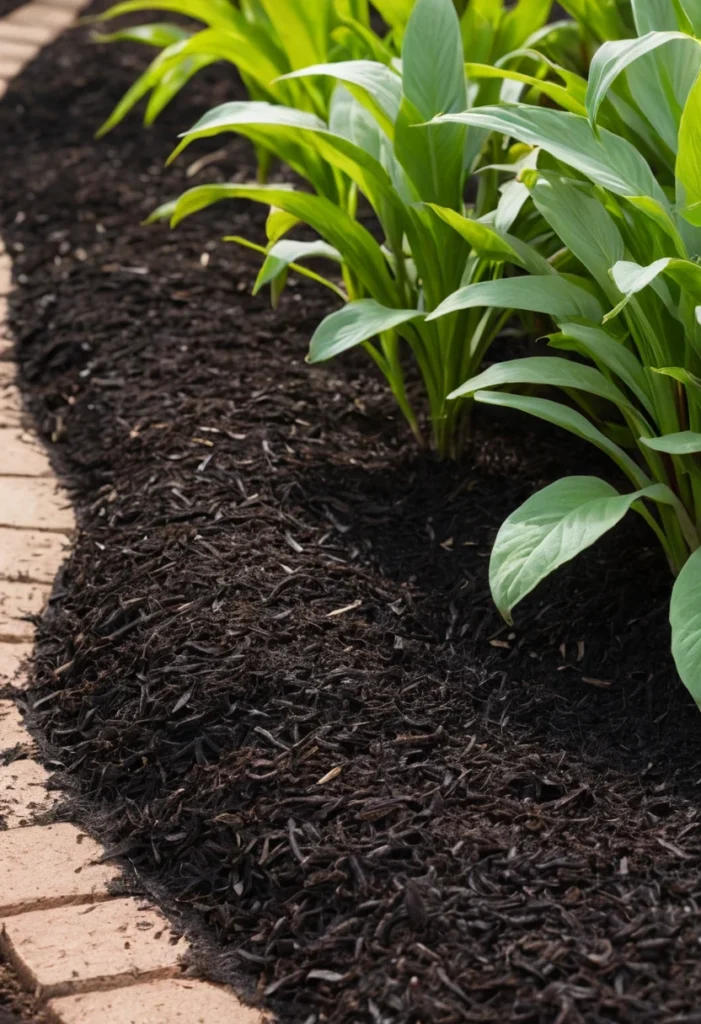
Mulch is an important part of 12+Garden ideas because it helps cover exposed soil and can reduce evaporation. It can also suppress weeds and help moderate soil temperatures. Xeriscaping guidance commonly includes mulching among the core techniques used to improve water efficiency.
The best mulch depends on your garden. Organic mulch can work well around many traditional planting beds, while gravel or stone may be more appropriate for certain dry gardens. Avoid applying mulch directly against plant stems or tree trunks.
Keep the Soil Covered
Bare soil can dry quickly and provide an easy place for weeds to establish.
A suitable layer of mulch or appropriate groundcover can protect the surface while making the garden look more finished.
12. Install Drip Irrigation
Efficient irrigation is an important element of 12+Garden ideas because drought-tolerant plants still need water during establishment and periods of extreme dryness. Drip irrigation can deliver water closer to plant roots and reduce unnecessary spraying over paths and other non-planted surfaces.
The key is to match irrigation to plant needs. National Geographic recommends grouping plants with similar water requirements, while modern xeriscape guidance emphasizes hydrozoning and efficient irrigation rather than treating the entire garden as one watering zone.
Separate Irrigation Zones
Keep plants with similar water requirements together whenever possible.
This prevents plants that prefer dry conditions from being watered excessively simply because they share a zone with thirstier plants.
13. Add a Drought-Tolerant Shade Tree
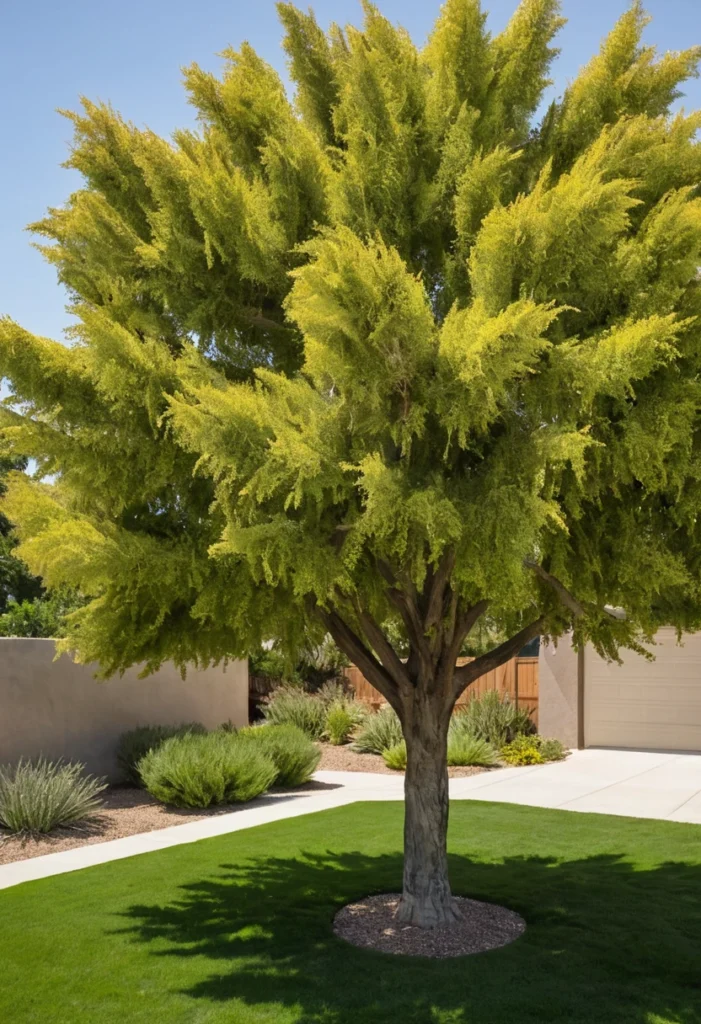
A carefully chosen tree can make 12+Garden ideas more functional by adding shade, structure, habitat, and a long-term focal point. Trees can also make outdoor seating areas more comfortable and provide vertical interest that smaller plants cannot achieve.
Don’t select a tree based only on its appearance. Check mature height, canopy spread, root characteristics, climate suitability, and available space. Even drought-tolerant trees need adequate water while establishing their root systems.
Think About the Future
Plant the tree according to its mature size rather than its current nursery size.
Give it enough space to grow without eventually interfering with buildings, utility lines, pathways, or other plants.
How to Plan Your Xeriscape Garden
Good 12+Garden ideas start with observation rather than immediate planting. Spend time identifying areas of full sun, partial shade, existing trees, compacted soil, poor drainage, and natural water movement. Understanding these conditions makes it much easier to choose plants that will actually thrive.
Next, divide the garden into zones according to water requirements. A lawn or ornamental area that needs more water can remain near the home or a frequently used space, while low-water plants can occupy less-used areas. This concept of grouping plants according to water needs is central to efficient xeriscape planning.
Make a Simple Garden Map
Before buying plants, mark:
- Sunny and shaded areas
- Existing trees and shrubs
- Paths and entrances
- Seating areas
- Drainage patterns
- Irrigation points
- Lawn that you actually use
- Areas suitable for drought-tolerant planting
A basic map can prevent costly planting mistakes.
Start With One Section
You don’t need to transform your entire property in one weekend.
Begin with one bed, observe how it performs through the seasons, and use what you learn when expanding the design.
How to Choose the Right Drought-Tolerant Plants
The best 12+Garden ideas depend on choosing plants that match the actual conditions of the garden. Look at sunlight, soil texture, drainage, winter temperatures, summer heat, rainfall, and mature size. A plant that requires dry soil should not be placed in an area where water regularly collects.
It’s also important to understand the difference between establishment and long-term maintenance. A drought-tolerant plant may need regular irrigation after planting while its root system develops. Once established, its water requirements may decrease considerably, but that does not mean it can survive every extreme weather event without supplemental water.
Consider More Than Flowers
Look for plants that offer attractive foliage, interesting shapes, fragrance, berries, bark, seed heads, or seasonal color.
A diverse combination creates a garden that remains interesting even when only a few plants are flowering.
Common Xeriscape Mistakes to Avoid
Even the best 12+Garden ideas can become difficult if basic design principles are ignored. One common mistake is treating every drought-tolerant plant as completely maintenance free. Plants still need appropriate establishment watering, pruning when necessary, weed management, irrigation checks, and occasional replacement.
Another mistake is overusing gravel. A garden made almost entirely from stone can become visually harsh and may create an unsuitable environment for plants. Recent landscape guidance instead recommends combining rockscaping with resilient plants, groundcovers, trees, and other design elements.
Avoid These Problems
- Choosing plants without checking climate compatibility
- Overwatering drought-adapted plants
- Ignoring drainage
- Planting everything at the same height
- Using excessive gravel
- Mixing plants with very different water needs
- Forgetting the establishment period
- Ignoring mature plant size
Don’t Copy Another Garden Exactly
A beautiful garden online may be designed for a completely different climate.
Use other landscapes for inspiration, but adapt the plant selection and irrigation approach to your own growing conditions.
How to Make a Low-Water Garden Look Lush
The secret to making 12+Garden ideas look lush is not necessarily adding more plants. Instead, use layers, repetition, texture, and varied heights. Combine low groundcovers with medium flowering plants, taller grasses, shrubs, and a few structural plants.
Color can help, but texture is equally important. Silver foliage, fine grasses, broad leaves, rounded succulents, stone, bark, and flowers can create contrast even when the garden uses a relatively small plant palette. Recent xeriscape guidance specifically emphasizes that water-wise gardens can remain colorful, lush, and full of life rather than looking like bare gravel yards.
Repeat Plants for a Professional Look
Choose three to five dependable plants and repeat them in different parts of the landscape.
This creates visual rhythm and makes the entire garden feel connected.
Frequently Asked Questions
1. What is the main purpose of xeriscaping?
Xeriscaping aims to reduce unnecessary landscape water use through appropriate plant selection, hydrozoning, soil management, mulch, and efficient irrigation.
2. What are the best plants for a drought-tolerant garden?
The best choices depend on your region, but native and well-adapted plants are often excellent options because they suit local environmental conditions.
3. Does a xeriscape garden need watering?
Yes, especially during plant establishment and periods of extreme dryness, although mature drought-adapted plants generally need much less supplemental water.
4. Can xeriscaping include a lawn?
Yes. A practical xeriscape can retain lawn in areas where it is useful while replacing unnecessary lawn with drought-tolerant planting.
5. Is xeriscaping only for desert climates?
No. Xeriscaping can be adapted to many climates by selecting plants and irrigation practices that match local rainfall, soil, temperatures, and growing conditions.
Conclusion
The most successful 12+Garden ideas focus on working with nature rather than fighting against it. A beautiful xeriscape can combine native and climate-adapted plants, flowering borders, grasses, gravel, rocks, mulch, pathways, containers, and efficient irrigation. The goal isn’t to eliminate every drop of supplemental water but to make sure the water you use is serving the plants and spaces that genuinely need it.
Start small, study your garden, and choose plants according to the conditions they will actually experience. As you learn which combinations thrive, you can gradually expand your water-wise landscape. With thoughtful planning and a little patience during establishment, your garden can become attractive, practical, and considerably more resilient during dry periods.

