
Lavender is one of those garden plants that can transform an ordinary outdoor space with very little effort. Its silvery-green foliage, fragrant flower spikes, and soft purple, pink, blue, or white blooms make it suitable for borders, pathways, containers, cottage gardens, pollinator spaces, and sunny beds. 13+Flower Garden & Planting ideas centered on lavender can bring structure, fragrance, color, and a relaxed Mediterranean-inspired feeling to both large and small gardens.
A lavender plant can look wonderfully easygoing, but there is one important secret: it prefers conditions that are quite different from many moisture-loving garden plants. Give it plenty of sunshine and sharply draining soil, and it can thrive with surprisingly little water once established. Put it in heavy, constantly wet soil, however, and problems can appear quickly. The Royal Horticultural Society also emphasizes full sun, free-draining soil, and annual pruning as key elements of successful lavender growing.
In this guide, you’ll discover 13+Flower Garden & Planting ideas that use lavender in creative and practical ways, along with detailed care advice for planting, watering, feeding, pruning, propagation, container growing, seasonal maintenance, and common problems. Whether you’re planning a new flower bed or simply want to improve an existing lavender patch, these ideas can help you create a healthier and more attractive garden.
1. Create a Lavender Border Along a Garden Path
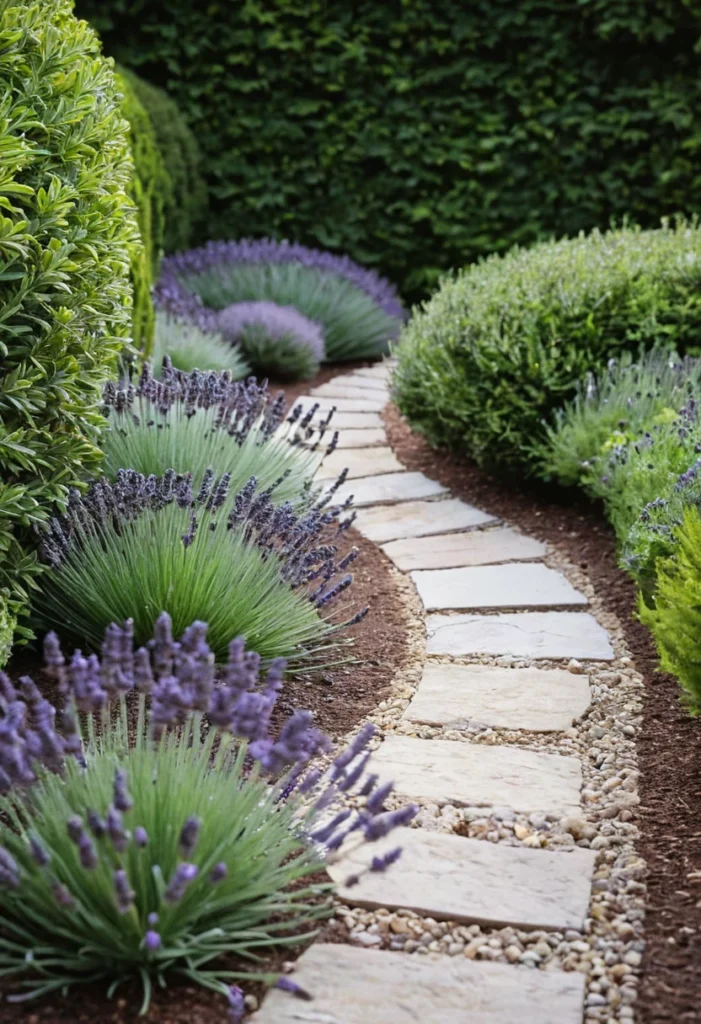
A lavender border is one of the most natural ways to use this fragrant plant. Planting lavender along both sides of a walkway creates a soft frame and allows its scent to be enjoyed whenever you pass. English lavender and suitable hybrids are particularly useful for borders and low hedging, while the exact variety should be selected according to your climate and available space.
For 13+Flower Garden & Planting, keep the spacing consistent enough to create rhythm without forcing plants together. Lavender needs good air circulation, and overcrowding can make foliage stay damp for longer after rain or irrigation. A slightly informal arrangement can work beautifully in a cottage garden, while evenly spaced plants give a more formal appearance.
- Mark the pathway before planting.
- Choose a sunny side of the garden.
- Allow mature plants enough room.
- Keep the soil well drained.
- Use consistent varieties for a uniform border.
- Trim plants annually to maintain their shape.
2. Design a Classic Lavender Bed
A dedicated lavender bed can become a simple focal point in a sunny part of the yard. Instead of mixing dozens of unrelated flowers, use lavender as the dominant planting and introduce a few complementary plants around it. This keeps the design calm and gives the foliage and flowers room to make an impact.
A successful 13+Flower Garden & Planting bed doesn’t have to be perfectly symmetrical. You can arrange lavender in sweeping groups, curved rows, or compact clusters depending on the shape of your garden. The important point is to avoid creating a crowded mass where air cannot move freely between plants.
For a formal appearance, repeat identical plants at regular intervals. For a relaxed cottage style, combine lavender with compatible flowering plants that have similar sun and drainage requirements.
3. Combine Lavender With Roses
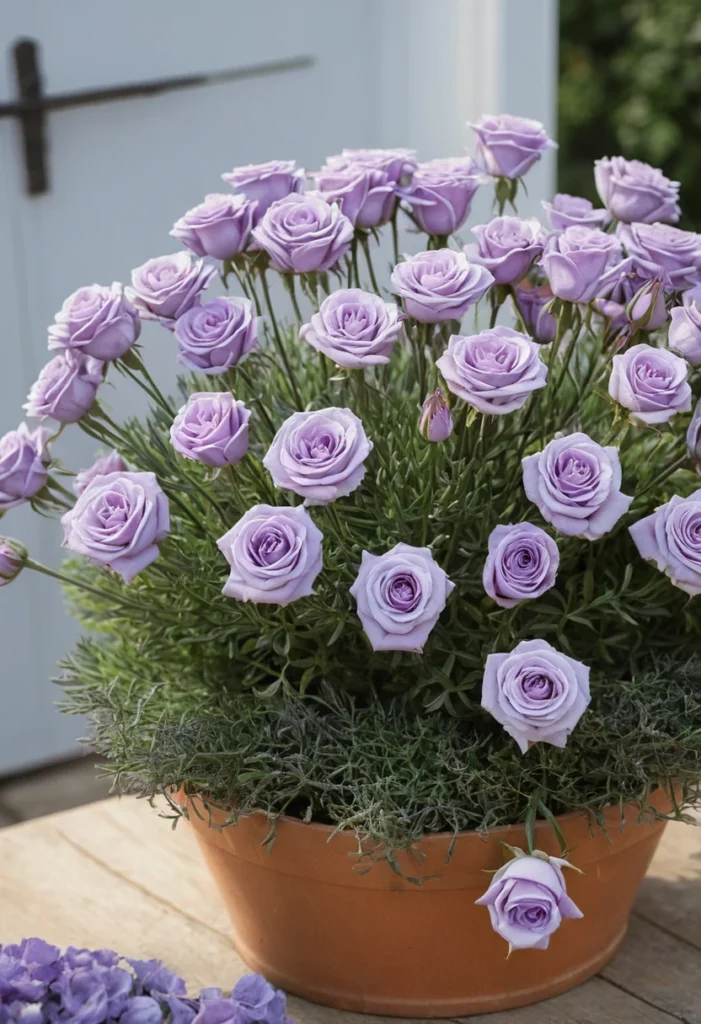
Lavender and roses make a classic garden combination because their colors and forms complement each other. Tall rose stems can provide vertical structure while lavender creates a low, fragrant layer around the base.
When planning 13+Flower Garden & Planting, don’t plant lavender so close to roses that both plants compete for space. Roses may appreciate more moisture and richer soil than lavender, so position them where you can meet the needs of both plants without keeping lavender roots constantly wet.
A useful arrangement is to place roses farther back and use lavender toward the front of the bed. Add a few low-growing flowering plants between the two if there is enough space.
4. Use Lavender as a Natural Garden Edge
Lavender can create a beautiful transition between lawn and flower beds. Instead of installing a hard border, use compact lavender plants as a living edge that visually separates the two spaces.
This 13+Flower Garden & Planting approach works especially well in sunny gardens where you want a soft, natural boundary. The silver-green foliage remains attractive even when the flowers are not in bloom, helping the garden retain structure.
Keep the edge accessible for trimming and lawn maintenance. A narrow strip between the lavender and lawn can also make it easier to mow without damaging the plants.
Read Also: 13+ Seasonal Garden Guides: Winter Pruning Guide for Trees and Shrubs
5. Build a Mediterranean-Inspired Flower Garden
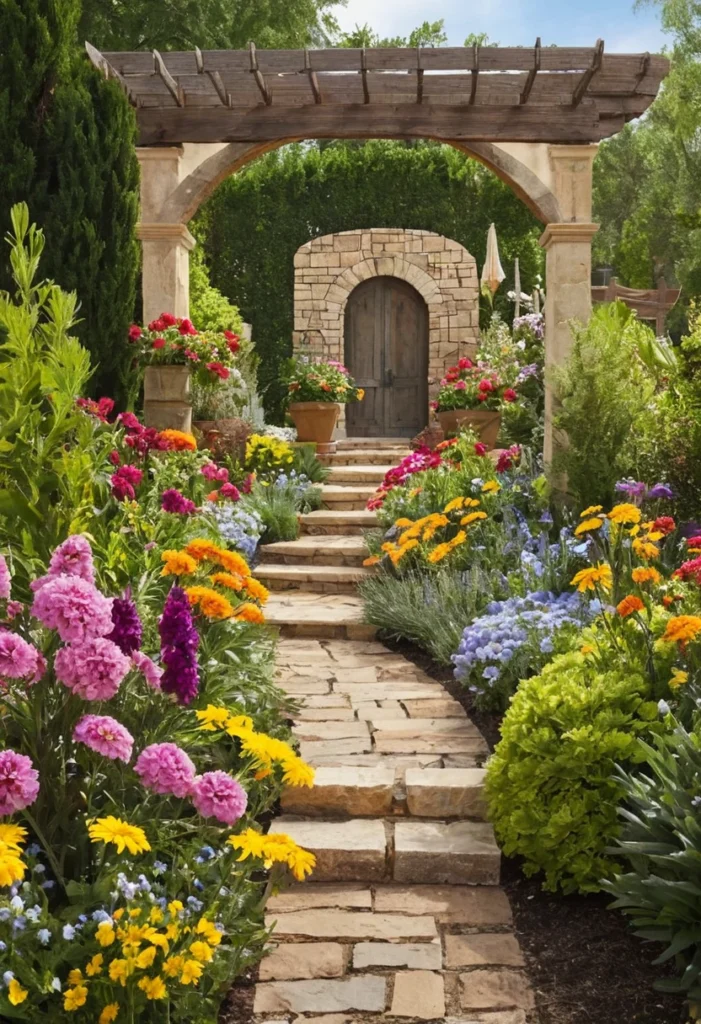
Lavender naturally suggests warm, sunny landscapes, making it an excellent foundation for a Mediterranean-style garden. Combine it with other plants that enjoy sun, good drainage, and relatively dry conditions after establishment.
For 13+Flower Garden & Planting, consider incorporating gravel, stone, terracotta containers, ornamental grasses, and drought-tolerant plants suited to your local climate. The goal is not to copy a Mediterranean landscape exactly but to recreate some of its key characteristics: sunlight, texture, restrained watering, and well-drained soil.
Use pale stone or gravel around the plants to reinforce the visual theme. Keep decorative materials simple so the flowers and aromatic foliage remain the focus.
6. Grow Lavender Around a Seating Area
A seating area becomes much more inviting when fragrant plants are nearby. Lavender can be planted around the perimeter of a sunny patio, bench, or outdoor sitting space so its scent can be enjoyed while relaxing.
A 13+Flower Garden & Planting design around seating should leave enough open space for people to move comfortably. Don’t surround the chairs with dense vegetation simply to create a lush effect. Instead, use lavender in selected clusters and combine it with low-maintenance plants.
A few lavender plants beside a pathway leading to the seating area can create a pleasant transition. Containers can also be used when planting directly into the ground isn’t practical.
7. Create a Lavender and Pollinator Garden
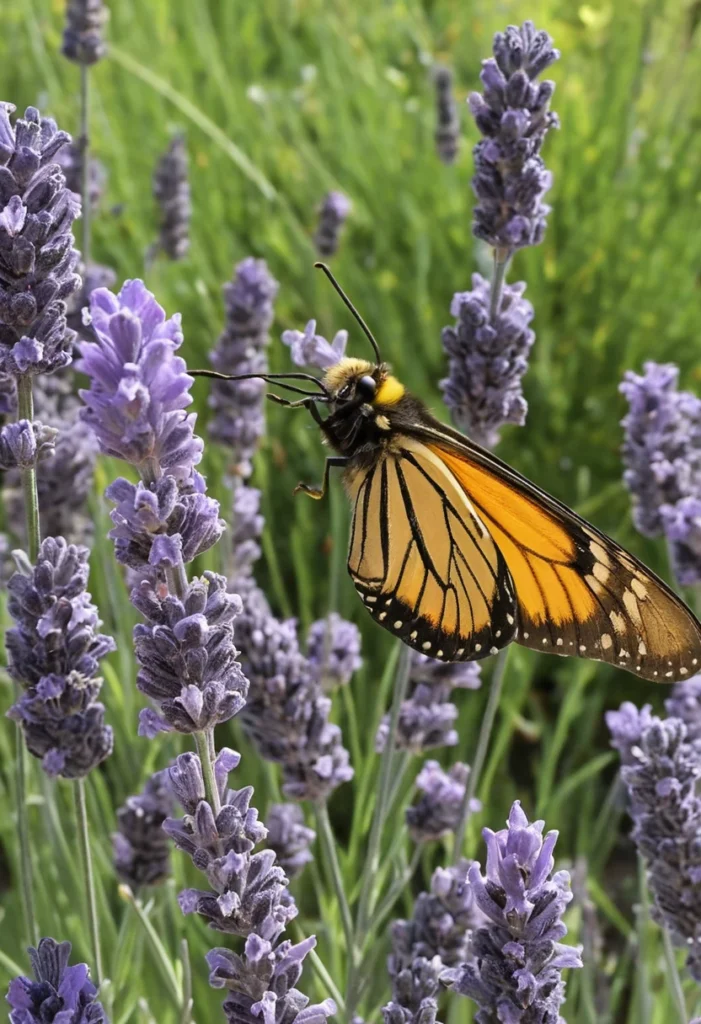
Lavender flowers are attractive to bees and other pollinating insects, making them useful in wildlife-friendly planting designs. The RHS lists lavender flowers as highly attractive to bees and other pollinating insects.
For 13+Flower Garden & Planting, combine lavender with other locally suitable flowering plants that provide blooms at different times. This can extend the period when your garden offers resources to pollinators while creating more visual variety.
Try to avoid designing the entire space around one flowering period. A mixture of spring, summer, and later-season plants can keep the garden interesting for people as well as wildlife.
Add Different Flower Shapes
Different flower forms can make a pollinator garden more visually interesting. Choose compatible plants that bloom at different heights and times while sharing similar site requirements.
Leave Some Open Space
A pollinator garden doesn’t need to be packed from edge to edge. Open areas make maintenance easier and can provide useful movement space around flowering plants.
8. Plant Lavender in a Raised Bed
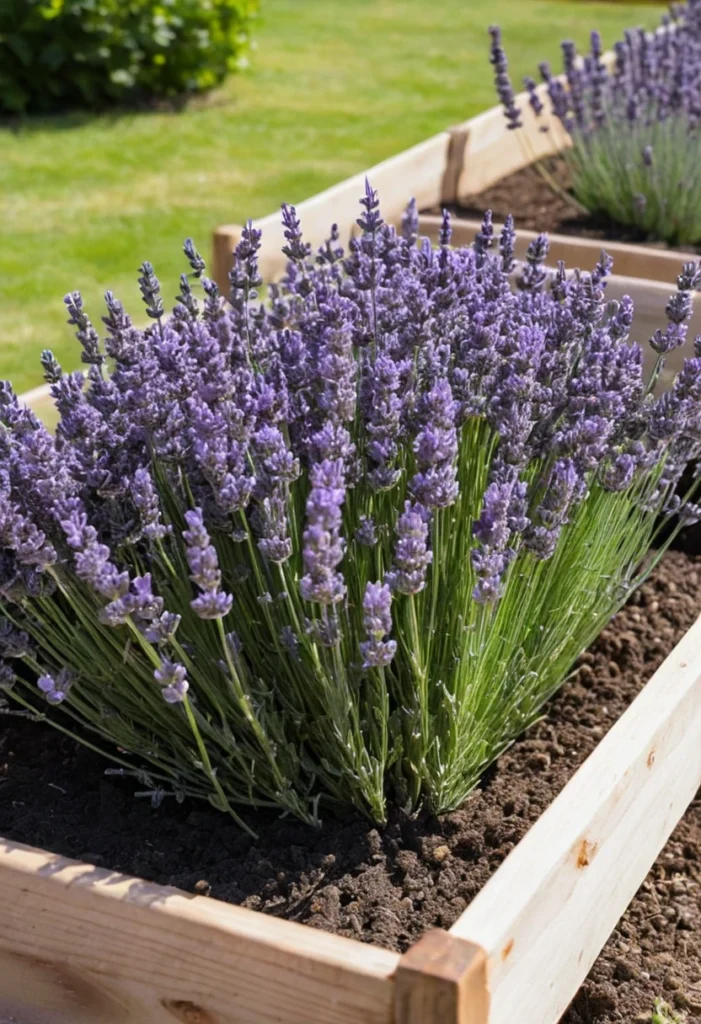
If your native soil is heavy or holds water, a raised bed can make lavender much easier to grow. The RHS recommends planting lavender on a mound, ridge, or in a raised bed when heavy soil creates drainage problems.
A raised-bed 13+Flower Garden & Planting design can also make lavender more visible from a distance. Use stone, brick, timber, or another suitable material to create the edge, then fill it with a growing medium that drains well.
Don’t make the bed unnecessarily deep or complicated. The main objective is to keep the root zone from remaining saturated after rainfall or irrigation.
9. Try Lavender in Containers
Lavender is well suited to containers, making it an excellent choice for patios, balconies, terraces, entrances, and small gardens. Containers also allow you to control the growing medium more easily when the ground soil is poorly drained.
For 13+Flower Garden & Planting, choose a container with generous drainage holes and use a free-draining growing medium. The RHS recommends large containers and adding coarse grit to improve drainage.
Remember that container-grown lavender usually needs more attention to watering than lavender planted in the ground because containers dry out faster. During winter, keeping the container protected from excessive rain can also reduce the risk of waterlogged roots.
10. Create a Purple-and-Silver Flower Bed
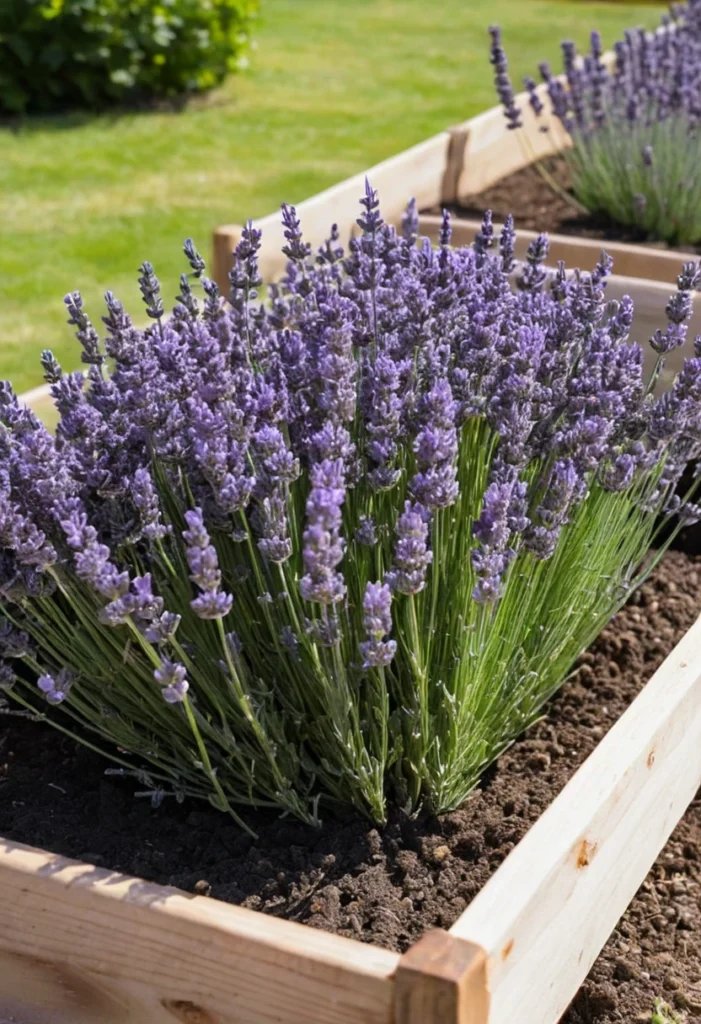
Lavender’s purple flowers and silver-green foliage already provide a beautiful color combination. You can emphasize that effect by surrounding it with plants that offer contrasting or complementary foliage.
A purple-and-silver 13+Flower Garden & Planting scheme can feel elegant without requiring a large number of flower varieties. Add white flowers for brightness or soft pink blooms for a romantic appearance.
Use foliage carefully. Silver, gray-green, and deep-green leaves can create contrast even when flowering plants are between bloom periods.
11. Grow Lavender Beside a Fence
A sunny fence line can be an excellent location for lavender. The fence can provide a visual background while the lavender forms a lower layer in front.
For 13+Flower Garden & Planting, make sure the fence does not create excessive shade. Lavender performs best in full sun and struggles in consistently shady, damp locations.
If the fence receives strong reflected heat, monitor young plants carefully during establishment. Once mature, many lavender types tolerate dry conditions well, but newly planted specimens still need appropriate watering.
You can also combine the fence with a trellis and suitable climbing plants, creating a layered vertical garden behind the lavender.
12. Design a Small Lavender Corner
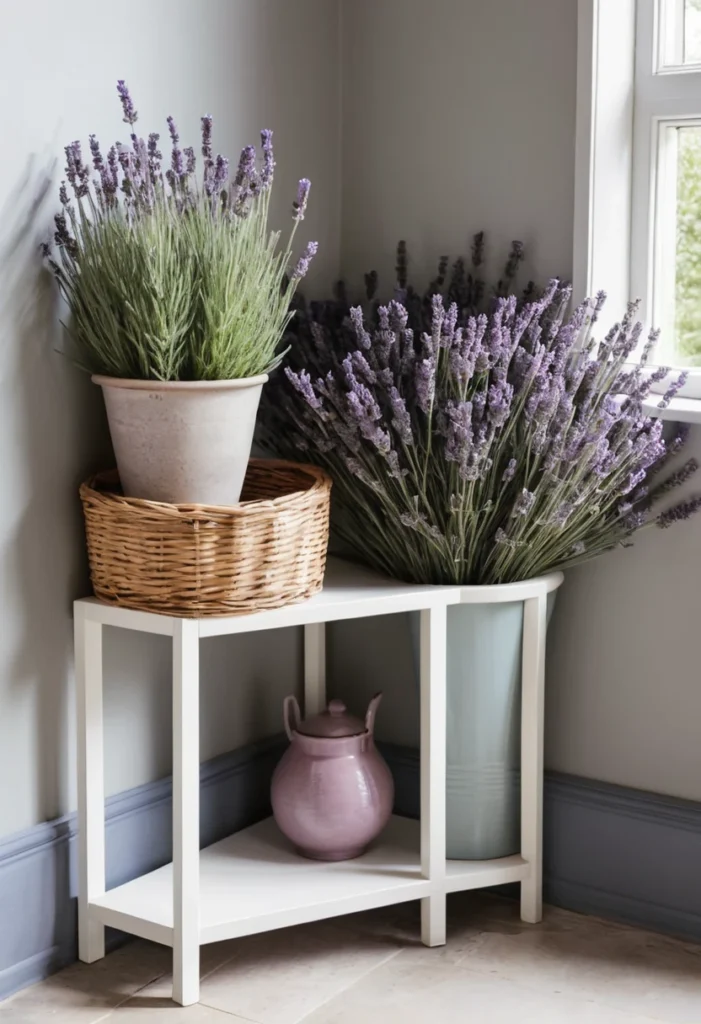
You don’t need a huge yard to enjoy lavender. A small corner with three or five well-spaced plants can create a surprisingly attractive feature.
The key to successful 13+Flower Garden & Planting in a small space is restraint. Instead of adding too many varieties, choose one main lavender type and perhaps two compatible companion plants.
Use a simple gravel or stone surface around the planting to make the foliage stand out. A small pot, garden ornament, or compact bench can complete the space without overcrowding it.
13. Create a Lavender Hedge
Lavender can be grown as a low hedge or informal border, particularly when plants are spaced appropriately and trimmed regularly. The RHS notes that lavender is suitable for low hedges and gives spacing guidance based on plant size and use.
For 13+Flower Garden & Planting, choose a lavender type that remains appropriate for the intended hedge height. Space plants according to their mature dimensions rather than trying to make them touch immediately after planting.
A young hedge may look sparse at first. Give plants time to establish rather than compensating by planting them too closely.
14. Mix Lavender With Ornamental Grasses
Ornamental grasses can provide movement and fine texture beside lavender’s upright flower spikes. This combination is especially attractive in modern or Mediterranean-inspired gardens.
Use grasses that are suitable for the same sunlight and moisture conditions. A plant that needs frequent watering is unlikely to be a good long-term partner for drought-tolerant lavender.
In a 13+Flower Garden & Planting arrangement, place taller grasses toward the rear and lavender toward the front. This creates layers without hiding the lavender flowers.
15. Make a Fragrant Cottage Garden
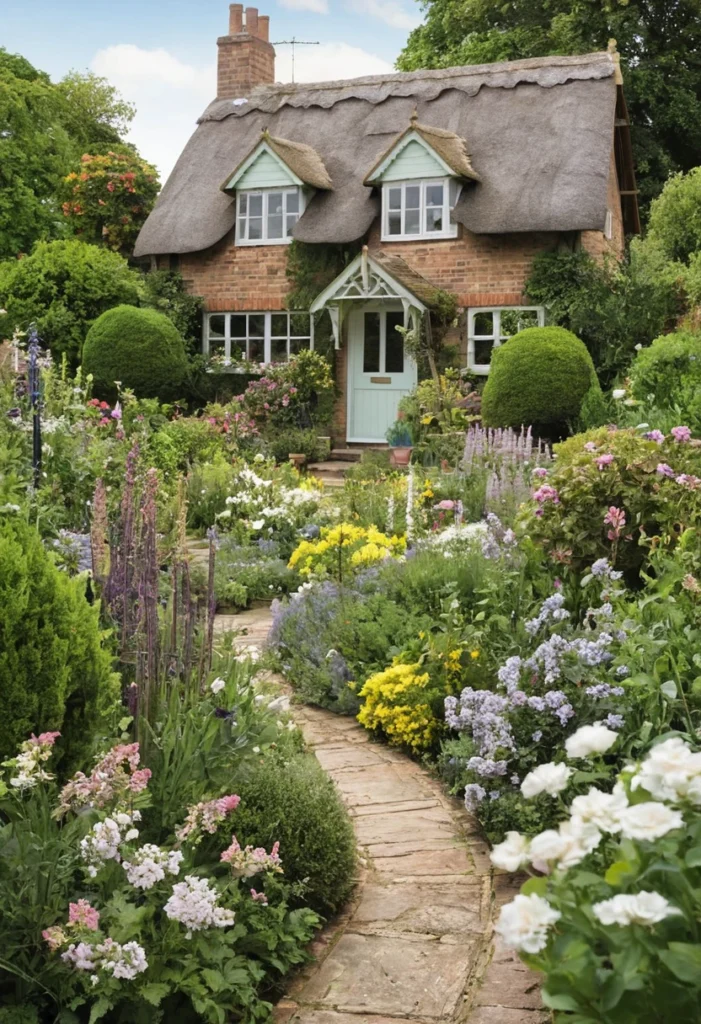
Lavender is a natural fit for cottage-style planting because its flowers combine beautifully with roses, daisies, salvias, and other traditional garden plants. The important thing is to select companions that suit the same site rather than simply choosing plants that look good together.
A fragrant 13+Flower Garden & Planting scheme can include several scented plants distributed throughout the garden. Place the strongest fragrances near paths and seating areas where people can actually experience them.
Common Lavender Problems and How to Prevent Them
Most lavender problems can be reduced by correcting the growing environment rather than constantly treating the plant. Poor drainage, excessive watering, insufficient sunlight, overcrowding, and incorrect pruning are common causes of disappointing growth.
For 13+Flower Garden & Planting, inspect the plant and its surroundings before reaching for a treatment. Yellowing foliage, weak growth, or root problems may be signs that the plant is receiving too much moisture or insufficient light.
Keep these warning signs in mind:
- Constantly wet soil
- Poor air circulation
- Heavy shade
- Overcrowded planting
- Excessive fertilizer
- Cutting deeply into old woody stems
- Blocked container drainage
- Too much winter moisture
Fixing the underlying condition is usually more valuable than simply responding to the symptom.
Best Lavender Garden Design Principles
The most attractive lavender gardens usually have a clear visual idea. They may focus on repetition, color, fragrance, symmetry, wildlife value, or a combination of these elements.
When planning 13+Flower Garden & Planting, start with the purpose of the space. A pathway border should remain low and accessible, while a backyard focal bed can accommodate a more layered composition.
Keep these design principles in mind:
- Repeat lavender in recognizable groups.
- Match companion plants to similar conditions.
- Use height to create depth.
- Leave enough room for mature plants.
- Keep drainage excellent.
- Limit unnecessary decorative clutter.
- Consider fragrance when placing plants near paths.
- Plan for seasonal changes.
- Choose varieties suited to your climate.
- Make maintenance access part of the design.
FAQs
Where is the best place to plant lavender?
Lavender generally performs best in a sunny, sheltered location with excellent drainage and relatively lean soil.
How often should lavender be watered?
Water newly planted lavender regularly while it establishes, then reduce watering once it is established; container plants generally need more frequent monitoring.
Does lavender need full sun?
Yes. Lavender thrives in full sun, and insufficient light can lead to weaker, less attractive growth.
When should lavender be pruned?
Lavender is generally pruned annually after flowering to maintain a compact shape, while avoiding cuts into old, bare woody stems.
Can lavender grow in pots?
Yes. Lavender grows well in containers when the pot has good drainage and the growing medium allows excess water to escape.
Conclusion
Lavender offers far more possibilities than a simple row of purple flowers. From fragrant pathways and cottage borders to gravel gardens, raised beds, containers, pollinator spaces, and elegant color-themed displays, 13+Flower Garden & Planting ideas can turn lavender into the defining feature of an outdoor space. The plant’s greatest strength is its combination of beauty and relatively low water needs once established.
The most important lesson is to work with lavender rather than against it. Give it plenty of sun, excellent drainage, sensible spacing, moderate watering during establishment, and careful annual pruning. Choose varieties that suit your climate, then build the surrounding garden around those conditions. With thoughtful planning and regular but simple care, 13+Flower Garden & Planting can become a fragrant, attractive garden feature that continues to reward you season after season.

