
A flower garden becomes more polished when its planting area has a clear, attractive boundary. Stone edging creates that boundary while adding natural texture, helping separate flowers from lawns, paths, gravel, or other parts of the landscape. From irregular fieldstone and smooth river rocks to flat flagstone and stacked borders, 12+Flower Garden & Planting ideas can be adapted to both small and large outdoor spaces.
Have you ever spent time creating a beautiful flower bed only to notice that grass slowly creeps into it, mulch spreads across the lawn, or the border looks unfinished? The right stone edge can solve several of these problems while also becoming part of the garden design. Natural stone can make a casual cottage garden feel established, while clean-cut stone can give a modern yard a more structured appearance.
This guide explores practical 12+Flower Garden & Planting ideas that use stone in different ways, including curved borders, stacked stones, river rocks, flagstone, raised beds, gravel transitions, and budget-friendly DIY designs. You’ll also learn how to choose suitable stone, prepare the edge, install it securely, match stones with flowers, and maintain the finished border.
Why Stone Edging Works So Well in Flower Gardens
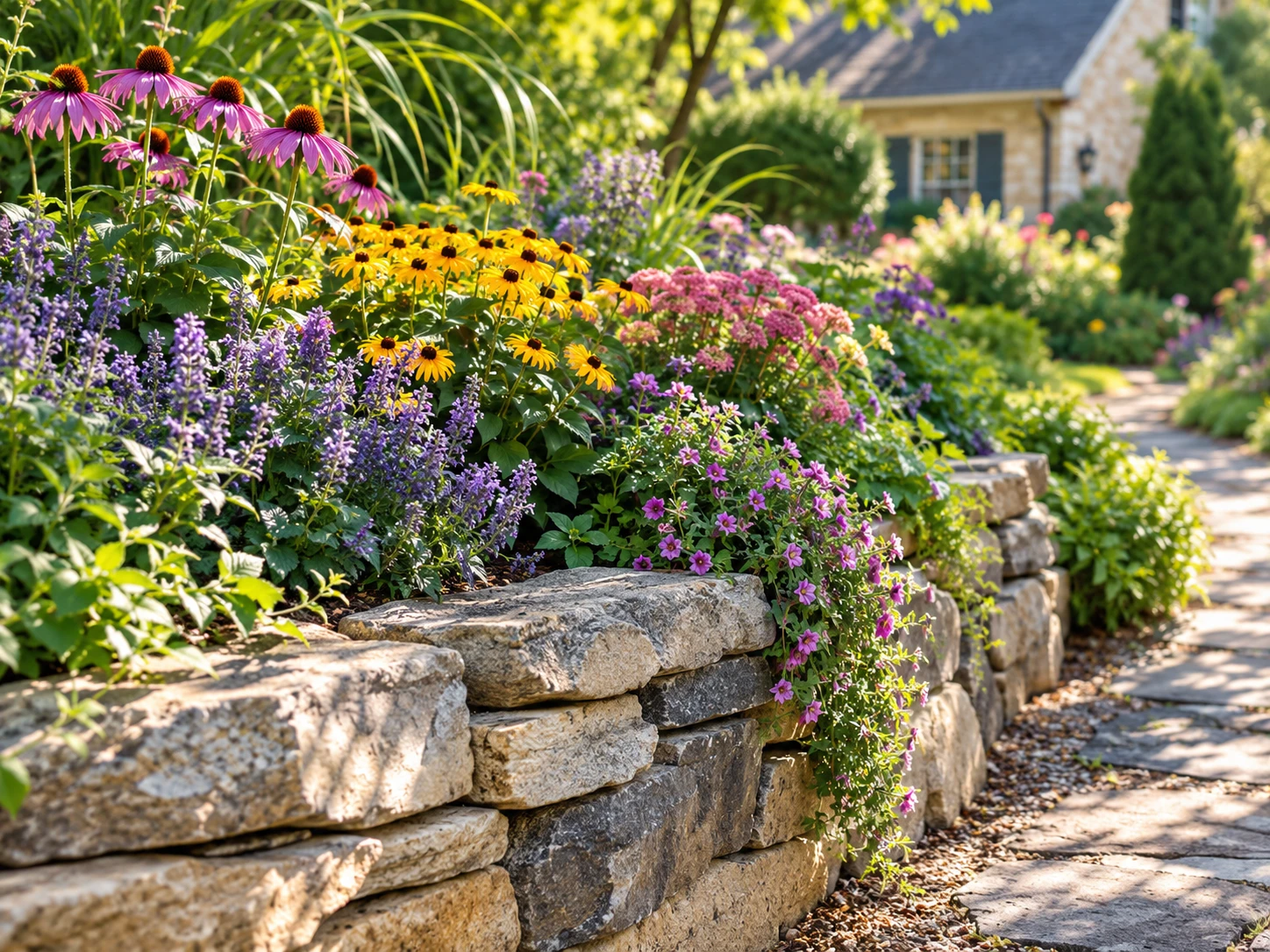
Stone edging gives a flower bed a defined visual boundary between plants and surrounding areas. It can help keep soil and mulch contained and make the transition from lawn to planting area look intentional. Current garden-design guidance also highlights stone as a material that can provide structure while complementing both rustic and contemporary landscapes.
For 12+Flower Garden & Planting, stone is especially useful because it offers many shapes, sizes, colors, and textures. You can choose rough natural rocks for an informal bed or evenly cut pieces for a more orderly design. The important point is to choose an edging style that fits the architecture of your home and the character of the existing garden.
Before buying anything, consider the practical side as well as appearance. Think about how the lawn will be mowed, where rainwater will move, whether the bed sits on a slope, and how much maintenance you’re willing to do.
A good stone border can provide:
- A clear separation between lawn and flowers
- A defined shape for curved or irregular beds
- Better containment of loose mulch and soil
- Strong visual contrast with green foliage
- A durable alternative to temporary garden borders
- A natural transition between paths and planting areas
1. Natural Fieldstone for a Rustic Flower Border
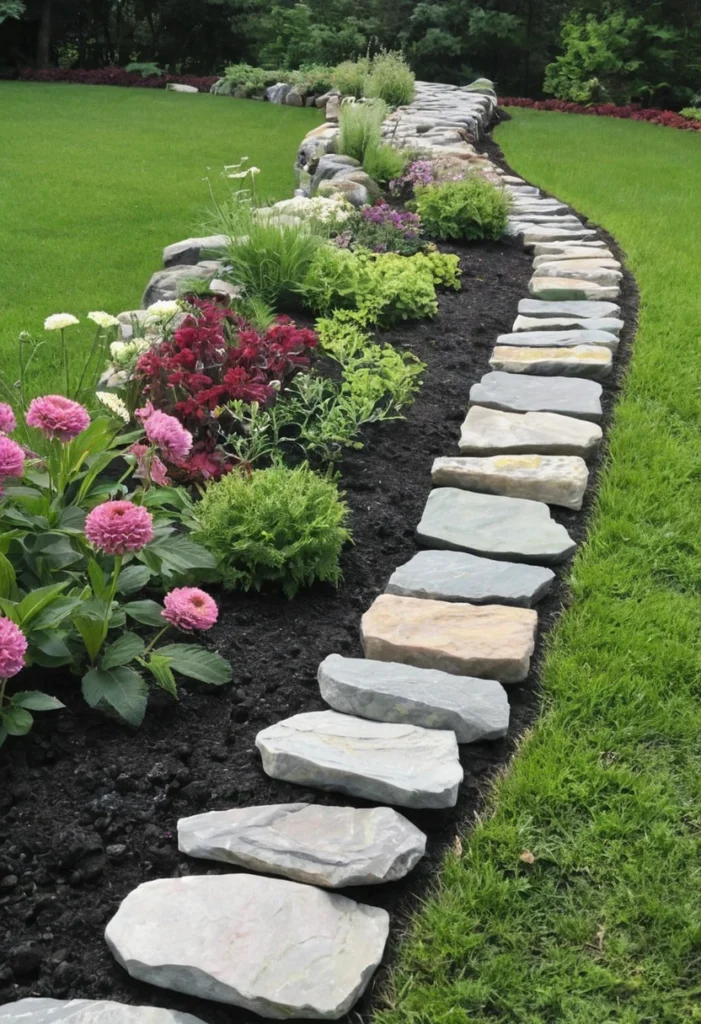
Natural fieldstone is an excellent choice when you want the garden to look relaxed rather than perfectly manufactured. Irregular shapes and natural color variations give the border character, making it especially suitable for cottage gardens, woodland-inspired spaces, and informal backyard flower beds. Natural stone is also commonly used in garden edging because it blends easily with plants and surrounding landscape materials.
For 12+Flower Garden & Planting, arrange the stones so their natural shapes complement the curve of the bed. You don’t necessarily need every stone to be identical. In fact, slightly different sizes can make the edge look more organic.
Keep the largest stones toward corners or areas where you want additional visual weight. Smaller stones can fill transitions between larger pieces, but avoid creating tiny gaps that collect soil and weeds.
2. Smooth River Rock Edging for Curved Beds
River rocks have naturally rounded shapes and smooth surfaces, making them attractive for curved flower beds. Their softer appearance works particularly well with flowing garden layouts, water features, informal paths, and plants with delicate foliage.
A river-rock 12+Flower Garden & Planting border can be created by placing larger rounded stones along the main edge and smaller stones behind them for a layered transition. A shallow trench can help prevent loose rocks from rolling onto the lawn. TheGrow similarly recommends placing river rocks in a shallow trench so they remain more stable.
Choose stone colors that work with the rest of your landscape. Gray, cream, brown, tan, or mixed-color rocks can all work, but using too many unrelated colors may make a small garden feel visually busy.
3. Flat Flagstone for a Clean Garden Edge
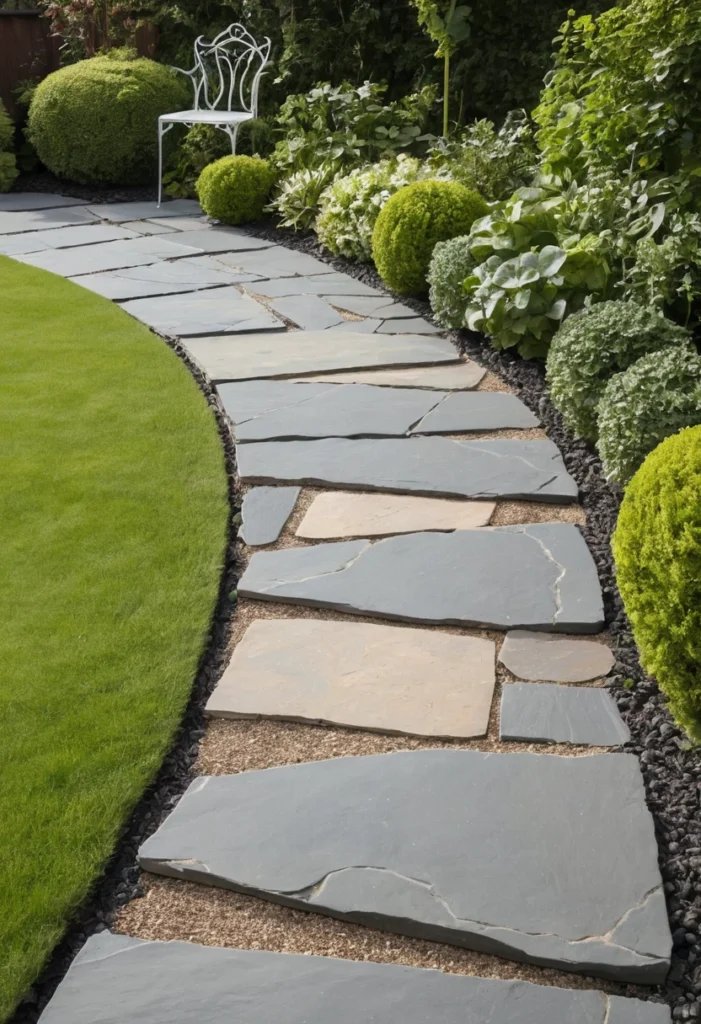
Flat flagstones create a strong, horizontal line around flower beds. Their broad surfaces can look especially attractive when placed beside lawn, gravel paths, or patios.
A flat-stone 12+Flower Garden & Planting design can follow either straight lines or gentle curves. Place the stones close together if you want a continuous visual border, or leave controlled gaps when you want a more relaxed appearance. Flagstone is also featured among practical flower-bed edging choices in current garden-design guides.
If the bed has a formal appearance, try to keep the top surfaces reasonably consistent in height. For an informal garden, slight variation can be part of the charm. The goal is a border that looks intentional rather than accidentally uneven.
4. Stacked Stone Edging for a Raised Flower Bed
Stacked stone can provide both edging and a small amount of elevation. It is particularly useful when you want a flower bed to stand slightly above the surrounding lawn.
For 12+Flower Garden & Planting, use appropriately sized stones and make sure the base is stable before building upward. Taller borders carry more soil pressure than a simple single-row edge, so don’t treat a decorative stack like a retaining wall.
A low stacked border can look beautiful around roses, ornamental grasses, lavender, coneflowers, and other flowering plants. If the structure needs to retain a significant amount of soil, consult a qualified local professional rather than relying on a simple decorative installation.
5. Pebble-and-Stone Edging for a Budget-Friendly Look
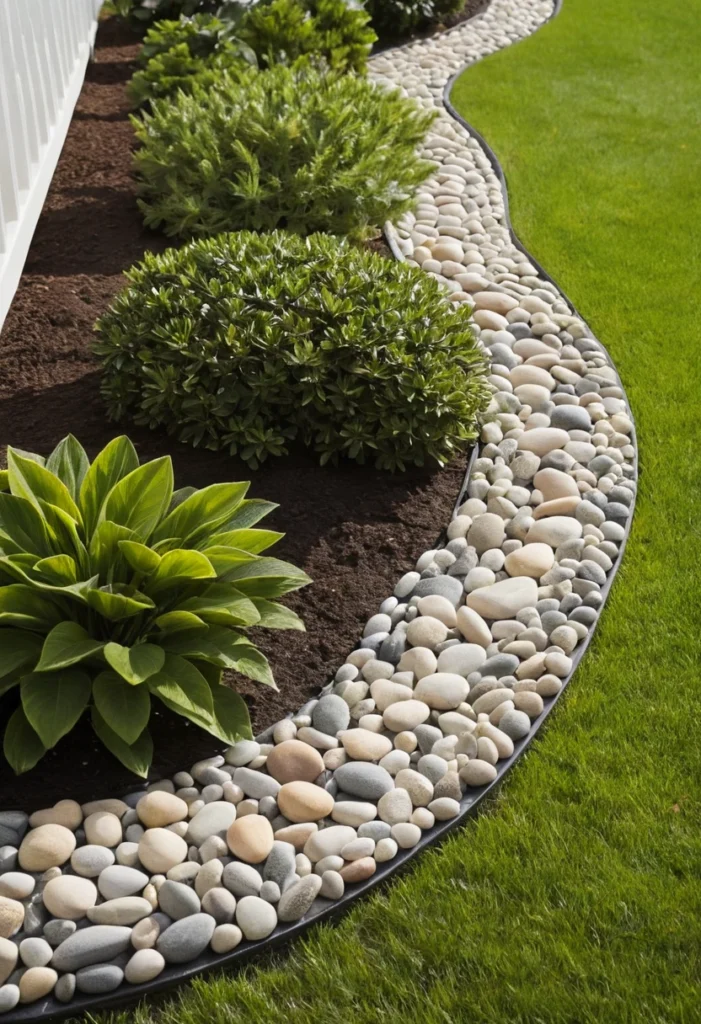
You don’t always need large, expensive pieces to create an attractive garden border. Smaller decorative stones can be used to form a low-profile transition between a flower bed and surrounding areas.
This 12+Flower Garden & Planting approach works particularly well when you want the border to blend rather than dominate. A narrow strip of contrasting pebbles can visually separate dark mulch from green lawn without adding a tall wall.
The key is containment. Small loose stones can migrate into lawns and pathways over time, especially where people walk or lawn equipment passes. A shallow trench and a firm boundary can help keep them where you intended.
6. Use Large Boulders as Statement Edging
Large landscape boulders can turn an ordinary flower bed into a dramatic focal point. Rather than using dozens of small stones, select a few larger pieces and arrange them along important points of the garden.
For a bold 12+Flower Garden & Planting layout, place larger boulders near corners, entrances, or changes in elevation. Surround them with softer plants so the stones become structural features without overpowering the flowers.
Before placing large rocks, think about access and stability. Heavy stones should be positioned carefully, particularly on slopes or near areas where people walk.
7. Create a Curved Stone Flower Bed
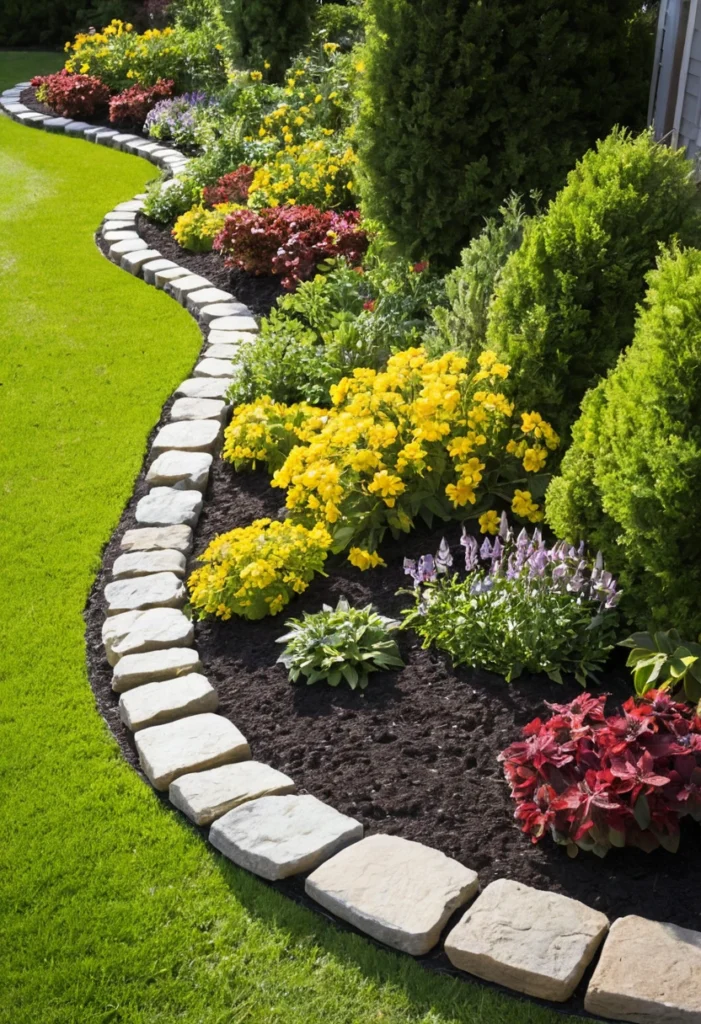
Curves can make a flower garden feel more natural and less rigid. Stone is particularly useful for defining a curved planting area because individual pieces can be arranged gradually along the shape.
For 12+Flower Garden & Planting, mark your desired curve first using a garden hose, string, or another flexible guide. This allows you to view the shape before doing significant digging. Installation guidance from garden-stone specialists similarly recommends marking the line before excavating.
Avoid making every curve extremely tight if your stone pieces are large and rigid. Gentle curves are generally easier to construct neatly, while smaller pieces can accommodate more intricate shapes.
8. Combine Stone Edging With Gravel
A narrow gravel strip between a lawn and a stone-edged flower bed can create a neat transition. It also gives the stone border room to stand out instead of disappearing visually into grass.
This 12+Flower Garden & Planting idea works especially well in modern, Mediterranean, minimalist, and drought-conscious landscapes. Choose gravel that complements the color of your edging stones and nearby paths.
Keep the gravel contained so it doesn’t spread into the lawn. A properly defined trench can help maintain the separation and make occasional maintenance easier.
Read Also: 11+ Plant Care Tips for Cleaning Plant Leaves and Making Them Shine Naturally
9. Use Light-Colored Stone Around Bright Flowers
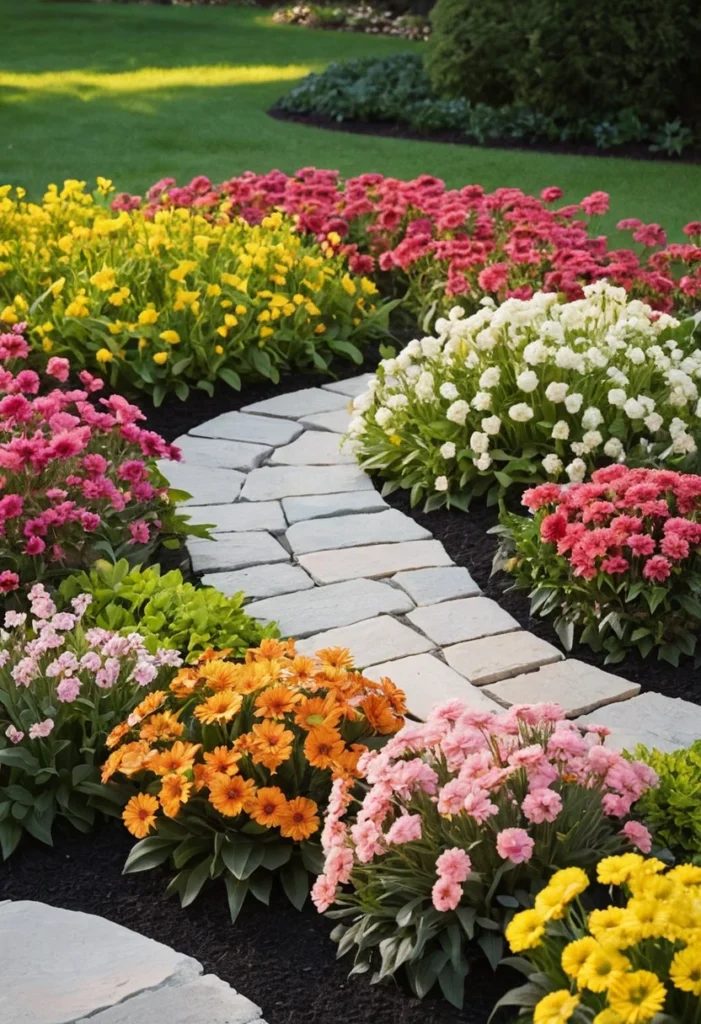
Light-colored limestone, pale gravel, or cream-toned natural stone can make colorful flowers stand out. The contrast can be especially effective with purple, pink, red, and deep-blue blooms.
For 12+Flower Garden & Planting, use light stone around plants with darker foliage to create additional contrast. Lavender, roses, salvia, and ornamental grasses can all look striking against pale edging when their growing conditions are compatible.
Be careful with extremely bright or highly contrasting materials in small gardens. A softer stone color can sometimes create a more sophisticated result than a dramatic white border.
10. Pair Dark Stone With Green Foliage
Dark gray or charcoal stone creates a contemporary appearance and can provide a strong background for green foliage and brightly colored flowers.
A dark-stone 12+Flower Garden & Planting design works well around modern homes, patios, geometric flower beds, and simple planting schemes. Use clean lines when the rest of the landscape has a structured appearance.
To prevent the border from looking too heavy, soften it with plants that spill slightly toward the stone without completely hiding it. Repeating the same stone elsewhere in the landscape can also make the design feel connected.
11. Create a Cottage Garden With Rough Stone
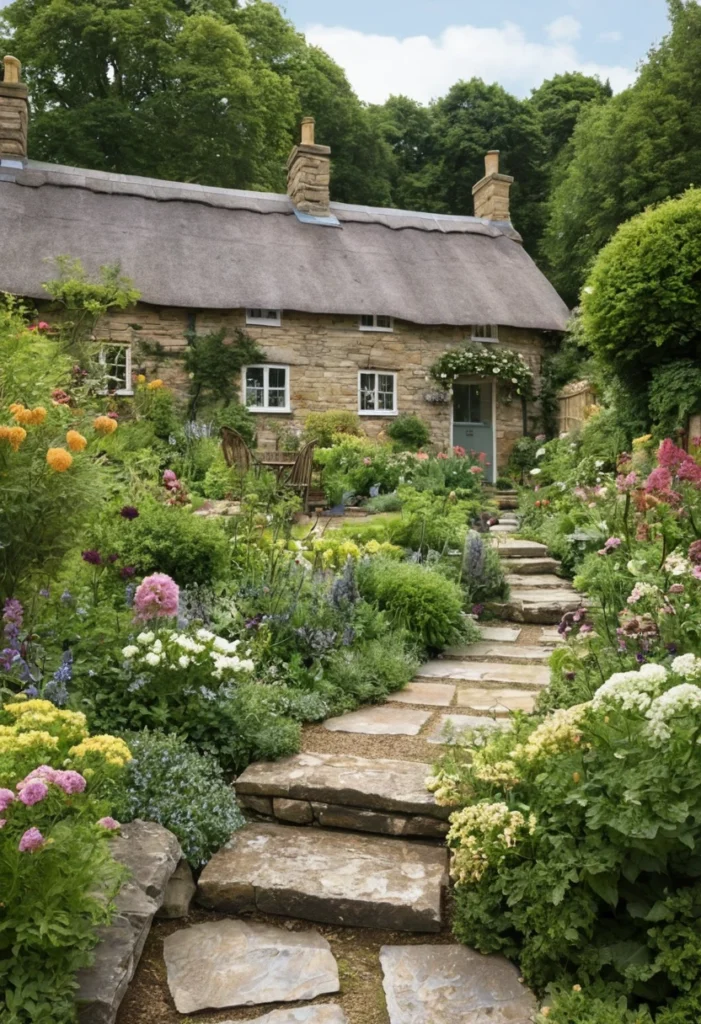
Rough stone is an excellent companion for informal planting. Instead of creating a perfectly straight border, allow the stones to follow the natural shape of the bed.
This 12+Flower Garden & Planting approach pairs well with roses, daisies, lavender, foxgloves, salvia, coneflowers, and other cottage-style plants that suit your local growing conditions.
Don’t overcrowd the planting simply to make it look abundant. Leave enough room for each plant to reach mature size. The stone border should frame the flowers rather than compete with them.
12. Use Reclaimed Stone for Character
Reclaimed stone can bring history and texture into a garden. Old stone pieces from previous landscaping projects can sometimes be reused as edging rather than discarded.
For 12+Flower Garden & Planting, inspect reclaimed materials carefully before installation. Avoid pieces that are unstable, contaminated, excessively sharp, or unsuitable for the intended location.
Mixing slightly weathered stones with established plants can create a garden that looks as though it has developed naturally over many years. This can be especially effective in cottage and traditional landscapes.
13. Make a Stone Edge Around a Tree
A tree can become a strong focal point when surrounded by a carefully shaped flower bed. Stone edging can define the planting area without requiring a complicated structure.
For 12+Flower Garden & Planting, don’t pile soil deeply against the trunk or cover the root flare. Instead, keep the area around the trunk appropriately clear and select plants that tolerate the available light and root competition.
A low stone ring can provide definition while leaving the tree itself visually dominant. Choose shade-tolerant plants where the canopy blocks significant sunlight.
14. Use Stone Edging Around a Garden Path
Flower beds beside paths benefit from a clearly defined boundary. Stone can protect the planting edge from accidental foot traffic while making the pathway look more finished.
A path-side 12+Flower Garden & Planting design should prioritize safety. Avoid placing unstable stones where someone could trip, particularly on frequently used walkways.
Keep the top of the edging reasonably consistent and avoid sharp protrusions into the walking area. If the path is narrow, choose a low-profile border rather than a wide arrangement that reduces usable space.
15. Create a Modern Geometric Stone Border
If your garden has straight paths, rectangular beds, or contemporary architecture, cut stone or uniform pavers can reinforce the clean geometry.
This 12+Flower Garden & Planting style depends on accurate layout. Straight lines should be marked carefully before excavation, and stones should be aligned consistently.
Keep the planting design relatively simple so the structure remains visible. Repeating a small number of flower varieties can work better than filling a modern bed with dozens of unrelated plants.
16. Install a Stone Edge Along a Lawn
One of the most useful applications of stone is creating a visual and physical separation between lawn and flowers. A defined border makes the garden bed easier to read and can help keep mulch from spreading onto grass.
For 12+Flower Garden & Planting, first mark the edge and remove unwanted grass along the intended line. Garden-edging guidance recommends preparing a clean lawn edge before placing stone.
Don’t assume stone automatically stops weeds. Edging can reduce unwanted movement between lawn and bed, but weeds can still grow from seeds, roots, or gaps. Regular inspection remains part of good garden maintenance.
17. Prepare the Ground Before Installing Stone
The foundation is one of the most important parts of a successful stone border. Simply placing heavy stones on loose soil can lead to uneven settling, shifting, or tilting.
For a 12+Flower Garden & Planting project, mark the border first, excavate an appropriate trench, and create a firm, level base suited to the stone and site conditions. Current installation guidance recommends using a stable base and checking alignment before backfilling.
The exact depth depends on stone size, soil, climate, slope, and whether the border is decorative or retaining soil. Don’t use one universal measurement for every garden. Heavy or structural stonework may require substantially more preparation.
18. Keep the Stone Border Level and Stable
Once the base is prepared, position the stones carefully. A level border generally looks more professional, although informal gardens can intentionally use variation.
For 12+Flower Garden & Planting, check the alignment every few stones instead of waiting until the entire border is finished. Small adjustments are much easier while the material is still accessible.
After positioning the stones, backfill and compact the surrounding material as appropriate. A firm base helps reduce future movement, while periodic maintenance may still be necessary because soil and weather conditions change over time.
19. Match Stone Color to Your Home
Your flower bed shouldn’t feel disconnected from the rest of the property. One simple way to create harmony is to repeat colors already present in the house, patio, pathway, fence, or driveway.
A coordinated 12+Flower Garden & Planting design might use warm tan stone near a brick home or cool gray stone beside contemporary paving. The flowers can then provide the brighter seasonal colors.
You don’t need every material to match exactly. Instead, look for complementary tones. Repeating one stone color in another part of the garden can make the overall landscape feel more deliberate.
20. Match the Border to the Flowers
Stone and flowers should work together rather than compete for attention. Large rough rocks can complement bold plants, while smaller smooth stones can suit delicate flowers.
For 12+Flower Garden & Planting, consider plant height, foliage color, flower shape, and mature spread when choosing your edging style. Low-growing plants can soften a hard stone line, while upright flowers can create a strong contrast.
If your flowers are already visually dramatic, a simple stone border may be the better choice. A restrained edge gives colorful blooms room to become the stars of the garden.
21. Choose the Right Stone for Your Garden Style
Different stones create very different moods. Fieldstone feels natural, river rock feels relaxed, flagstone feels structured, and uniform cut stone tends to look more formal.
For 12+Flower Garden & Planting, make the selection based on both appearance and practical requirements. Natural stone options commonly include sandstone, limestone, granite, and other materials, with durability and appearance varying by type.
Also consider availability. Locally sourced stone may be easier to replace and can sometimes blend naturally with the surrounding landscape. Your local stone supplier can provide information about the material’s suitability for your climate.
22. Maintain Your Stone Flower Bed Edging
Even durable stone borders need occasional attention. Soil settles, grass spreads, mulch moves, and stones can shift after heavy rain, freezing conditions, or routine garden activity.
For a long-lasting 12+Flower Garden & Planting border, inspect it at least seasonally. Remove grass that has crossed the edge, sweep loose soil away from the stone, and reset pieces that have noticeably shifted. A practical maintenance approach is to lift sunken stones, level the base, and replace them securely.
Avoid using harsh cleaning methods simply to make natural stone look brand new. Weathering can actually contribute to its character. Focus on stability, cleanliness, drainage, and a clear boundary rather than perfect uniformity.
23. Add Mulch Behind the Stone Edge
Mulch can make flowers look fuller while helping moderate soil moisture and suppress some weed growth. A stone border can help visually contain that mulch inside the planting area.
In 12+Flower Garden & Planting, leave a sensible gap between mulch and the stems or crowns of plants. Avoid piling mulch directly against trunks or plant bases.
Choose mulch that complements your stone. Dark organic mulch can create strong contrast against pale stone, while lighter mulch can work nicely with darker edging.
24. Keep Drainage in Mind
A beautiful stone edge can become a problem if it redirects water toward areas where it shouldn’t go. This matters particularly on sloped properties or beside foundations and pathways.
For 12+Flower Garden & Planting, observe how water currently moves across the garden before installing a solid border. Make sure the new edging doesn’t create an unintended dam.
If the site has significant runoff or erosion, a simple decorative edge may not be enough. Consider professional landscape advice when water movement is affecting structures, steep slopes, or large quantities of soil.
25. Make a Small Stone Border First
If you’re uncertain about which style will suit your yard, start with a small flower bed rather than edging the entire property at once.
A small 12+Flower Garden & Planting project allows you to test stone color, spacing, plant combinations, and maintenance requirements before making a larger investment.
Take photographs during different seasons. A border that looks perfect when flowers are blooming may appear too dominant once foliage dies back, so consider the garden as a year-round composition.
26. Combine Several Stone Sizes Carefully
Using several stone sizes can add depth and natural variation. However, too many sizes can make a border look disorganized.
For 12+Flower Garden & Planting, choose one dominant stone size and use a smaller secondary size as an accent. This gives you variety without losing visual consistency.
For example, large flat stones can form the primary edge while small matching rocks fill selected gaps. Keep the palette consistent so the different sizes still feel like part of one design.
27. Use Stone Edging for Small Gardens
Small gardens benefit from borders that define the space without taking up too much planting area. A low stone edge can accomplish this without making the garden feel crowded.
A compact 12+Flower Garden & Planting design should avoid oversized boulders unless they are intentionally used as focal points. Smaller flat stones or narrow rows of river rock can be more proportional.
Choose flowers that match the available space as well. Mature plant width matters just as much as the dimensions of the stone border.
28. Create a Natural Transition Between Lawn and Flowers
The best garden edges don’t always look like barriers. Sometimes the most attractive approach is to create a gradual transition from grass to stone to flowers.
For 12+Flower Garden & Planting, you might use a narrow gravel strip outside a row of natural stones, followed by a mulched flower bed inside. This creates several visual layers instead of one abrupt line.
The approach is especially attractive in informal gardens where you want the landscape to feel connected rather than heavily segmented.
FAQs About Flower Garden Edging With Stone
What is the best stone for flower bed edging?
The best stone depends on your garden style, soil, climate, budget, and desired durability; natural fieldstone, flagstone, river rock, limestone, and granite can all work in suitable settings.
How deep should stone garden edging be?
There is no single depth for every project; the required excavation depends on stone size, soil, slope, and whether the edging is decorative or retaining soil, so a stable prepared base is essential.
What should I put under edging stones?
A firm, level base of suitable sand, gravel, or compacted aggregate can support the stones and reduce uneven settling, depending on the installation and site.
How do I keep garden edging stones from sinking?
Prepare a stable base, position stones securely, compact surrounding material, and periodically reset any pieces that settle because of weather or soil movement.
Can I install stone flower bed edging myself?
Yes, low decorative stone edging can often be a DIY project, but heavy, tall, or soil-retaining structures require more careful construction and may be better handled with professional advice.
Conclusion
Stone edging can transform an ordinary flower bed into a defined and visually cohesive part of the landscape. From rustic fieldstone and rounded river rocks to elegant flagstone and structured stacked borders, there are plenty of ways to make 12+Flower Garden & Planting ideas work with different garden styles, budgets, and spaces. The best result comes from balancing appearance with stability, drainage, mature plant size, and everyday maintenance.
Start with the shape and conditions of your garden rather than choosing stone first. Mark the border, prepare a firm base, select material that complements your home and flowers, and give the plants enough room to mature. With thoughtful planning, your 12+Flower Garden & Planting project can create a beautiful edge that frames the flowers, improves garden definition, and remains attractive through the seasons.

