
Winter is a useful season for many garden maintenance jobs, and pruning is one of the most important tasks for trees and shrubs. When deciduous plants lose their leaves, their branches become easier to see. This makes it simpler to spot dead wood, damaged limbs, crossing branches, and crowded growth.
However, winter pruning is not simply about picking up a saw and cutting branches. Different plants have different growth patterns, flowering habits, and pruning needs. A cut made at the wrong time can remove flower buds or encourage unwanted growth.
With the right approach, winter pruning can improve the structure, appearance, airflow, and overall condition of many garden plants. The key is to understand the plant before making major cuts.
1. Why Winter Can Be a Good Time to Prune
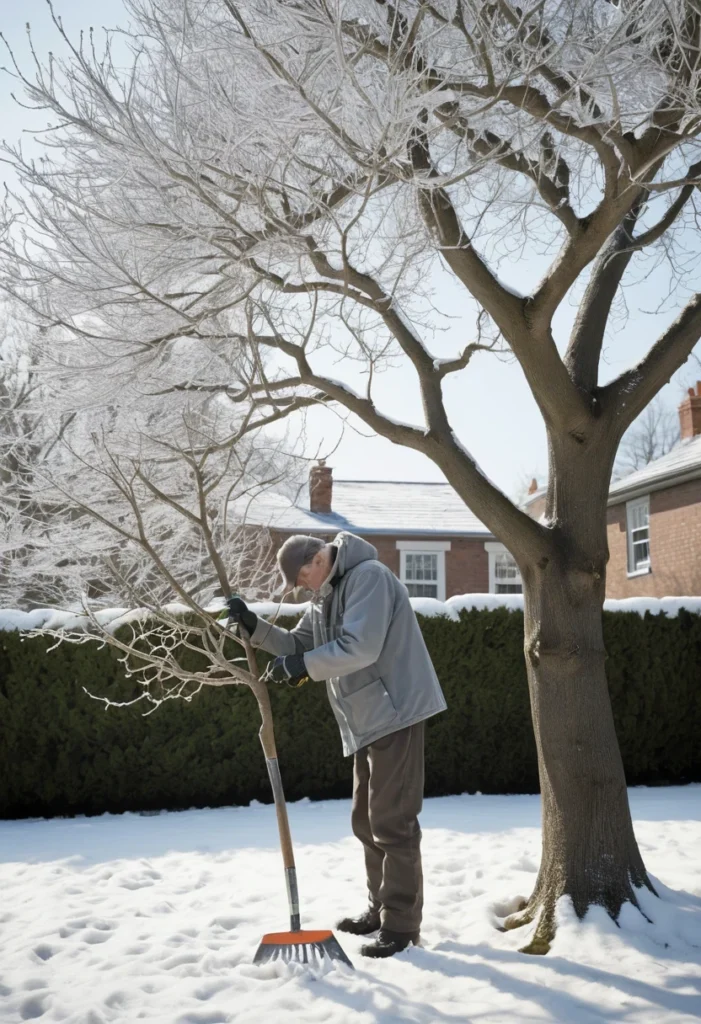
Many deciduous trees and shrubs enter a dormant period during winter. During this time, there are fewer leaves covering the branches, so the plant’s structure is much easier to inspect.
This makes winter particularly useful for structural pruning. You can see where branches cross, rub against each other, grow toward the center, or compete for space.
Another advantage is that pruning during the dormant season can allow plants to prepare for fresh growth as spring approaches. However, the exact timing depends on the plant species and local climate.
Benefits of Dormant-Season Pruning
Winter pruning may help you:
- Remove dead or damaged branches
- Improve the plant’s overall structure
- Increase light penetration
- Improve air movement through the canopy
- Control unwanted growth
- Remove branches that create safety problems
- Prepare some plants for healthy spring growth
The important point is to prune with a clear purpose rather than cutting simply because the plant looks large or untidy.
2. Decide What You Want to Accomplish

Before making the first cut, take a few minutes to look at the entire plant. Good pruning starts with observation.
Ask yourself why the plant needs pruning. Perhaps there are dead branches, damaged growth, poor structure, excessive size, or branches interfering with a walkway or building.
Avoid removing healthy branches just to make the plant smaller. Heavy pruning can sometimes produce vigorous new shoots and may change the plant’s natural shape.
Start With the Three Ds
A simple way to begin is by checking for:
- Dead branches
- Damaged branches
- Diseased branches
These branches should usually receive attention before cosmetic pruning. Once they have been removed, step back and reassess the plant.
You may discover that only a few additional cuts are necessary. Selective pruning is generally better than removing large amounts of healthy growth without a clear reason.
3. Choose the Right Winter Pruning Time
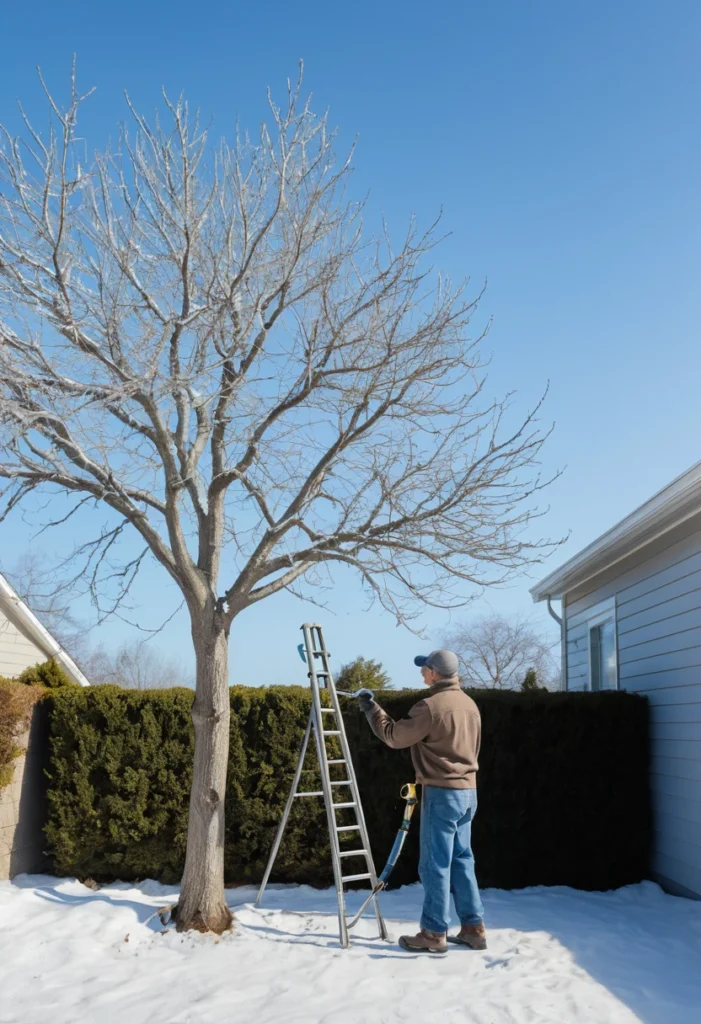
There is no single winter date that works for every tree and shrub. Late winter is commonly suitable for many deciduous landscape plants, but the correct window depends on species, weather, and growing region.
In very cold areas, avoid pruning immediately before an intense freeze when possible. Extremely cold temperatures can make branches more brittle and may make pruning more difficult.
In warmer climates, plants may begin coming out of dormancy earlier. This means the useful pruning window can arrive sooner.
Check the Weather Before You Cut
Try to choose a mild and dry day when practical.
Before pruning, consider:
- Is a severe freeze expected?
- Is the plant already showing signs of spring growth?
- Is the weather wet?
- Are strong winds expected?
- Can you safely reach the branches?
Good timing is about more than the calendar. Weather conditions should also be part of the decision.
Read Also: 12+ Flower Garden & Planting Ideas for a Moon Garden With
4. Prune Deciduous Trees With a Clear Plan
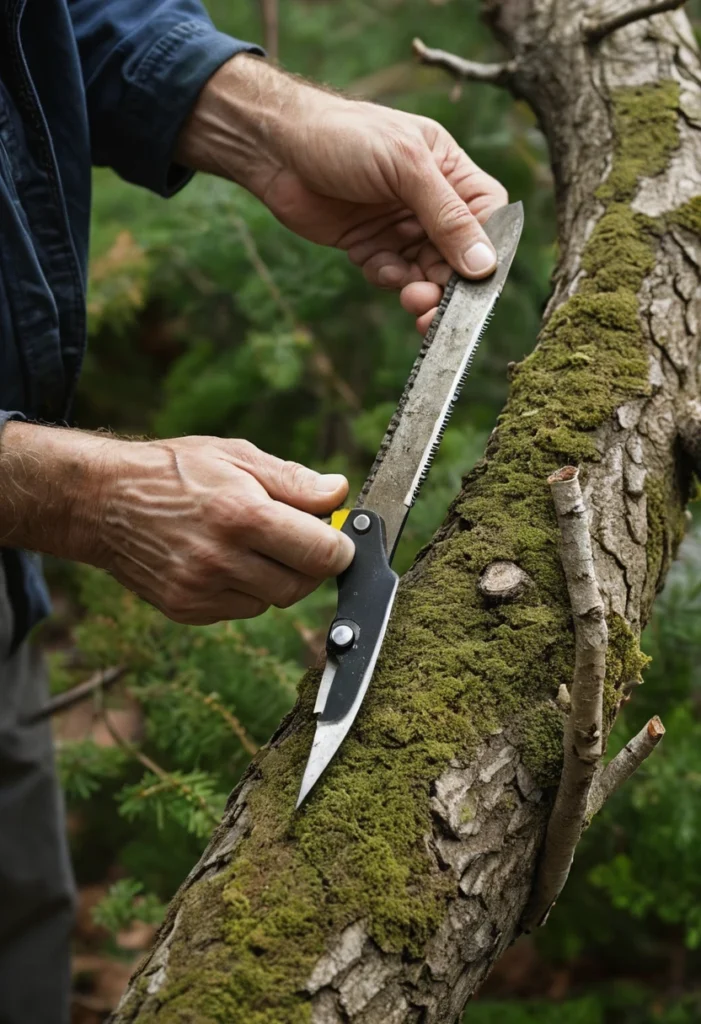
Deciduous trees are often easier to prune in winter because their leaves have fallen. Begin by looking at the trunk and major limbs before moving toward smaller branches.
Look for branches that are dead, broken, crossing, rubbing, poorly positioned, or competing with important structural limbs.
Focus on Strong Structure
Do not try to make the tree perfectly symmetrical. Natural trees rarely have perfectly balanced branch patterns.
Instead, focus on developing a strong framework.
Pay special attention to:
- Crossing branches
- Rubbing limbs
- Weakly attached branches
- Competing leaders
- Inward-growing branches
- Growth interfering with buildings or paths
When two branches are competing for the same space, removing one carefully can give the better-positioned branch room to develop.
Young trees also benefit from thoughtful structural pruning. Small corrections made early can help establish a better framework as the tree grows.
5. Handle Evergreen Trees Differently
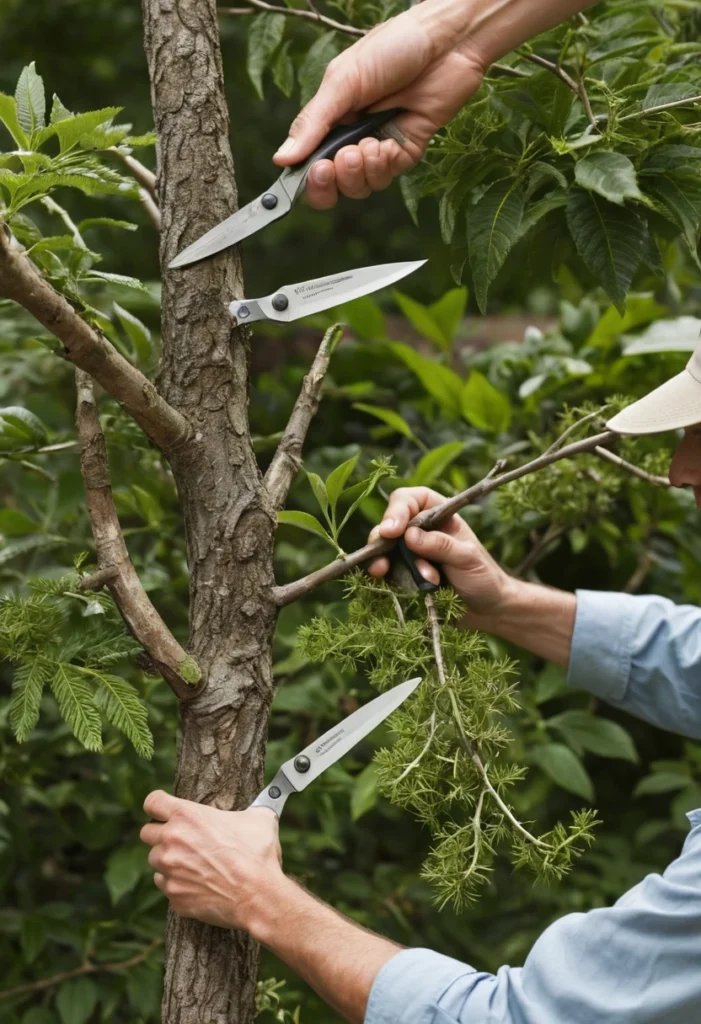
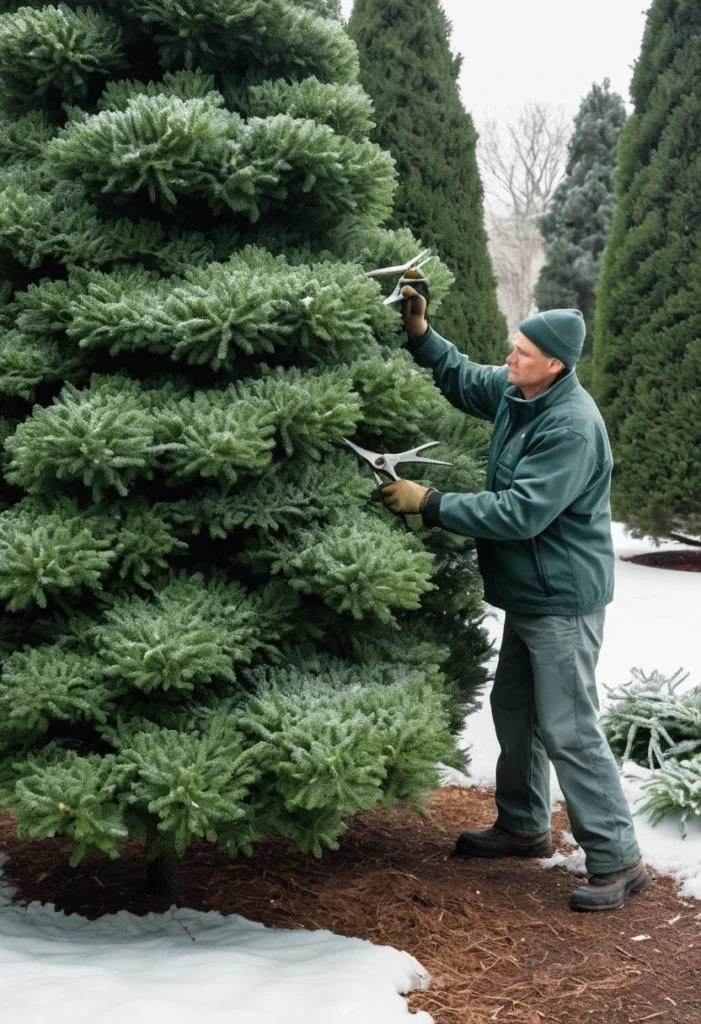
Evergreen trees and shrubs should not automatically be pruned using the same approach as deciduous plants.
Many evergreens need relatively little pruning beyond removing dead, broken, or diseased branches. Before making major cuts, identify the evergreen and learn how it produces new growth.
Pines deserve particular attention because their growth pattern differs from many other evergreen trees.
Be Careful With Pine Trees
Pines produce new growth from terminal buds, commonly known as candles. Cutting into old, bare portions of some pine branches may leave you with little or no new growth from that area.
Spruce and fir have different growth habits and may tolerate selective cuts back to suitable lateral growth.
If you are uncertain about an evergreen’s growth pattern, avoid major cuts until you have confirmed the correct method for that species.
6. Understand Flowering Shrubs Before Pruning
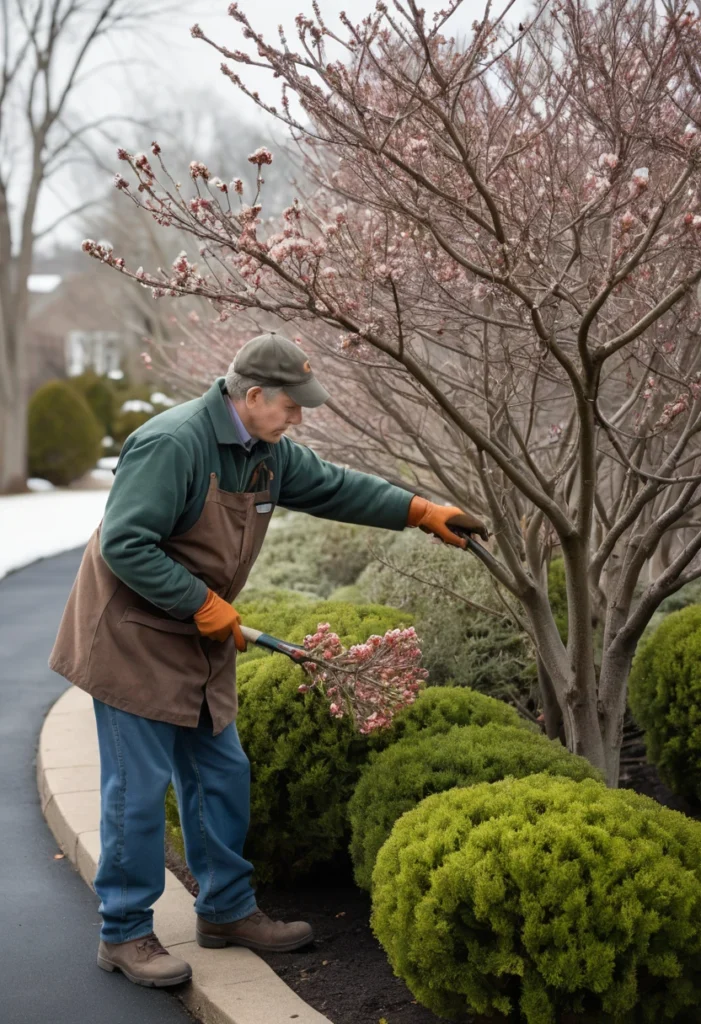
Flowering shrubs are one of the biggest reasons you should not assume that every plant should be pruned in winter.
Some shrubs produce their next season’s flowers on older branches. If you cut these branches during winter, you may accidentally remove many of the flower buds.
Other shrubs flower on new growth and can be better candidates for dormant-season pruning.
Old Wood vs. New Wood
The key question is:
Where does the plant produce its flowers?
If a spring-flowering shrub develops flower buds on older wood, heavy winter pruning can reduce the upcoming flower display.
Shrubs that flower on new growth often have more flexibility for late-winter pruning.
Before pruning an unfamiliar flowering shrub, identify it and check its recommended pruning period. A few minutes of research can prevent an entire season of lost flowers.
7. Give Fruit Trees Special Attention
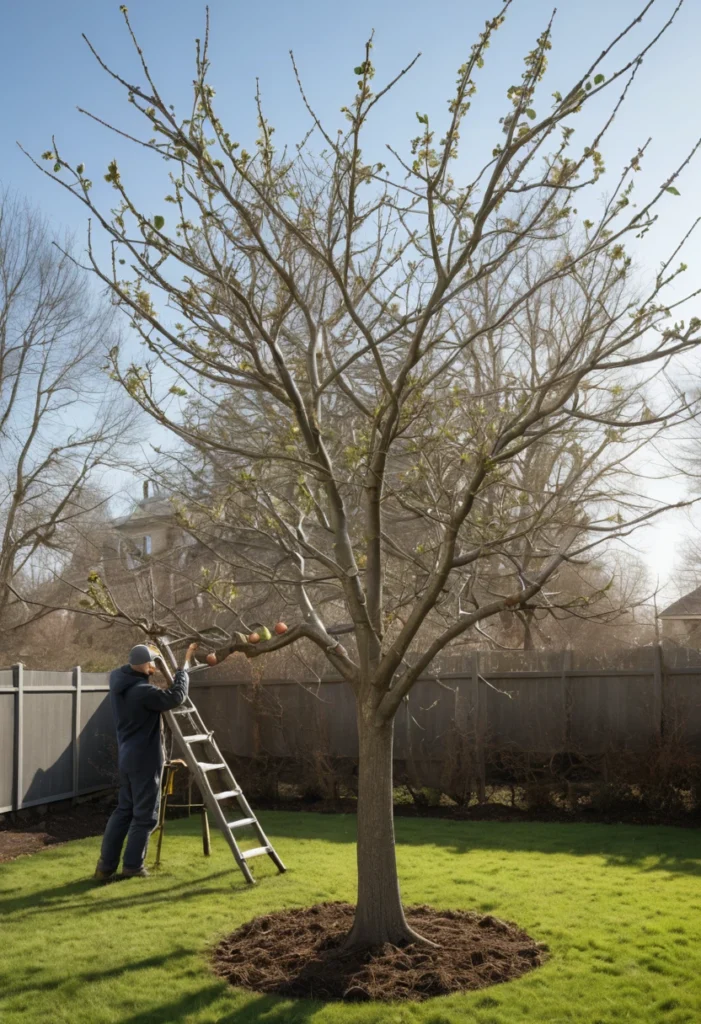
Winter is often a useful time to inspect and prune many deciduous fruit trees. Without leaves covering the branches, the structure is easier to evaluate.
Trees such as apples and pears can benefit from removing dead, damaged, crowded, and inward-growing branches. Selective pruning can also improve light and airflow within the canopy.
However, fruit trees should not all be treated exactly the same.
Don’t Remove Productive Wood
A fruit tree needs enough healthy branches to support leaves and fruit production. Removing too much growth can reduce the tree’s productive potential.
Different fruit species can also require different training systems and pruning approaches.
Before making major cuts, identify whether you are working with an apple, pear, peach, plum, cherry, or another fruit tree and follow guidance appropriate to that species.
A good goal is an open but balanced canopy rather than a completely stripped interior.
8. Use the Correct Pruning Cuts and Tools
The quality of a pruning job depends partly on how the cuts are made. Two common approaches are thinning cuts and heading cuts.
A thinning cut removes a branch back toward its point of origin. A heading cut shortens a branch and can encourage additional branching near the cut.
For structural pruning, thinning cuts are often useful because they remove unwanted branches while maintaining a more natural framework.
Protect the Branch Collar
When removing a branch, avoid cutting flush against the trunk or larger limb. The branch collar contains important tissue involved in the plant’s natural response to the wound.
At the same time, avoid leaving long stubs.
Your goal is a controlled cut that removes the unwanted branch while causing as little unnecessary damage as possible.
Match the Tool to the Branch
Use a tool appropriate for the size of the branch:
- Hand pruners: Small branches and shoots
- Loppers: Larger branches that need extra leverage
- Pruning saws: Branches too large for ordinary pruners or loppers
Sharp, clean tools make controlled cuts easier. Dull equipment can crush or tear plant tissue and makes accurate pruning more difficult.
9. Avoid Common Winter Pruning Mistakes
Good pruning is about making useful cuts, not making as many cuts as possible. One of the most common mistakes is removing too much healthy growth at once.
A general guideline is to avoid removing more than about one-third of a plant in a year, although specific renovation or safety situations may require a different approach.
Common Mistakes to Watch For
Avoid these problems:
- Pruning without identifying the plant
- Cutting healthy branches unnecessarily
- Removing too much growth
- Making flush cuts
- Leaving long stubs
- Cutting spring-flowering shrubs at the wrong time
- Ignoring signs of disease
- Pruning during extreme cold
- Using dull or damaged tools
- Treating every tree species the same
- Removing too many major limbs at once
After making several cuts, step away from the plant and look at it again. This simple habit can help prevent over-pruning.
10. Know When to Stop and Call a Professional
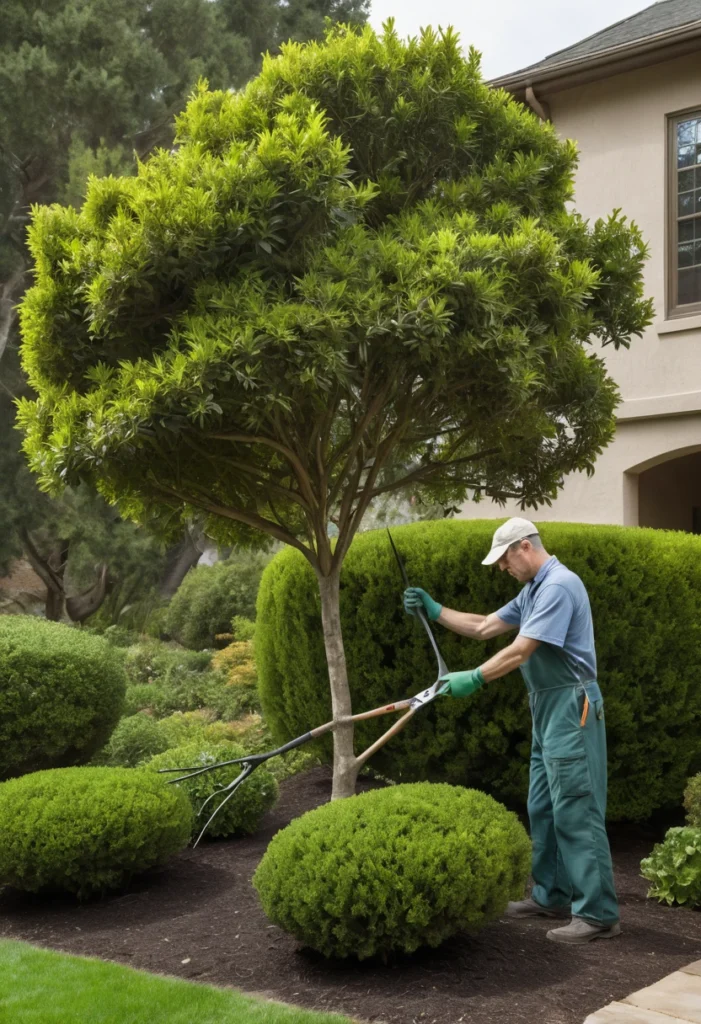
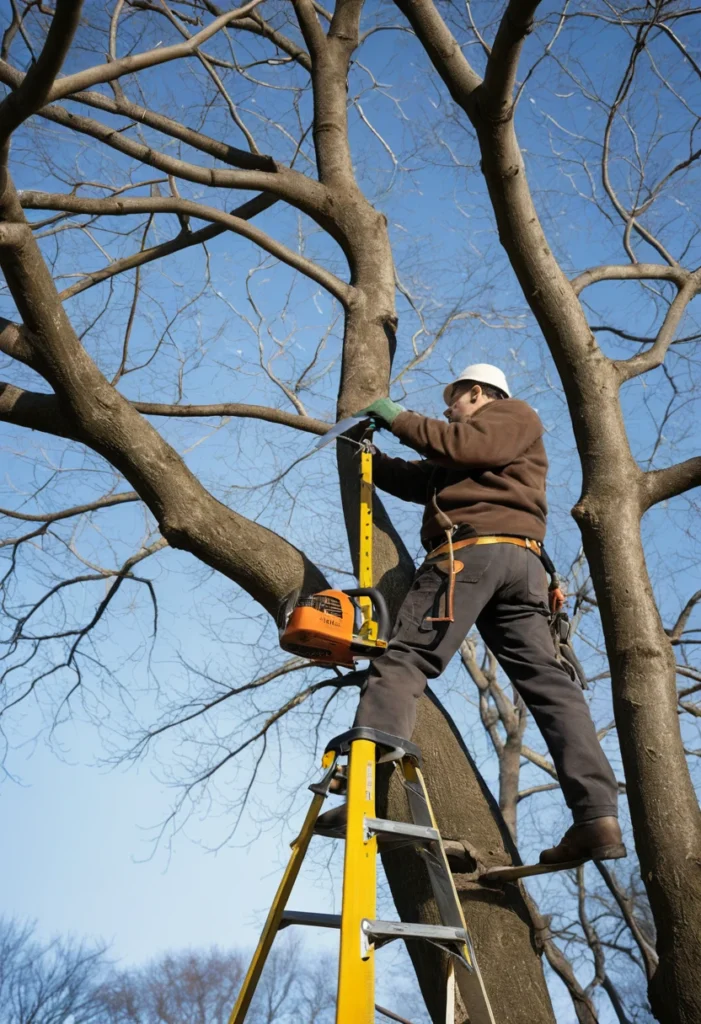
Not every pruning job is suitable for a homeowner. Small shrubs and low branches can often be managed carefully, but large trees present additional risks.
Branches near electrical lines, large dead limbs, storm-damaged trees, extensive decay, and major structural problems require extra caution.
Leave High-Risk Tree Work to Professionals
Consider contacting a qualified tree professional when:
- Branches are close to power lines
- Large limbs need to be removed
- The tree has serious storm damage
- There is significant decay
- The tree has major structural defects
- You need to work high above the ground
- A heavy branch could fall onto property or people
Safety should always come before appearance. A difficult pruning job is not worth risking an injury or damaging property.
Frequently Asked Questions
Is winter a good time to prune trees?
For many deciduous trees, late winter or the late dormant season can be a useful pruning period. However, the correct timing depends on the tree species and local climate.
Should all shrubs be pruned in winter?
No. Some flowering shrubs develop buds on older wood and may be better pruned after flowering. Other shrubs that flower on new growth can often be pruned during dormancy.
What should I remove first when pruning?
Start by identifying dead, damaged, and diseased branches. After removing obvious problems, reassess the plant before making additional cuts.
How much can I prune from a tree?
A commonly used general guideline is to avoid removing more than about one-third of a plant in a year. The appropriate amount can vary according to species, age, health, and the reason for pruning.
Should I prune evergreen trees in winter?
Some evergreen trees can be selectively pruned during winter, but many require little pruning. Species such as pine, spruce, and fir have different growth habits, so identify the tree before making major cuts.
Conclusion
Winter pruning can be an excellent part of seasonal garden care when it is done carefully. The dormant season makes the structure of many deciduous plants easier to inspect, allowing gardeners to identify dead, damaged, crossing, and poorly positioned branches. The most important rule is to identify the plant before cutting it. Flowering shrubs, evergreen trees, and fruit trees can have very different pruning requirements.
Use sharp tools, protect the branch collar, avoid excessive removal, and reassess the plant as you work.A successful pruning job does not require dozens of cuts. In many cases, a small number of well-planned cuts can make a meaningful difference. When the work involves large trees, power lines, heavy branches, or serious structural problems, professional help is the safer option.

