
My go-to Chicken Breast recipe is a quick and easy way to make juicy, tender chicken with a golden crust. It uses simple pantry spices, boneless chicken breasts, and a hot skillet.
This easy chicken breast recipe takes about 20 minutes, including resting time. It is perfect for busy weeknights, family dinners, and meal prep.
Why You’ll Love My Go-to Chicken Breast Recipe
This pan-seared chicken breast recipe creates a flavorful crust while keeping the meat tender. Evenly sized chicken pieces and proper heat help prevent dry, rubbery chicken.
It also needs no long marinade. Paprika, garlic powder, onion powder, and a little flour create a savory coating that tastes delicious with an optional garlic butter pan sauce.
Ingredients for My Go-to Chicken Breast Recipe
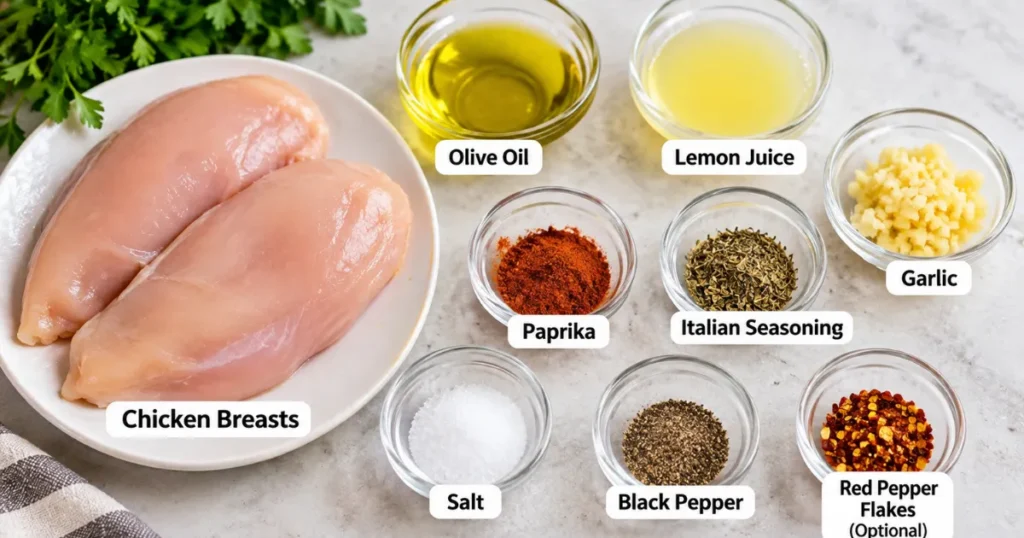
You only need a few everyday ingredients to make this juicy chicken breast recipe.
Main Ingredients
- 2 large boneless, skinless chicken breasts (about 1½ pounds total)
- 2 tablespoons all-purpose flour
- 1 teaspoon paprika
- 1 teaspoon garlic powder
- ½ teaspoon onion powder
- ½ teaspoon dried thyme
- ¼ teaspoon ground cumin
- ¾ teaspoon kosher salt
- ½ teaspoon black pepper
- 1 tablespoon olive oil
- 1 tablespoon unsalted butter
Optional Garlic Butter Pan Sauce
- 1 tablespoon unsalted butter
- 2 minced garlic cloves
- ½ cup low-sodium chicken broth
- 1 tablespoon fresh lemon juice
- 1 tablespoon chopped parsley
Ingredient tip: Paprika adds color and mild flavor. Flour helps form a light golden crust, while butter gives the chicken a richer taste.
How to Make My Go-to Chicken Breast Recipe

Prep: 5 minutes | Cook: 8–12 minutes | Rest: 5 minutes | Servings: 4
Prepare the Chicken Breasts
Cut each large chicken breast horizontally into two thinner cutlets. Gently pound thicker areas until the pieces are about ½ inch thick.
Pat the chicken dry with paper towels. Removing surface moisture helps the seasoning stick and improves browning.
Mix the Chicken Breast Seasoning
Combine flour, paprika, garlic powder, onion powder, thyme, cumin, salt, and black pepper in a shallow bowl.
Coat both sides of each chicken cutlet with the seasoning mixture. Shake off excess flour to prevent a thick, pasty coating.
Heat the Skillet
Heat olive oil in a large skillet over medium-high heat. Add one tablespoon of butter and allow it to melt.
A heavy-bottomed skillet helps spread heat evenly. The pan should be hot enough to brown the chicken without burning the spices.
Cook the Chicken Until Golden Brown
Place the seasoned chicken in the skillet without overcrowding. Cook for about 3–5 minutes per side, depending on thickness.
Turn the chicken once a golden crust forms. Use a food thermometer to confirm the thickest part reaches 165°F (74°C).
Make the Garlic Butter Pan Sauce
Transfer the cooked chicken to a plate. Reduce the heat to medium and add garlic to the same skillet. Stir briefly until fragrant.
Pour in chicken broth and lemon juice. Scrape up the browned bits, called fond, and simmer for 2–3 minutes. Stir in the remaining butter and parsley.
Rest and Serve
Let the chicken rest for about five minutes before slicing. This helps reduce moisture loss when cutting.
Serve the golden pan-seared chicken breast with the warm butter sauce, rice, mashed potatoes, or roasted vegetables.
The Secret to Juicy and Tender Chicken Breast
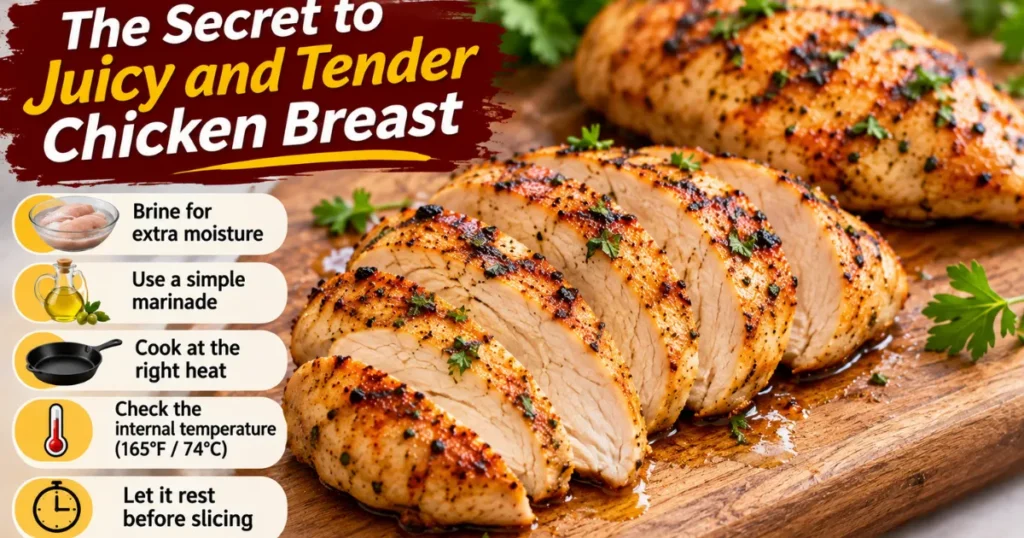
The key to juicy chicken breast is even thickness and accurate cooking temperature. Thin cutlets cook more evenly than thick, uneven pieces.
According to the USDA Food Safety and Inspection Service, chicken must reach a safe internal temperature of 165°F.
Why Does Chicken Breast Become Dry?
Chicken breast contains relatively little fat. Excessive cooking causes its muscle proteins to tighten and squeeze out moisture.
Cooking thin pieces over controlled heat and checking their temperature helps protect the chicken’s tenderness.
How to Keep Chicken Breast Juicy Every Time
Use evenly sized pieces, avoid overcrowding, and check the thickest part with an instant-read thermometer.
Remove the chicken once it reaches 165°F. Let it rest briefly before cutting to help preserve its juices.
Best Tips for Perfect Pan-Seared Chicken Breast
How to Get a Golden Chicken Crust
Pat the chicken dry and apply a thin flour coating. Allow the surface to brown before turning.
Avoid moving the chicken constantly. Direct contact with the hot skillet creates the Maillard reaction, which produces deeper flavor and a golden color.
Why Use Butter and Olive Oil?
Olive oil helps transfer heat across the skillet, while butter adds rich flavor and supports browning.
Butter can burn at high temperatures. Reduce the heat if the milk solids begin turning very dark.
Common Chicken Breast Cooking Mistakes
- Overcooking: Makes chicken dry and tough.
- Uneven thickness: Causes thinner sections to cook faster.
- Crowded skillet: Traps steam and reduces browning.
- Too much flour: Creates a heavy coating.
- Skipping temperature checks: Makes doneness harder to judge.
Easy Variations of My Go-to Chicken Breast Recipe
Garlic Butter Chicken Breast
Add an extra garlic clove and a little fresh thyme to the pan sauce. This creates a rich garlic butter chicken breast with a savory finish.
Lemon Pepper Chicken Breast
Replace cumin with lemon zest and extra cracked black pepper. Finish with fresh lemon juice for a bright, tangy flavor.
Spicy Cajun Chicken Breast
Use Cajun seasoning and a small pinch of cayenne pepper. Check the seasoning’s salt content before adding extra salt.
Healthy Chicken Breast Without Butter Sauce
Cook the chicken with olive oil and skip the butter sauce. Serve with steamed vegetables and brown rice for a balanced meal.
Gluten-Free Chicken Breast
Replace all-purpose flour with a gluten-free flour blend or omit it entirely. Check seasoning labels if strict gluten avoidance is necessary.
What to Serve With My Go-to Chicken Breast Recipe
This easy chicken dinner pairs well with simple sides that complement its savory seasoning.
- Garlic mashed potatoes: Great with butter pan sauce.
- Steamed rice: Absorbs the flavorful juices.
- Roasted broccoli: Adds texture and vegetables.
- Green beans: A quick, light side dish.
- Garden salad: Offers a fresh contrast.
- Creamy pasta: Makes a filling family dinner.
You can also slice leftover chicken for sandwiches, wraps, grain bowls, and salads.
How to Store and Reheat Leftover Chicken Breast
How Long Does Cooked Chicken Breast Last?
Store cooked chicken in an airtight container in the refrigerator at 40°F or below. According to FoodSafety.gov, cooked poultry lasts 3–4 days when properly refrigerated.
Refrigerate leftovers within two hours of cooking, or within one hour if the temperature is above 90°F.
Can You Freeze Cooked Chicken Breast?
Yes. Place cooled chicken in freezer-safe containers or tightly sealed bags. For best quality, use frozen cooked poultry within 2–6 months.
Thaw frozen chicken in the refrigerator rather than on the kitchen counter.
How to Reheat Chicken Breast Without Drying It Out
Place the chicken in a skillet with a little broth. Cover and warm gently over medium-low heat.
Reheat leftovers until the center reaches 165°F. Adding moisture helps prevent the chicken from becoming dry.
Chicken Breast Nutrition and Health Benefits
Is Chicken Breast a Good Source of Protein?
Yes. Skinless chicken breast provides high-quality protein, which supports muscle maintenance and normal body functions.
According to USDA FoodData Central, a typical 3.5-ounce serving of cooked, skinless chicken breast contains approximately 31 grams of protein.
Calories in Pan-Seared Chicken Breast
A 3.5-ounce portion of cooked, skinless chicken breast contains approximately 165 calories before adding oil, flour, or sauce.
The final calorie count depends on portion size and the amount of butter, oil, and flour used.
How to Make This Chicken Breast Recipe Lighter
Use a smaller amount of oil, skip the butter sauce, and serve the chicken with roasted vegetables.
Low-sodium chicken broth and fresh herbs also add flavor without requiring heavy sauces.
Troubleshooting My Go-to Chicken Breast Recipe
Why Is My Chicken Breast Tough or Rubbery?
Rubbery chicken breast often results from overcooking. Excess heat causes the muscle fibers to tighten and lose moisture.
Use evenly sized cutlets and check the internal temperature instead of relying only on cooking time.
Why Is My Chicken Not Getting Golden Brown?
A wet surface or overcrowded skillet can prevent proper browning. Pat the chicken dry and cook in batches when necessary.
Why Does My Chicken Seasoning Burn?
High heat can burn paprika, garlic powder, and other spices before the chicken finishes cooking.
Reduce the heat slightly and avoid using excessive seasoning or flour.
How Do I Fix a Thin or Salty Pan Sauce?
Simmer a thin sauce briefly to reduce its liquid. If the sauce is too salty, add a little unsalted broth to dilute it.
FAQ’s
What Is the Best Way to Cook Chicken Breast So It Stays Juicy?
Cook evenly sized chicken cutlets in a hot skillet. Use a thermometer to check for 165°F and rest the chicken before slicing.
How Long Should I Cook Chicken Breast in a Skillet?
Thin chicken cutlets usually take about 3–5 minutes per side. Thicker pieces need longer, so always check the internal temperature.
Should I Use Butter or Olive Oil for Chicken Breast?
Both work well. Olive oil is useful for searing, while butter adds rich flavor. Using both creates a flavorful finish.
Do I Need to Marinate Chicken Breast Before Cooking?
No. This quick chicken breast recipe uses dry seasoning, so a long marinade is unnecessary.
Can I Make This Chicken Breast Recipe Without Flour?
Yes. Flour helps create a light crust, but you can skip it. The chicken will still brown when cooked properly.
Can I Use Frozen Chicken Breast for This Recipe?
Yes, but thaw it safely before preparing the thin cutlets. Refrigerator thawing is the easiest option for this method.
Can I Make My Go-to Chicken Breast Recipe Ahead of Time?
Yes. Cook the chicken, refrigerate it promptly, and store it for up to 3–4 days. Reheat thoroughly before serving.
What Is the Best Seasoning for Chicken Breast?
A combination of paprika, garlic powder, onion powder, salt, and black pepper gives chicken breast a balanced savory flavor. Thyme and cumin add extra depth.
Conclusion
My go-to Chicken Breast recipe is a simple way to make tender, flavorful chicken using everyday ingredients. A golden crust, balanced seasoning, and optional butter sauce make it suitable for quick family meals.
For the best results, use evenly sized cutlets, avoid overcooking, and check the internal temperature. Serve with your favorite sides for an easy homemade dinner.