
A tiny balcony can feel like the end of your gardening dreams until you realize the limitation was never really the square footage. It was thinking only in two dimensions.
No matter how small your balcony might be, there’s still room to place hanging baskets on hooks or add railing planters filled with plants and flowers. The real skill is knowing which ideas make the most of the exact space you’ve got.
Save this guide now, because idea #4 is the single trick balcony gardeners swear changes everything about how spacious a small space actually feels.
Here’s the thing: mini garden ideas can transform a balcony into a vibrant oasis even if you only have a few square feet to work with. Let’s get into exactly how.
Think Vertical First, Floor Space Second
Vertical gardening is one of the best balcony garden ideas because it means you’re not limited to the small square footage a balcony provides — it’s a way to use your growing area far more effectively. Done creatively, it can even provide a highly sought-after privacy screen along with surprisingly more growing space.
So what does this mean for you? Before buying a single planter, look up. Walls, railings, and ceilings on most balconies are completely unused growing real estate.
[Image placement: A narrow balcony with wall-mounted planters and hanging pots creating a lush vertical green wall. Alt text: “Vertical balcony garden idea maximizing small space.”]
1. Start With Railing Planters
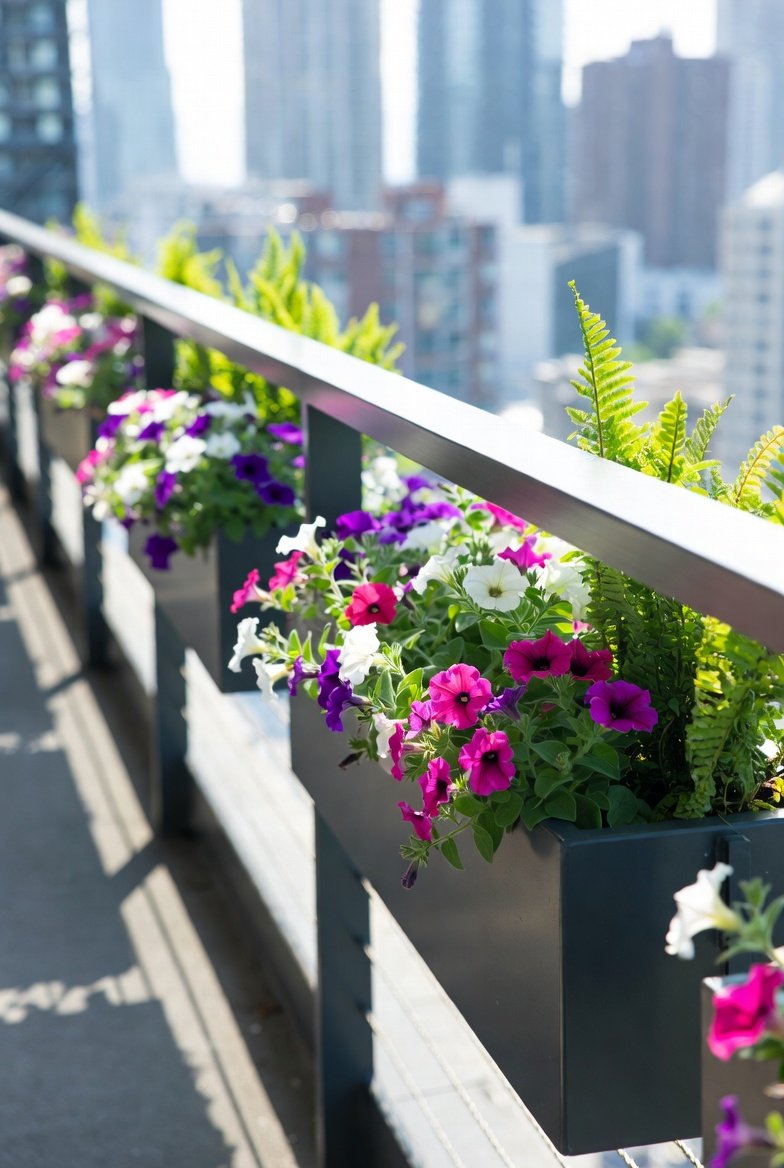
Railing planters are a quick, easy way to surround your home with lush greenery, edibles, and colorful plants many designs securely adjust to fit 1-5 inch rail supports without damaging the railing or risking falling planters, and some even straddle the railing to use space on both the inside and outside.
Quick tip: Always double-check your building or HOA’s rules before mounting anything to a shared railing some restrict weight or exterior-facing planters.
2. Hang Baskets to Add a Second Layer of Green
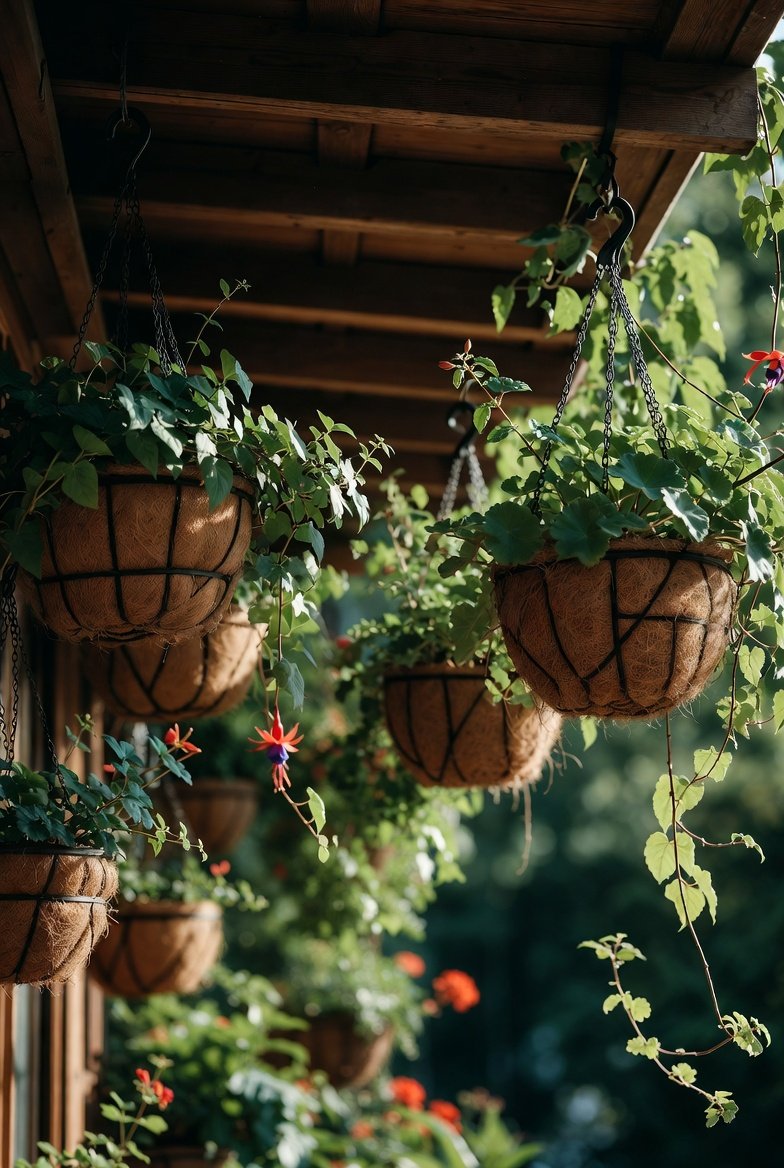
Hanging planters from traditional baskets with cascading plants to upside-down tomato planters and hanging terrariums add growing space and make a balcony feel more expansive, since they draw the eye upward instead of only toward pots on the ground.
<cite name=”41-1″>Even the smallest balcony has room to place hanging baskets from hooks,</cite> making this one of the lowest-effort, highest-impact ideas on this list.
3. Build a Simple Wall Trellis for Climbers
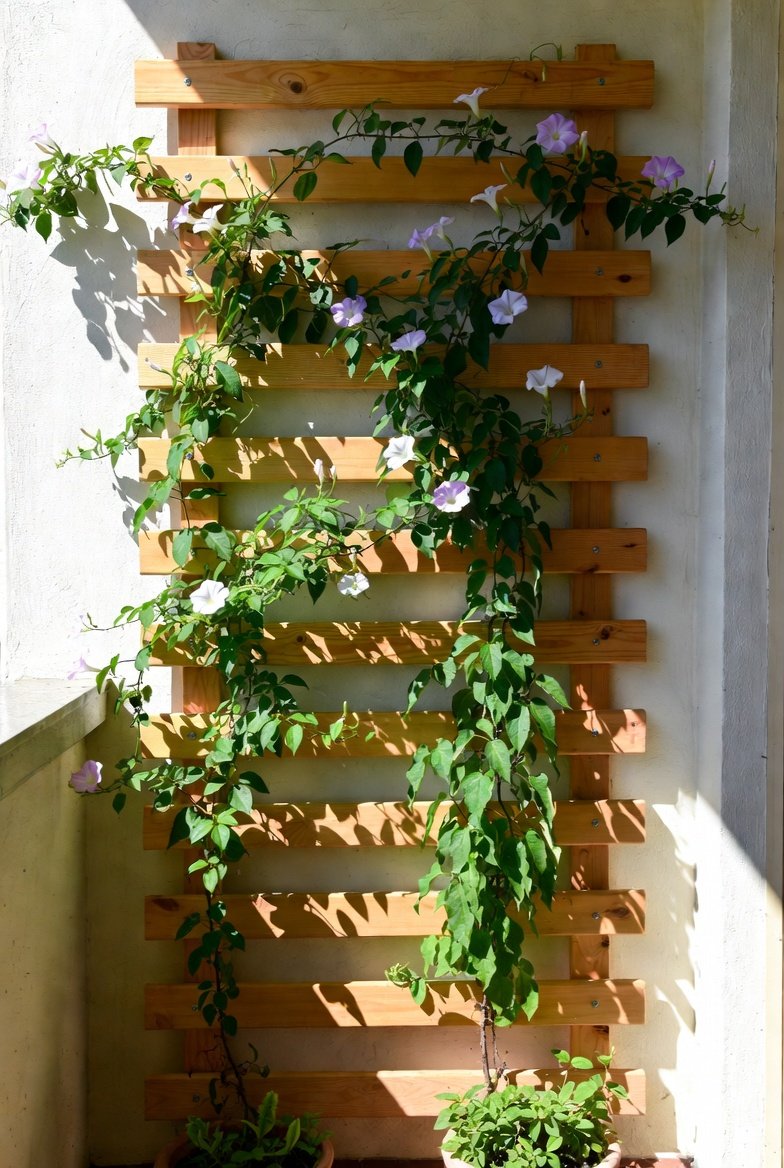
Turn your balcony into a vertical garden by attaching pots, shelves, or trellises directly to the walls, and if there’s a ceiling, add hooks for hanging plants too. Climbing plants like beans, sweet peas, or morning glories will happily use a simple wall trellis to grow up rather than sprawl across your limited floor space.
4. Cover Railings With Chicker Wire for Climbing Plants
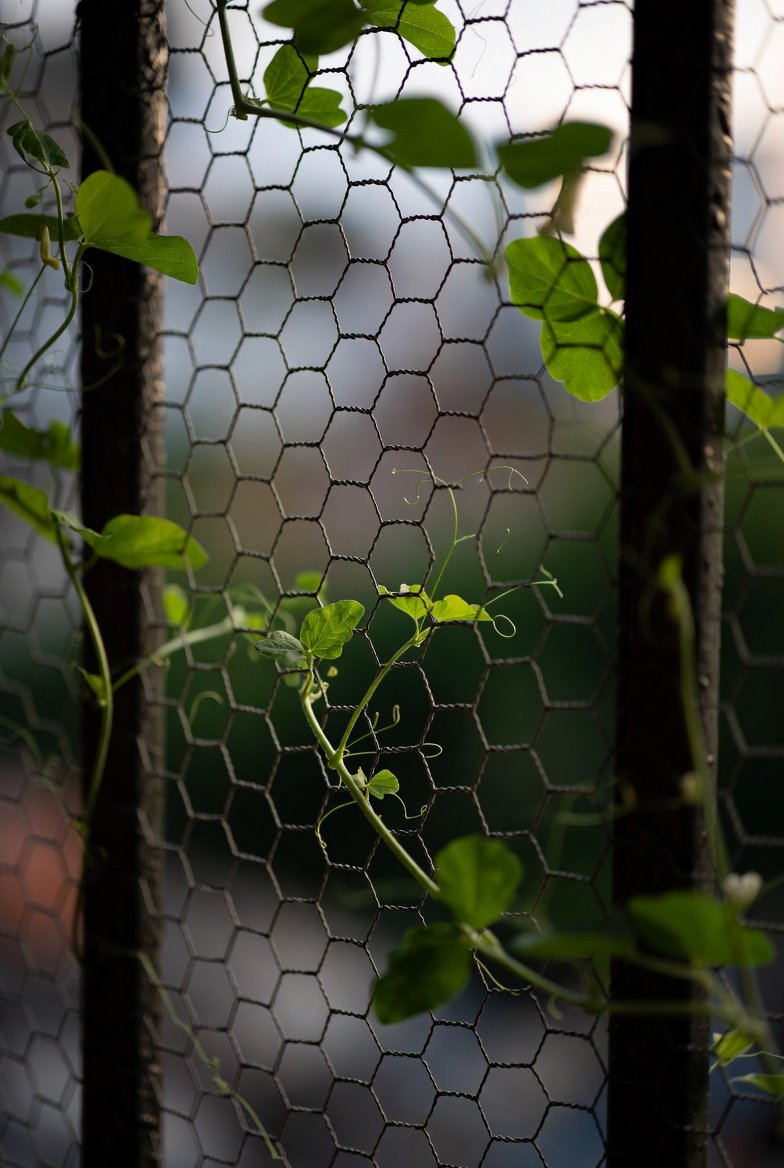
Here’s the trick most people miss: covering balcony railings with chicken wire (or attaching purpose-made plant hangers) gives climbing plants a support structure without taking up any floor space at all.
Save-worthy tip: This single idea can turn a plain railing into a living wall of flowers or herbs within a single growing season genuinely one of the most transformative low-cost balcony upgrades.
[Image placement: A balcony railing covered in chicken wire with climbing flowering vines growing through it. Alt text: “Balcony railing climbing plant idea for small space gardens.”]
5. Add Tiered Plant Stands
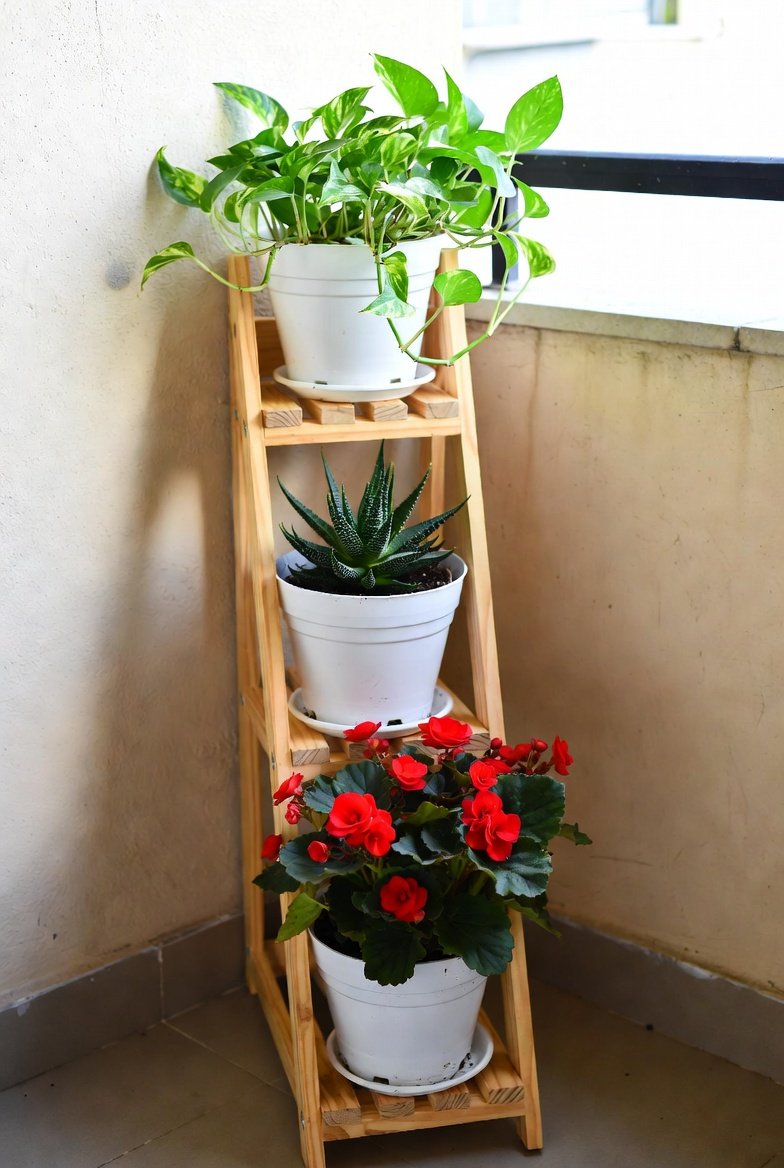
Tiered plant stands are ideal for limited floor space, letting you showcase multiple plants while keeping your balcony organized arrange taller varieties at the bottom and smaller ones on top for a visually appealing tiered effect.
Tiered planters also add instant visual appeal, and since most stands are easy to reposition, you can shift them throughout the day to catch the best available sun.
6. Choose Lightweight Containers, Not Heavy Ones
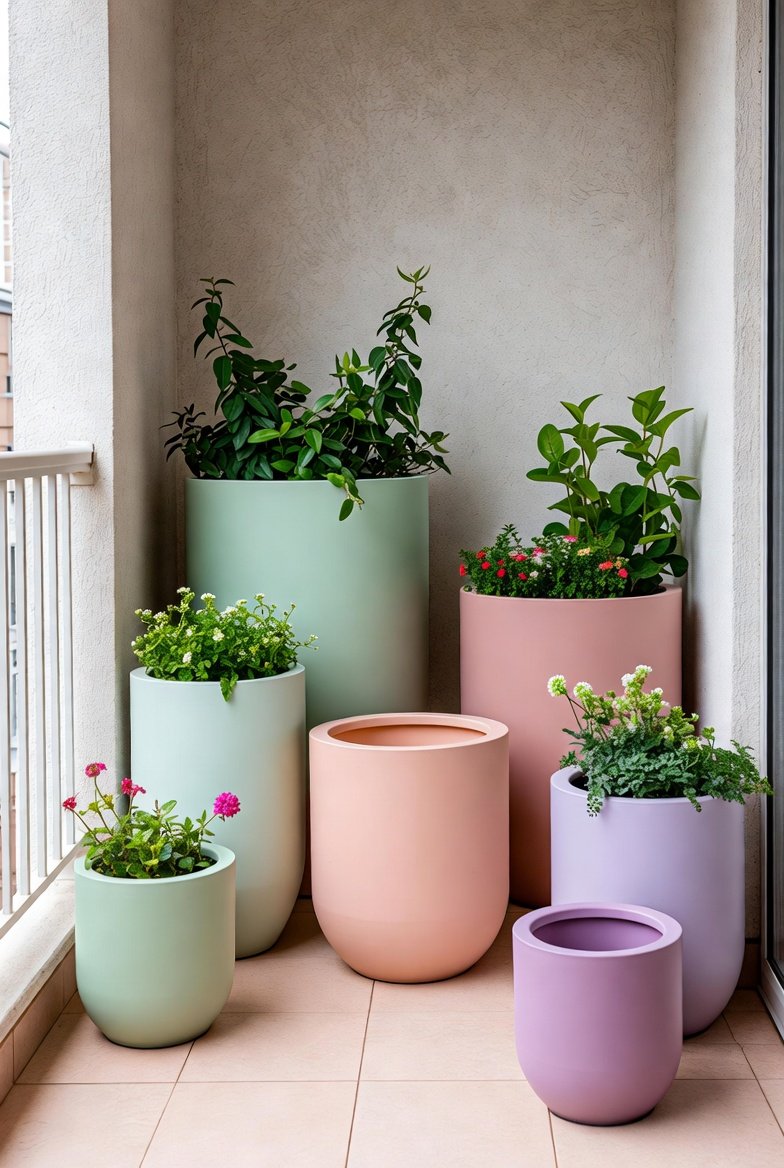
When purchasing planters for a balcony, be mindful of weight terracotta or ceramic pots filled with dirt get heavy quickly, so composite, resin, vinyl, or plastic planters offer a stylish yet lightweight and easy-to-move alternative.
This matters more than most beginners realize: it’s worth checking with your HOA or building management about any weight restrictions before loading up a balcony with heavy, soil-filled pots.
7. Grow a Compact Herb Garden
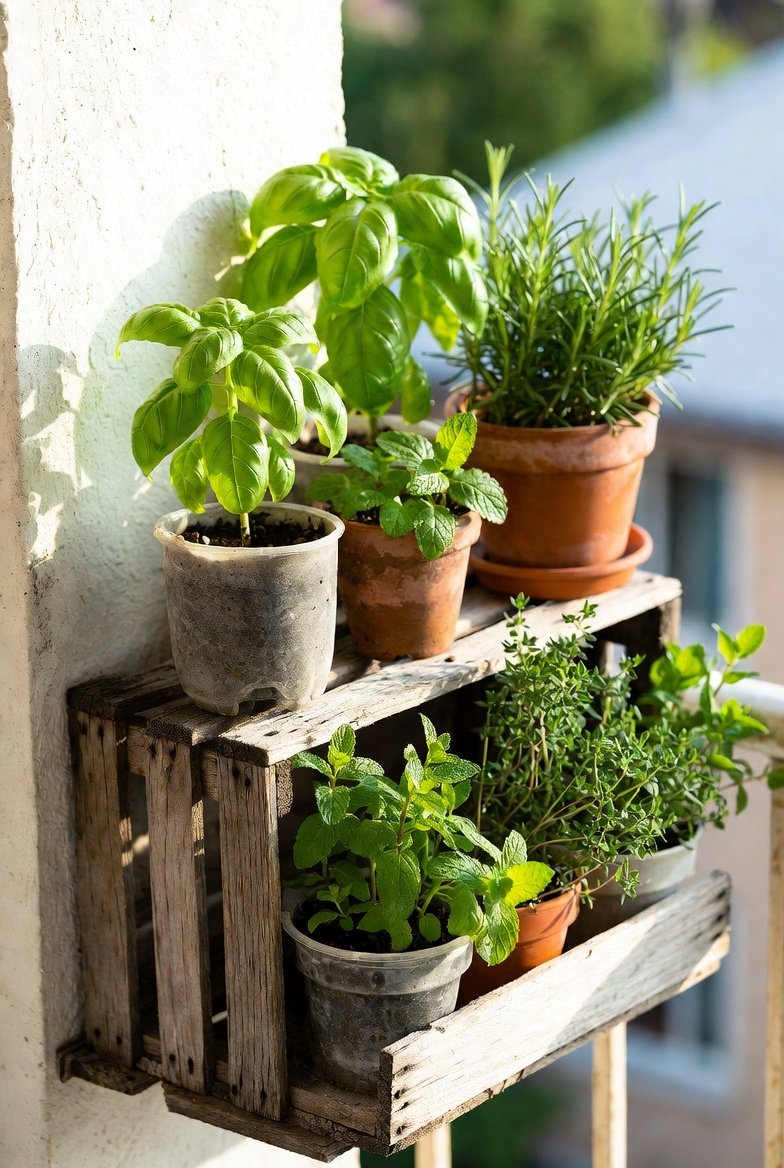
Growing an herb garden is one of the easiest ways to bring fresh basil, oregano, rosemary, mint, and more to your favorite dishes and herbs are naturally suited to small containers, making them ideal for tight balcony spaces.
Quick tip: Most herbs need a lot of sunshine to thrive, so place them in the sunniest available spot on your balcony rather than tucking them into a shaded corner.
[Image placement: Small terracotta pots of basil, mint, and rosemary lined up on a sunny balcony ledge. Alt text: “Compact herb garden idea for a small balcony space.”]
8. Match Your Balcony’s Light Before Choosing Plants
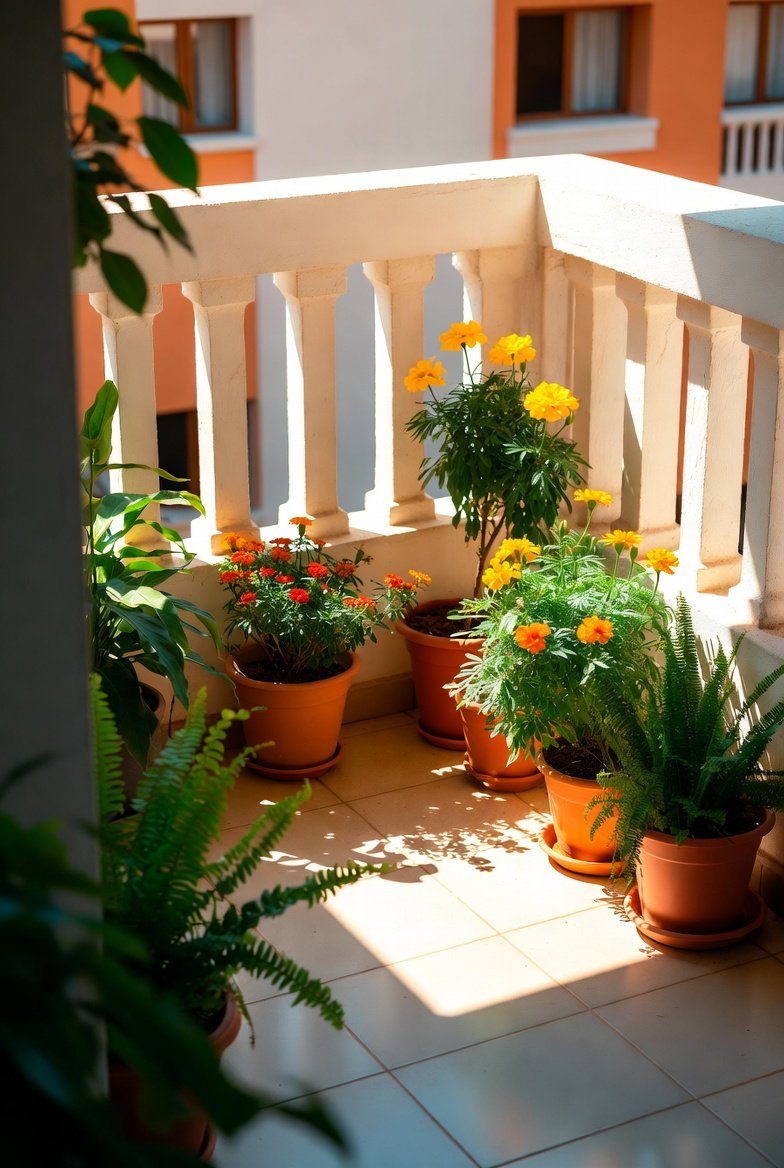
A balcony that gets lots of light is perfect for sun-loving annuals like poppies or petunias, or even a small vegetable garden, while one that’s mostly in shade suits plants like Sweet Alyssum or boxwood instead.
Skipping this step is the fastest way to waste money on plants that were never going to thrive in your specific balcony’s light conditions.
9. Resist the Urge to Overcrowd
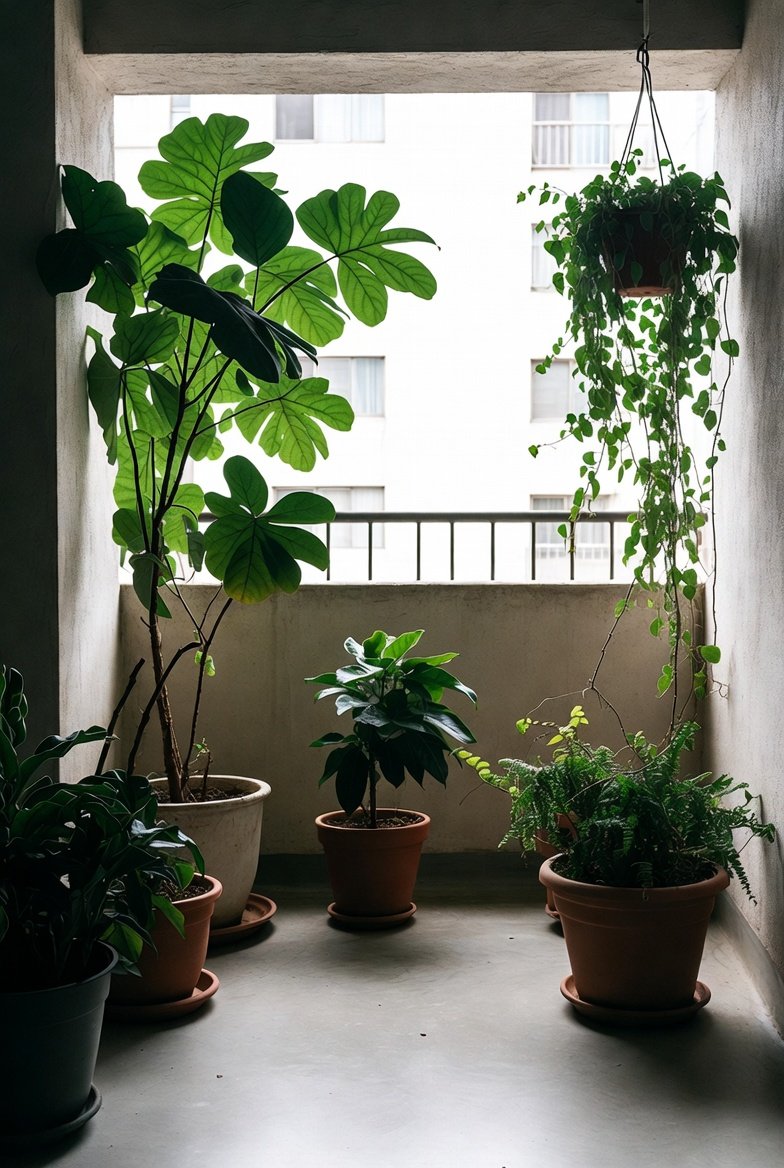
When planning a small garden, factor in the actual size of your planters and resist the temptation to overcrowd the space, so plants have enough room to grow properly.
Bucket brigade moment: But there’s a catch a balcony packed wall-to-wall with plants can feel more cluttered than lush. Leave a little visual breathing room between groupings for a more intentional, curated look.
10. Use Plant Hooks for Every Inch of Vertical Space
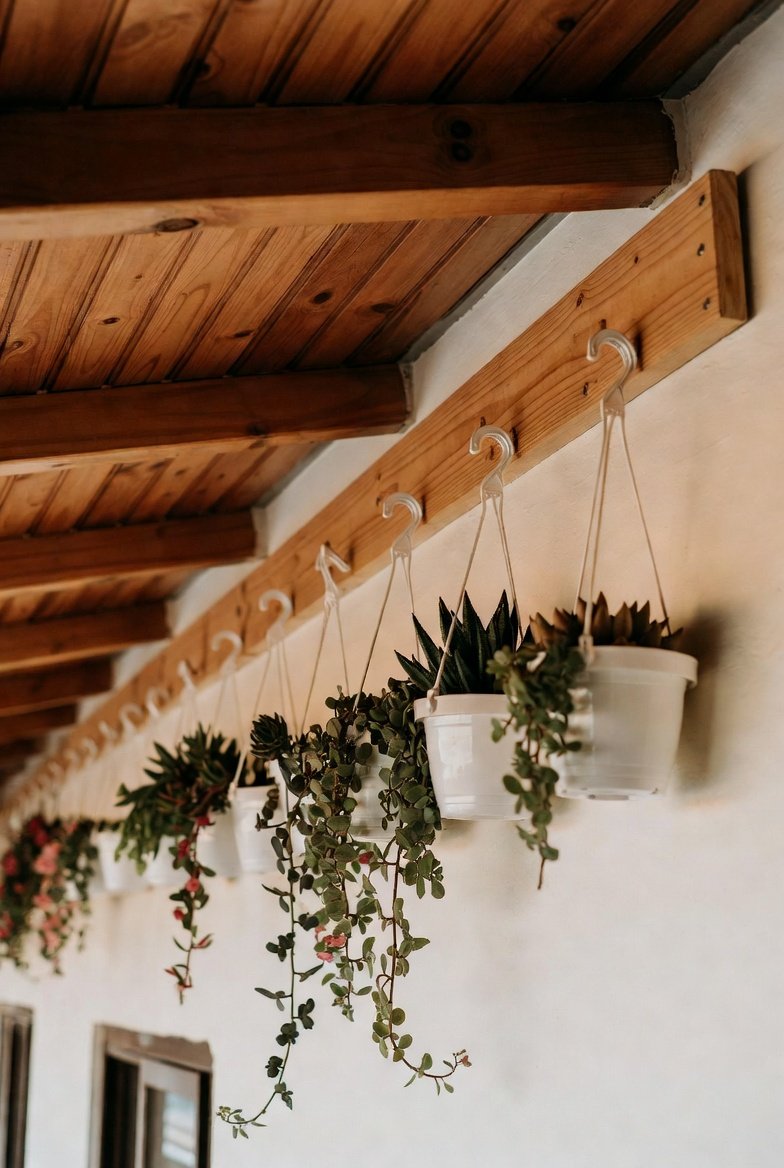
When you have a small outdoor space, every inch counts, and plant hooks usually made of aluminum or steel and affixed to a wall or ceiling are an easy way to add flowers and greenery without using a single square foot of floor or railing space.
11. Build a DIY Vertical Pallet Planter
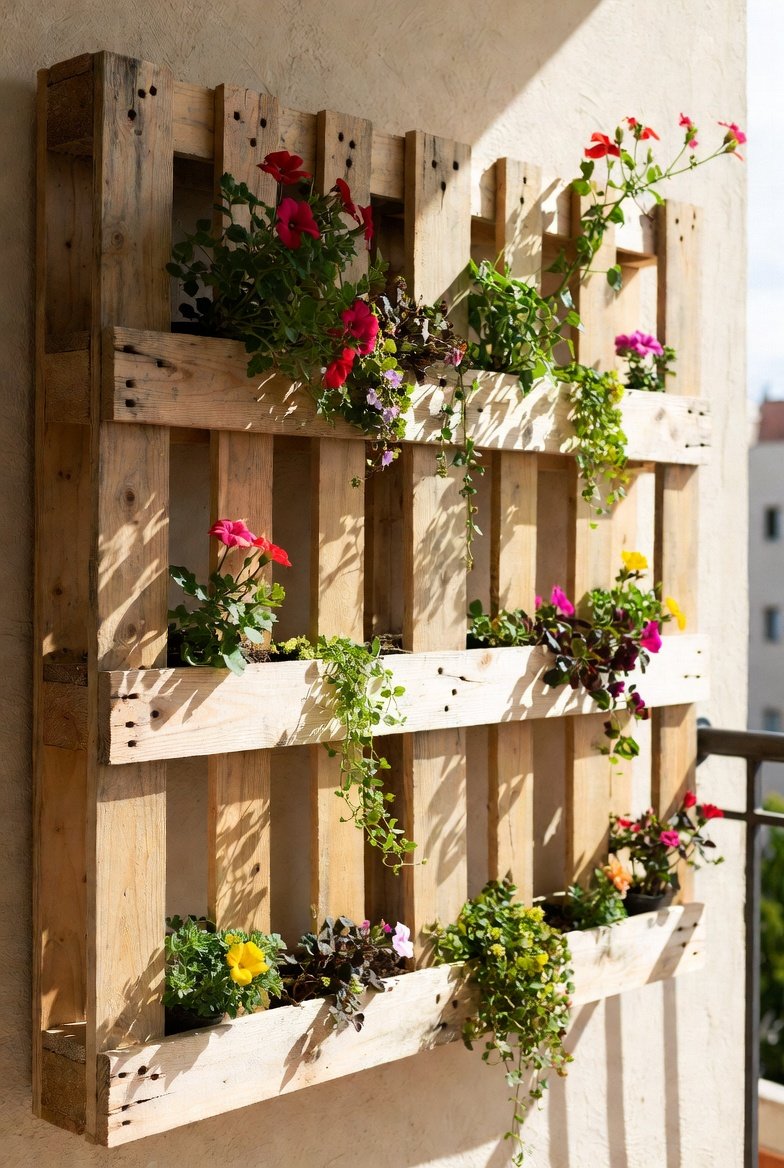
A DIY vertical garden planter can turn anyone into a balcony gardener, multiplying growing space several times over and for tall versions, it can even create a sense of privacy. If floor space is especially limited, attaching wooden pallets to the wall is a simple, low-cost way to build this kind of vertical garden.
[Image placement: A vertical pallet planter mounted on a balcony wall, filled with a mix of herbs and flowers. Alt text: “DIY pallet vertical planter idea for a small balcony garden.”]
12. Design for Both Edibles and Ornamentals
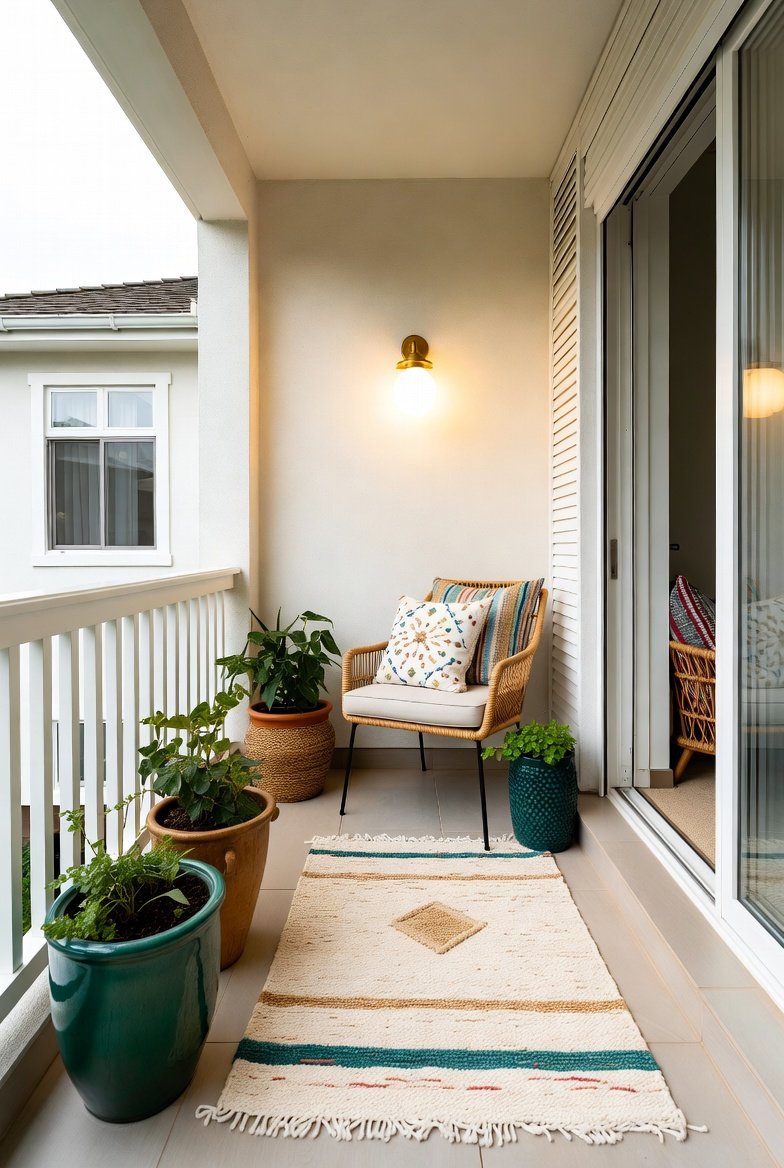
A multi-level vertical planter leaves room for both edibles and ornamentals in the same footprint, so you don’t have to choose between a productive herb garden and a beautiful flowering display you can layer both into the same small structure.
Read Also: Green Nest Hubs
13. Echo Your Interior Design Style
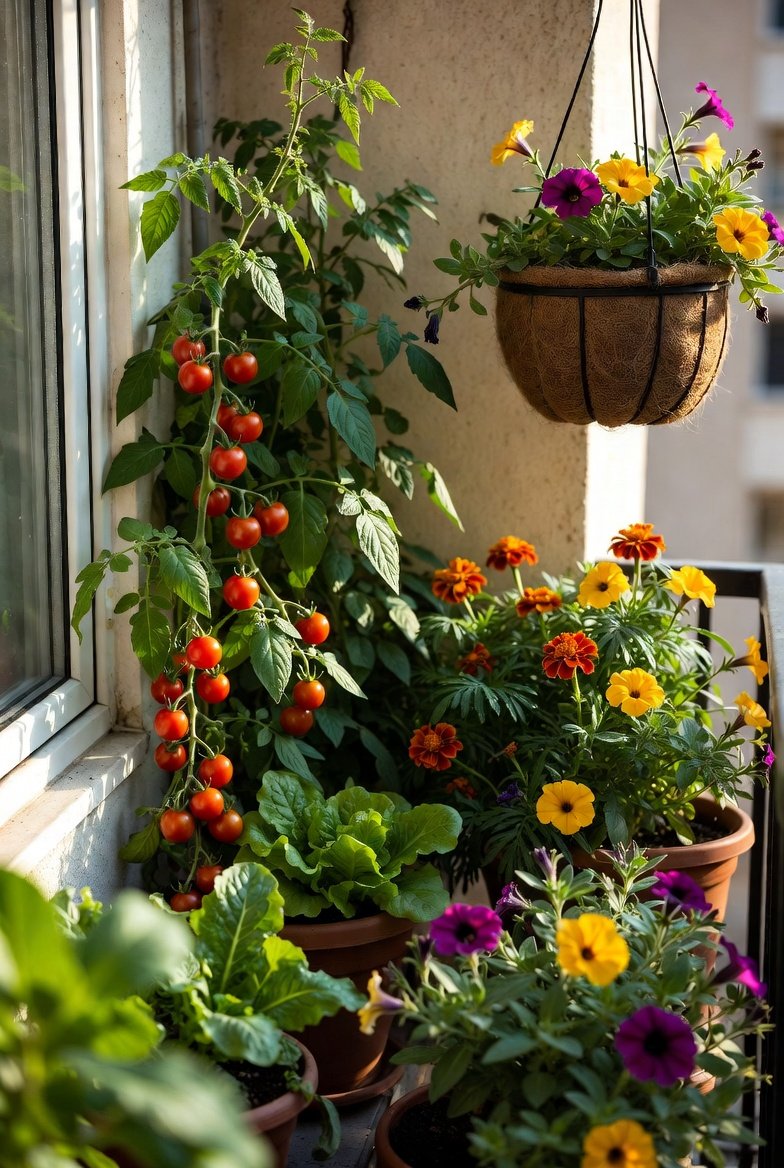
Think of your balcony garden as an extension of your indoor living space choosing plant colors and textures that echo your interior design makes even the smallest balcony feel more expansive and welcoming.
This is a simple styling trick, but it’s what separates a balcony that feels like an afterthought from one that feels like a genuine extension of your home.
14. Layer Plant Sizes for Depth and Diversity
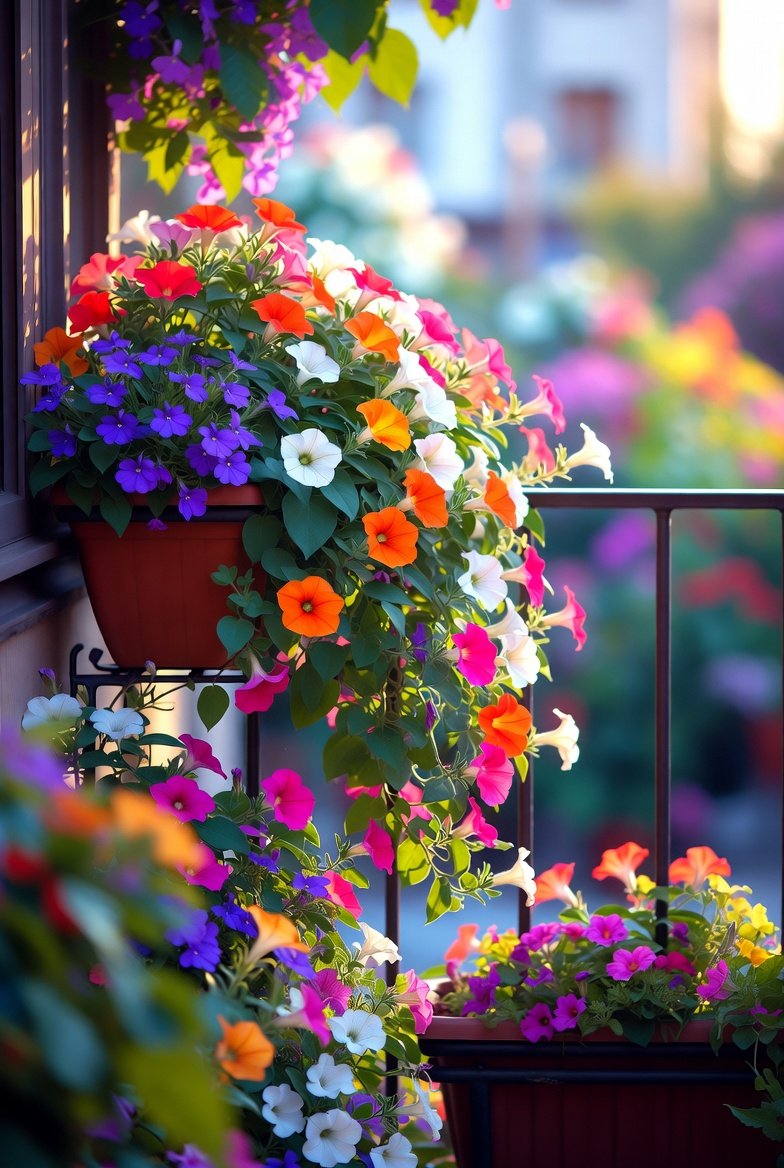
A mix of small trees, shrubs, foliage plants, and colorful annuals adds interest and diversity to a balcony garden, preventing the flat, one-note look that happens when every plant is roughly the same size and shape.
15. Let Flowers Cascade Over the Edge
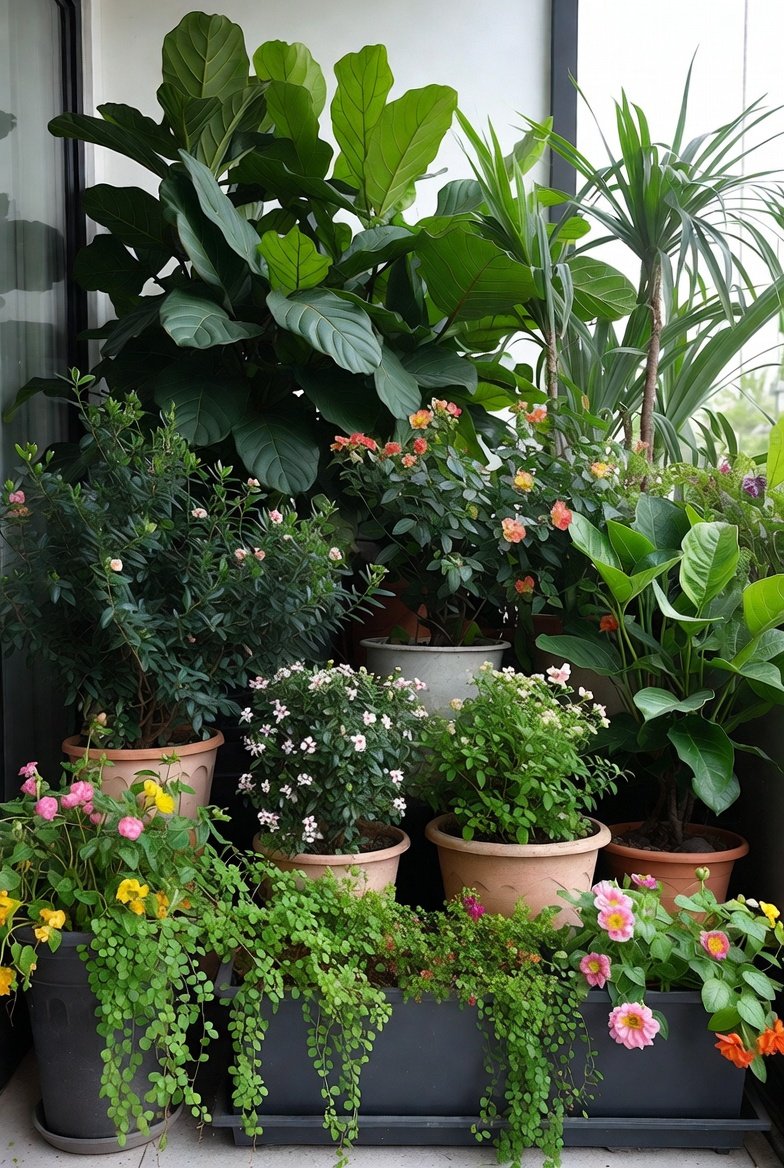
Flowers cascading over railings and climbing up trellises bring color and fragrance that reads as lush and established, even in a genuinely small space. Trailing petunias, lobelia, and ivy geraniums are all well-suited to this cascading look.
[Image placement: Trailing flowers cascading over a balcony railing against a city backdrop. Alt text: “Cascading balcony flower idea for a small urban garden space.”]
16. Finish the Floor With Balcony-Friendly Tiles
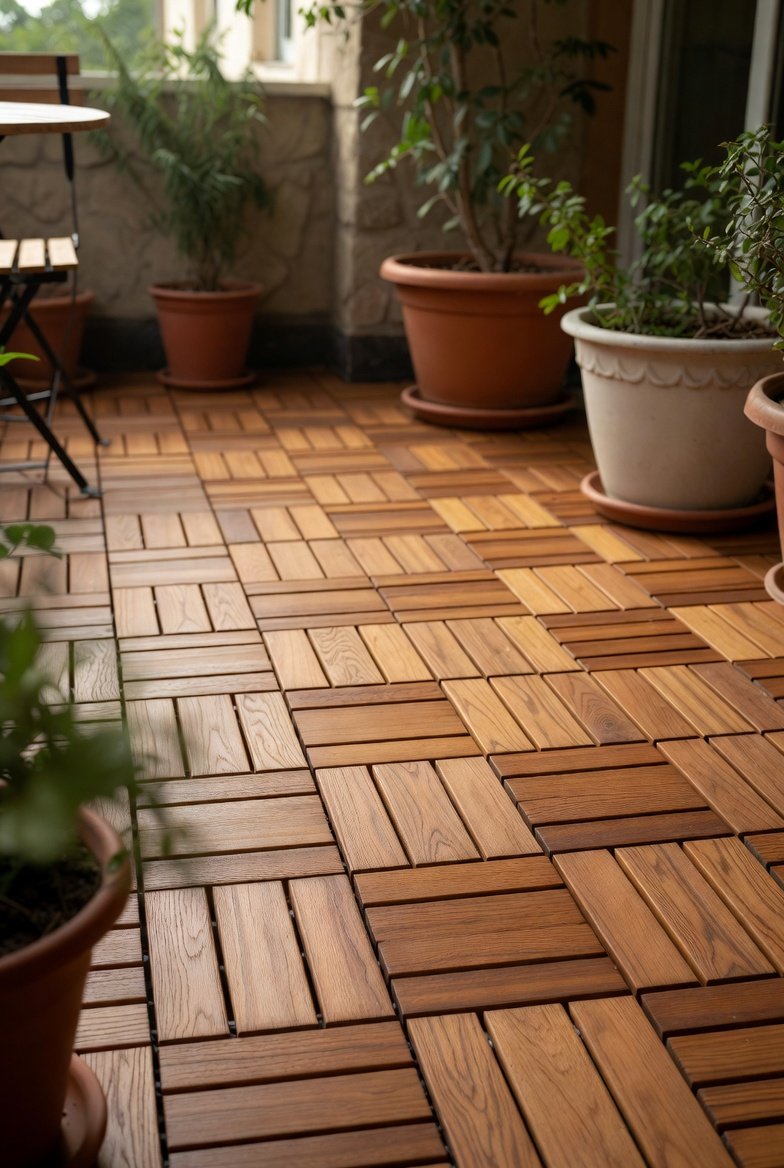
Textured, water-resistant balcony tiles both prevent slips during watering and give your small balcony garden a rustic yet modern finish, tying the whole space together the same way flooring finishes off an indoor room.
17. Add Fairy Lights for Evening Ambiance
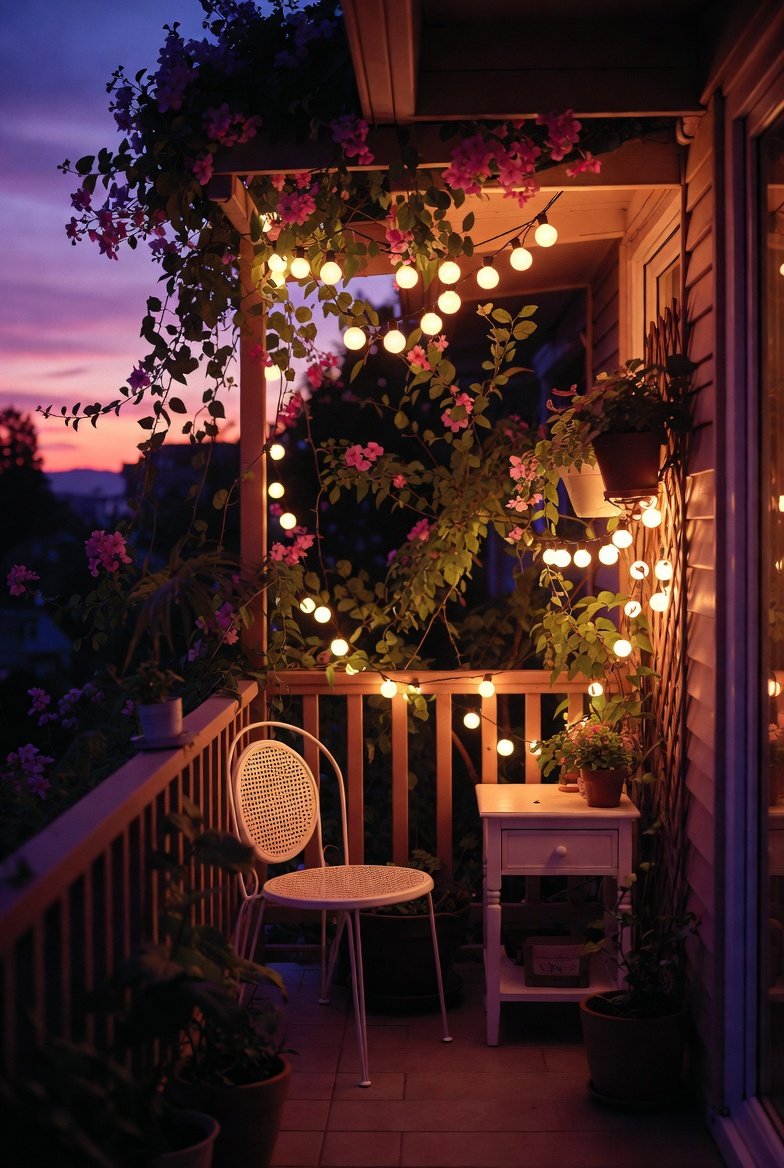
Incorporating fairy lights or decorative stones into a tiered plant display creates a cozy ambiance for evening relaxation, extending the usefulness of your balcony garden well past daylight hours.
Quick recap of the fastest wins if you only try three: railing planters, hanging baskets, and matching your plant choices to your actual sun exposure. Those three alone will make a tiny balcony feel dramatically greener within a single season.
Frequently Asked Questions
What is the minimum space needed for a balcony garden?
There’s no true minimum — even the smallest balcony has room for hanging baskets on hooks or railing planters, making balcony gardening accessible regardless of square footage.
How do I choose the right plants for my balcony’s light conditions?
A bright, sun-exposed balcony suits sun-loving annuals or a small vegetable garden, while a mostly shaded balcony does better with shade-tolerant plants like Sweet Alyssum or boxwood.
What type of planters are best for a small balcony?
Lightweight materials like composite, resin, vinyl, or plastic are generally better choices than heavy terracotta or ceramic, especially once filled with soil.
How can I add privacy to a small balcony garden?
Tall vertical planters can create a sense of privacy, and creative vertical gardening more broadly can double as a privacy screen while still maximizing your limited growing space.
Final Thoughts
A small balcony isn’t a compromise it’s simply a different kind of canvas, one where vertical thinking matters more than square footage. Start with a couple of railing planters and a tiered stand match your plant choices to your actual sunlight, and resist the urge to fill every inch at once.

