
Ever plant a garden full of flowers you love individually, only to stand back and realize nothing actually goes together? You’re not alone, and it’s not a talent problem it’s a color problem.
Here’s the good news: there’s a simple tool that professional garden designers rely on every single time, and once you understand it, choosing flower combinations stops being guesswork. It’s called the color wheel, and it’s about to become your new favorite garden planning tool.
Why Color Combinations Make or Break a Flower Garden
Color is the very first thing anyone notices about a flower garden before they register individual blooms, before they clock the layout, color is what hits first. That means getting it right (or wrong) has an outsized impact on how your whole garden feels.
The good news is that there are no hard rules in gardening color is ultimately about what you love. But understanding a few foundational design principles means every choice you make will look intentional, instead of accidental.
Understanding the Color Wheel (Your Garden’s Secret Weapon)
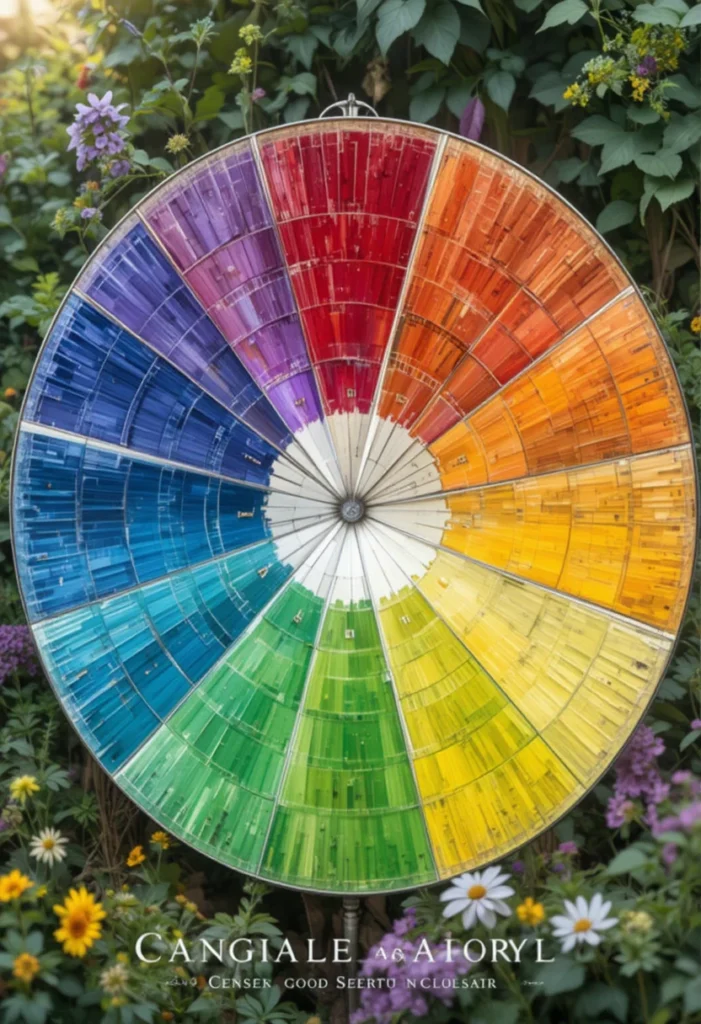
Before jumping into specific combinations, it helps to understand the tool behind almost all of them: the color wheel.
The wheel is built on three primary colors red, yellow, and blue with every other color falling somewhere in between them. As colors move toward the center of the wheel, they soften into more pastel, muted tones; at the outer edge, they’re at their most vivid and saturated.
Two broad categories matter most for garden planning:
Warm colors yellow, orange, red, magenta bring energy and heat to a planting. They visually “advance,” meaning they draw the eye even from a distance, which makes them great for garden areas you want to feel lively or be seen from far away.
Cool colors blue, purple, violet have a soothing, calming effect. They tend to recede visually and can get lost when viewed from far off, which makes them best suited for spots you’ll enjoy up close, like a patio border or a seating area.
Once you understand where your favorite flowers sit on this wheel, choosing a combination becomes much less like guessing and much more like following a formula.
The Main Color Combination Styles (And When to Use Each)

Every flower garden color scheme falls into one of a handful of design categories. Here’s a breakdown of each, along with when it works best.
Complementary Colors: Bold and High-Impact
Complementary schemes combine two colors that sit directly across from each other on the color wheel. Think yellow and purple, orange and blue, or red and green.
Why it works: Opposite colors intensify each other visually, creating maximum contrast and energy. This is the scheme to reach for if you want your garden bed to genuinely pop.
Try this pairing: Yellow ‘Moonshine’ yarrow with purple catmint and ‘Blue Queen’ salvia an easy, widely available combination that delivers serious visual punch.
Analogous Colors: Naturally Harmonious

Analogous colors sit right next to each other on the wheel. A classic example is red, orange, and yellow together or a simpler two-color pairing like violet and purple.
Why it works: Because these colors are close relatives on the wheel, they blend together almost effortlessly. This is the lowest-risk scheme for beginners, since analogous colors essentially always look good together.
Try this pairing: Zinnias, geraniums, and marigolds in shades of red, orange, and yellow for a warm, cohesive planting that feels vibrant without clashing.
Read Also: 15 Herb Garden Ideas for Beginners That Actually Work
Monochromatic: Effortlessly Elegant
A monochromatic scheme uses a single color across every plant in the bed though shades, tints, and textures can still vary.
Why it works: This is genuinely one of the hardest schemes to get wrong, because there’s no color-matching decision to make at all just find flowers in your chosen hue and go. It reads as polished and intentional every time.
Try this pairing: Pink peonies paired with lighter pink roses for an easy, romantic monochromatic bed that still has visual depth thanks to the shade variation.
Triadic: Balanced and Dynamic
A triadic scheme uses three colors spaced evenly around the wheel equal distance apart in each direction.
Why it works: You get colors that are meaningfully different from one another for visual interest, without the jarring intensity of a pure complementary clash.
Try this pairing: Red, yellow, and blue together using the primary colors directly is a foolproof triadic starting point if you’re not sure where else to begin.
Split-Complementary: Energy With More Flexibility
This scheme takes one main color and pairs it with the two colors on either side of its direct opposite combining the punch of complementary color with a bit more flexibility than a straight two-color pairing.
Why it works: It gives you the drama of complementary contrast with room to play with two supporting tones instead of just one.
Try this pairing: Orange and yellow paired with purple you get the warmth and energy of an analogous pairing plus the drama of a true color-wheel opposite.
12+ Flower Garden Color Combination Ideas to Try
Now for the fun part — real, plantable combinations you can use this season.
- Yellow and Purple
One of the most reliable complementary pairings in gardening. Try yellow yarrow with purple salvia or catmint for a combination that’s nearly impossible to mess up. - Blue and Orange
A bold, eye-catching complementary combination think blue forget-me-nots against orange tulips. True blue flowers can be harder to source, but the payoff is worth the search. - Blue, Yellow, and White
Widely considered one of the easiest and most popular three-color combinations there is. The white acts as a visual buffer between the blue and yellow, keeping the whole bed feeling fresh and balanced. - Red, White, and Blue
A traditional, patriotic-feeling combination that reads as classic and crisp ideal for early-summer color near a front porch or entryway. - Pink, Blue, and White
A traditional soft pastel combination. Add a touch of pale yellow to brighten the mix if the bed feels too muted. - Bold Red and Soft Pink
Pairs the intensity of red roses or carnations with the gentleness of pink peonies for a combination that balances romance and drama. - Magenta and Chartreuse
An unexpected but striking pairing magenta bee balm alongside chartreuse foliage (like Aralia ‘Sun King’) creates high contrast that also happens to be a pollinator favorite. - Pastel Lavender, Pale Pink, and Baby Blue
A dreamy, gentle palette perfect for a cottage-style or romantic garden mood. Soft ranunculus, lilacs, and pale roses all work beautifully here. - Burgundy, Gray-Green, and Light Pink
A more sophisticated, trend-forward combination that feels moody and elevated rather than bright and cheerful. - Orange, White, Gold, and Red
A rich, warm four-color combination for a bed that wants to feel abundant and sun-soaked, ideal for late-summer and fall blooms. - Chartreuse-Green and Bright Pink
A punchy, modern contrast bright pink yarrow against chartreuse-green stonecrop foliage is a favorite among contemporary garden designers. - Orange and Yellow with Marigolds and Sunflowers
A cheerful, sunny combination that brings an instantly uplifting feel to any bed especially effective near entryways or high-traffic garden areas. - All-White Garden
White flowers famously go with everything, and an all-white bed offers a peaceful, classic look that also glows beautifully at dusk. - Purple Hydrangeas Against a Yellow Backdrop
A reminder that color combinations aren’t limited to flowers alone pairing purple blooms against a yellow fence, wall, or structure creates a striking complementary effect using your garden’s hardscaping.
How to Choose the Right Combination for Your Garden
With this many options, narrowing down where to start can feel overwhelming. Here’s how to simplify the decision.
Start with a color you already love. The most important design principle, according to professional designers, is simple: choose colors and plants that genuinely appeal to you. Everything else builds from there.
Think about viewing distance. Warm colors read well from far away, which makes them ideal for beds you’ll see across a yard. Cool colors are better suited to spaces you’ll experience up close, like a path-side border or a patio planting.
Consider your home’s exterior. Flower and foliage colors can be chosen specifically to complement or intentionally contrast with the color of your house, fencing, or hardscaping for a more cohesive overall look.
Mix perennials and annuals strategically. Use perennials as the stable, long-term backbone of your color scheme, and fill in gaps with annuals, which are more forgiving and easy to swap out if a shade isn’t quite working the way you pictured it.
Don’t be afraid of foliage. Color combinations aren’t limited to blooms chartreuse, burgundy, and silver foliage can all play a role in your palette, often adding contrast and texture even when flowers aren’t in bloom.
Common Mistakes to Avoid With Garden Color Schemes
Choosing too many unrelated colors at once. More than 3-4 colors in a single bed can start to feel chaotic rather than curated, especially in a smaller space.
Ignoring bloom timing. A stunning color combination on paper can fall flat if the two flowers you’re pairing don’t actually bloom at the same time. Check bloom windows before finalizing a pairing.
Forgetting about seasonal shifts. Early-season perennials tend to lean toward pinks, blues, and whites, while later-season blooms trend toward stronger yellows, golds, oranges, and reds. Plan your combination with the full season in mind, not just one moment in it.
Overlooking foliage color. A gorgeous flower combination can be undercut by foliage that clashes always consider leaf color and texture as part of your overall palette, not just an afterthought.
Planting single specimens instead of groups. A single flower here and there rarely reads as a “combination.” Planting in clusters of three or more of each variety creates the visual mass needed for a color scheme to actually register.
Frequently Asked Questions
What is the easiest flower color combination for beginners?
An analogous combination using colors that sit next to each other on the color wheel, like red, orange, and yellow is widely considered the most forgiving starting point, since these colors are naturally harmonious.
Do white flowers go with every color combination?
Yes. White is often treated as a neutral in garden design, meaning it pairs well with virtually any color scheme and can also be used to visually separate two bold colors that might otherwise clash.
How many colors should I use in one flower bed?
Two to three colors is a common sweet spot for most garden beds. Beyond that, a scheme can start to feel busy rather than intentional, especially in smaller spaces.
Should I match my flower colors to my house?
It’s optional but effective many gardeners choose flower and foliage colors specifically to complement or contrast with their home’s exterior for a more unified overall look.
What’s the difference between a complementary and analogous color scheme?
Complementary schemes pair colors from opposite sides of the color wheel for maximum contrast and drama. Analogous schemes use colors that sit next to each other for a softer, more naturally harmonious look.
Final Thoughts
Use the color wheel to identify complementary, analogous, monochromatic, or triadic pairings
Warm colors (yellow, orange, red) read well from a distance; cool colors (blue, purple) shine up close
Blue-yellow-white and pink-blue-white are two of the most reliable, beginner-friendly combinations
White works as a neutral that pairs with almost anything
Plant in groups of three or more per variety for the combination to visually register
Factor in bloom timing and foliage color, not just flower color alone
The right color combination turns a random collection of pretty flowers into a garden that feels genuinely designed. Pick a starting palette from this list, plant in generous groupings, and watch your beds go from scattered to stunning.