
Ever plant a flower bed that looks stunning for exactly three weeks in June and then just… sits there, green and forgettable, for the rest of the summer?
That’s not bad luck. That’s a design problem, and it’s one of the most common mistakes perennial gardeners make. The good news: fixing it doesn’t mean starting over or buying a hundred new plants. It means designing with a few simple principles that professional landscapers use every day layering, bloom succession, color rhythm, and repetition so your garden looks intentional instead of accidental, in every single month of the growing season.
Save this guide for later because these 12+ design ideas will help you turn a scattered collection of pretty plants into a cohesive, ever-blooming perennial border. And don’t skip idea #5, because bloom succession is the single change that does the most to fix a “gappy” garden.
1. Assess Your Site Before You Choose a Single Plant

Every great perennial design starts with homework, not a shopping trip.
Walk your space and note:
- Sun exposure full sun, part sun, or shade, and how it shifts through the seasons
- Soil and drainage dig a small test hole, fill it with water, and see how fast it drains
- Existing conditions what’s already growing well, any low or wet spots, wind exposure
Skipping this step is the number-one reason perennial gardens struggle. A plant that needs six hours of sun will always disappoint in a shady corner, no matter how carefully you designed around it.
2. Pick a Simple Color Palette Then Commit to It
Before falling in love with every pretty flower at the nursery, choose just two or three colors you want repeated throughout the garden.
A few easy approaches:
- Soft and cohesive: pinks, purples, and whites for a calm, romantic feel
- Hot and bold: oranges, reds, and golden yellows for a garden that “sings” in the peak of summer heat
- Complementary contrast: pair opposite colors on the color wheel, like blue-purple lavender against golden yarrow, for extra visual energy
Warm colors (red, orange) visually advance toward the viewer, while cool colors (blue, purple) recede a trick you can use to make a small garden feel deeper, or a large one feel more intimate.
3. Plant in Drifts, Not Single Specimens

One of the fastest ways to make a perennial garden look “off” is planting one of everything.
Instead, group the same plant in odd numbers three, five, or seven in a cluster or drift. This does two things at once: it reads as intentional design rather than a random collection, and it gives pollinators a mass of color they can actually spot from a distance, instead of a single lonely bloom easy to miss entirely.
Quick summary: Odd-numbered drifts = more visual impact + more pollinator visits, for the exact same number of plants.
4. Layer Your Border by Height
Just like a good photograph, a good perennial bed has a foreground, midground, and background.
- Back layer (tall): Joe Pye weed, hardy hibiscus, tall phlox, liatris
- Middle layer: salvia, daylily, peony, black-eyed Susan
- Front layer (low border): creeping phlox, sedum, dianthus
For a border planted against a wall or fence, keep the tallest plants at the back. For an island bed viewed from all sides, put the tallest plants in the center and taper down toward the edges in every direction.
5. Design for Bloom Succession, Not One Big Moment

This is the idea that fixes the “three weeks of glory, then nothing” problem for good.
Instead of choosing flowers that all peak at once, map out plants whose bloom windows overlap in waves through the season:
- Spring: bleeding heart, creeping phlox, spring bulbs
- Early summer: peony, salvia, iris
- Midsummer: daylily, bee balm, coneflower
- Fall: asters, Joe Pye weed, sedum
Sketching bloom windows on paper before you plant even just a rough month-by-month list next to each plant name makes any gaps obvious while you can still fix them, instead of discovering a bare, flowerless stretch in the middle of July.
6. Use Color Rhythm to Guide the Eye Through the Garden
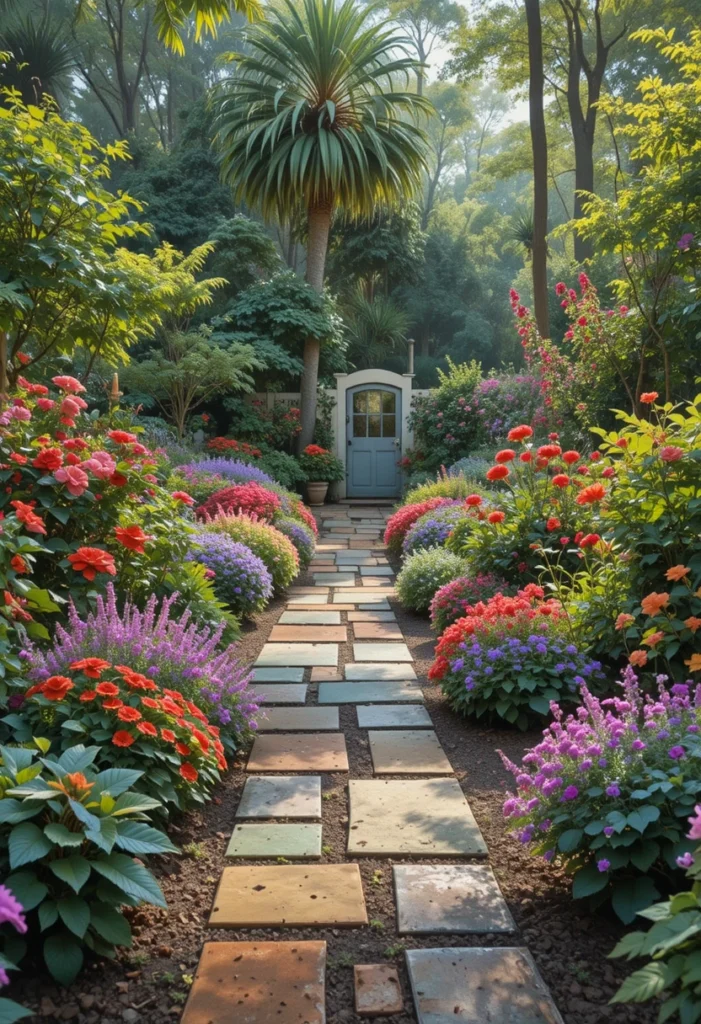
A great perennial design doesn’t just sit there it leads the viewer’s eye from one end of the space to the other.
Do this by repeating the same color (not necessarily the same plant) at intervals throughout the bed. A patch of purple salvia here, a clump of purple asters there, and a few purple alliums in between create a visual “trail” that pulls attention through the entire border, rather than letting the eye stop at the first pretty thing it sees.
7. Let Foliage Do as Much Work as Flowers
Flowers come and go in a matter of weeks. Foliage is there for the entire growing season which makes it the real backbone of a perennial design.
Mix fine-textured foliage (ornamental grasses, coreopsis) with bold, broad leaves (hosta, coral bells, lamb’s ear) to keep the bed visually interesting even when nothing is in bloom. A garden with strong foliage contrast looks intentional in April, July, and October a garden relying on flowers alone only looks good in July.
8. Add Structural Plants as a Backbone
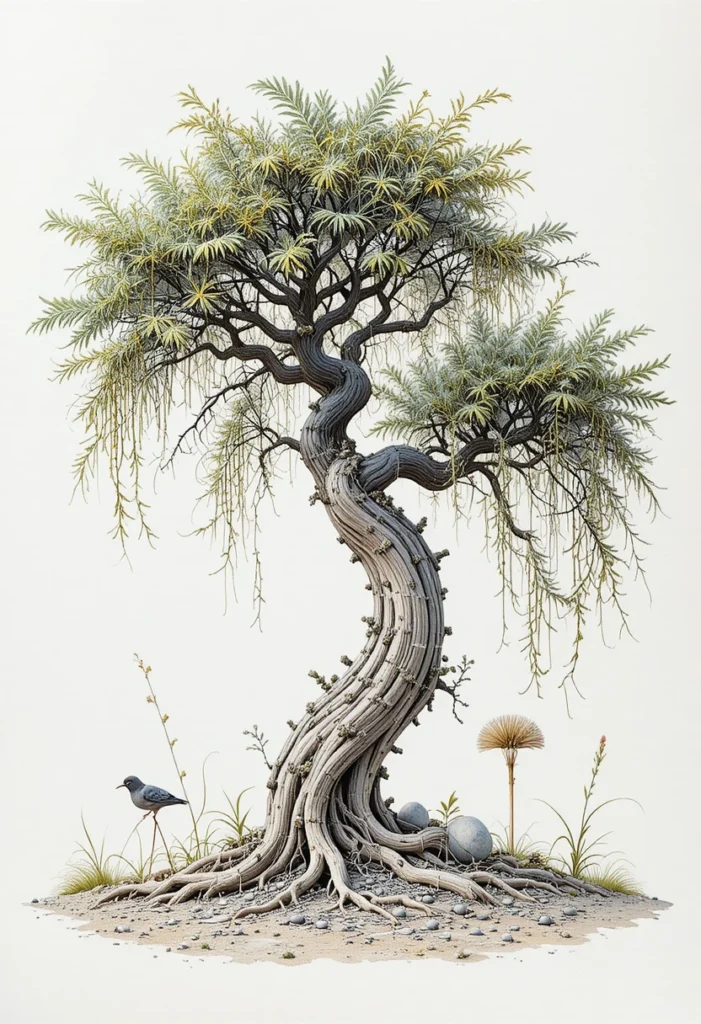
Before choosing flowers, decide what will anchor the space visually in every season even the depths of winter.
Small shrubs, evergreens, and ornamental grasses serve as the “bones” of a perennial garden. They break up long borders into manageable sections, give the design presence when perennials die back, and keep the whole space feeling grounded rather than a flat, uniform blur of stems.
9. Add a Focal Point for Year-Round Interest
A trellis, birdbath, garden bench, or small sculpture gives the eye somewhere to land and it keeps the garden feeling designed even in the off-season, when most perennials have died back for winter.
Position your focal point where it’s visible from a window or a frequently used path, then build your tallest or most dramatic plantings around it to frame the feature rather than hide it.
10. Tuck in Bulbs for Early Spring Color
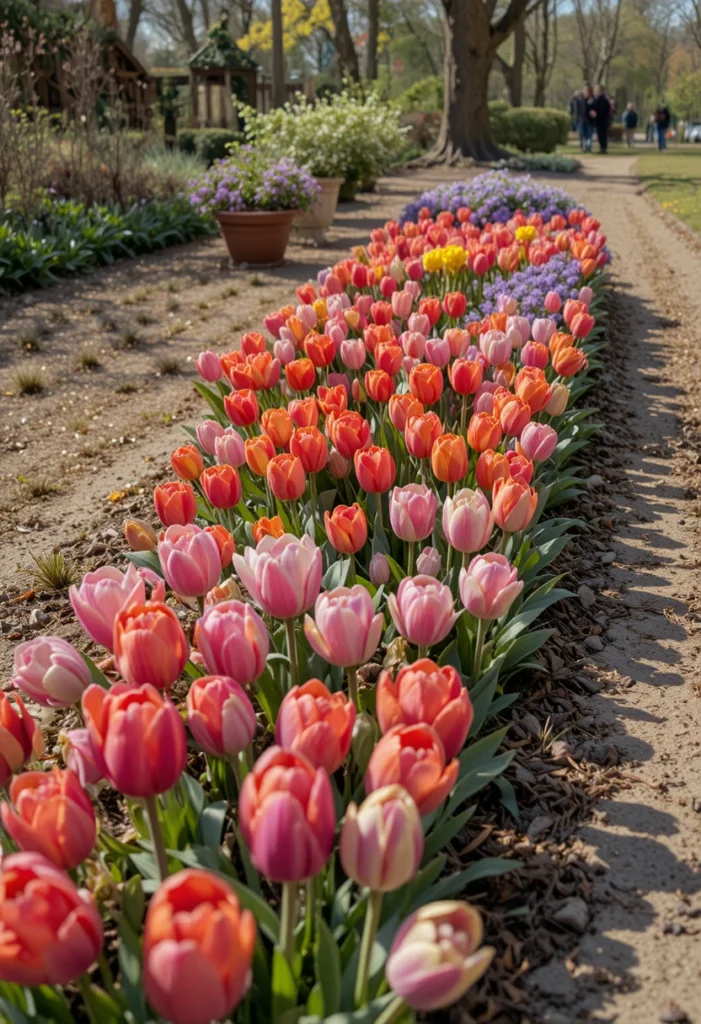
Perennials are wonderful, but most don’t wake up until well after the last frost which can leave a bed looking bare in early spring.
Fill that gap with daffodils, crocuses, or tulips planted between your perennial clumps. Bulbs bloom early, then die back and disappear underground just as the surrounding perennials fill in, so you get an extra season of color without sacrificing any bed space.
11. Plan for Winter Interest, Not Just Summer Color
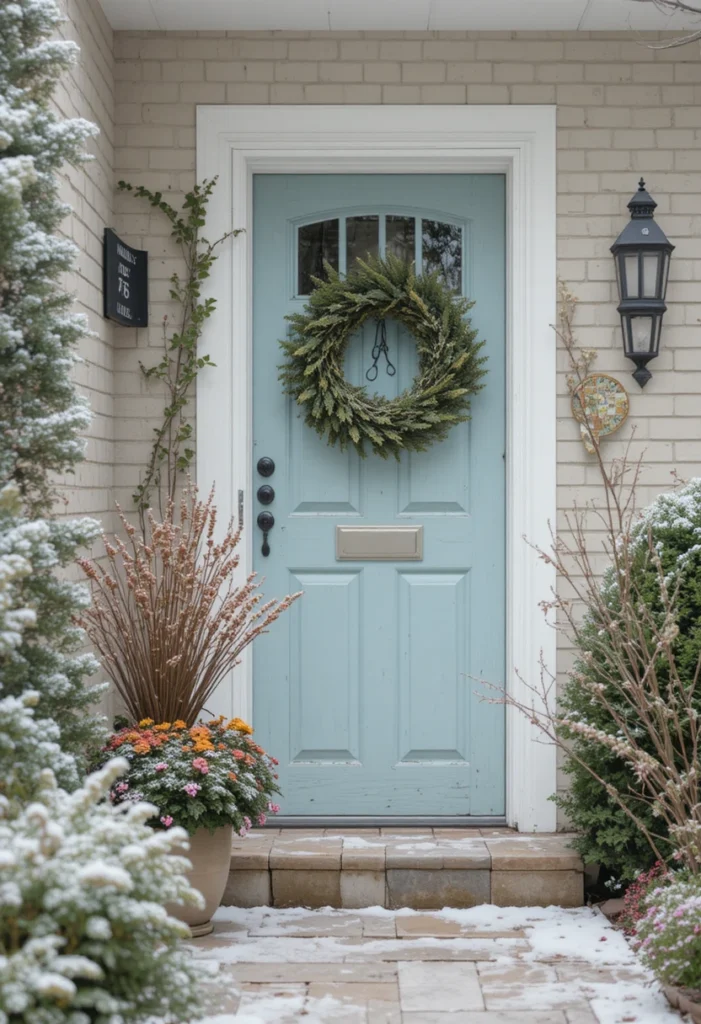
A perennial garden that only looks good from May to September is only doing half its job.
Choose a few perennials that hold attractive seed heads or structure through winter ornamental grasses, coneflower, sedum, and black-eyed Susan all look striking dusted with frost rather than collapsing into a shapeless mess. Combined with evergreen structural plants (see idea #8), this keeps your garden from disappearing entirely for four to five months of the year.
12. Group Plants by Water and Sun Needs
This is a design idea that saves you real, ongoing effort not just a better-looking bed.
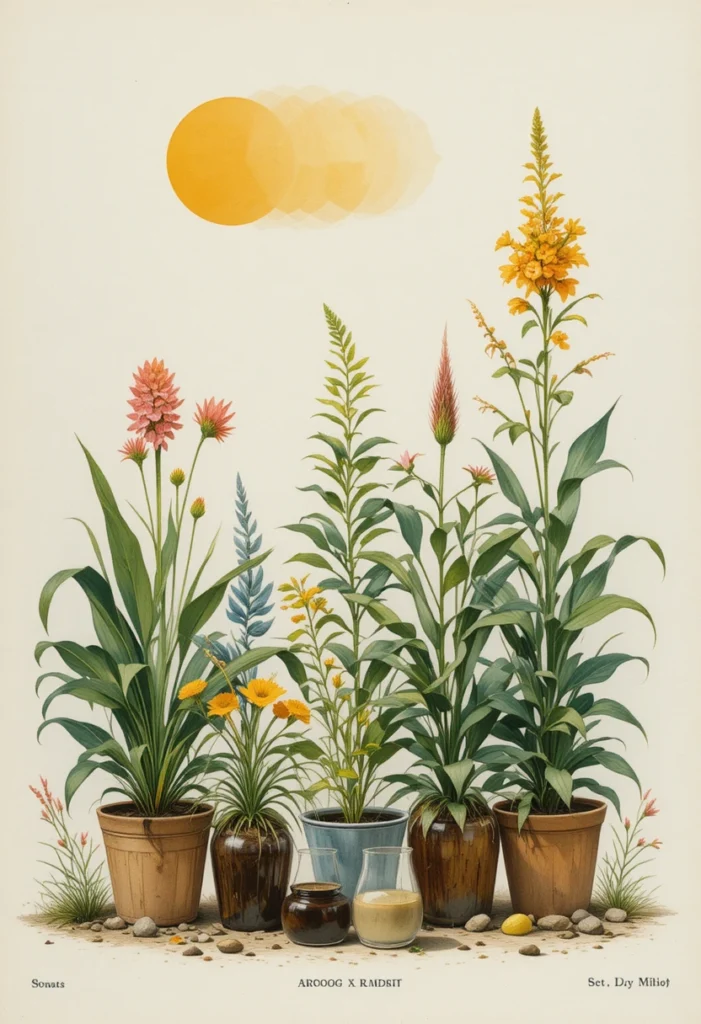
Cluster plants with similar sun exposure and water needs together, a practice sometimes called hydrozoning. Put drought-tolerant plants like yarrow and sedum together on a sunny, well-drained slope, and keep moisture-loving plants like bee balm or Joe Pye weed grouped in a low spot where water naturally collects. The result is a garden that’s dramatically easier to water and maintain, because you’re never trying to satisfy two opposite sets of needs in the same few square feet.
13. Mix In a Few Annuals for Extra Summer Punch
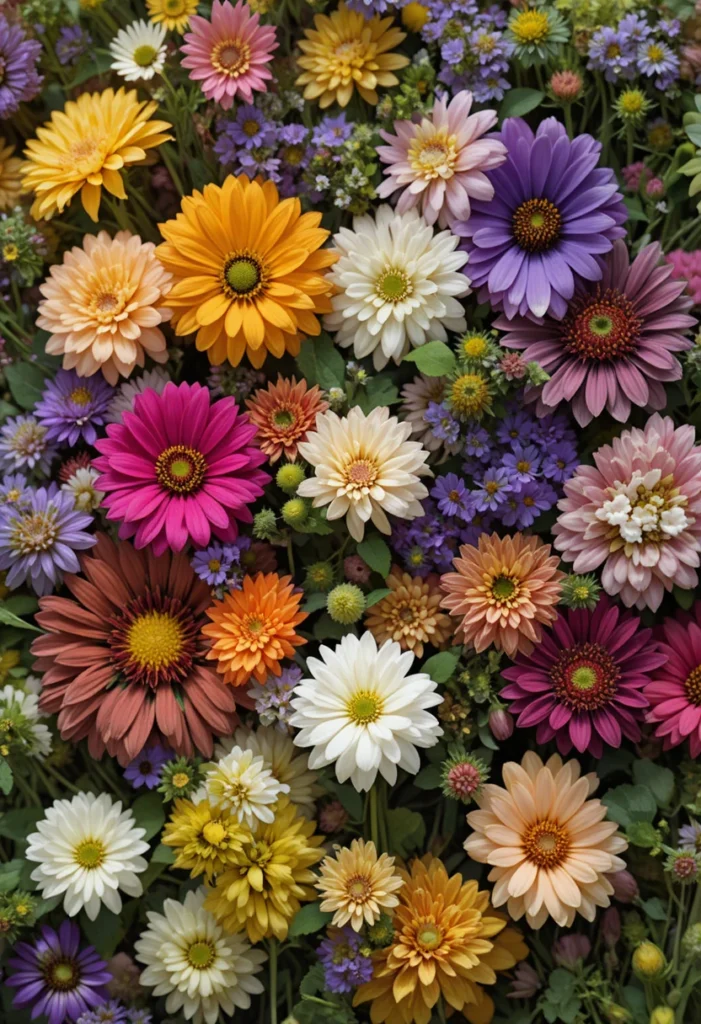
Perennials are the backbone of the design, but a handful of annuals tucked into the gaps can carry a bed through its slowest weeks.
Annuals bloom continuously all summer and can be swapped out each year, making them the perfect filler for any spot where a perennial hasn’t filled in yet or where you want an extra hit of color during a natural lull in the bloom succession.
14. Leave Room to Grow Don’t Overcrowd
It’s tempting to plant everything close together for an instant “full” look, but perennials are still small the day you plant them.
Check each plant’s mature size before placing it, and space accordingly. Yes, the bed will look sparse for the first year or two but overcrowded perennials fight each other for light and water, need constant dividing and transplanting, and rarely reach the lush, healthy fullness that patience rewards a few seasons down the line.
Frequently Asked Questions About Perennial Garden Design
How many different perennials should I use in one bed?
Fewer varieties, planted in larger drifts, almost always look more polished than many single specimens. Aim for a handful of “star” plants repeated throughout, rather than one of everything you like.
How do I keep a perennial garden blooming all season?
Focus on bloom succession choose a mix of spring, early summer, midsummer, and fall bloomers so something is always flowering as something else fades.
Do perennial gardens need a lot of maintenance?
Less than most people expect, especially once you group plants by sun and water needs. Most of the ongoing work is occasional dividing, deadheading, and a yearly tidy-up rather than constant attention.
Should I plant perennials in straight rows or in drifts?
Drifts. Odd-numbered clusters of three, five, or seven plants read as far more natural and intentional than straight rows or single plants scattered throughout the bed.
Bringing It All Together
A stunning perennial garden isn’t about finding rare, hard-to-grow plants it’s about applying a handful of design principles consistently: layering by height, repeating color in drifts, planning bloom succession, and giving the space real structure that holds up in every season.
Start with your site conditions, choose a simple palette, and build outward one thoughtful layer at a time. In a year or two, you’ll have a border that looks as good in October as it does in June and gets better, not messier, with every passing season.