
A raised garden bed gives you a defined place to grow vegetables, herbs, and flowers when your yard has compacted soil, poor drainage, limited space, or ground that is difficult to work. It can also make planting and harvesting more comfortable because you can shape the growing area around your reach and mobility needs.
Building a box is only one part of the job. The bed needs a suitable location, safe materials, enough root depth, a balanced soil mix, and a watering plan. Getting those decisions right before you fill the frame can prevent common problems such as waterlogged soil, dry corners, unstable walls, and plants that struggle to establish.
This guide explains how to plan, build, fill, and plant a raised bed for a typical home garden in the United States. The best dimensions and materials depend on your site and crops, so use the recommendations as practical starting points and adjust them to your local climate and soil conditions.
In This Guide
- What is a raised garden bed?
- Benefits and limitations
- Choose the right location
- Choose the right size and depth
- Compare frame materials
- Prepare the site and build the frame
- Fill the bed with suitable soil
- Choose crops and plan spacing
- Water and maintain the bed
- Mistakes to avoid
- Frequently asked questions
What Is a Raised Garden Bed?
A raised garden bed is a growing area where the soil sits higher than the surrounding ground. Some beds have a timber, metal, brick, or stone frame, while others are simply mounded soil with clear paths around them. A framed bed is useful when you want a neat edge, need to hold soil on a slope, or are gardening over a hard surface. An unframed mound can work well when the native ground is usable and you mainly want a deeper, defined planting area.
Most backyard raised beds are open at the bottom when placed over soil. This lets roots reach into the ground below, provided that soil is healthy and not compacted or contaminated. A bed built on a patio or concrete slab is different: it behaves more like a large planter, so it needs enough depth for the mature roots of the plants you choose and reliable drainage. The University of Minnesota Extension raised-bed guide explains these different uses and design considerations.
Benefits and Limitations of Raised Beds
Raised beds can improve access to gardening, give you more control over the soil you add, and make it easier to keep foot traffic away from growing areas. They are especially useful where native soil is compacted, heavy, shallow, or poorly drained. Because the soil is elevated and often drains more freely, it may warm earlier in spring, which can help you prepare a bed sooner than a wet in-ground plot. A defined bed also makes crop rotation, plant spacing, and routine maintenance easier to organize.
There are tradeoffs. Raised beds can dry out faster than surrounding ground, particularly when they are tall, exposed to wind, or placed over pavement. Frames also add an initial cost, and deep beds require more soil to fill. A raised bed does not automatically make unsafe soil safe if contaminated ground can mix into the growing area. If you suspect lead or another contaminant, get the site assessed and follow local extension guidance before growing food. For more on the practical advantages and limits, see University of Missouri Extension’s raised-bed gardening guidance.
Choose the Right Location Before You Build
Start by watching the proposed area through the day. Fruiting vegetables such as tomatoes, peppers, and eggplants generally perform best with about six to eight hours of direct sunlight. Leafy crops such as lettuce, baby kale, scallions, and some greens can be more forgiving in partial shade. Choose a level or nearly level spot where water will not collect around the frame, and avoid placing the bed directly beneath large tree branches where roots may compete for moisture and nutrients.
Keep the bed reasonably close to a hose or other safe water source. A bed that looks convenient on paper can become frustrating if every watering requires carrying heavy cans across the yard. Leave enough room to walk around it, open gates, move a wheelbarrow, and reach all planting areas without stepping on the soil. If the bed will sit over lawn, remove or suppress the grass and loosen the ground beneath it before filling. The Utah State University Extension raised-bed guide also recommends planning for sunlight and irrigation before construction.
Choose a Practical Size and Rooting Depth
Width should be based on how far you can comfortably reach, not simply on how much space is available. A bed around four feet wide is a common choice when you can work from both sides. If it sits against a wall or fence, make it narrower—often about two to three feet—so you can reach the back without leaning across the soil. The length can vary, but shorter sections are easier to access and can make crop rotation simpler. Paths should be wide enough for your normal movement and any equipment you use.
Depth depends on the surface below and the plants you want to grow. A frame roughly 8 to 12 inches high can be enough for many vegetables when it sits over workable soil that roots can enter. If the bed is over concrete, compacted fill, or another barrier, provide a deeper root zone. Root crops and larger vegetables may need more loose soil than shallow-rooted greens. University of Missouri Extension notes that many plants need at least a 6- to 12-inch rooting zone, with deeper soil often beneficial.
| Bed situation | Useful starting point | What to consider |
|---|---|---|
| Accessible from both sides | About 4 feet wide | Reach the center without stepping in |
| Against a wall or fence | About 2–3 feet wide | Work from one side only |
| Over healthy garden soil | About 8–12 inches high | Roots may continue into native soil |
| Over concrete or poor ground | Deeper, based on crop roots | Provide drainage and enough soil volume |
Compare Safe, Durable Raised Bed Materials
Cedar and redwood are popular because they are naturally more resistant to decay than many inexpensive softwoods. Untreated pine can cost less, but it may need replacing sooner. Galvanized steel is durable and creates a clean, modern look, while brick, stone, and concrete blocks can make a permanent structure that matches a landscape. Choose a material that fits your budget, local weather, and the weight of the soil it must hold. Taller walls need stronger construction and appropriate reinforcement.
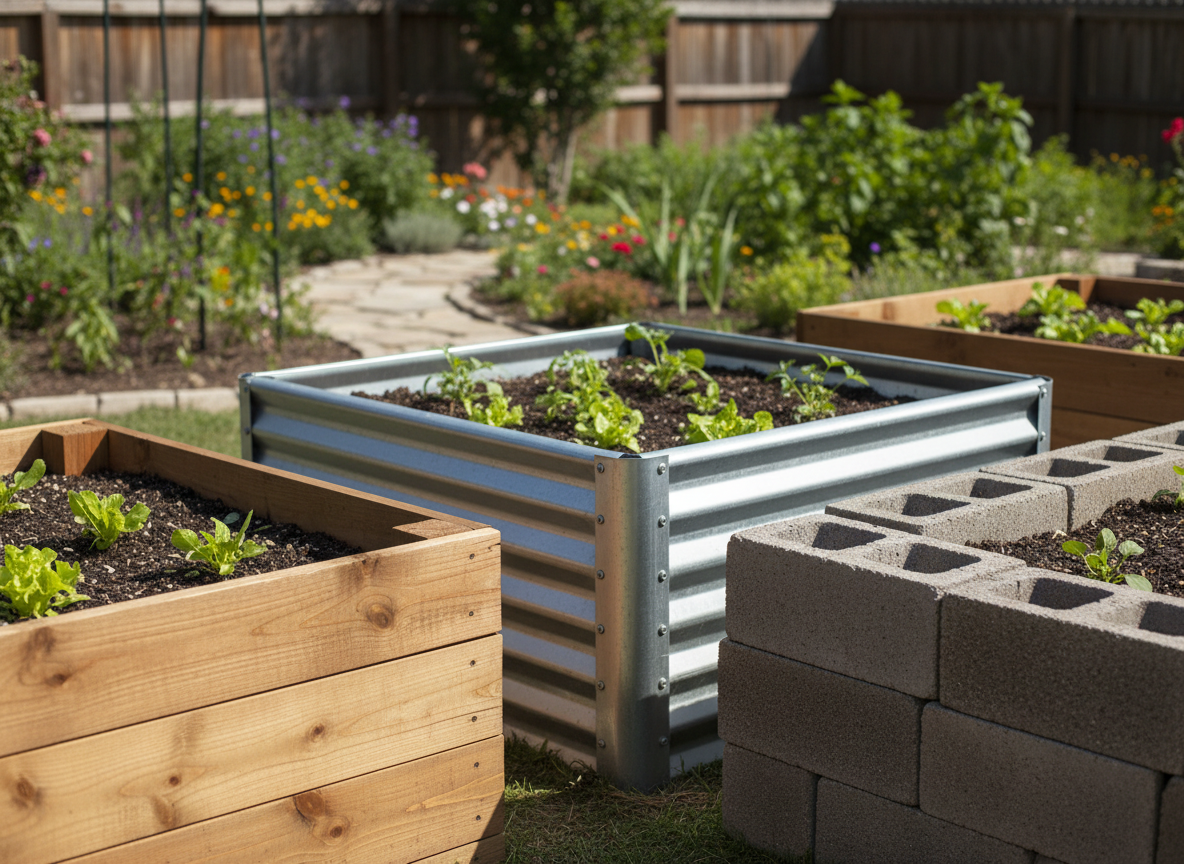
For food gardens, avoid old timber with an unknown treatment history, painted scrap wood, and railroad ties that may contain creosote. The U.S. Environmental Protection Agency says manufacturers voluntarily discontinued CCA-treated wood for homeowner uses in December 2003, but older structures may still exist. If you are unsure about a product, choose a clearly identified garden-suitable material or ask your local extension office. Read the EPA’s guidance on chromated arsenicals before reusing old treated wood. For a closer look at metal options, see our guide to metal raised garden beds.
Prepare the Ground and Build a Stable Frame
Mark the bed’s outline with stakes and string, then check that the corners are square and the base is level. Remove turf and persistent weeds. If the bed is going over soil, loosen the ground below the frame so roots and water can move between the native soil and the new mix. Avoid placing a solid, non-permeable sheet beneath an ordinary ground-level bed; it can interfere with drainage and root growth. A layer of hardware cloth at the bottom can help deter burrowing animals, but it should not block water movement.
Assemble the sides on a firm base and fasten the corners with exterior-rated screws or suitable connectors. Add corner posts or cross-bracing if the bed is tall or long enough for soil pressure to push the walls outward. Check that the frame does not wobble before adding soil. If you are building over paving, design the base to hold the mix while allowing excess water to escape. Keep the finished height comfortable for planting and harvesting, and leave the paths clear before the bed is filled.
Fill the Bed With a Balanced Soil Mix
Good soil is the foundation of a productive raised bed. For many home vegetable beds, a practical starting mix is roughly one-half to two-thirds quality topsoil combined with one-third to one-half mature plant-based compost. The exact balance depends on the texture of the topsoil and the compost. Choose a loamy or sandy-loam topsoil when available, and avoid material that is mostly clay, very sandy, or of unknown origin. Do not fill the entire bed with pure compost: too much can create moisture and nutrient imbalances.
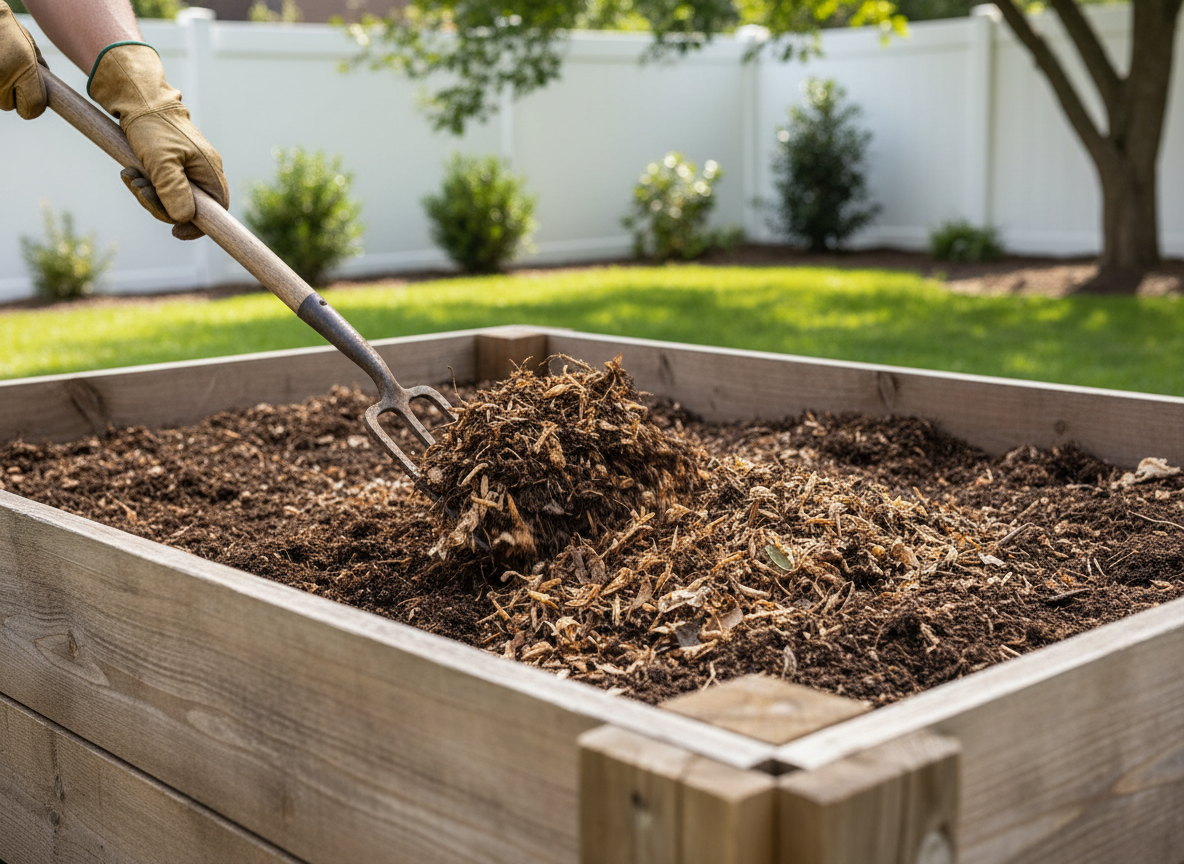
The University of Minnesota Extension recommends a mix built around topsoil and plant-based compost, while Utah State University Extension describes a balanced blend that can also include a drainage-improving ingredient such as perlite, pumice, vermiculite, or coarse sand. These are starting points, not a single formula for every location. Mix the ingredients evenly, moisten the soil lightly as you fill, and avoid packing it down hard. A 4-by-8-foot bed filled to 12 inches holds about 32 cubic feet of material, or roughly 1.2 cubic yards. You can estimate other sizes by multiplying length × width × depth in feet. For help improving existing garden soil, see our garden soil preparation guide and guide to composting leaves at home.
Choose Crops That Fit the Bed
Begin with plants that match your sunlight, growing season, and available root depth. Leaf lettuce, radishes, spinach, scallions, and many herbs are manageable choices for a first bed. Bush beans, compact tomatoes, peppers, cucumbers, and other fruiting crops can also work when the bed receives enough sun and has adequate soil depth. Check the mature size and spacing on seed packets or plant labels instead of filling every open spot with seedlings.
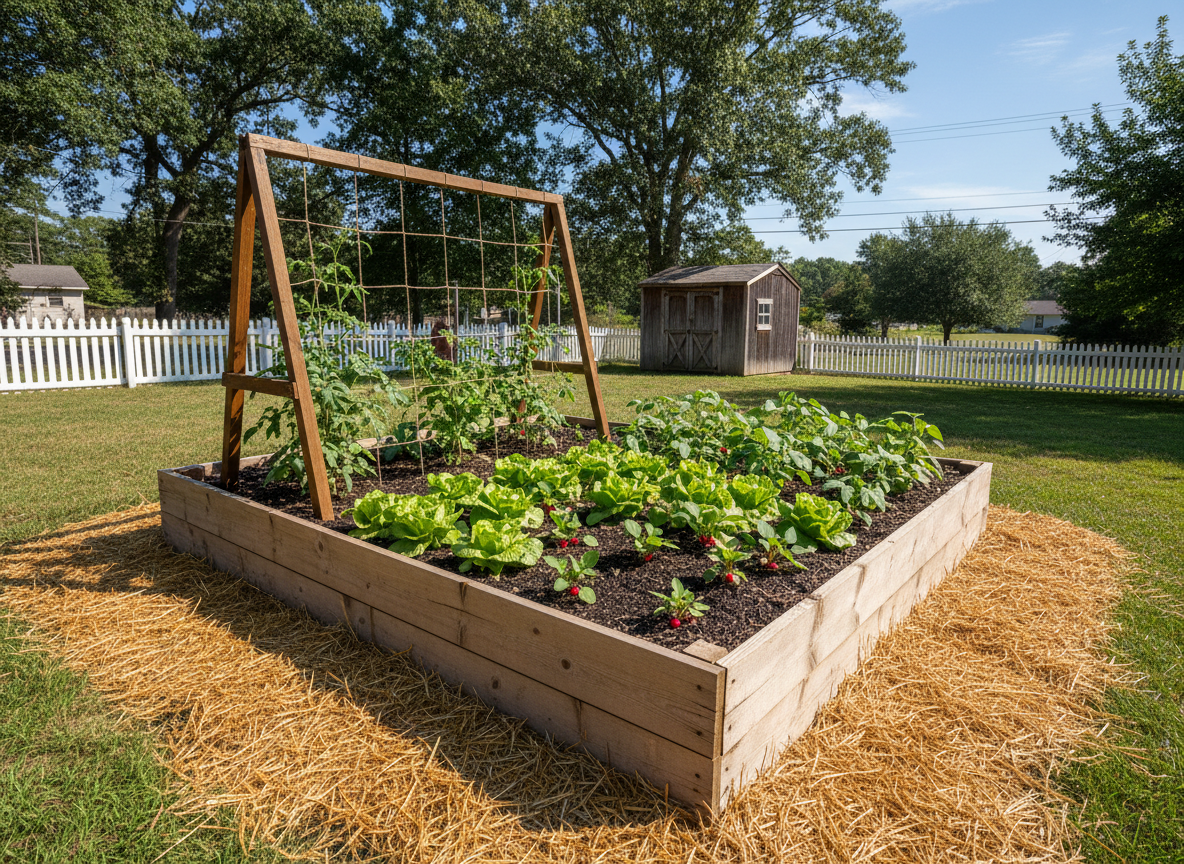
Arrange taller crops where they will not shade smaller plants, and use a sturdy trellis for suitable climbing beans or cucumbers. Keep paths open so you can harvest without stepping into the bed. If you have several beds, group crops by family and rotate them when practical rather than planting the same family in the same soil every season. Our existing raised garden bed ideas for beginners article has additional layout inspiration; this guide focuses on the practical setup and growing conditions behind a successful bed.
Water, Mulch, and Maintain the Bed
Raised beds often lose moisture faster than in-ground gardens, so check the soil regularly instead of following a rigid calendar. Water deeply enough to moisten the root zone, then allow the surface to begin drying before watering again, adjusting for rainfall, temperature, wind, and crop needs. A soaker hose or drip line can deliver water close to the soil and reduce the amount that lands on leaves. This is particularly useful in warm weather or when you have several beds to maintain.
A thin layer of suitable organic mulch can slow evaporation, reduce weeds, and moderate soil temperature. Keep mulch a little away from plant stems to reduce the risk of rot. Remove weeds while they are small, harvest crops promptly, and inspect leaves for signs of pests or disease. Add compost or fertilizer only when the soil and plants need it; regular heavy compost applications can build up excess phosphorus and soluble salts. A soil test every few years can help guide amendments more accurately.
Common Raised Bed Mistakes to Avoid
One frequent mistake is making a bed too wide to reach comfortably. When you step into the growing area, you compact the soil and reduce the air spaces that roots need. Another is building on a low, wet spot without improving drainage. A third is choosing a frame before checking the site: a beautiful bed can still fail if it receives too little sun, sits far from water, or blocks a natural walkway.
Also avoid filling the bed with only compost, using unknown reclaimed timber, or adding a plastic barrier that traps water beneath a bed placed on soil. Do not assume that a tall bed always needs a complicated layered fill; choose materials based on the bed’s depth, budget, and crop needs, and keep the root zone consistent. Plan the soil volume before buying supplies so you do not run short halfway through the project or pay for far more material than the bed requires.
Frequently Asked Questions
What is the best size for a raised garden bed?
A bed about four feet wide is a practical starting point when you can reach it from both sides. If it is against a wall or fence, keep it closer to two or three feet wide so the entire bed remains accessible. Choose the length and depth based on your space, the plants you want to grow, and the soil underneath.
How deep should a raised garden bed be?
Many vegetables can grow in a bed around 8 to 12 inches high when roots can continue into healthy soil below. If the bed sits on concrete, compacted ground, or another barrier, provide a deeper growing zone based on the mature roots of your crops. Root vegetables and larger plants may need more depth than lettuce or herbs.
What is the best soil mix for a raised garden bed?
A useful starting point is quality topsoil blended with mature plant-based compost. Many gardeners begin with roughly one-half to two-thirds topsoil and the rest compost, then adjust for local soil texture and drainage. Avoid using only compost or ordinary potting soil as the entire fill, and use a soil test to guide fertilizer additions.
Should a raised garden bed have a bottom?
A bed placed over healthy ground is usually open at the bottom so roots can reach the soil beneath it. A bed on a patio or other hard surface needs a base that holds the growing mix while allowing excess water to drain. A permeable liner may help on a paved surface, but avoid a solid barrier that traps water.
Can I use pressure-treated wood for a raised garden bed?
Wood treatments differ, and older lumber may have an unknown history. Avoid old CCA-treated wood and railroad ties that may contain creosote. If you are considering modern pressure-treated lumber for a food garden, check its label and current local extension advice; naturally rot-resistant wood, suitable metal, brick, or stone are alternatives.
How often should I water a raised bed?
Check moisture frequently, especially during hot, dry, or windy weather. Water when the root zone begins to dry, and adjust the amount for rainfall, soil texture, bed depth, and plant type. Drip irrigation or a soaker hose can make watering more consistent while keeping foliage relatively dry.
Conclusion
A productive raised garden bed starts with a location that suits your plants, a width you can reach, a stable frame, and a soil mix that balances drainage with moisture and nutrients. Take time to measure the space and calculate the soil volume before buying materials. Those small planning steps can save money and make the finished bed easier to care for.
Start with one manageable bed, grow crops that match your conditions, and improve the soil based on observation and testing. Once you understand how quickly your bed dries and which plants perform well, you can expand with confidence. A simple, well-planned raised bed can support years of productive home gardening.