
Learning how to boil eggs is simple when you know the right cooking time. Whether you want soft, creamy yolks or firm hard-boiled eggs, a few easy steps can help you get the texture you want.
This easy boiled eggs recipe uses water, eggs, and a saucepan. Follow the cooking time chart below to make delicious eggs for breakfast, salads, sandwiches, or meal prep.
How to Boil Eggs – Quick Answer
To boil eggs perfectly, bring a pot of water to a boil. Gently add the eggs, reduce the heat to maintain a steady, gentle boil, and cook for 6–12 minutes, depending on your preferred yolk texture.
Transfer the eggs into cold water immediately after cooking. This stops most of the remaining cooking and helps prevent overcooked yolks.
Egg Boiling Time Chart – How Long to Boil Eggs?
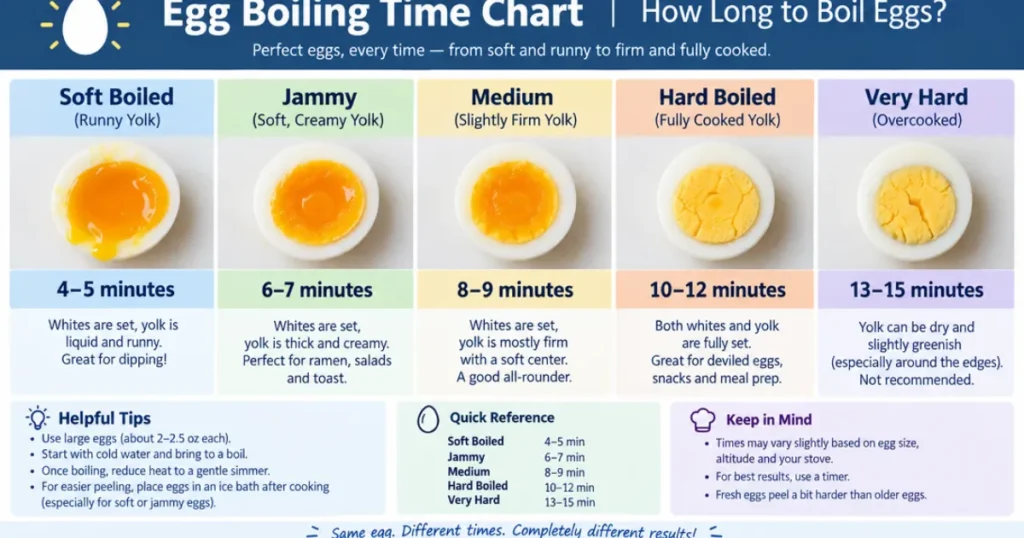
The best boiling time for eggs depends on how soft or firm you want the yolks. These approximate times are for large, refrigerator-cold eggs added to boiling water.
| Boiling time | Egg yolk texture | Best use |
| 3 minutes | Very soft whites and liquid yolk | Dippy eggs |
| 6 minutes | Mostly set whites, runny yolk | Breakfast toast |
| 8 minutes | Creamy, jammy yolk | Ramen and salads |
| 10 minutes | Firm or nearly firm yolk | Egg sandwiches |
| 12 minutes | Fully firm yolk | Deviled eggs and meal prep |
Important: These times are a starting guide, not a guarantee. Egg size, water temperature, altitude, and boiling strength can change the results. A 3-minute egg may still have undercooked whites.
Ingredients and Equipment Needed to Boil Eggs

You only need a few basic kitchen items to make perfect boiled eggs.
- 4 large eggs
- Water to cover the eggs by about 1 inch
- Ice and cold water
- Medium saucepan
- Slotted spoon
- Kitchen timer
- Bowl for cooling
Helpful tip: Use a saucepan large enough to hold the eggs in a single layer. This helps them cook evenly and reduces cracking.
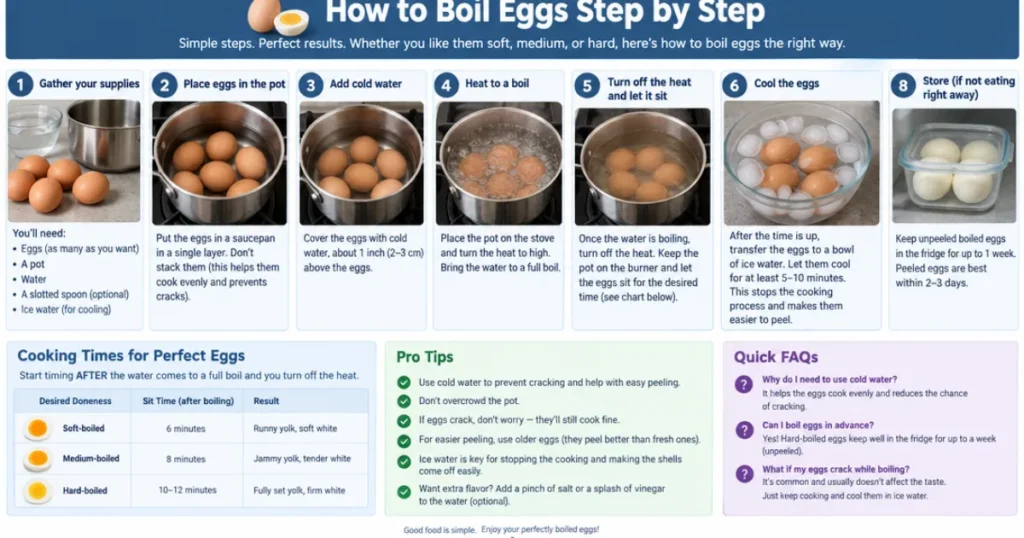
How to Boil Eggs Step by Step
Bring Water to a Boil
Fill a saucepan with enough water to cover the eggs by about 1 inch. Bring the water to a full boil over medium-high heat.
Starting with boiling water provides a clear timing point. This makes it easier to control the final yolk texture.
Gently Add the Eggs
Use a slotted spoon to lower the refrigerator-cold eggs into the boiling water. Avoid dropping them directly into the pot.
Lowering the eggs slowly helps protect their shells from cracking.
Adjust the Heat and Start the Timer
Reduce the heat slightly to maintain a gentle boil. Start the timer as soon as the eggs enter the water.
Cook for 6 minutes for runny yolks, about 8 minutes for jammy centers, or 10–12 minutes for firm yolks.
Cool the Eggs in Cold Water
Transfer the cooked eggs into a bowl of ice water. Let them cool for several minutes.
An ice bath slows further cooking and helps protect the yolk texture.
Peel and Serve
Gently tap the wider end of the egg against a hard surface. Roll it lightly to crack the shell.
Start peeling near the air pocket at the wider end. Peeling under water may help loosen the shell membrane.
How to Make Perfect Soft-Boiled Eggs
Soft-boiled eggs have set or mostly set whites and a warm, runny yolk. They are popular for breakfast, toast, and noodle bowls.
For large, cold eggs, start with about 6 minutes in gently boiling water. Adjust the time slightly based on the results.
How Long to Boil Eggs for Runny Yolks
Boil large eggs for approximately 6 minutes for a runny center. The white should be mostly firm while the yolk remains liquid.
Very short cooking times may leave some whites unset. The FDA recommends cooking eggs until both whites and yolks are firm for food safety.
Best Ways to Serve Soft-Boiled Eggs
Serve soft-boiled eggs with buttered toast, toast soldiers, avocado toast, or ramen.
They also pair well with sautéed spinach, rice bowls, and lightly seasoned vegetables.
How to Make Jammy Boiled Eggs
Jammy eggs have firm whites and thick, creamy yolks. Their centers are softer than hard-boiled eggs but thicker than runny yolks.
Boil large eggs for approximately 8 minutes, then cool them quickly in ice water to limit further cooking.
Best Ways to Use Jammy Eggs
Jammy eggs work well in ramen, grain bowls, rice dishes, and fresh salads.
Their creamy centers add richness without requiring extra sauce.
How to Make Perfect Hard-Boiled Eggs
Hard-boiled eggs have fully set whites and firm yolks. They are ideal for meal prep, salads, and sandwiches.
For large eggs added to boiling water, start with 10–12 minutes. Use the longer end of the range when you want a completely firm center.
How to Avoid Green or Gray Yolks
A green-gray ring can form around the yolk when eggs are cooked too long or cooled too slowly.
This color comes from a reaction between sulfur in the egg white and iron in the yolk. It is generally harmless but may indicate overcooking.
Best Uses for Hard-Boiled Eggs
Use hard-boiled eggs in deviled eggs, egg salad sandwiches, potato salad, Cobb salad, and Niçoise salad.
They also make convenient snacks when stored safely in the refrigerator.
How to Peel Boiled Eggs Easily Without Damaging Them
The best way to peel boiled eggs is to crack the shell gently and begin at the wider end.
Peeling under cool running water can help separate the shell from the thin membrane beneath it.
Why Are Some Boiled Eggs Hard to Peel?
Very fresh eggs can be harder to peel because their inner shell membrane may cling more tightly to the egg white.
As eggs age, changes in the egg white’s acidity can make peeling easier.
Does an Ice Bath Make Eggs Easier to Peel?
An ice bath cools eggs quickly and limits additional cooking.
It may also help with peeling, but egg freshness and cooking method can affect how easily the shell comes off.
Should You Start Boiling Eggs in Cold or Hot Water?
Both methods work, but they use different timing systems.
The boiling water method gives a consistent starting point. The cold water method heats eggs gradually, so timing depends more on the pot and stove.
Boiling Water Method
Bring water to a boil before adding the eggs. Lower them gently and start timing immediately.
This method is especially useful when making soft-boiled or jammy eggs.
Cold Water Method
Place eggs in a saucepan and cover them with cold water. Heat the water until it boils, then follow a tested cooking or covered-resting method.
Avoid applying boiling-water cooking times directly to this method because the eggs have already been heating.
How Egg Size and Temperature Affect Boiling Time
Egg size and starting temperature affect how quickly heat reaches the yolk.
Medium eggs may cook slightly faster than large eggs, while extra-large and jumbo eggs often need more time.
Should Eggs Be Cold or at Room Temperature?
Refrigerator-cold eggs work well with the boiling-water method.
Keep eggs refrigerated until cooking. There is no need to leave them on the counter for a long period.
Does High Altitude Affect Egg Boiling Time?
Yes. Water boils at a lower temperature at higher elevations, so eggs may take longer to cook.
Use the timing chart as a starting point and adjust according to your altitude and preferred texture.
Common Mistakes to Avoid When Boiling Eggs
Why Do Eggs Crack While Boiling?
Eggs can crack when they hit the saucepan or move against each other during a strong boil.
Lower them gently with a spoon and maintain a steady boil instead of vigorous bubbling.
Why Are My Boiled Eggs Rubbery?
Rubbery egg whites often result from excessive cooking.
Use a timer and cool the eggs promptly to help maintain a tender texture.
Why Are My Egg Whites Still Runny?
The eggs may not have cooked long enough, or the water temperature may have dropped too much.
For fully set whites, increase the cooking time slightly and keep the water gently boiling.
Why Does the Eggshell Stick?
Freshness, membrane attachment, and cooking conditions can make shells difficult to remove.
Try peeling from the wider end under running water.
How to Store Boiled Eggs Safely
Proper storage keeps boiled eggs safe and fresh.
According to FoodSafety.gov, hard-boiled eggs can be refrigerated for up to one week.
Should You Store Boiled Eggs Peeled or Unpeeled?
Both can be refrigerated safely. Keep them in clean, covered containers at 40°F or below.
Unpeeled eggs have their shells as an extra protective layer.
Can You Freeze Hard-Boiled Eggs?
Freezing whole hard-boiled eggs is not recommended because the whites can become watery and rubbery.
For best texture, prepare fresh eggs or store them in the refrigerator.
How Long Can Boiled Eggs Sit at Room Temperature?
Do not leave cooked eggs unrefrigerated for more than two hours.
When temperatures exceed 90°F, refrigerate them within one hour.
Nutrition and Health Benefits of Boiled Eggs
Boiled eggs provide protein, vitamins, minerals, and other nutrients.
According to USDA FoodData Central, one large hard-boiled egg contains approximately 78 calories and 6.3 grams of protein.
Are Boiled Eggs Good for Breakfast?
Yes. Eggs provide protein and nutrients such as vitamin B12, selenium, and choline.
Pair them with whole-grain toast, fruit, or vegetables for a more balanced breakfast.
Are Boiled Eggs Healthy?
Boiled eggs can fit into a balanced eating plan. They contain high-quality protein and essential nutrients without requiring added cooking fat.
People with specific dietary restrictions should follow advice suited to their individual health needs.
Best Ways to Eat and Serve Boiled Eggs
Boiled eggs are useful for breakfast, lunch, snacks, and meal preparation.
Try them sliced over avocado toast, mixed into egg salad, added to ramen, or served with roasted vegetables.
For meal prep, refrigerate hard-boiled eggs promptly and use them within one week.
FAQ’s
How Long Does It Take to Boil Eggs Perfectly?
Large eggs generally take about 6 minutes for runny yolks, 8 minutes for jammy yolks, and 10–12 minutes for firm yolks when added to boiling water.
Do You Put Eggs in Water Before or After It Boils?
Both methods work. Adding eggs after the water boils makes cooking times easier to measure consistently.
How Long Should I Boil Eggs for Hard-Boiled Yolks?
Boil large eggs for approximately 10–12 minutes. Cool them promptly to reduce overcooking.
How Do You Boil Eggs So They Peel Easily?
Lower eggs gently into boiling water, cool them after cooking, and peel from the wider end under water.
Is 10 Minutes Enough to Hard-Boil an Egg?
Often, yes. Ten minutes can produce a firm or nearly firm yolk in a large egg. Some eggs need closer to 12 minutes.
Should You Add Salt or Vinegar When Boiling Eggs?
Neither is necessary. Salt and vinegar do not reliably prevent cracking or guarantee easier peeling.
How Do You Know When a Boiled Egg Is Done?
Use a timer based on egg size and desired texture. You can cut open a test egg to check the yolk.
Can You Overcook Hard-Boiled Eggs?
Yes. Excess cooking can create rubbery whites and a green-gray ring around the yolk.
Is It Safe to Eat Soft-Boiled Eggs?
Soft-boiled eggs with runny yolks carry a greater risk of foodborne illness than fully cooked eggs.
The FDA recommends cooking eggs until both the yolk and white are firm. Pasteurized eggs reduce risk when preparing dishes with undercooked eggs.
Conclusion
Learning how to boil eggs becomes easier when you follow the right timing and cooling method. Whether you prefer soft, jammy, or hard-boiled eggs, controlling the cooking time helps produce consistent results.
Use fresh, properly refrigerated eggs, a gentle boil, and cold water for cooling. These simple steps make boiled eggs easy to prepare for breakfast, snacks, and family meals.