
Your lawn just survived months of snow, ice, and freezing temperatures and it shows. Matted patches, bare spots, a few stubborn weeds already poking through. It’s tempting to grab the fertilizer bag and go to town on the first warm Saturday of the year.
Don’t. The order you do things in matters just as much as what you do, and rushing spring lawn care is one of the fastest ways to waste a whole season of effort.
This checklist breaks spring lawn care into the exact sequence that works: from the first cleanup pass all the way through to your regular mowing rhythm. Follow it in order, and you’ll set your grass up for a season of thick, even, weed-resistant growth no guesswork required.
When Does Spring Lawn Care Actually Start?
Before you touch a single tool, check the ground, not the calendar. Grass roots start growing again once soil temperatures consistently sit around 50°F, and that happens below the surface well before your lawn looks green on top.
A simple test: walk across your lawn. If the soil is soft and springs back under your feet without leaving a deep footprint, it’s dry enough to work. If you leave a soggy indent, wait walking on saturated soil compacts it and can damage the tender new shoots trying to break through.
Patience here pays off later. Rushing onto wet ground is one of the most common and most avoidable spring lawn mistakes.
The Complete Spring Lawn Care Checklist
1.Clear Away Winter Debris
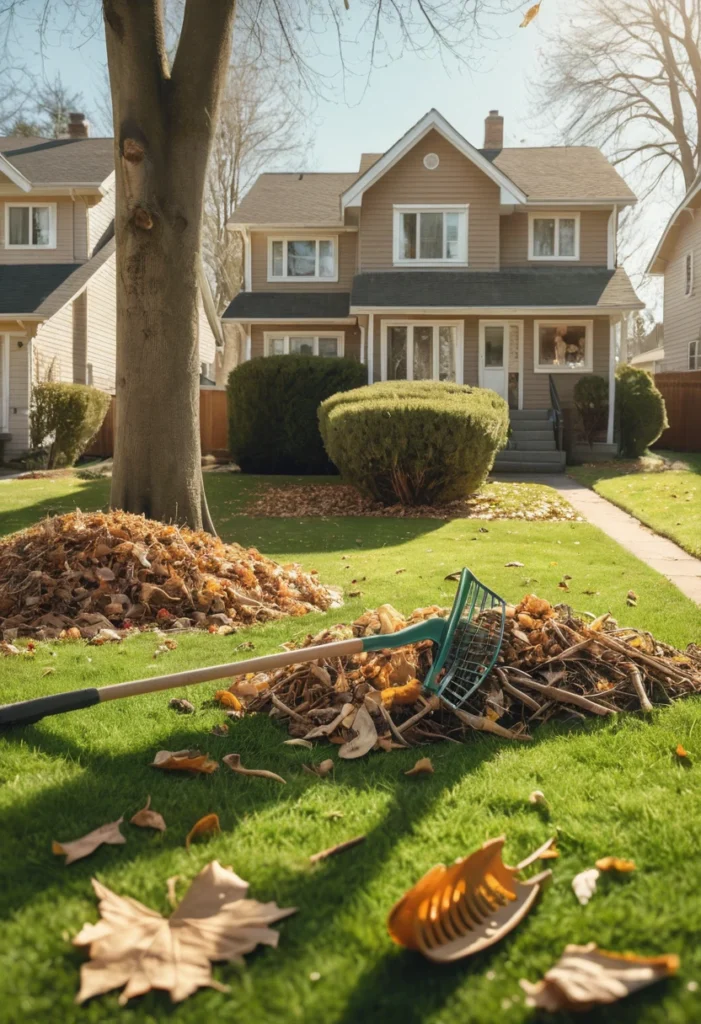
Start with a clean slate. Rake up fallen branches, matted leaves, and any twigs or debris that piled up over winter. Left in place, this buildup blocks sunlight and traps moisture against the grass, creating the perfect breeding ground for mold, disease, and pests.
Use a light touch with a springy leaf rake rather than digging in aggressively young grass shoots underneath are fragile this early in the season.
Pro tip: Compost the clean leaves and grass clippings for free mulch later in the year, but keep any diseased plant material or weeds out of the pile.
2.Test Your Soil Before You Add Anything
This is the step almost every beginner skips and it’s the one that determines whether everything else actually works. A simple soil test (through a local extension office or an at-home kit) tells you your lawn’s pH and nutrient levels, so you’re not fertilizing blind.
Depending on the results, you may need to add lime to raise a too-acidic pH, or sulfur to lower one that’s too alkaline. Without this step, your grass may struggle to absorb the nutrients in any fertilizer you apply later meaning wasted product and wasted money.
3.Rake and Lightly Dethatch
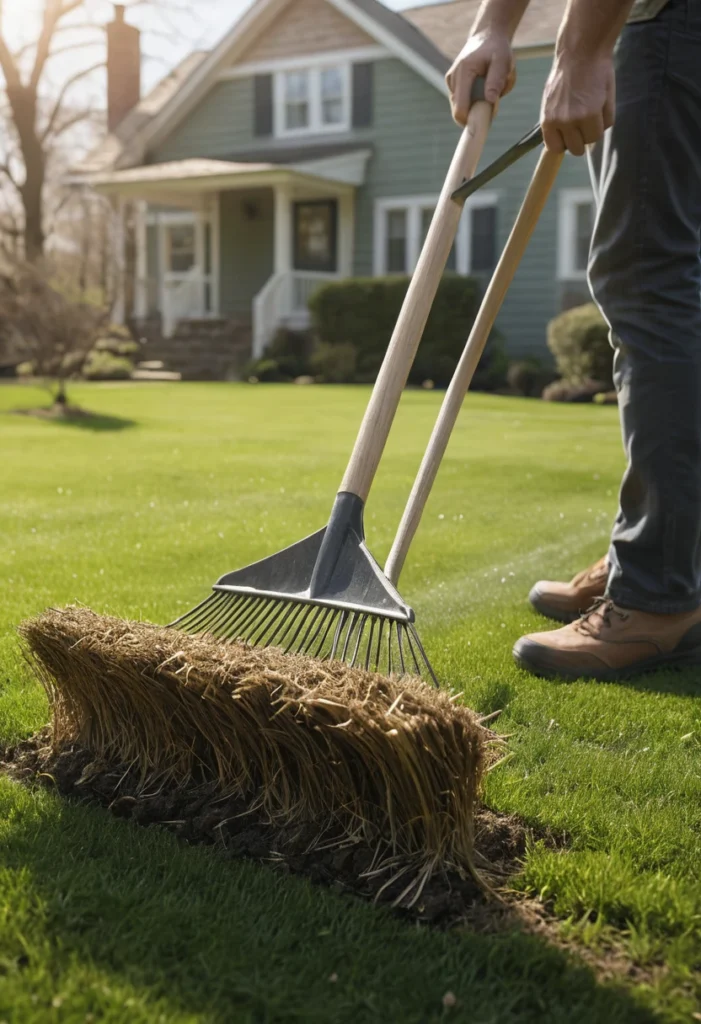
Thatch is the layer of dead grass, roots, and organic debris that builds up between the soil and the living grass blades. A thin layer (under about half an inch) is healthy it helps retain moisture. But a thicker layer blocks air, water, and nutrients from reaching the soil.
To check: dig into a small patch of lawn and measure the brown, spongy layer. If it’s thick, or you’re noticing water pooling on the surface instead of soaking in, it’s time to dethatch with a rake or a dethatching tool.
4.Aerate Compacted Areas
If your lawn sees heavy foot traffic, pet activity, or hasn’t been aerated in a few years, compacted soil could be holding your grass back. Compaction squeezes out the air pockets roots need to breathe and expand.
Core aeration pulling small plugs of soil out of the lawn relieves that pressure and gives roots room to grow deeper. You don’t need to aerate every single spring, but high-traffic lawns benefit from it every year or two.
5.Overseed Bare or Thin Patches
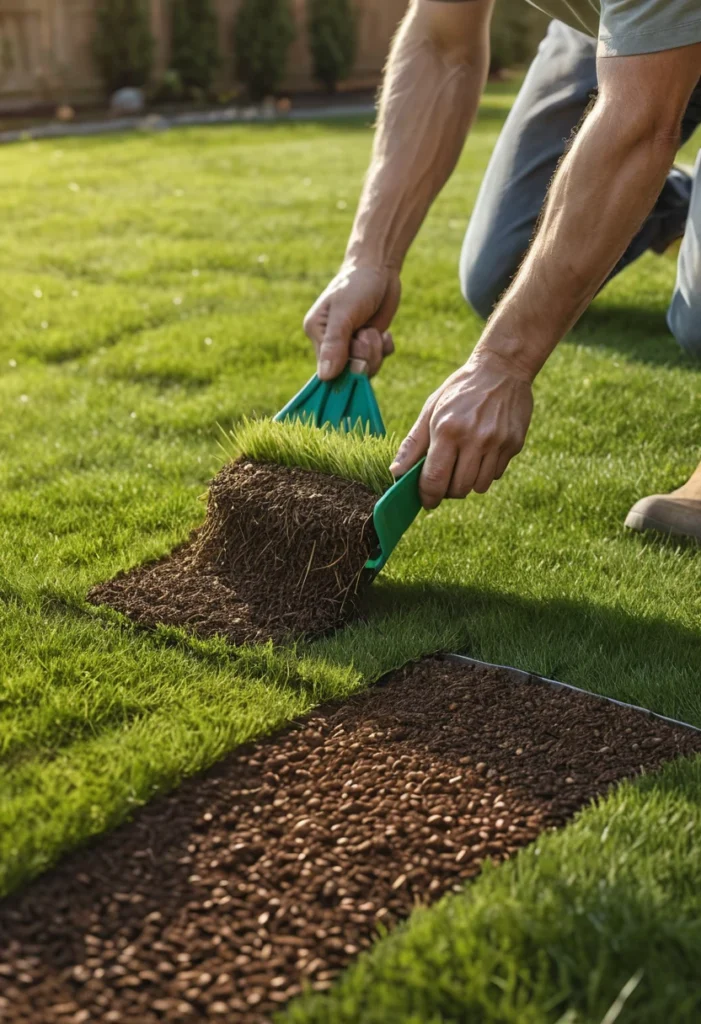
Late winter often leaves behind bare spots, thin patches, or areas thinned out by snow mold. Early-to-mid spring is a great window to overseed these areas, especially for cool-season grasses, since the cooler temperatures and typically higher rainfall help new seed establish before summer heat arrives.
Choose a seed blend that matches your existing grass type, and keep the area consistently moist (not soggy) until you see new growth take hold.
6.Get Ahead of Weeds With Pre-Emergent Control
Spring is exactly when dormant weed seeds especially crabgrass start to germinate, which makes timing critical. A pre-emergent herbicide, applied before those seeds sprout, creates a barrier that stops them before they ever become a problem.
The timing window matters: apply too early and it can break down before weeds germinate; apply too late and the weeds are already up, making a pre-emergent useless against them. Soil temperature is your best guide most pre-emergents are most effective once soil hits the mid-50s°F.
If you’re planning to overseed, check your product label carefully many pre-emergents will also block your new grass seed from germinating.
Read Also: 14 Winter Garden Prep Tips to Protect Your Yard (and Set Up an Easier Spring)
7.Fertilize With a Slow-Release Formula
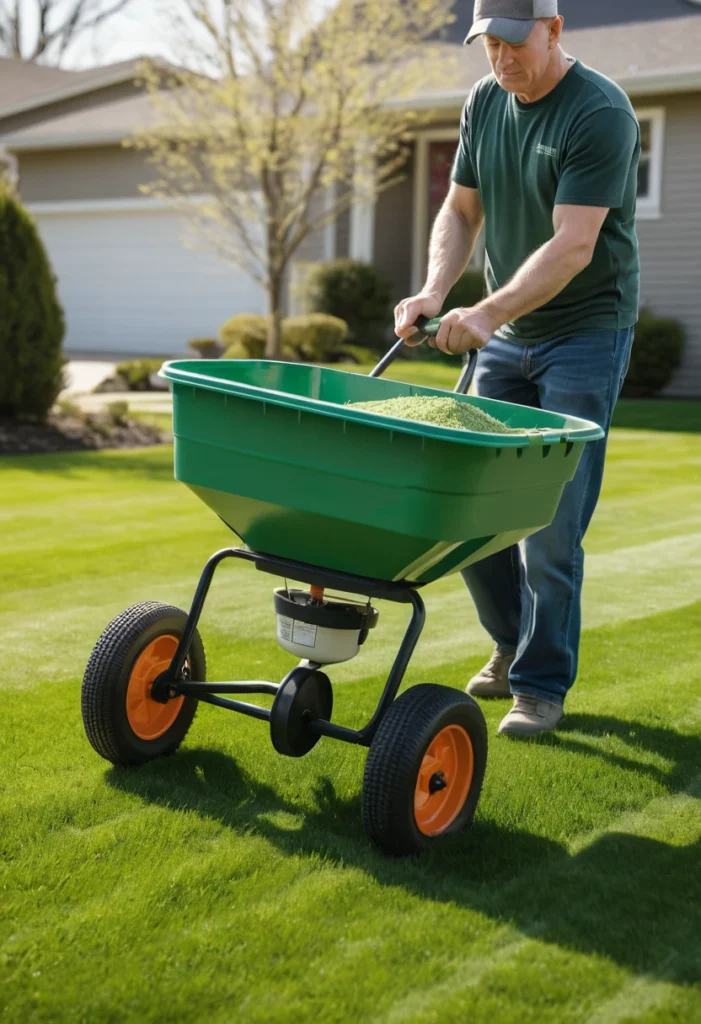
Once your soil test results are in and the ground has warmed, it’s time to feed your lawn. Early-season fertilization gives grass the nutrients it needs to wake up from dormancy and start building strong roots.
A slow-release, balanced fertilizer is typically the safer early-spring choice over a fast-release option, since it feeds the lawn gradually instead of forcing a sudden growth spurt your grass isn’t ready for yet.
Timing tip: Applying fertilizer while the ground is still cold, or applying too much at once, can do more harm than good. When in doubt, follow the product’s label rates exactly rather than guessing.
8.Tune Up Your Mower
Before the first cut of the season, give your equipment some attention:
Gas mowers: Change the oil, replace the spark plug and air filter, and refill with fresh gas fuel that sat all winter can gum up the engine.
Battery mowers: Check that the battery still holds a full charge, and replace it if it doesn’t.
Sharpen the blade. A dull blade tears grass instead of cutting it cleanly, leaving ragged edges that are more vulnerable to disease and stress.
A five-minute equipment check now saves you a frustrating, uneven first mow later.
9.Mow at the Right Height (and Don’t Rush the First Cut)
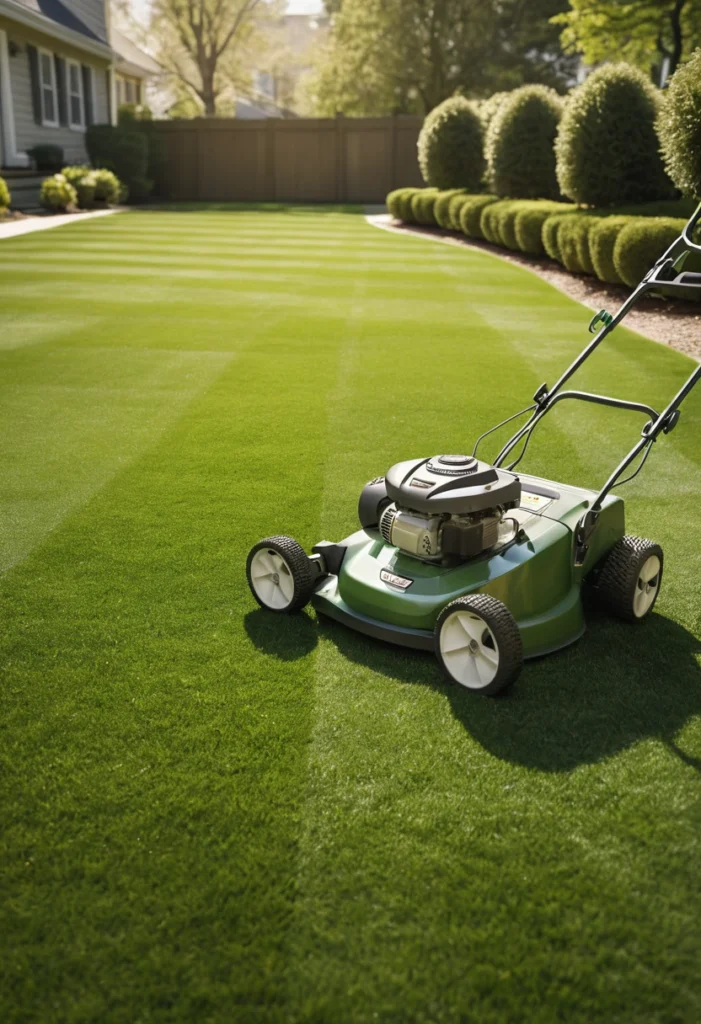
Resist the urge to scalp your lawn short for a “clean” spring look. Cutting too low stresses grass right when it’s trying to rebuild energy reserves after winter dormancy.
For most lawns, keep grass at the higher end of its recommended range in early spring. Taller grass shades the soil, which helps suppress weed seeds from getting the sunlight they need to germinate a nice side benefit alongside your pre-emergent treatment.
10.Adjust Your Watering Schedule
Early spring rainfall is often enough on its own, so hold off on regular watering until temperatures climb and growth picks up. Overwatering cool, still-dormant soil can promote fungal problems rather than help your lawn.
Once your lawn is actively growing and temperatures rise, aim for deep, infrequent watering this encourages roots to grow downward in search of moisture, building a lawn that’s naturally more drought-resistant later in summer.
11.Edge Beds and Walkways

A crisp edge along your flower beds, driveway, and walkways instantly makes the whole yard look more intentional, even before the grass has fully filled back in. It also keeps grass from creeping into garden beds where it competes with your other plants for nutrients.
Bonus: Watch for Pests and Early Disease Signs
As temperatures rise, keep an eye out for early signs of grubs, chinch bugs, or fungal patches like snow mold, especially in areas that stayed damp and shaded through winter. Catching an issue in its early stage is far easier and cheaper to treat than waiting until it’s spread across the whole yard.
Bonus: Set a Regular Mowing and Care Rhythm
Once the early-spring tasks are done, shift into a consistent maintenance rhythm: regular mowing at the correct height, a follow-up fertilizer application 6–8 weeks after your first feeding, and ongoing weed spot-treatment as needed. Consistency from here forward matters more than any single big push.
A Simple Spring Lawn Care Timeline
Phase Approximate Timing Key Tasks
Early Spring Once soil hits ~50°F Cleanup, soil test, dethatch, aerate, pre-emergent
Mid Spring 3–4 weeks after early tasks Overseed bare patches, first fertilizer application
Late Spring 6–8 weeks after early feeding Second fertilizer round, regular mowing rhythm, spot-treat weeds
(Exact timing shifts depending on your climate and grass type cool-season and warm-season lawns follow slightly different windows, so soil temperature is always a better guide than the calendar date.)
Common Spring Lawn Care Mistakes to Avoid
Working on wet, soggy soil, which compacts it and can damage new growth.
Mowing too short too early, stressing grass that’s still rebuilding energy reserves.
Skipping the soil test and fertilizing blind.
Applying pre-emergent and grass seed at the same time, which often cancels out the seed’s ability to germinate.
Overwatering before the lawn has actually entered active growth.
Frequently Asked Questions
When should I start my spring lawn care checklist?
Let the soil guide you rather than the date on the calendar. Once soil temperatures consistently reach around 50°F and the ground is no longer waterlogged, it’s ready for early-spring tasks like cleanup and dethatching.
Should I fertilize or apply pre-emergent weed control first?
These can often be done around the same time, but check your product label some combination products handle both at once, while others require pre-emergent to be applied before you overseed or fertilize separately.
How short should I cut my grass in early spring?
Keep it on the taller end of your grass type’s recommended range. Cutting too short early in the season stresses grass and gives weeds more sunlight to germinate.
Do I need to aerate my lawn every spring?
Not necessarily. Aeration is most beneficial for lawns with heavy foot traffic or noticeably compacted soil typically once every one to two years is enough for most yards.
Is it too late to overseed if my lawn already looks mostly green?
Not necessarily, but bare patches establish best when seeded early, while the soil is still cool and moisture is more consistent. The longer you wait into warmer weather, the harder it becomes for new seed to compete with established grass and weeds.
Final Thoughts
A great-looking lawn all summer isn’t built in a single weekend it’s built in the right order, starting now. Clean up, test your soil, address compaction and thatch, then layer in weed control, fertilizer, and a consistent mowing rhythm.