
There’s a specific kind of disappointment that comes from planting a garden full of flowers, then walking outside to cut a bouquet only to realize every stem is six inches long and nothing matches. Cut flower gardening isn’t the same as ordinary flower bed gardening, and most beginners don’t find that out until it’s too late in the season to fix it.
The good news: once you know the twelve ideas below, you’ll never make that mistake again. Stick around for idea #6 it’s the single change that turns a so-so cutting patch into one that keeps producing all summer long.
Pin this now so you have all twelve ideas on hand when you’re standing at the seed rack trying to decide what to buy.
1. Start With a Dedicated Bed, Not Leftover Space
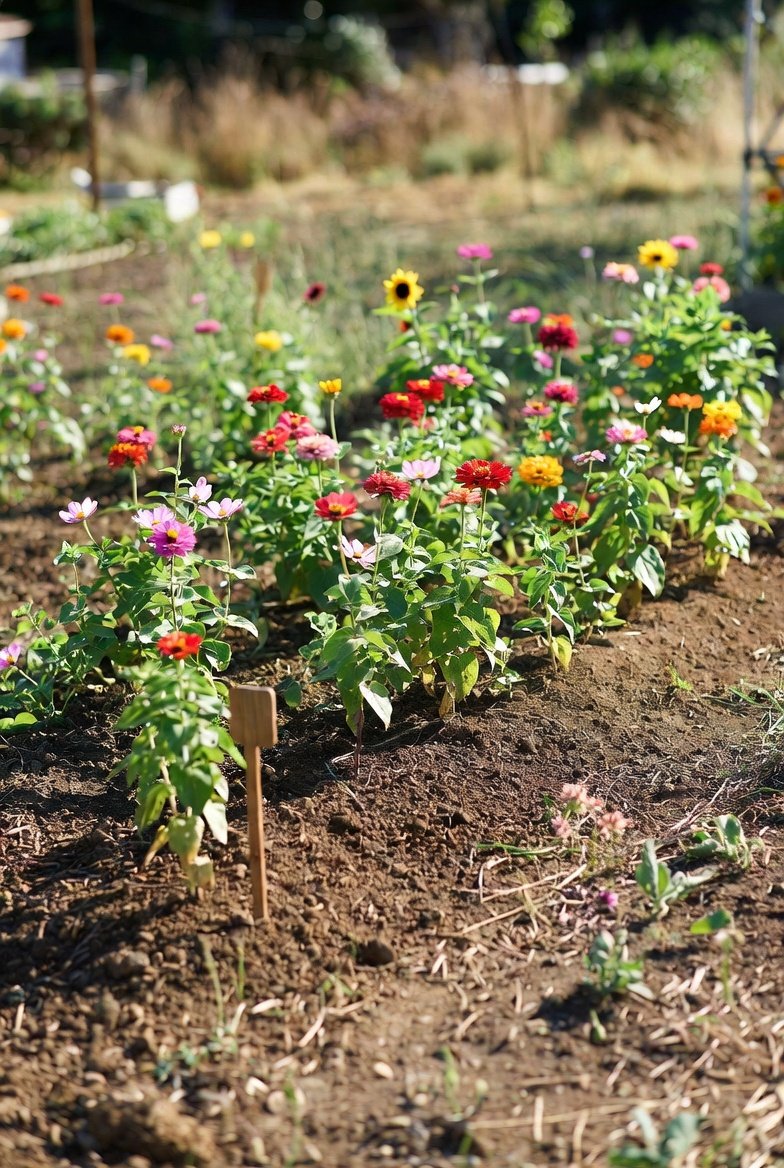
Here’s the thing most beginners get wrong: they tuck a few cut flowers into gaps in an existing flower bed and wonder why yields are disappointing. A true cut flower garden is grown for production, not just display which means it needs its own space, planned like a mini vegetable patch.
What this looks like in practice: a simple 4×8-foot bed in full sun (at least 6 hours of direct light), planted in rows or a grid rather than scattered clusters, so you can walk between plants to harvest without trampling anything.
So what does this mean for you? More stems, longer stems, and a garden that’s actually easy to cut from not one you have to reach awkwardly into.
2. Plan Your Layout by Height, Not Just by Plant
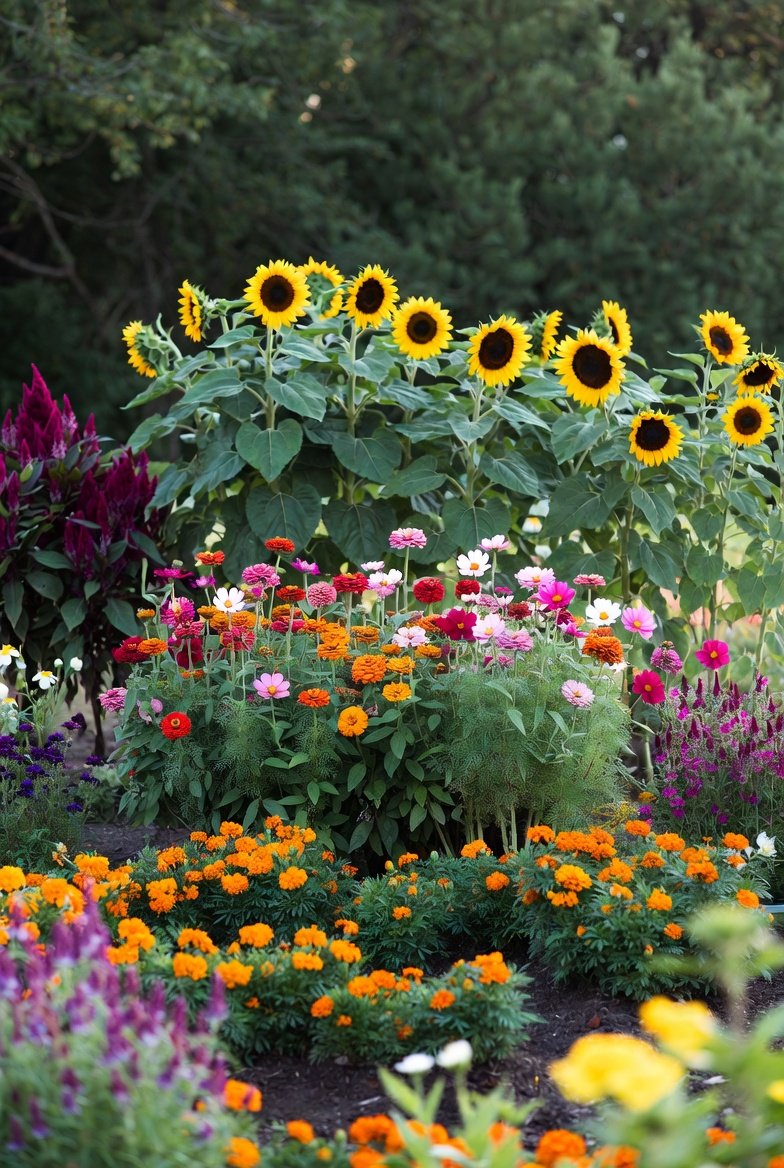
Once you have your bed, think about placement before you plant a single seed. Tall flowers cast shade, and shade means weaker stems on whatever’s planted behind them.
A layout that works for almost any yard:
- North side (or the back of the bed): tallest plants — sunflowers, dahlias, cosmos
- Middle rows: mid-height bloomers — zinnias, snapdragons
- Front edge: shorter fillers and airy accents — calendula, sweet alyssum
Placing your tallest flowers on the north side means they won’t shade out everything else as the sun moves through the day — a small detail that makes a noticeably bigger difference in stem strength than most beginners expect.
Image idea: an overhead or angled shot of a gridded raised bed showing the height-tiered layout this kind of “planning” visual tends to get saved often on Pinterest.
3. Choose Flowers From Every Bouquet “Role” Not Just Pretty Ones
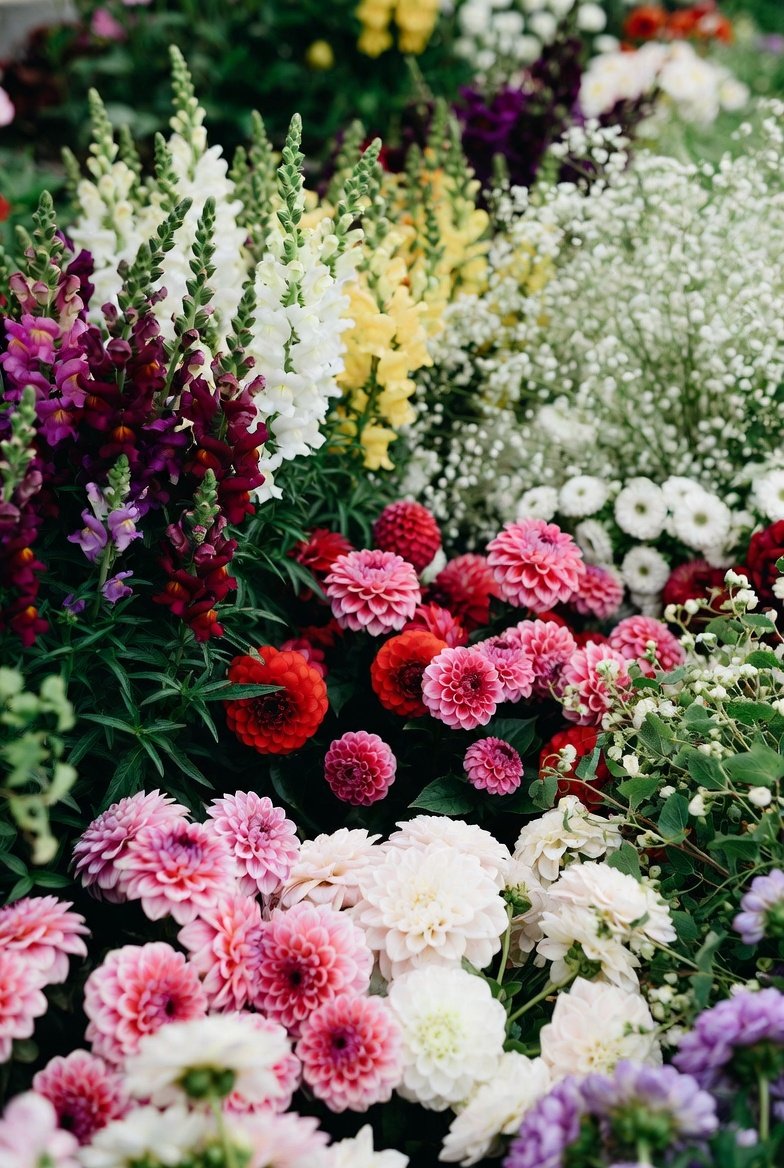
Here’s a mistake almost every beginner makes: planting only what looks nice in the garden, then discovering the bouquet on the table looks flat and one-dimensional. Florists build arrangements around roles, and your garden should too.
The four roles to plant for:
- Focals — the star of the bouquet (dahlias, sunflowers, zinnias)
- Spikes — vertical structure (snapdragons, larkspur)
- Fillers — texture and volume (cosmos, celosia)
- Airy accents — movement and softness (baby’s breath, bunny tail grass)
Quick tip to save: you don’t need dozens of varieties. Two or three plants per role is plenty for a beginner-sized bed and will still produce bouquets that look intentionally arranged.
4. Build Your Backbone Around Cut-and-Come-Again Flowers
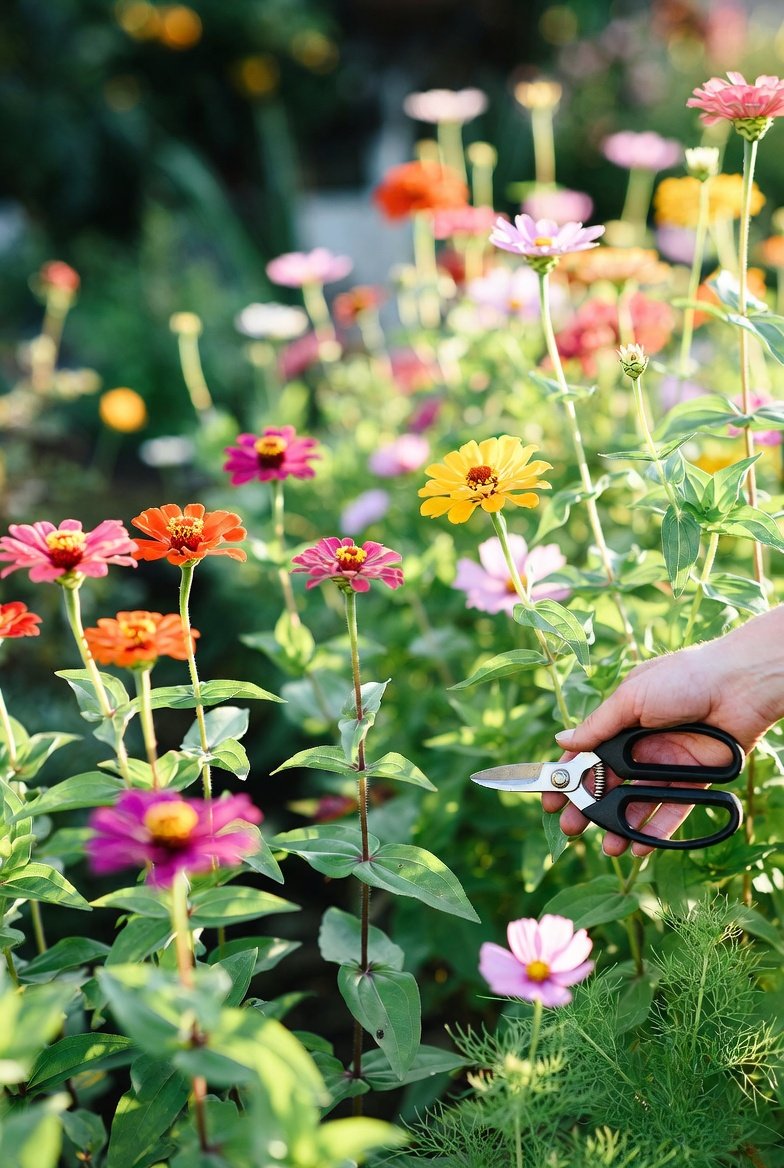
This is the idea that separates a garden that produces all summer from one that gives you a single big bloom and then goes quiet. Some flowers are “one-hit wonders” they bloom once and are done. Others are “cut-and-come-again” the more you harvest, the more they produce.
Reliable cut-and-come-again choices for beginners: zinnias, cosmos, snapdragons, and dahlias all keep producing new stems the more regularly you cut them.
But there’s a catch: you have to actually cut them to keep them producing. Letting blooms sit and go to seed signals the plant to slow down. If you’re not cutting for bouquets that week, deadhead anyway.
Read Also: 14+ Flower Garden Ideas for Beginners That Bloom All Season
5. Pinch Your Seedlings Early
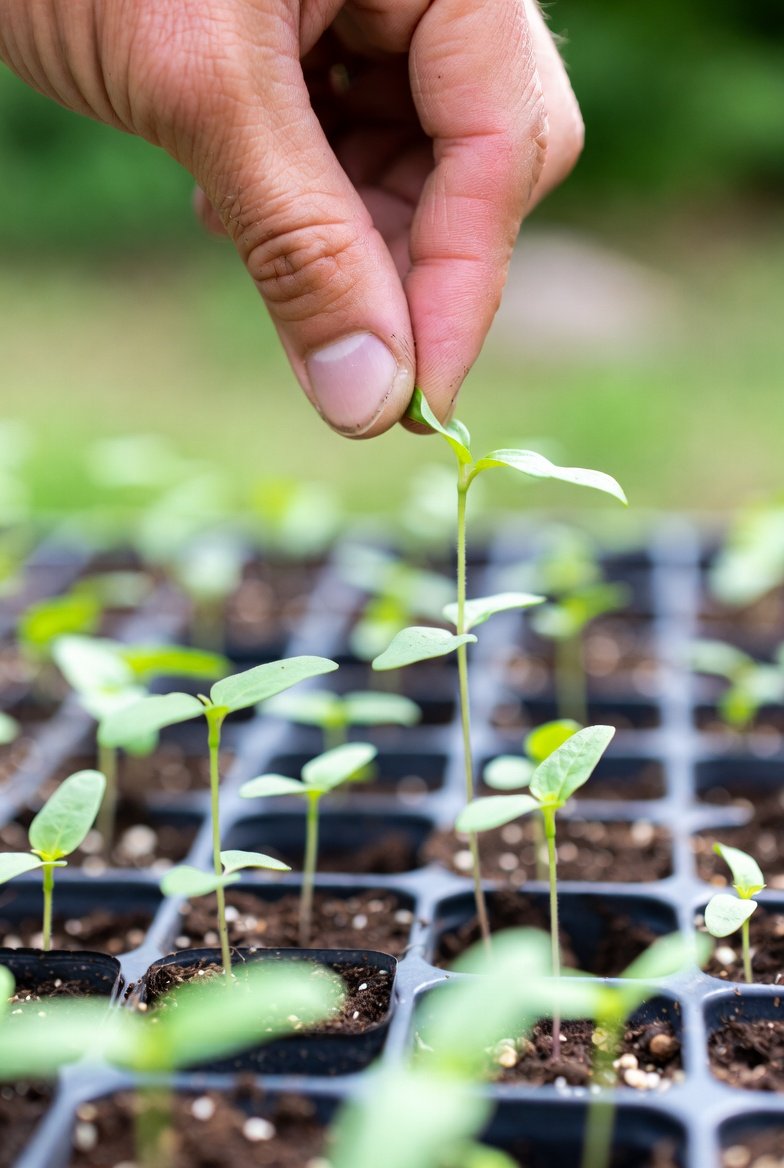
It feels counterintuitive to cut a young, healthy-looking plant back but this is one of the best-kept secrets among experienced cutting-garden growers. Pinching a seedling once it reaches 6 to 12 inches tall (snipping off the top just above a set of leaves) forces the plant to branch out into multiple stems instead of growing one single stalk.
Why this matters for beginners specifically: an unpinched zinnia or dahlia gives you one flower. A pinched one can give you six or more over the season from the exact same seed packet.
6. Pick Your Five Beginner-Proof Flowers First (The Idea Most People Skip)
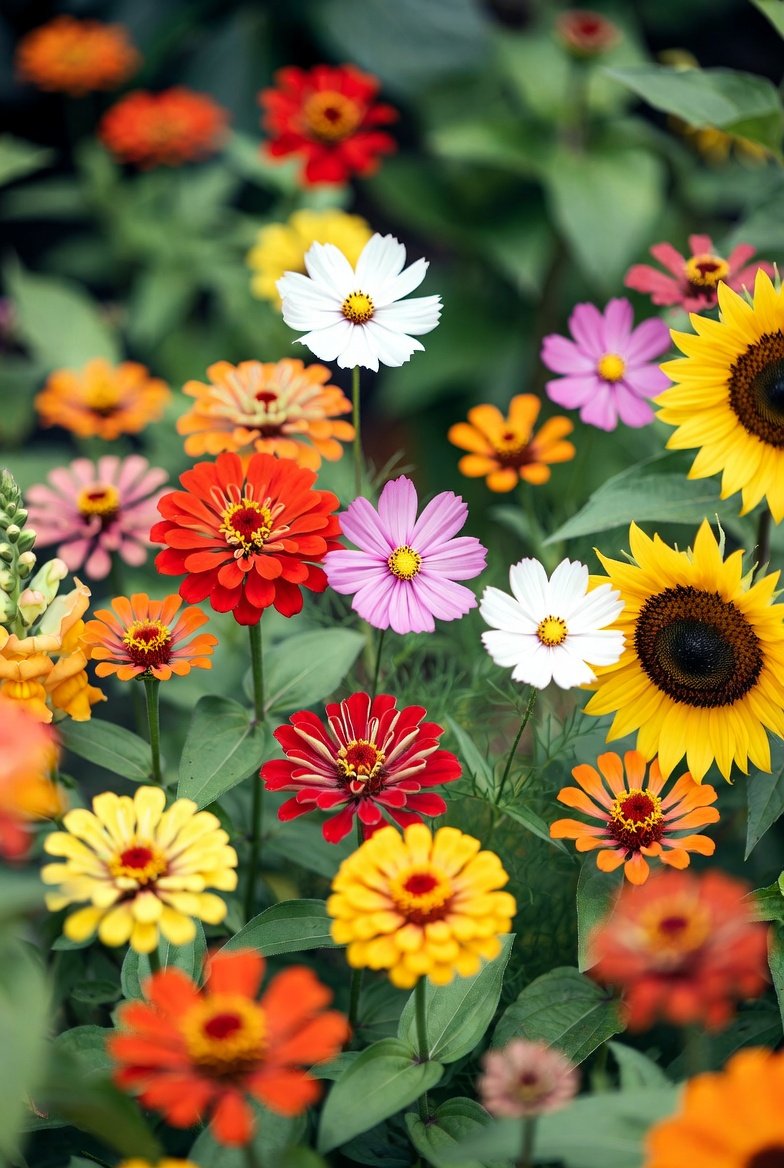
If you only take one idea from this whole list, make it this one: before you get seduced by every gorgeous variety in a seed catalog, plant these five first. They’re the ones that consistently perform for first-time growers regardless of climate or soil quality.
- Zinnias — sturdy stems, nearly foolproof, blooms in as little as eight weeks
- Cosmos — airy and delicate, thrives with minimal care, long bloom window
- Sunflowers — bold focal blooms; choose branching varieties for more than one flower per plant
- Snapdragons — vertical structure and a genuinely long vase life
- Calendula — an easy, cheerful filler that tolerates cooler weather other flowers can’t
Here’s the payoff: master these five in your first season, and you’ll have the confidence and the harvested bouquets to branch into fussier varieties like dahlias or sweet peas the following year.
Image idea: a vertical shot of a fresh-cut bouquet made entirely from these five beginner flowers, with a short overlay like “5 Beginner Flowers, 1 Beautiful Bouquet” strong pin material.
7. Add One Fragrant Climber for Free Vertical Interest
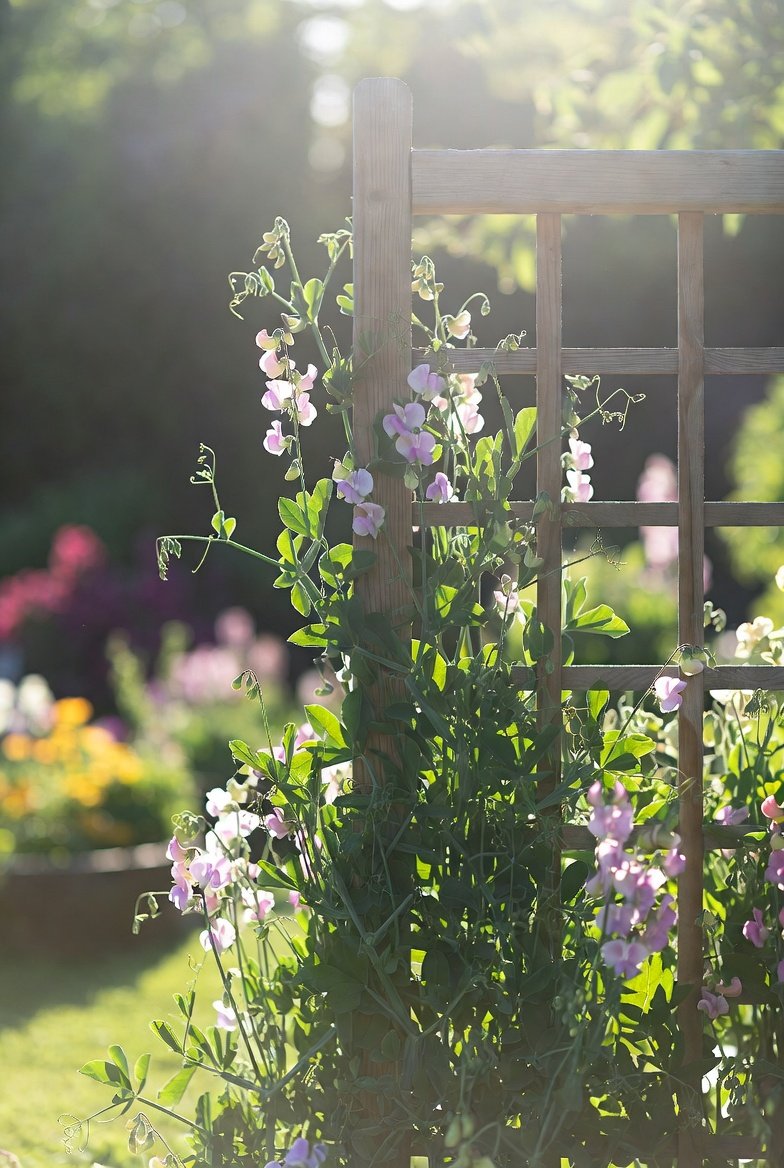
Most beginner cut flower gardens are flat everything at roughly the same eye level, all growing straight up from the soil. A single trellis planted with sweet peas solves that instantly, adding both height and one of the most fragrant blooms you can put in a vase.
What to know before planting: sweet peas are cool-season flowers and prefer a head start in early spring; give them something to climb from day one rather than waiting until they’ve flopped over.
8. Mix In a Few Perennials for a Garden That Returns on Its Own
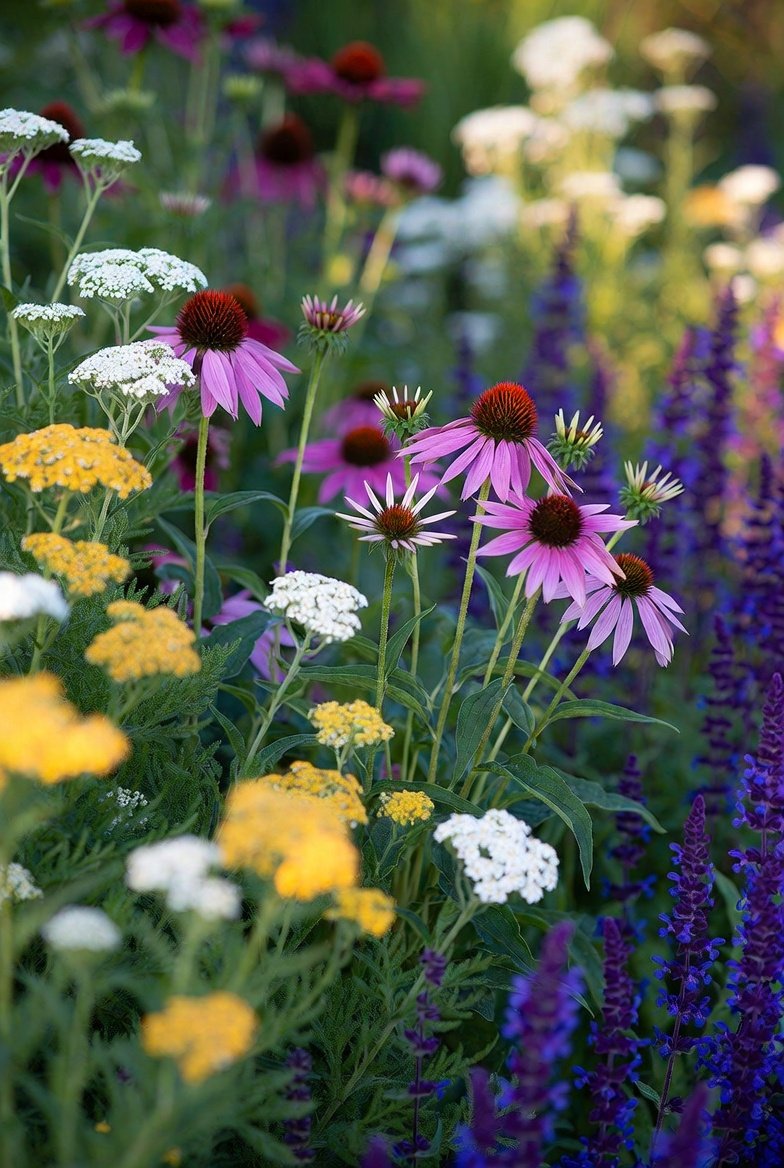
Annuals give beginners fast, abundant color in year one but planting everything from seed every single spring gets old fast. Tucking in a handful of perennials means part of your cutting garden comes back automatically, with no reseeding required.
Beginner-friendly perennial picks: coneflower, garden phlox, and yarrow are all reliable repeat performers with a solid vase life, and yarrow in particular can also be air-dried for arrangements that last well beyond the growing season.
9. Don’t Have a Yard? Build a Container Cutting Garden Instead
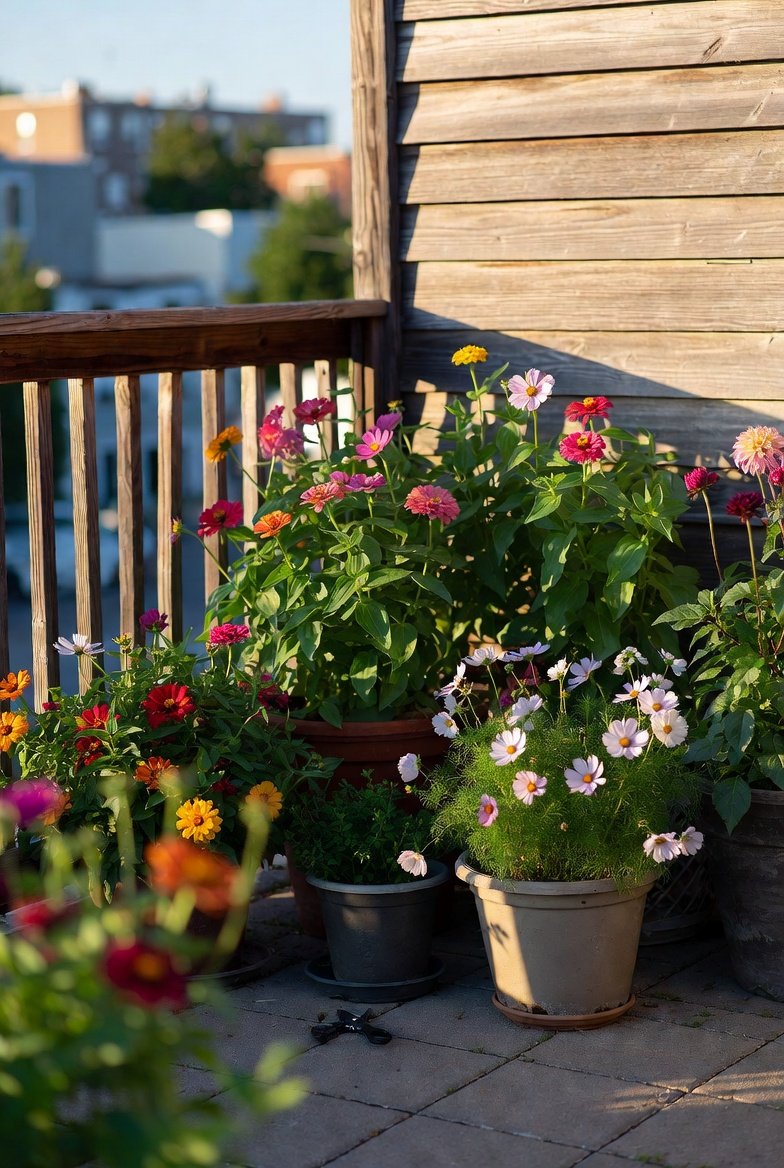
Here’s an idea most beginners assume isn’t possible: you don’t need a dedicated in-ground bed to grow cut flowers at all. Zinnias, dahlias, snapdragons, and cosmos all perform well in large containers, as long as the pot is deep enough.
The one rule that matters: use containers at least 12 to 14 inches deep with solid drainage. Anything shallower limits root development and stem length which defeats the purpose of growing flowers meant for cutting.
10. Learn the Right Way to Harvest It’s Not “Whenever It Looks Pretty”
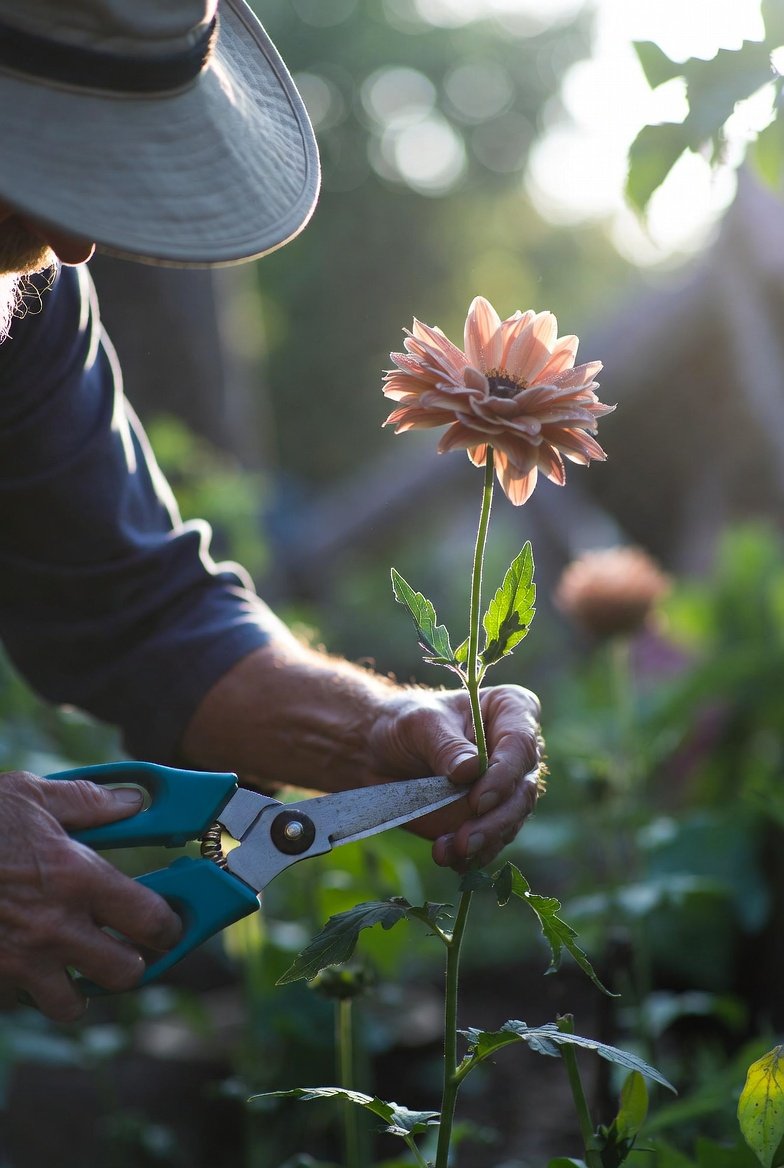
Cutting at the wrong stage is one of the fastest ways to shorten a flower’s vase life, and it’s rarely covered until after beginners have already made the mistake.
A simple stage guide:
- Zinnias & dahlias: cut when fully open they won’t continue opening after cutting
- Cosmos & sunflowers: cut just as petals begin to unfurl or lift, before fully open
- Snapdragons & sweet peas: cut when the bottom third of florets are open; the rest will continue opening in the vase
Quick recap you can save: always cut early morning or evening, use clean, sharp snips, and place stems in cool water immediately never let a fresh cut sit in open air.
11. Extend Vase Life With Three Habits, Not Fancy Products
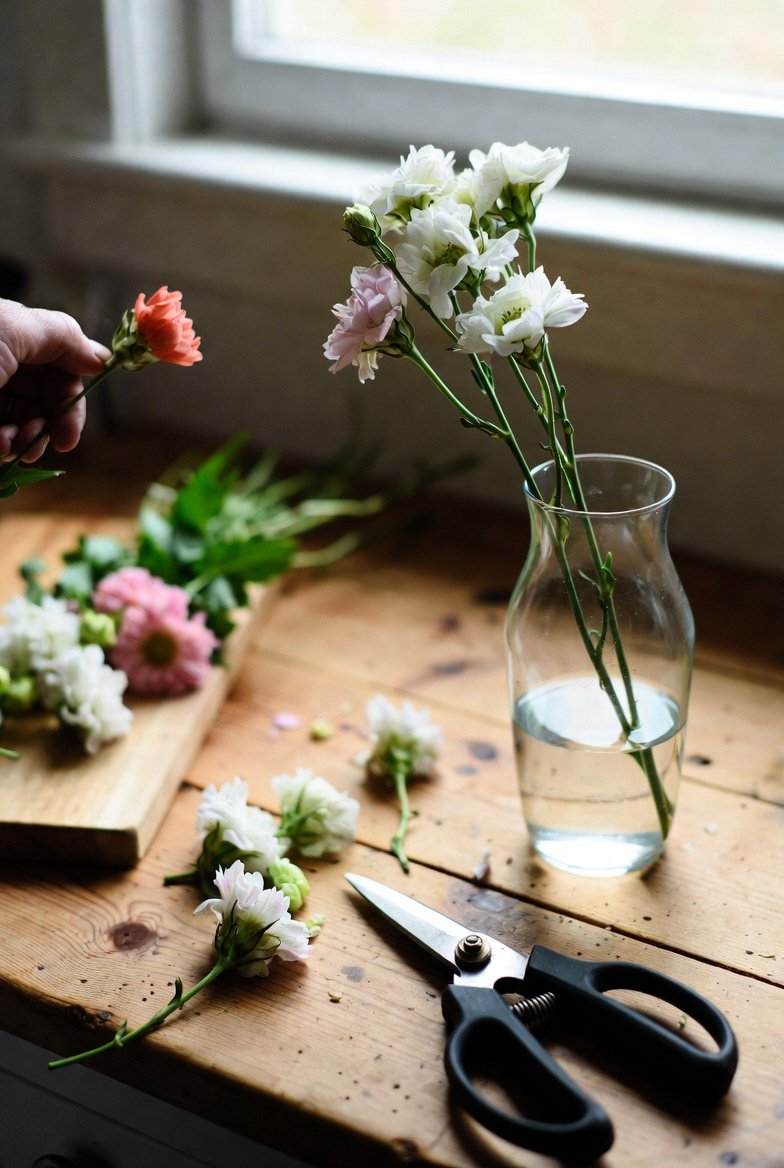
You don’t need commercial flower food to get a week or more out of a bouquet a few consistent habits do most of the work.
- Strip any leaves that would sit below the waterline (they cause bacteria growth)
- Recut stems at an angle every few days to keep water uptake fresh
- Change the vase water every 2-3 days rather than only topping it off
So what does this mean for you? A bouquet that looks as good on day six as it did on day one from the same handful of stems you grew yourself.
12. Succession Sow So You’re Never Out of Blooms
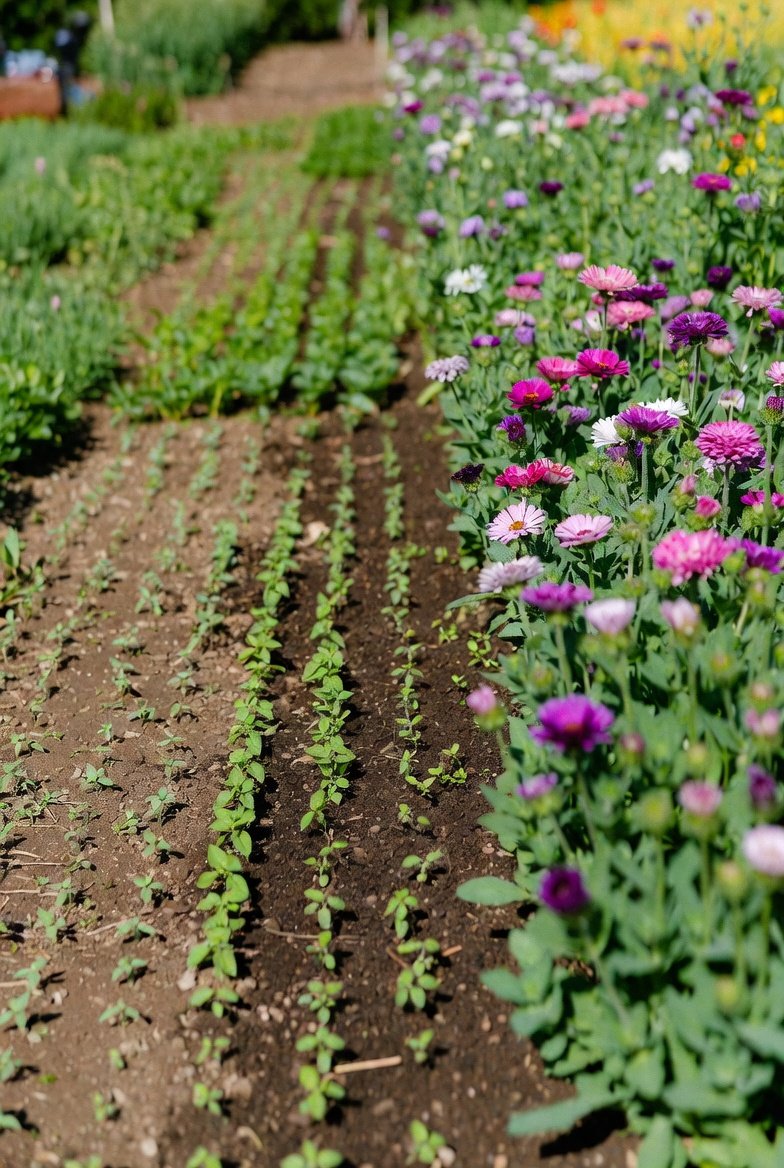
The single biggest gap in most beginner cutting gardens: everything blooms at once in a big early-summer flush, then the garden goes quiet for the rest of the season. Succession sowing planting a new round of fast-blooming annuals like zinnias or cosmos every 2-3 weeks keeps fresh stems coming instead of one dramatic wave followed by silence.
A realistic beginner approach: you don’t need a spreadsheet. Just plant a second round of your favorite cut-and-come-again flower about three weeks after the first, and repeat once more in early summer.
Frequently Asked Questions
What are the easiest cut flowers to grow for beginners?
Zinnias, cosmos, and sunflowers are consistently ranked as the easiest starting points. All three germinate quickly from seed, tolerate a range of soil conditions, and bloom prolifically with minimal fuss.
How much space do I need for a beginner cut flower garden?
A single 4×8-foot bed in full sun is enough to keep a household in bouquets for most of the growing season, especially if it’s planted with cut-and-come-again varieties and succession-sown every few weeks.
Can I grow cut flowers in pots if I don’t have a yard?
Yes. Zinnias, dahlias, snapdragons, and cosmos all do well in containers at least 12 to 14 inches deep with good drainage — the same varieties recommended for in-ground beginner beds.
How do I make cut flowers last longer in a vase?
Harvest at the correct stage for each flower type, strip leaves below the waterline, recut stems at an angle every few days, and change the vase water every 2-3 days rather than just topping it up.
Bringing It All Together
A beginner cut flower garden doesn’t need to be complicated or perfectly planned from day one. Start with a dedicated sunny bed, lean on five or six beginner-proof, cut-and-come-again flowers, and commit to the harvesting habits above the rest comes together naturally as the season goes on.
The real secret isn’t a rare seed variety or an expensive setup. It’s cutting consistently, so the garden keeps producing exactly the way it’s designed to.
Save this guide you’ll want it again in a few months when you’re standing over your first real bouquet, wondering what to plant next.