
Rock garden ideas can turn an awkward slope, dry corner, narrow side yard, or sunny patio into a landscape feature with year-round structure. Instead of relying on a large lawn or constant seasonal flowers, a rock garden uses stones, gravel, and carefully selected plants to create texture, shape, and small pockets of color.
The best designs look as though the rocks belong naturally in the landscape. Large stones anchor the composition, smaller gravel fills the gaps, and low-growing plants soften the edges without hiding the stonework. With the right layout, drainage, and plant choices, even a modest space can become a striking garden that may reduce mowing and routine watering. It still needs weeding, occasional pruning, and checks for stone movement.
This guide shares practical rock garden ideas for different yard sizes, explains how to choose stones and plants, and walks through the building process. You will also learn how to avoid common problems such as unstable rocks, soggy planting pockets, and plants that outgrow their space.
Table of Contents
- 15 Rock Garden Ideas for Different Spaces
- Choose the Right Location
- Choose Stones That Look Natural
- Plan Soil and Drainage First
- How to Build a Rock Garden Step by Step
- Best Plants for a Rock Garden
- Create Balanced Plant Combinations
- Rock Garden Ideas for Small Spaces
- Keep Your Rock Garden Healthy
- Common Rock Garden Mistakes to Avoid
- Frequently Asked Questions
15 Rock Garden Ideas for Different Spaces
A successful rockery is not simply a pile of stones with plants tucked between them. It should respond to the shape of the yard, the amount of sunlight, the local climate, and the time you can spend maintaining it. Use these ideas as starting points, then adapt the plant palette to your region.
1. Natural Slope Rock Garden
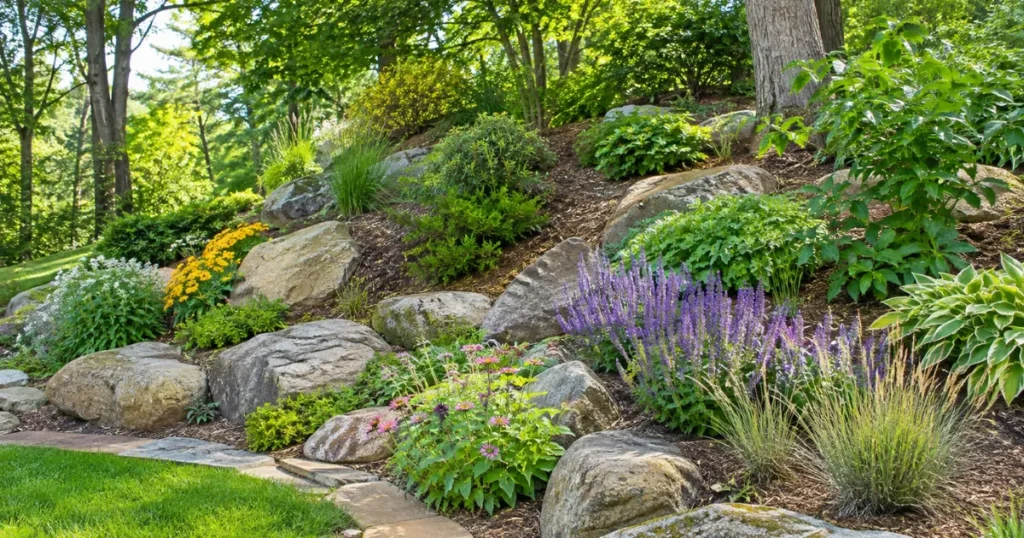
Use an existing bank or sloping corner as the foundation for a natural-looking rock garden. Set a few larger stones into the slope, then build smaller planting pockets between them. Low-growing groundcovers can spill gently over the edges and help soften the transition between stone and soil. Keep the stones partly buried so they appear anchored rather than placed on the surface.
2. Layered Boulder Garden
Choose several large boulders in a similar color and geological style, then arrange them in uneven groups. Add medium stones around the main pieces and use gravel to connect the spaces. Repeating one stone type creates a calmer look than mixing many unrelated colors and textures. This design works especially well in a front yard where a strong focal point is needed.
3. Colorful Alpine Rockery
Create small planting pockets for compact, flowering alpine plants. Choose species that suit your climate and soil, such as rockcress, creeping phlox, sea thrift, or other locally suitable low-growing perennials. Arrange plants in small groups rather than placing one of every variety in a row. Their seasonal flowers add color while the rocks provide structure after blooming ends.
4. Dry Creek Bed Garden
Use a curved channel of rounded river stones and gravel to suggest a dry stream. Plant drought-tolerant grasses, sedums, and compact shrubs along the edges, leaving the center mostly open. A dry creek bed can visually guide the eye through a yard and may help define a route for surface runoff, but it should not redirect water toward a building or neighboring property.
5. Gravel and Succulent Garden
For a sunny, dry location, combine gravel with hardy succulents that tolerate the local winter and summer conditions. Rosette-forming plants create strong shapes, while creeping varieties soften the edge of the stone. Use a restrained palette of two or three gravel colors so the plants remain the main attraction. Check each plant’s cold tolerance before planting outdoors.
6. Stone Stairway Rock Garden
If your yard has a slope, broad stepping stones can make the area easier to walk through while giving the design a practical purpose. Set the steps securely and build planting pockets on either side. Keep the walking surface stable, avoid loose stones where people will step, and leave enough space to reach plants for weeding and watering.
7. Rock Garden Along a Retaining Wall
A low retaining wall can become the backdrop for a narrow rock garden. Use smaller stones and compact plants along the top or at the base, while keeping drainage openings clear. If the wall is holding back a substantial amount of soil, consult a qualified professional before changing its structure or adding heavy stone features.
8. Japanese-Inspired Gravel and Stone Corner
For a quieter design, use a few carefully placed stones, fine gravel, and a small number of sculptural plants. Keep the layout simple and give each stone enough breathing room. This is not the same as a traditional planted rockery or a fully developed Japanese dry garden, but it can borrow the same sense of balance and restraint.
9. Woodland Rock Garden
Choose shade-tolerant plants for a spot beneath light tree cover or beside a north-facing wall. Use smaller stones, leaf-shaped groundcovers, ferns, and compact woodland perennials that match the moisture and light conditions. Avoid digging through major tree roots, and do not assume that every alpine plant will thrive in shade.
10. Raised Rock Berm
On a flat yard, create a gentle mound with a broad base rather than a steep pile. Place the largest stones first, partially bury them, and add smaller rocks around them. A low berm gives the garden height and can improve drainage for plants that dislike wet soil. Shape the mound gradually so it blends with the surrounding lawn or border.
11. Crevice Garden with Upright Slabs
Stand flat stone slabs vertically or at a slight angle, leaving narrow gaps for deep planting pockets. This style creates a striking pattern and gives roots access to cooler spaces between the stones. Use stable, heavy slabs and get professional help when moving large pieces. Choose plants that suit the narrow soil pockets and local climate.
12. Mini Rock Garden in a Trough
A stone, ceramic, or hypertufa trough can hold a miniature rock garden on a balcony, patio, or doorstep. Add drainage holes, a suitable gritty growing mix, a few small stones, and compact plants. Containers dry out faster than ground beds, so check moisture regularly during hot weather and protect plants from conditions they cannot tolerate.
13. Front Yard Rock Garden Border
Replace a difficult-to-mow strip with a shallow rock garden border. Repeat the same few plants along the edge, use stones of a consistent type, and keep the border wide enough for plants to mature. A clear edge beside the path or lawn makes the feature look intentional and prevents gravel from spreading into the grass.
14. Rock Garden with a Small Water Feature
A compact recirculating fountain can add movement and sound to a rock garden. Surround it with stable stones and moisture-tolerant plants, while keeping the pump accessible for cleaning. Make sure the water feature is safe for children and pets, and consider water use, splash, and winter care before installing it.
15. Native Plant Rock Garden
Use locally native, low-growing plants where they are suitable for the soil and exposure. Native species can support local insects and wildlife, and they are often better adapted to regional weather than unfamiliar ornamentals. Ask a local extension service or native-plant nursery for recommendations, because a plant that is native in one region may be invasive or unsuitable in another.
Choose the Right Location
Start by watching the site for a full day. Note when it receives direct sun, where water collects after rain, and whether nearby trees cast heavy shade. Many classic rockery plants prefer an open, bright position and soil that drains quickly, but a rock garden can also be designed for partial shade if you select plants for that microclimate. The Royal Horticultural Society recommends considering light, tree roots, frost pockets, and drainage before construction.
Think about how the garden will be viewed. A feature beside an entrance may need a neat, low profile, while a backyard slope can support larger boulders and a winding path. Keep the layout accessible for weeding and watering. Avoid placing heavy stones over underground services, on unstable ground, or where they could roll toward a path.
Choose Stones That Look Natural
Use local stone when practical because its color and texture are more likely to suit the surrounding landscape. Select one main geological type and vary the sizes within that family. A few large anchor stones, several medium pieces, and smaller gravel usually look more convincing than dozens of identical rocks. The Colorado State University Extension rock garden guide recommends using one geological rock type, partly burying large stones, and providing good drainage.
Before moving anything heavy, plan the arrangement on paper or mark it with a hose. Place the largest stones first, turn their natural layers in a consistent direction, and set them into shallow hollows. Do not stack unstable pieces or try to move boulders alone. For large stones, steep slopes, or retaining-wall work, use experienced help and suitable lifting equipment.

Plan Soil and Drainage First
Drainage is one of the most important parts of rock garden design. Many alpine and dry-site plants dislike water sitting around their roots or crowns. If the existing soil is heavy clay, consider a raised mound or a properly designed drainage layer, and improve the planting mix according to the needs of the plants. Simply spreading gravel on top of wet soil will not solve a drainage problem below the surface.
The Royal Horticultural Society rock-gardening guide describes a coarse base and a sample planting mix of one part loam, one part horticultural grit, and one part leafmould or coir. Treat this as a starting point rather than a universal recipe: adjust it for local rainfall, native soil, and the plants you choose. Use horticultural grit, not unwashed building sand, and keep each plant’s crown at the correct level.
How to Build a Rock Garden Step by Step
A careful build is safer and usually looks better than adding stones one at a time without a plan. Work in stages so you can check the layout before committing to the final positions.
- Measure and mark the area. Sketch the outline, paths, viewing points, and any existing plants you want to keep.
- Remove weeds and unwanted turf. Clear perennial weeds by hand where possible so they do not return between the stones.
- Check the ground and runoff. Identify compacted soil, low spots, tree roots, pipes, and places where water must not be directed.
- Prepare the base. Where the design and site require it, create a stable free-draining foundation using suitable coarse material.
- Set the anchor stones. Place the largest pieces first, burying a substantial portion so they are stable and look natural.
- Create planting pockets. Backfill the spaces with a mix suited to the chosen plants, leaving enough room for roots to spread.
- Arrange plants before planting. Keep them in their pots while you test spacing, height, color, and mature spread.
- Plant and water carefully. Firm the soil around each root ball and water enough to settle the mix without leaving crowns waterlogged.
- Add a light gravel top-dressing. Use a compatible material to finish the surface and help keep foliage away from wet soil.
- Review the result. Walk around the feature, check stone stability, and make sure paths and maintenance access remain clear.
Best Plants for a Rock Garden
Choose plants by their growing needs rather than by flower color alone. Compact perennials, mat-forming groundcovers, small grasses, and suitable succulents often work well because they do not hide the stones. Examples found in rock-garden plant lists include rockcress, sea thrift, creeping phlox, basket-of-gold, dwarf iris, and selected ice plants. Their suitability depends on your hardiness zone, soil pH, rainfall, and winter conditions.

For a cooler or alpine-style garden, look for plants that prefer open light and sharp drainage. For a warmer, drier site, consider locally adapted groundcovers and succulents. In partial shade, choose shade-tolerant species rather than forcing sun-loving plants to cope. The Colorado State University Extension plant guide compares plant height, exposure, soil preference, and flowering period. Before buying, also check your region in the official USDA Plant Hardiness Zone Map and confirm local recommendations, because Colorado examples will not suit every U.S. climate.
Create Balanced Plant Combinations
Use contrast carefully. Pair a fine-textured groundcover with a larger rosette plant, or place a small flowering perennial beside a broad, weathered stone. Repeat a few varieties in separate pockets so the garden feels connected. Too many unrelated colors and leaf shapes can make a small rockery look busy.
Plan for more than one season. Combine evergreen or semi-evergreen structure with plants that flower at different times, and leave room for mature spread. Avoid filling every gap on planting day; a little open gravel helps show the shape of the stones and gives plants room to grow. If you want more landscape inspiration, explore these garden wall ideas, drought-tolerant garden ideas, and garden edging ideas.
Rock Garden Ideas for Small Spaces
You do not need a large yard to use stone and plants effectively. A narrow side yard can hold a slim gravel strip with a few carefully chosen plants. A sunny balcony can use a trough garden, while a small courtyard can feature one anchor stone and a low planting group. Keep the scale appropriate: one strong focal point is often more effective than many tiny decorative objects.
In small gardens, choose compact plants and leave access for pruning and cleaning. Use lighter gravel around dark stones or darker gravel around pale stones to create contrast, but avoid too many materials. If you are planning a compact outdoor layout, these urban garden ideas for small spaces can help you make better use of narrow patios, balconies, and corners.
Keep Your Rock Garden Healthy
Rock gardens are not maintenance-free. Weed seedlings can establish in gravel, leaves can collect between stones, and some plants may spread faster than expected. Remove weeds while they are small, trim plants after flowering when appropriate, and check that gravel has not buried the crowns of low-growing species. Inspect the stones after heavy rain or frost, especially on slopes.
Water according to the plants and the weather. Newly planted pockets need attention while roots establish, but established drought-tolerant plants may need less frequent watering. Do not follow a fixed schedule without checking the soil. Refresh gravel only when needed, and avoid adding rich compost to plants that naturally prefer lean, mineral soil.
Common Rock Garden Mistakes to Avoid
- Using too many stone types: a mixed collection can look scattered. Repeat one main stone type for a more natural effect.
- Leaving large rocks on the surface: partly bury anchor stones so they look grounded and remain stable.
- Ignoring drainage: gravel on top cannot correct a waterlogged subsoil layer.
- Choosing plants only by appearance: check mature size, light needs, hardiness, and soil preferences first.
- Planting too densely: leave space for growth and allow the stonework to remain visible.
- Blocking access: leave room to reach plants, clear weeds, and maintain any water feature.
- Moving heavy stones without help: use appropriate equipment and professional assistance for large or unstable pieces.
Frequently Asked Questions
Are rock gardens difficult to maintain?
They can be lower-water than a conventional flower border when planted with suitable species, but they still need weeding, occasional trimming, and checks for stone movement. Good planning reduces maintenance; it does not remove it.
Do rock gardens need full sun?
Many alpine and dry-site plants prefer open, sunny locations, but not every rock garden needs full sun. You can design a partial-shade rockery by choosing plants suited to that light level and avoiding species that require strong direct sun.
What is the best soil mix for a rock garden?
There is no single mix for every plant. A common starting point for many alpine-style plantings is loam, horticultural grit, and leafmould or coir in roughly equal parts. Adjust the mix for your native soil, rainfall, and plant requirements.
Can I make a rock garden on flat ground?
Yes. Build a broad, gentle mound or raised berm, then set stones into it so they look naturally anchored. Make sure the feature is stable and that runoff does not flow toward buildings or neighboring yards.
Which plants are suitable for a beginner rock garden?
Start with compact, locally hardy plants that match your sun and soil conditions. Rockcress, creeping phlox, sea thrift, sedum, and selected low-growing perennials are common options, but check local recommendations before purchasing.
Can a rock garden help with drainage?
A properly designed rock garden can be built with a free-draining base and planting pockets, but simply adding rocks to a wet area will not automatically fix drainage. Assess where water flows and use a suitable site design before construction.
Conclusion
Choose one anchor stone, set it securely, and build the planting pockets around the sunlight and drainage your site actually has. Before buying plants, check their mature spread and local hardiness, then repeat a small group of region-suited groundcovers and perennials. That order—stone first, site conditions second, plants last—creates a rock garden that looks intentional without hiding the natural shape of the stonework.