
Roses are among the most versatile flowering plants for creating a romantic, colorful, and fragrant garden. They can be grown as shrubs, climbers, borders, containers, or focal plants, making them suitable for both large backyards and smaller outdoor spaces. The most successful rose gardens combine the roses themselves with plants, paths, structures, and planting layers that complement their shape and growing needs.
Imagine walking through your backyard and seeing soft pink roses surrounded by lavender, purple salvia, airy foliage, and seasonal flowers. Instead of having a garden where every plant competes for attention, you can create a balanced space where each layer has a purpose. Good companion planting can add contrast, fill bare areas, extend seasonal interest, and attract beneficial insects while keeping the overall design attractive.
If you’re searching for 11+Flower Garden & Planting inspiration, this guide brings together practical layouts and creative combinations for different garden sizes and styles. You’ll find ideas for cottage borders, rose arches, raised beds, pathways, containers, companion plants, color schemes, and easy planting techniques, along with practical advice for helping your roses thrive.
1. Create a Classic Rose and Perennial Border
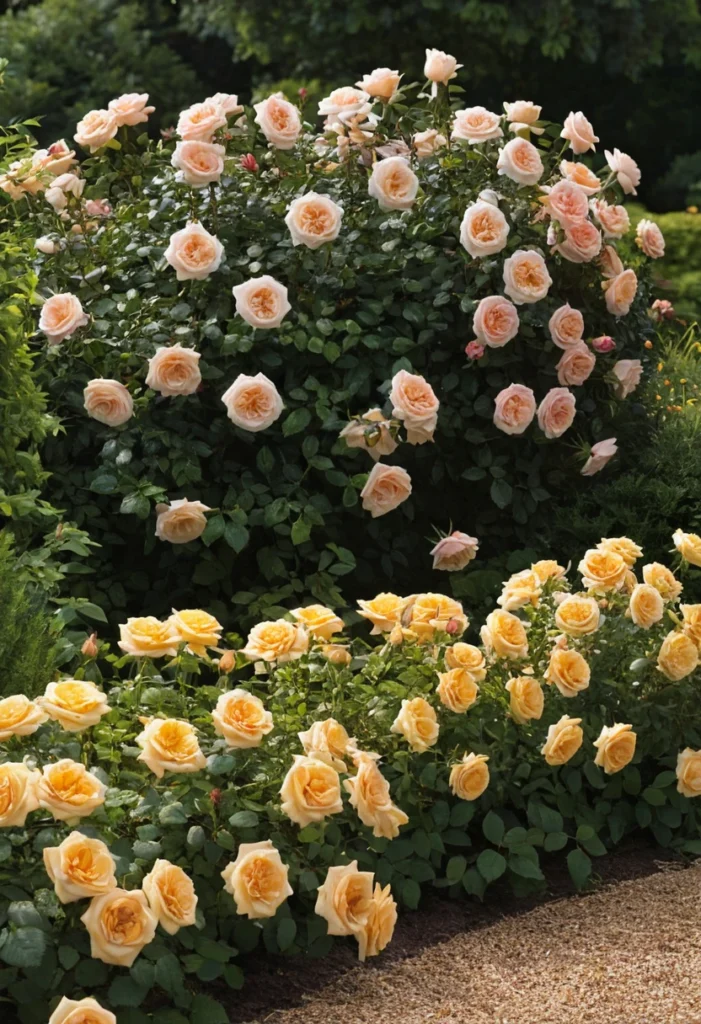
A classic mixed border is one of the easiest ways to turn 11+Flower Garden & Planting ideas into a polished backyard design. Start with roses as the main structural plants and surround them with perennials that provide different heights, textures, and flowering periods. Lavender, salvia, catmint, yarrow, hardy geraniums, and other sun-loving companions can create a soft transition around the rose bushes.
Instead of planting everything in a straight line, use small groups or repeated drifts. For example, place three lavender plants in front of one rose and repeat the same combination farther along the border. This repetition makes the garden feel intentional without becoming overly formal.
Use Different Plant Heights
Put taller companions behind the roses or toward the rear of the border, medium-height flowers around the sides, and low-growing plants toward the front. This layered arrangement keeps the garden visually interesting while making individual plants easier to see.
Keep the Rose Base Accessible
Do not pack plants tightly against every rose. Hybrid teas, floribundas, and other roses that need regular pruning should have accessible space around them so you can water, inspect, prune, and maintain them comfortably. Garden Design similarly recommends keeping companions in front of or behind higher-maintenance roses rather than crowding the plants between them.
2. Design a Romantic Cottage Rose Garden
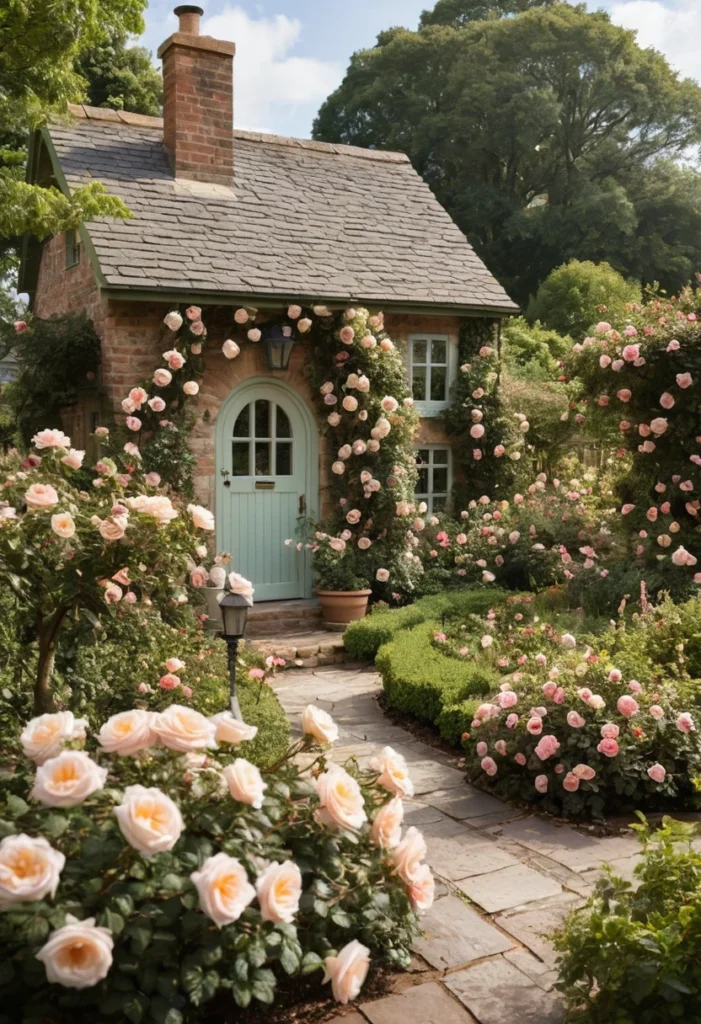
A cottage-style planting is a beautiful choice when you want your 11+Flower Garden & Planting design to feel relaxed and abundant. Combine roses with flowers of different shapes rather than using rows of identical plants. Soft pink roses can work beautifully with lavender, blue catmint, white flowers, and silvery foliage.
The secret is controlled informality. The planting should look generous rather than messy, so repeat a few colors throughout the border. A mixture of rose bushes, perennials, annuals, bulbs, and low-growing plants can provide interest before, during, and after the main rose flush.
Choose a Soft Color Palette
For a traditional cottage appearance, combine blush pink, white, lavender, pale blue, and soft yellow. If you prefer a stronger look, use burgundy, deep purple, hot pink, and warm yellow for more contrast.
Add Fragrance
Fragrant companions such as lavender can make the garden more enjoyable when you’re walking through it. The combination of rose fragrance and aromatic herbs creates an experience that goes beyond visual beauty.
3. Add a Rose Arch at the Garden Entrance
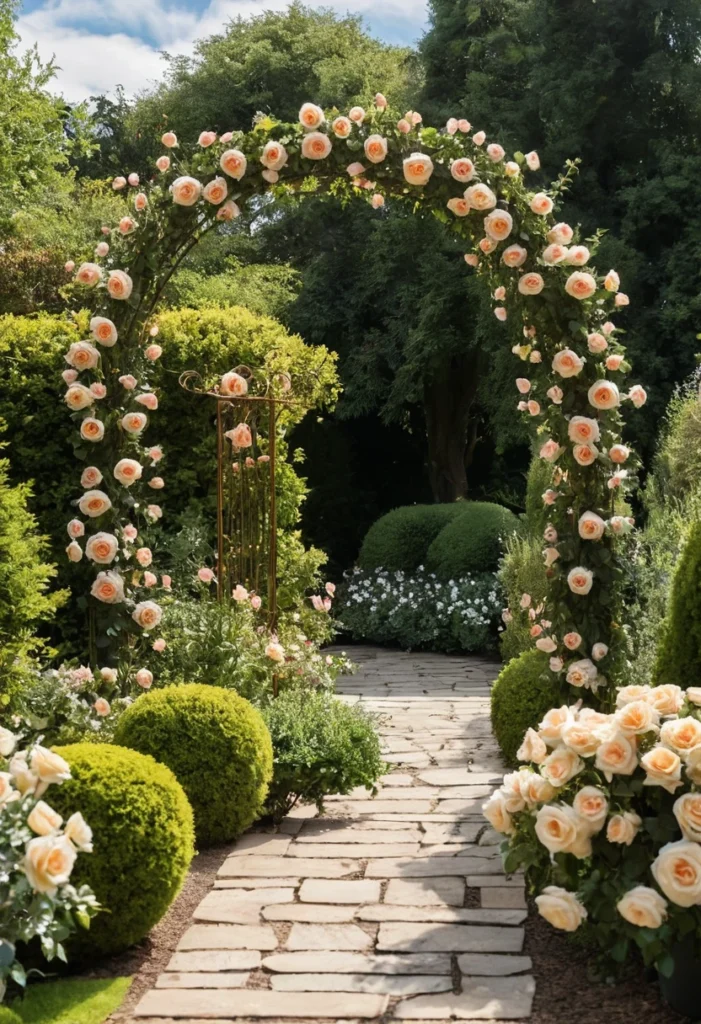
An arch can turn an ordinary backyard entrance into a dramatic garden feature. Climbing roses trained over an arbor or arch provide height without requiring a large amount of ground space, making this one of the most useful 11+Flower Garden & Planting approaches for narrow gardens.
Choose a sturdy structure capable of supporting mature plants. Place the arch where visitors naturally walk through the garden so the roses become part of the journey rather than simply another border plant. Garden Design lists climbing roses on pergolas and arbors as a way to introduce another vertical layer to rose garden design.
Train Roses Carefully
Young stems can be guided along the support as they grow. Secure them gently and check them periodically so ties do not become restrictive.
Leave Enough Room
Climbing roses can become substantial plants. Give them sufficient space around the base and avoid surrounding them with aggressive plants that compete heavily for water, nutrients, or root space.
Read Also: 14+ Flower Garden & Planting Ideas: Creative Mixed Flower Garden Planting Ideas
4. Plant Roses Along a Garden Path
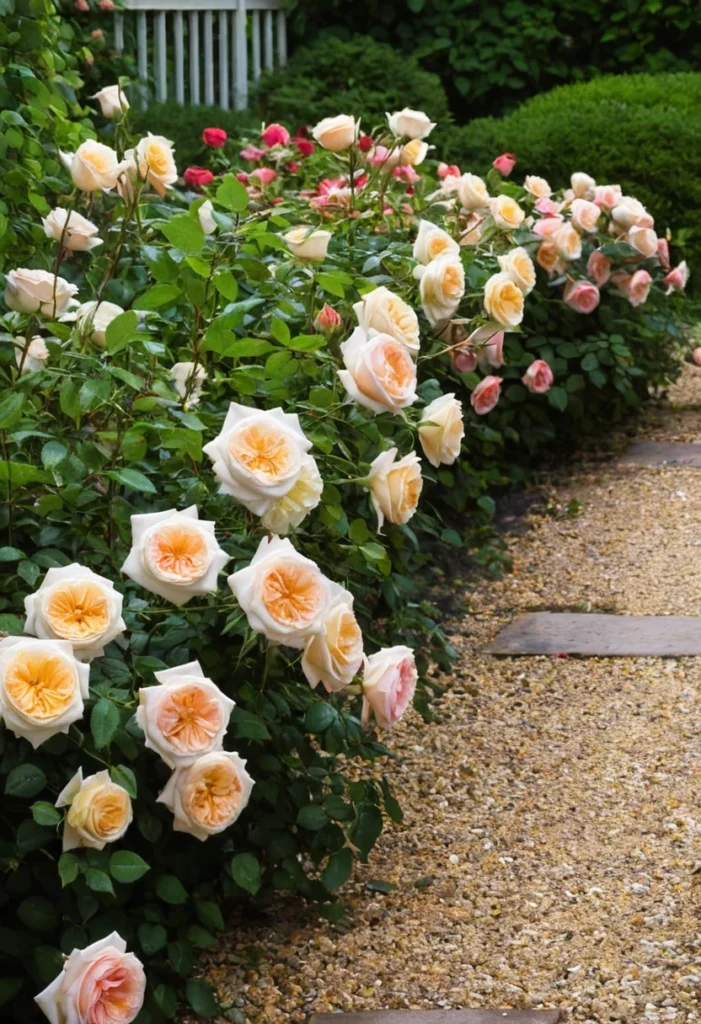
A rose-lined pathway creates an elegant transition between different parts of a backyard. For 11+Flower Garden & Planting, plant roses at intervals along both sides of a path or use them on just one side for a more relaxed appearance.
Repeat the same rose variety if you want a formal effect, or alternate two complementary colors for a softer cottage look. Keep plants far enough from the walkway that mature branches and thorns don’t interfere with people passing by.
Soften the Edges
Low-growing companions such as catmint, hardy geraniums, or suitable groundcovers can soften the edge of the path. Choose plants that share similar light and soil requirements with roses.
Create a Viewpoint
A pathway can lead toward a focal rose, bench, arch, or small garden feature. This simple design trick gives the garden a destination and makes even a modest backyard feel more thoughtfully planned.
5. Combine Roses With Lavender
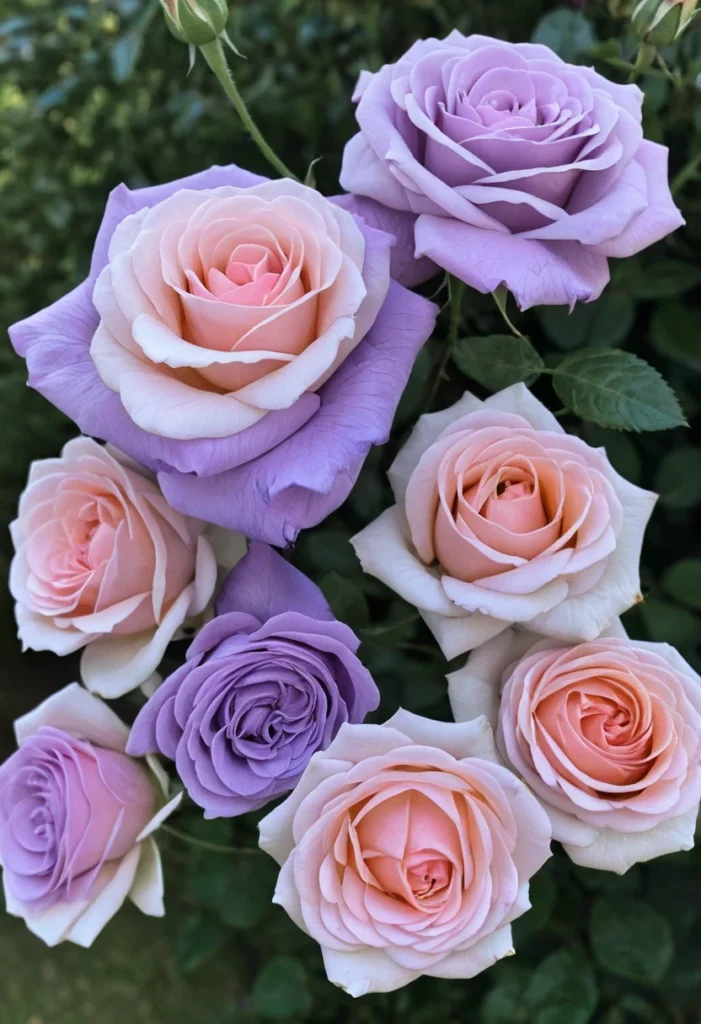
Lavender and roses are a classic combination because their shapes and colors contrast beautifully. The rounded rose blooms sit above the narrow purple flower spikes and silvery foliage of lavender, making this one of the most recognizable 11+Flower Garden & Planting combinations.
Both plants generally prefer sunny locations and well-drained conditions, although their exact watering requirements and climate tolerance can differ. Iowa State Extension recommends selecting companion plants that share the rose’s preference for full sun and well-drained soil.
Use Lavender as an Edge
Plant lavender in a repeated line along the front of a rose border. This creates a clear visual boundary and helps frame the larger rose bushes.
Avoid Overcrowding
Give both plants enough room to develop. A beautiful combination can become difficult to maintain if the plants are placed so closely that airflow is restricted.
6. Try a Pink and Purple Flower Combination
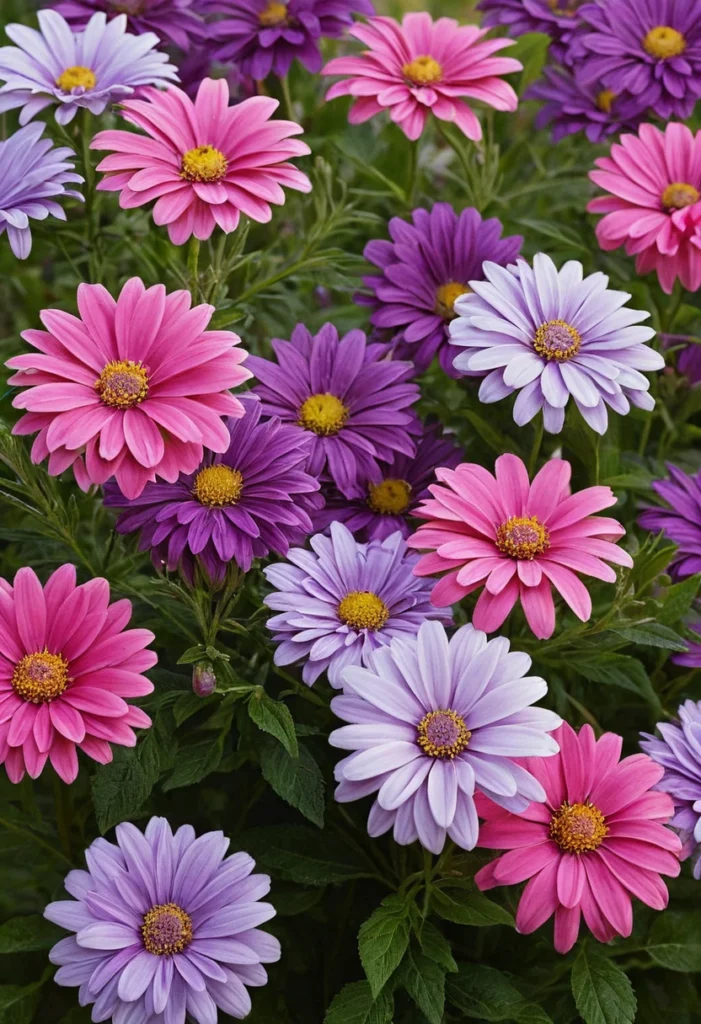
Color is one of the simplest ways to improve 11+Flower Garden & Planting layouts. Pink roses can be paired with purple salvia, catmint, lavender, or other blue-purple flowers for a cool and romantic effect.
Purple companions also create a useful contrast against pale and medium-pink roses. If your roses are yellow or golden, cool purple companions can provide even stronger visual contrast.
Repeat Colors Across the Bed
Do not place all purple plants in one corner and all pink roses in another. Repeat both colors throughout the border so the entire garden feels connected.
Add White for Balance
White flowers can act as a visual break between stronger colors. They also help brighten the garden in softer evening light.
7. Build a Rose Garden in a Raised Bed
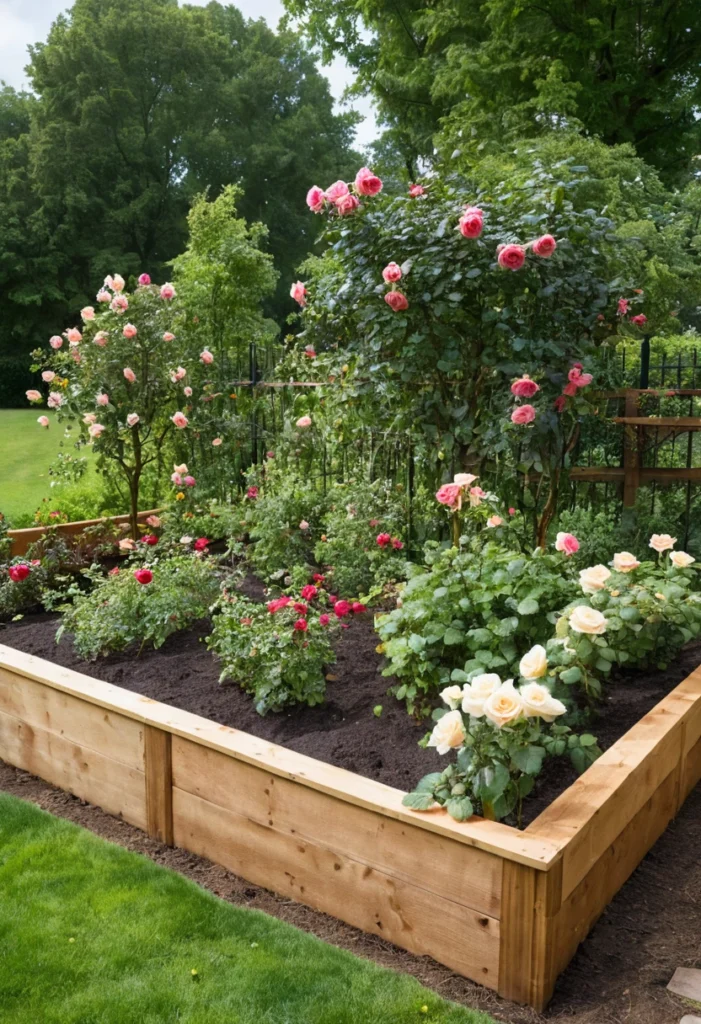
Raised beds are excellent for gardeners who want a structured 11+Flower Garden & Planting layout. They create clear boundaries, make soil improvement easier, and can help when the existing ground has drainage problems. Illinois Extension notes that raised beds can be useful where drainage is questionable.
Build the bed wide enough to accommodate mature roses while keeping the plants accessible. Avoid designing a bed that looks attractive from a distance but requires you to step into it for every pruning or watering task.
Add a Simple Border
Wood, stone, brick, or another suitable edging material can give the raised bed a finished appearance. Match the material to the style of your house and existing garden features.
Mix Roses With Low Companions
Use low-growing flowers toward the front and taller plants behind the roses. This creates a layered appearance without hiding the main blooms.
8. Create a Small Rose Garden in Containers
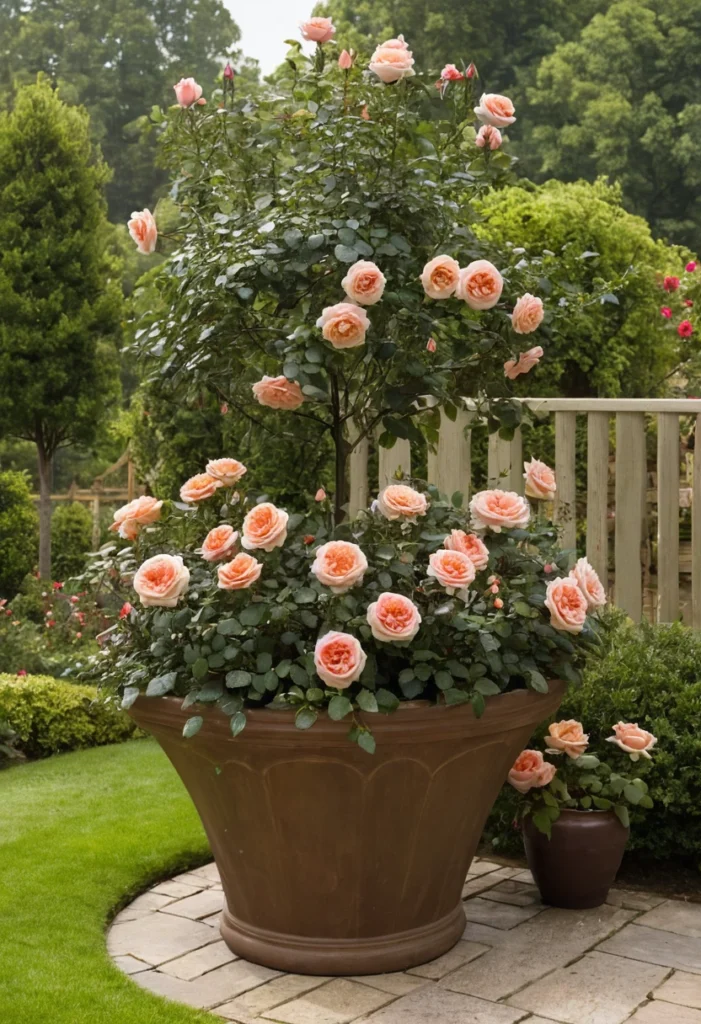
You don’t need a large backyard for beautiful roses. Container gardening allows you to experiment with 11+Flower Garden & Planting ideas on patios, balconies, decks, and small courtyards.
Choose compact or patio-friendly roses and use containers with adequate drainage and enough root space. A single rose in an attractive pot can become a focal point, while three coordinated containers can create a miniature garden composition.
Group Containers Together
Instead of spreading pots randomly around your patio, group them in a small cluster. Add one or two companion plants around the roses to create a fuller display.
Match Container Styles
Use similar pot materials or colors if you want a coordinated look. For a cottage garden, slightly mismatched traditional pots can also work beautifully.
9. Add Alliums for Vertical Contrast
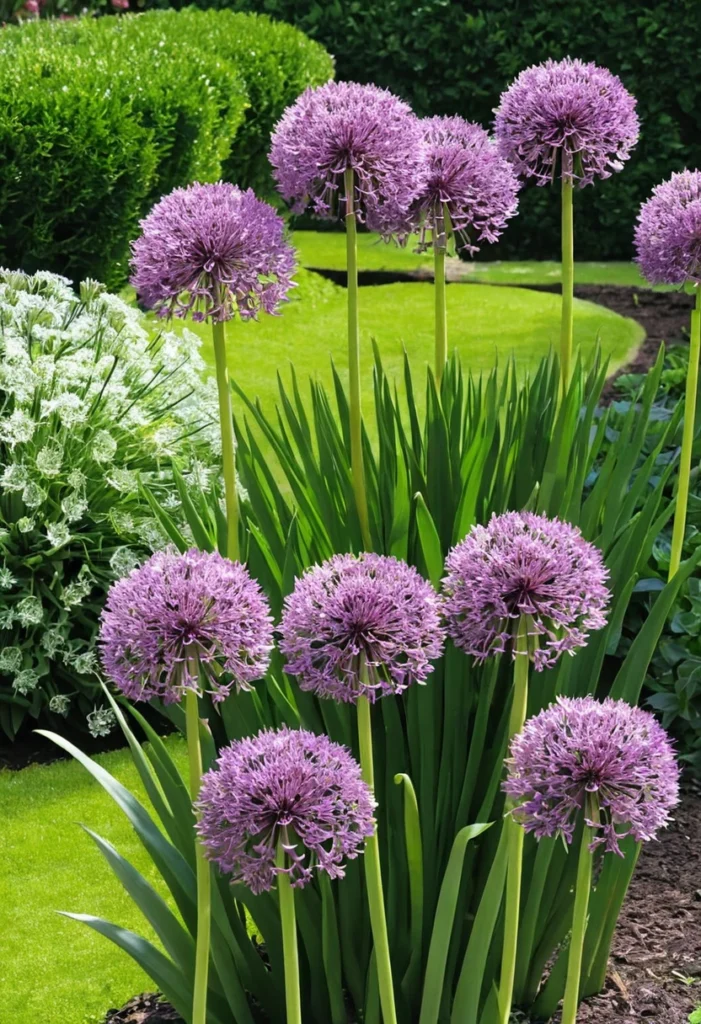
Alliums can add a completely different flower shape to a rose border. Their spherical flower heads contrast with the layered petals of roses, making them particularly useful in 11+Flower Garden & Planting designs.
Garden Design includes ornamental alliums among recommended rose companions, while companion-planting guidance also notes that their strong form can add contrast and interest.
Place Them Between Rose Groups
Rather than putting every allium in one cluster, distribute them between rose groupings. This creates repetition and keeps the planting visually connected.
Use Their Height
The tall stems of alliums create vertical movement above lower companion plants while providing a different silhouette from the rounded rose flowers.
10. Add Catmint Around Rose Bushes
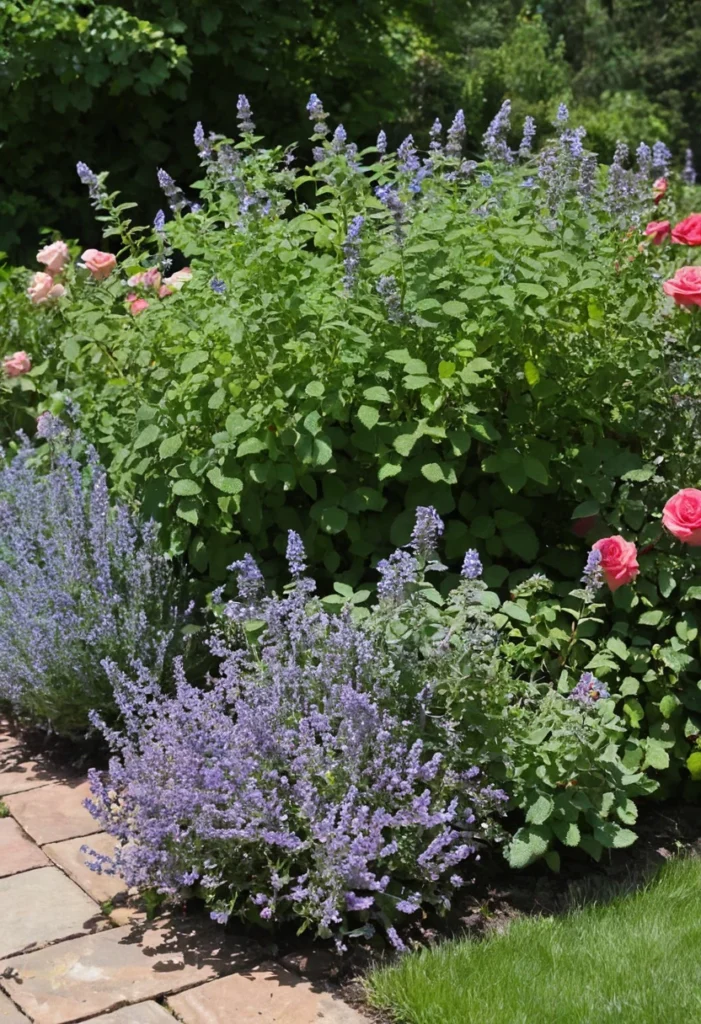
Catmint is another useful option for 11+Flower Garden & Planting because its blue-purple flowers and soft growth habit can visually soften rose borders. It can also attract pollinators, making the garden more active and wildlife-friendly.
Plant catmint toward the front or sides of the rose bed rather than directly against the rose crown. Its spreading habit can help fill gaps, but it should still have enough space to grow without overwhelming the roses.
Use It as a Living Edge
A line of catmint can create a soft boundary around a rose border. Its relaxed shape contrasts especially well with formal rose beds.
Cut It Back When Needed
If catmint becomes untidy after flowering, trimming it can encourage fresh growth and help maintain the shape of the border.
11. Design a Formal Rose Garden
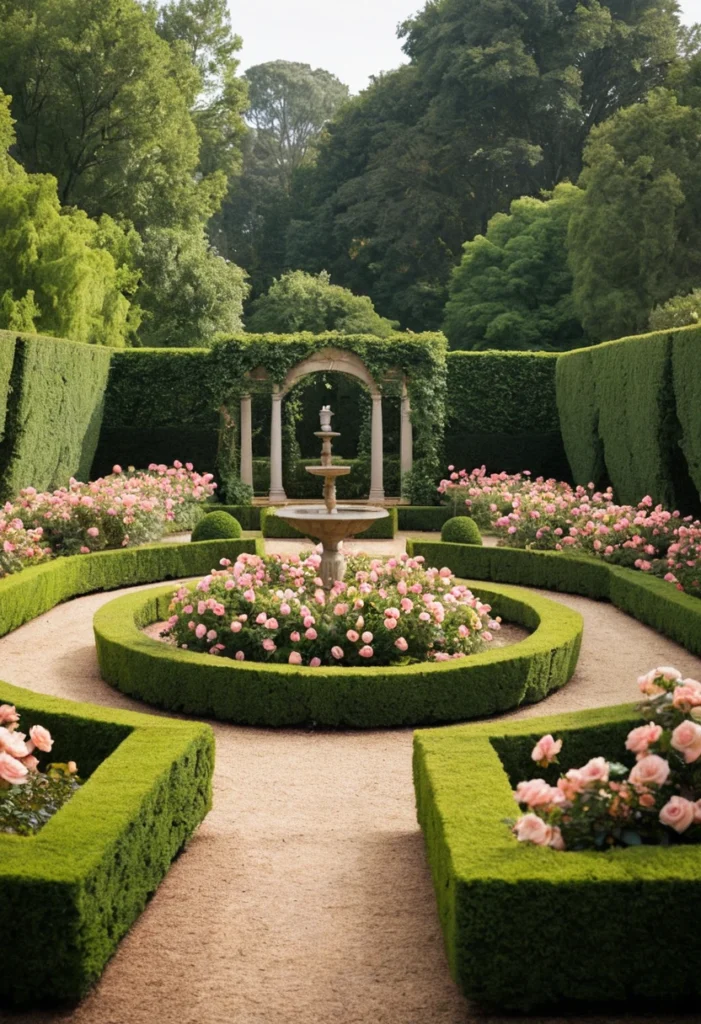
For gardeners who prefer symmetry, a formal rose garden can make 11+Flower Garden & Planting ideas feel elegant and organized. Use geometric beds, repeated rose varieties, straight paths, and carefully controlled companion plants.
A formal garden works particularly well in rectangular or square spaces. You can create four symmetrical beds around a central feature or use a single long rose border with matching plants on both sides.
Keep the Plant Palette Limited
Formal gardens often look better when you repeat fewer varieties. Choose one or two dominant rose colors and use companions in supporting shades.
Add Evergreen Structure
Evergreen shrubs or clipped plants can provide structure outside the main flowering season. Garden Design notes that shrubs such as boxwood can provide structure around roses in formal and informal settings.
12. Make a Rose Garden With a Hidden Seating Nook
A small seating area can transform 11+Flower Garden & Planting from a purely decorative project into a space you actually use. Place a bench or two chairs near roses so you can enjoy their fragrance and watch pollinators moving between flowers.
Use taller roses or shrubs to create a sense of enclosure without completely blocking sunlight. A small arch, trellis, or pergola can add height and make the seating area feel separate from the rest of the yard.
Choose a Comfortable Location
Avoid placing seating directly beside plants with heavy thorns or branches that interfere with movement. Leave a comfortable circulation area around furniture.
Add Evening Interest
White or pale flowers can become especially noticeable in low light. Fragrant roses and herbs can also make an evening seating area more enjoyable.
13. Create a Rose Border Along a Fence
A fence provides a ready-made background for roses. Climbing roses can be trained upward, while shrub roses can create a lower flowering border in front. This makes the fence part of your 11+Flower Garden & Planting design rather than leaving it as a plain backdrop.
If you use climbers, install appropriate support rather than expecting the rose to attach itself securely to a smooth fence. Keep the base open enough for watering and maintenance.
Add Layers in Front
Use lower companions such as hardy geraniums, catmint, or suitable seasonal flowers in front of the roses. This creates depth and hides some bare lower stems without covering the main plant.
Consider the Fence Color
A neutral fence can make colorful roses stand out. Darker backgrounds can emphasize pale flowers, while lighter backgrounds can make deep pink or red blooms more dramatic.
14. Build a Butterfly and Pollinator-Friendly Rose Garden
Roses can become part of a wider pollinator garden when combined with suitable flowering companions. 11+Flower Garden & Planting doesn’t have to focus only on visual design; you can also create a garden that provides nectar and habitat for beneficial insects.
Catmint, salvia, bee balm, lavender, yarrow, and other suitable flowers can bring additional activity to the garden. Garden Design and Garden Design’s companion-plant guide both highlight pollinator-friendly companions among useful rose-border choices.
Include Different Flower Shapes
Different flower structures can appeal to different insects. A mixture of spikes, flat flower heads, open blooms, and rose forms creates greater diversity than a bed containing only double roses.
Avoid Excessive Crowding
A pollinator-friendly garden still needs good plant spacing. Illinois Extension emphasizes good air circulation as an important consideration when selecting a rose-growing location.
15. Use Silver Foliage to Highlight Roses
If you want your roses to look more dramatic, introduce plants with silver or gray foliage. Artemisia and lamb’s ear are examples discussed as rose companions because their foliage provides textural contrast.
This is especially effective with pink, red, or purple roses. The muted foliage creates a visual pause between brighter flowers and prevents the garden from becoming a solid mass of green.
Place Silver Plants Near Bright Roses
A small group of silver-foliage plants can highlight a particularly attractive rose without competing with it. Repeat the foliage elsewhere to create consistency.
Use Texture as Well as Color
Garden design is not only about flowers. Leaf size, shape, and texture can make a border interesting even when fewer plants are blooming.
16. Plant Roses With Hardy Geraniums
Hardy geraniums can create a soft, low layer beneath taller rose plants. Iowa State Extension lists several perennials suitable for growing alongside roses, while Garden Design recommends perennial companions that complement rose height, form, and flowering periods.
They are especially useful when you want to reduce the amount of exposed soil between rose bushes. Their foliage and flowers can make the lower portion of a border look fuller.
Use Them Around Shrub Roses
Shrub roses often work well in mixed borders because they can be surrounded by compatible perennials. This produces a naturalistic garden rather than a collection of isolated rose bushes.
Keep a Maintenance Gap
Do not let ground-level plants completely cover the base of every rose. Keep enough access for watering, feeding, inspection, and pruning.
17. Create a Four-Season Rose Garden
One of the smartest 11+Flower Garden & Planting strategies is to think beyond the main rose-flowering period. Roses may be the star, but companion plants can keep the garden attractive at other times.
Use spring bulbs for early interest, roses and perennials for summer color, grasses or late-season flowers for autumn texture, and evergreen structure for winter.
Plan by Bloom Time
Write down when each major plant flowers. Aim to overlap different plants so there isn’t a long period when the entire border looks empty.
Include Winter Structure
Evergreen shrubs, ornamental grasses, attractive stems, and permanent garden structures can keep the layout interesting even when roses are dormant.
Choosing the Right Location for Roses
Location should be the starting point for any successful 11+Flower Garden & Planting project. Illinois Extension recommends at least six hours of sunlight, good air circulation, and well-drained soil for roses. It also notes that morning sun can help dry foliage more quickly, reducing disease potential.
Avoid planting roses directly beneath large trees or shrubs where their roots have to compete heavily for water and nutrients. Iowa State Extension likewise recommends choosing companion plants with similar growing requirements and avoiding strong competition around roses.
Before planting, watch your yard for several days. Notice where sunlight falls, where water collects after rain, and which areas remain shaded. A few minutes of observation can prevent a lot of problems later.
How Far Apart Should Roses Be Planted?
Spacing depends heavily on the type and mature size of the rose. A small patio rose needs far less room than a large shrub or climbing rose. As a general principle, space plants according to their expected mature width rather than how small they look when first planted.
For example, Garden Roses’ guidance gives approximately 60 cm for patio or front-border roses, around 90 cm for many hybrid tea, floribunda, shrub, and English roses, and considerably more for climbing and rambling roses. Always check the specific cultivar’s mature dimensions because varieties differ.
Good spacing is particularly important in 11+Flower Garden & Planting designs that include companion plants. Crowding can make pruning difficult and reduce air movement around foliage.
How to Choose Companion Plants for Roses
The best companion plant is not necessarily the prettiest one. Start with basic growing requirements. Roses generally perform best in sunny, well-drained locations, so companions should tolerate similar conditions. Iowa State Extension specifically recommends companion plants that prefer full sun and moist, well-drained soil.
Next, consider height, color, flowering period, texture, and maintenance. Garden Design recommends thinking about complementary colors and contrasting plant forms while also considering the maintenance requirements of different rose types.
Useful companions can include:
- Lavender for purple color and aromatic foliage
- Catmint for soft blue-purple flowers
- Salvia for upright flower spikes
- Alliums for spherical flower heads
- Yarrow for flat flower clusters
- Hardy geraniums for lower planting
- Sweet alyssum for a low flowering edge
- Artemisia for silvery foliage
- Bee balm for pollinator interest
- Suitable ornamental grasses for texture
How to Care for a Rose Flower Garden
A beautiful 11+Flower Garden & Planting design still depends on basic rose care. Give plants adequate water when needed, keep the growing area reasonably weed-free, and monitor foliage and flowers regularly for signs of stress, pests, or disease.
Watering should be adjusted according to soil, weather, plant size, and local climate rather than following one rigid schedule. University of Nebraska guidance notes that roses generally need around an inch of water per week, with more potentially required during hot weather, and recommends checking soil moisture before watering.
Water the Soil, Not the Foliage
When possible, direct irrigation toward the soil around the plant rather than repeatedly wetting the leaves. Nebraska Extension recommends avoiding wet foliage during irrigation because it can encourage foliar diseases.
Feed According to Plant Needs
Roses can benefit from fertile soil and appropriate feeding, but fertilizer should be chosen and applied according to the specific plant, soil conditions, and local recommendations. Adding compost or well-decomposed organic matter can also support a healthy growing environment.
Deadhead Roses for a Tidy Display
Removing spent flowers can help maintain a neat appearance and, depending on the rose type, may encourage further flowering. The exact technique depends on the rose and whether it is a repeat-flowering variety.
When planning 11+Flower Garden & Planting, remember that deadheading is easier when you can comfortably reach the plants. This is another reason not to bury rose bushes under dense companion planting.
Use clean, sharp tools where appropriate and avoid damaging healthy new growth. Regularly inspecting the plant while deadheading also gives you a chance to notice pests or disease early.
Protect Airflow Around the Rose Bushes
Good airflow is one of the most important practical considerations in a rose garden. Illinois Extension specifically recommends a location with good air circulation and notes that morning sunlight can help foliage dry more quickly.
Do not allow surrounding plants to form an impenetrable wall around the rose. Companion plants should enhance the garden without creating a humid, overcrowded environment.
This balance is particularly important in 11+Flower Garden & Planting layouts where many different plants are intentionally packed into a relatively small space.
Common Rose Garden Design Mistakes to Avoid
One common mistake is choosing companion plants only because they look attractive together. A visually perfect combination can still fail if one plant needs dramatically different moisture, sunlight, or soil conditions. Garden Design recommends matching cultural requirements when selecting companions.
Another problem is excessive competition. Large shrubs, aggressive spreaders, or plants with extensive root systems can compete with roses for water and nutrients. Keep vigorous plants at a sensible distance and allow sufficient space for mature growth.
Other mistakes include:
- Planting roses in deep shade
- Ignoring mature plant size
- Crowding the rose base
- Forgetting access for pruning
- Choosing too many unrelated colors
- Creating narrow paths that become difficult to use
- Ignoring drainage
- Planting everything that blooms at the same time
- Forgetting winter or off-season structure
A Simple Planting Plan for Beginners
If you’re new to rose gardening, begin with one small border rather than attempting an entire backyard transformation. Choose a sunny location, select one or two rose varieties, and add a few compatible companions.
For example, you could place three shrub roses toward the back, repeat lavender along the front edge, and add catmint or salvia between the rose groups. This creates color contrast without requiring dozens of different plant varieties.
Once you see how the plants perform, expand the design gradually. A garden that develops over several seasons often becomes more successful than one filled with too many plants on the first day.
FAQs About Flower Garden Ideas With Roses
What flowers grow well with roses?
Lavender, catmint, salvia, alliums, hardy geraniums, yarrow, and other plants that prefer similar sunny, well-drained conditions can complement roses.
What is the best location for planting roses?
Choose a sunny site with at least six hours of sunlight, good air circulation, and well-drained soil.
Can roses and lavender be planted together?
Yes. Lavender is a classic rose companion because it offers contrasting foliage and flower color while generally preferring sunny, well-drained conditions.
How far apart should rose bushes be planted?
Spacing varies by rose type and mature size; many common shrub and floribunda roses need roughly 90 cm, while climbers require substantially more room. Always check the cultivar’s recommended spacing.
How can I make a small rose garden look bigger?
Use vertical climbers, narrow borders, repeated colors, a pathway, mirrors or light backgrounds, and layered companion plants to create depth without using excessive ground space.
Conclusion
The best 11+Flower Garden & Planting designs combine roses with thoughtful structure rather than simply filling every available space with flowers. A classic perennial border, romantic cottage garden, rose-covered arch, fence planting, container display, raised bed, or pollinator-friendly border can all work beautifully when the plants share suitable growing conditions and have enough room to develop.
Start with the conditions your backyard naturally provides, then choose roses and companion plants that fit those conditions. Focus on sunlight, drainage, spacing, color, height, flowering time, and maintenance before adding decorative features. With a little planning, your rose garden can become a welcoming outdoor space that offers fragrance, color, texture, and seasonal interest for years to come.

